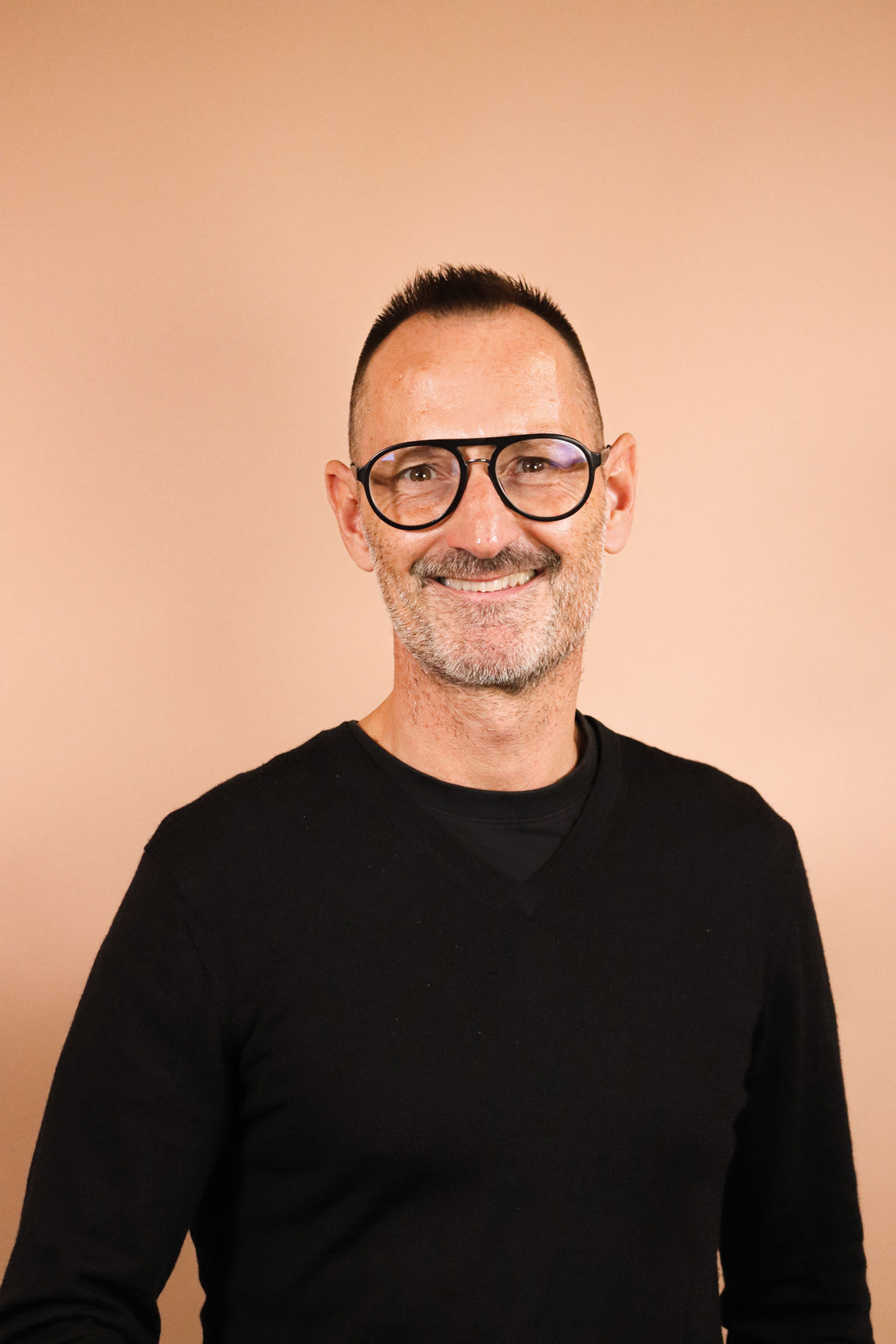
Spanish floral designer Alex Segura is known for his colorful and innovative floral arrangements, which combine texture, detail, and technique. With more than 25 years of experience, he teaches courses and gives demonstrations around the world. His background in graphic design is reflected in his sense of form, proportion, and composition. He is also a certified Florint judge and works as an international floral designer and instructor.
During four days of masterclasses at the Boerma Institute in Aalsmeer, Alex created bridal bouquets and table decorations. He demonstrated how rustic materials can be used to create tasteful, contemporary designs. We spoke with him about his love for bridal work, the influence of fashion, and the importance of experimentation.
A Romantic Through and Through
For Alex, wedding floristry has always held a special place in his heart, thanks to the creative possibilities it offers and the emotions associated with a wedding. “For an incorrigible romantic like me, there’s nothing more beautiful than celebrating love,” he says.
The temporary nature of bridal bouquets offers a great deal of freedom to experiment with techniques and construction methods. While a regular bouquet needs to stay fresh for one to two weeks, a bridal bouquet only needs to look stunning for a single day. This opens up possibilities for techniques such as gluing.
In addition, according to Alex, there is another important connection in bridal design: the relationship between flowers and fashion. “Fashion has always been a source of inspiration. The interplay of textures, the combinations of proportions, the movement, the impressions, and the different personalities conveyed by a variety of dresses inspire me to think about which shapes and materials are best suited to creating a cohesive whole.”
Alex considers the bridal bouquet to be part of the bride’s overall look. It should complement the dress while also reflecting the personality and preferences of the person carrying it. “I always try to design a bouquet that reflects the personality and taste of the person who will be carrying it. Above all, it needs to be comfortable to hold for an extended period of time. Some florists don’t take that last point into account enough.”
Finding Creativity in Materials
Instead of combining many different elements, Alex often takes a single material and experiments with ways to work with it. “I believe you can develop your imagination and creativity tremendously by taking a material and working with it,” he explains.
Alex enjoys exploring how a single material can be used to achieve different results. By gluing, binding, or weaving it, the material takes on a completely different character each time. “I think it’s wonderful that you can create different designs using exactly the same material, each with its own character. I especially love paper because it offers so many opportunities to experiment.”
This distinctive feature of his work has not gone unnoticed. It is also the reason why the Boerma Institute specifically asked Alex Segura to make this way of thinking a central focus of his teaching.
Four designs, one approach
Although the fourdesigns differ in construction and appearance, they have one thing in common: they explore how rustic materials can be presented in a contemporary way.
Design 1: Geometry and Refinement
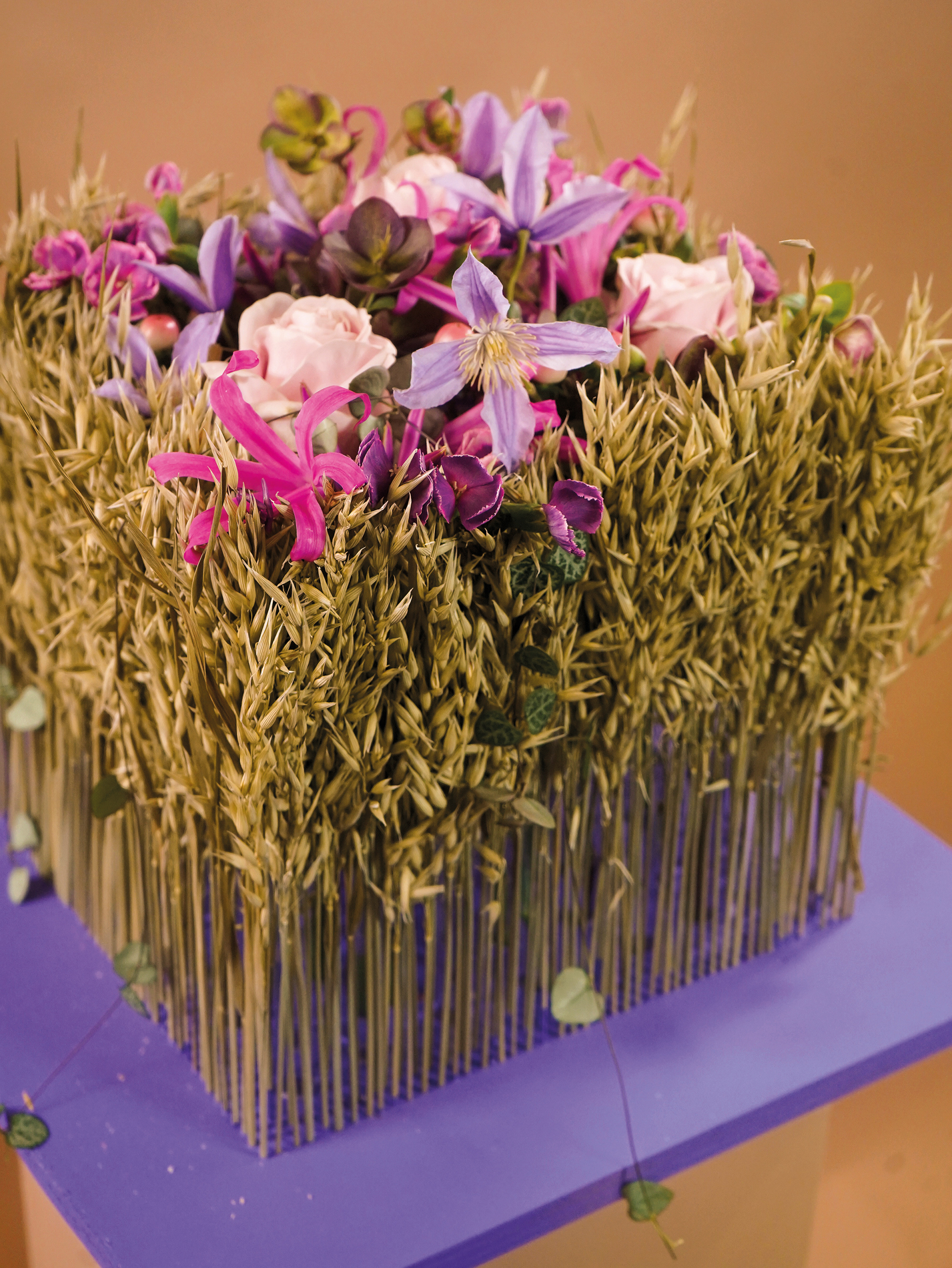
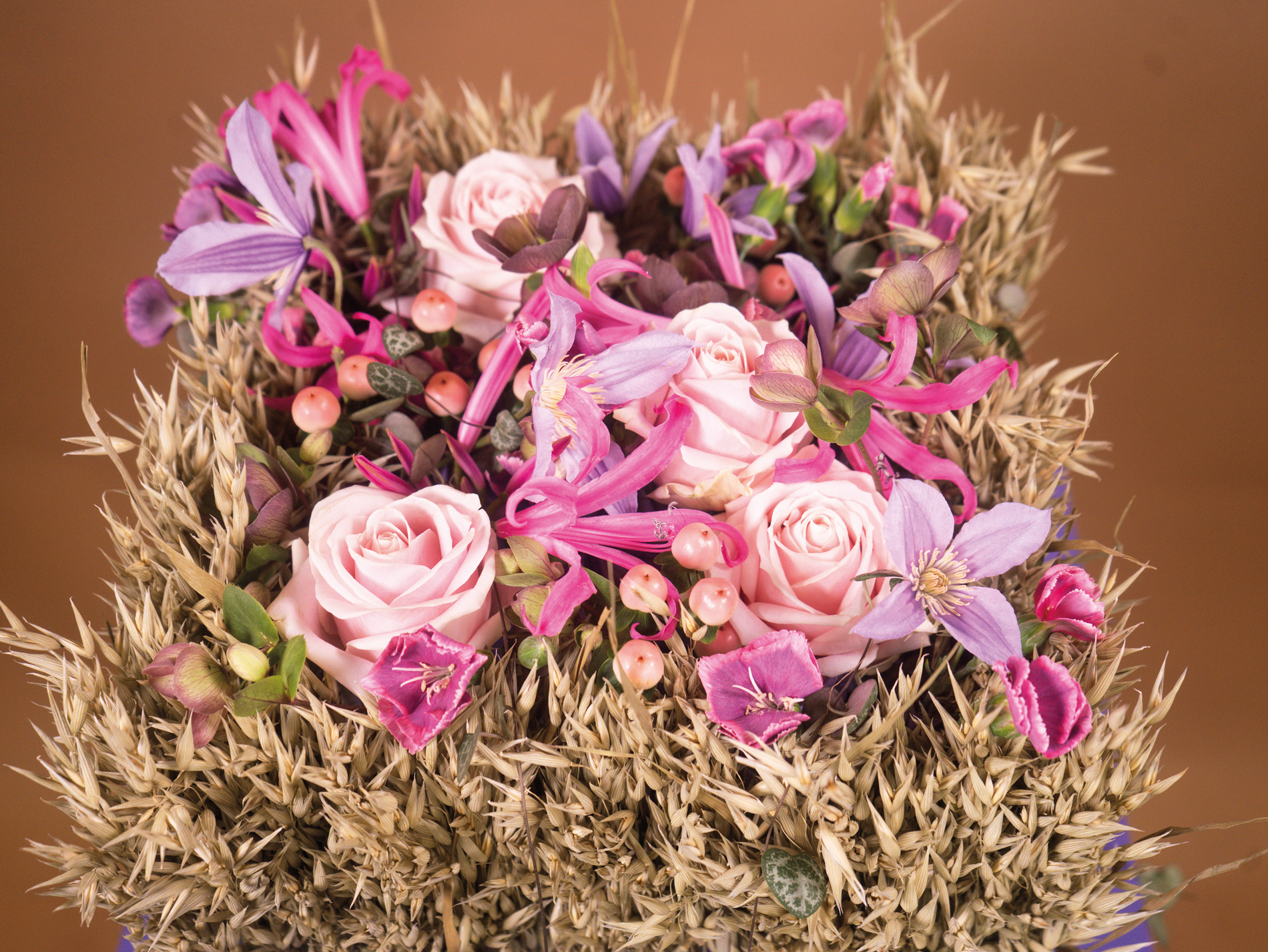
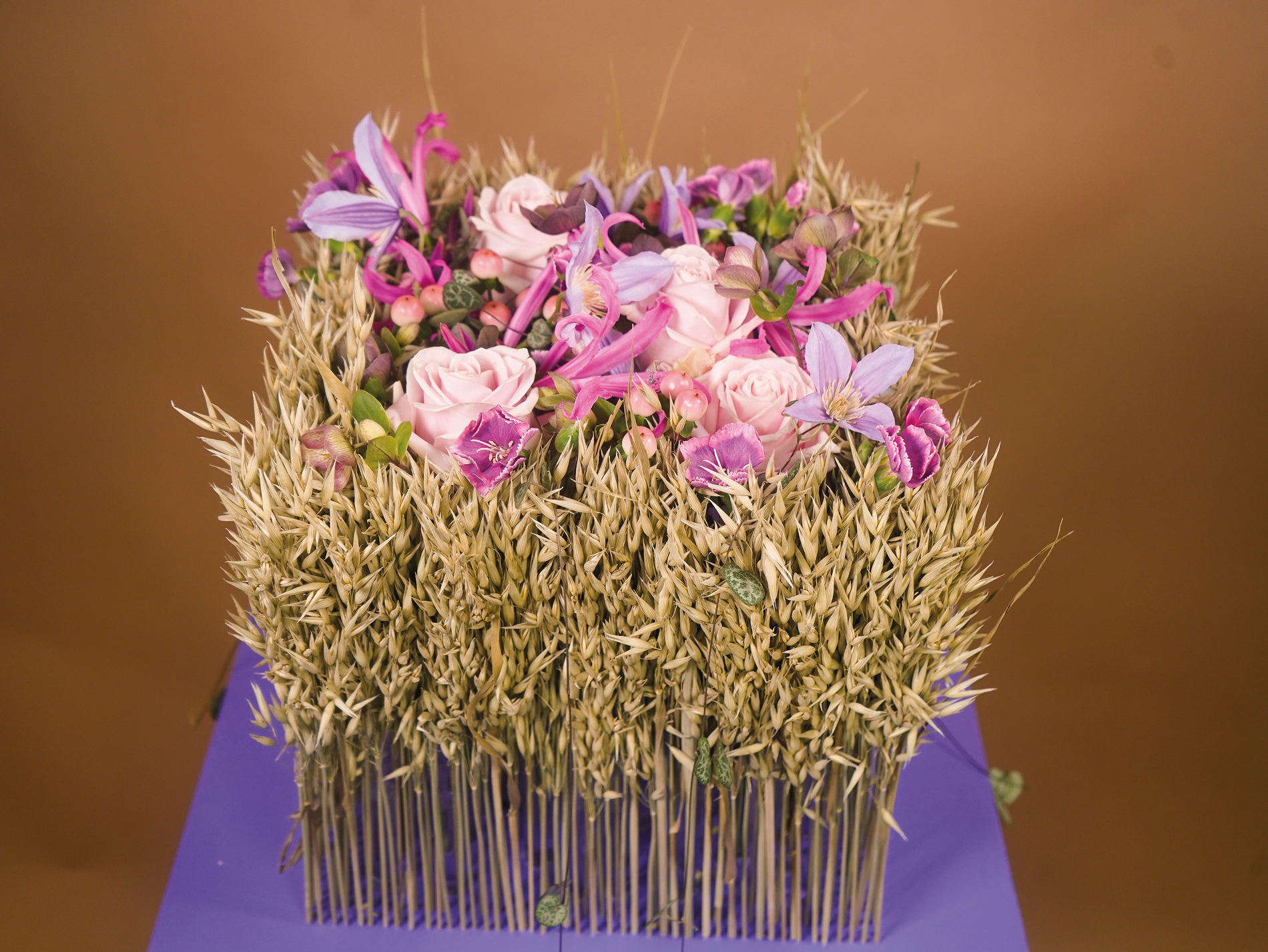
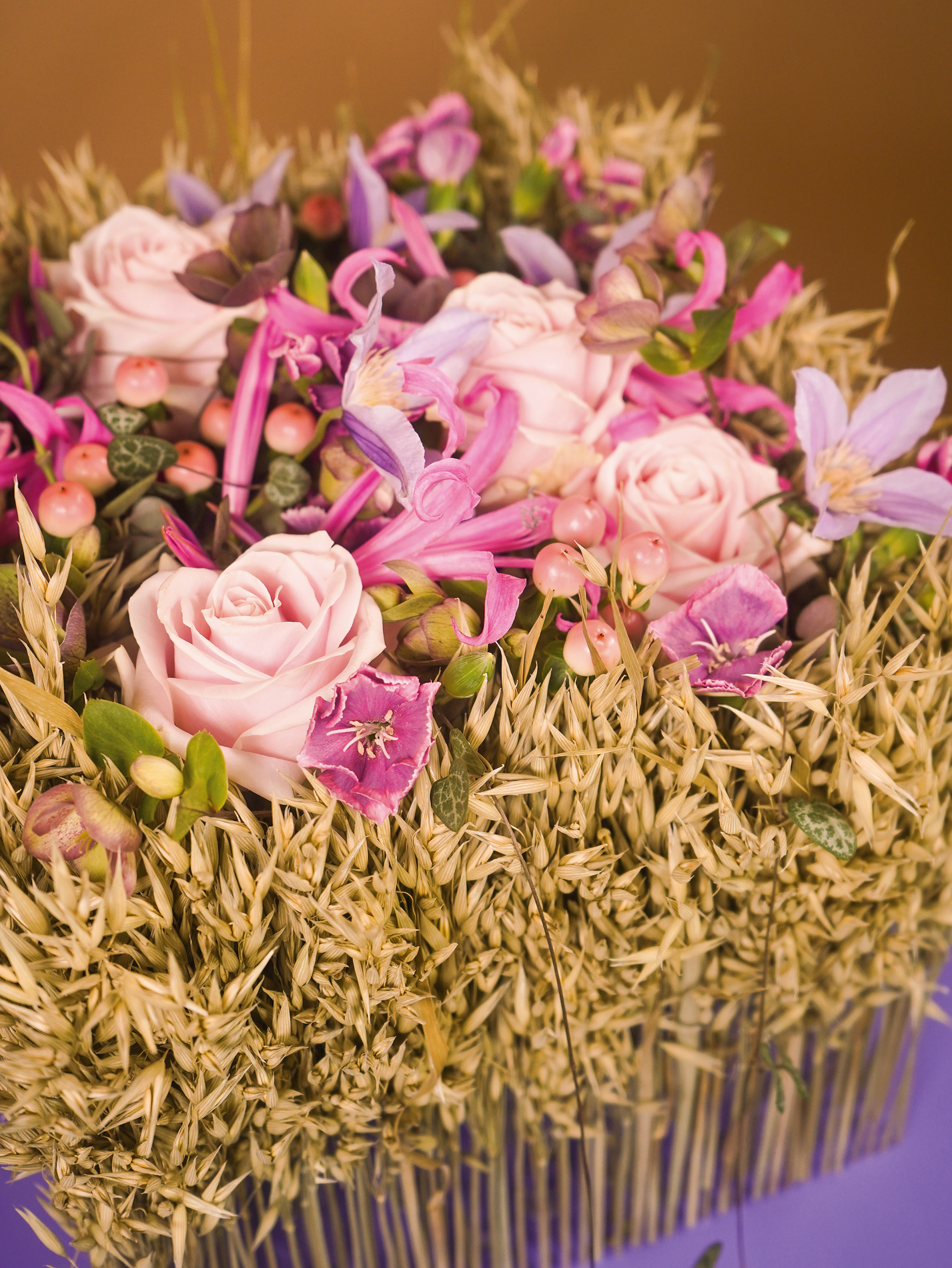
For the first composition, Alex focused on creating a strong geometric shape, using a wooden bowl as the base. “With this composition, I wanted to create a piece with a very clearly defined geometric shape that serves as a frame for refined floral arrangements, thereby creating a play of contrasts.”
The design features a soft, feminine color palette, with pastel-colored clematis and hellebores from Marginpar, the "Dorchester" rose from Meijer Roses, and bright pink nerines scattered here and there.
Alex tied wires into the wooden structure to secure the wheat, thereby creating a framework for the flowers. Test tubes supply water to the flowers. The result demonstrates how a sturdy structure can provide visual order while still allowing the floral elements to remain expressive.
Design 2: Contrast Between Weight and Movement
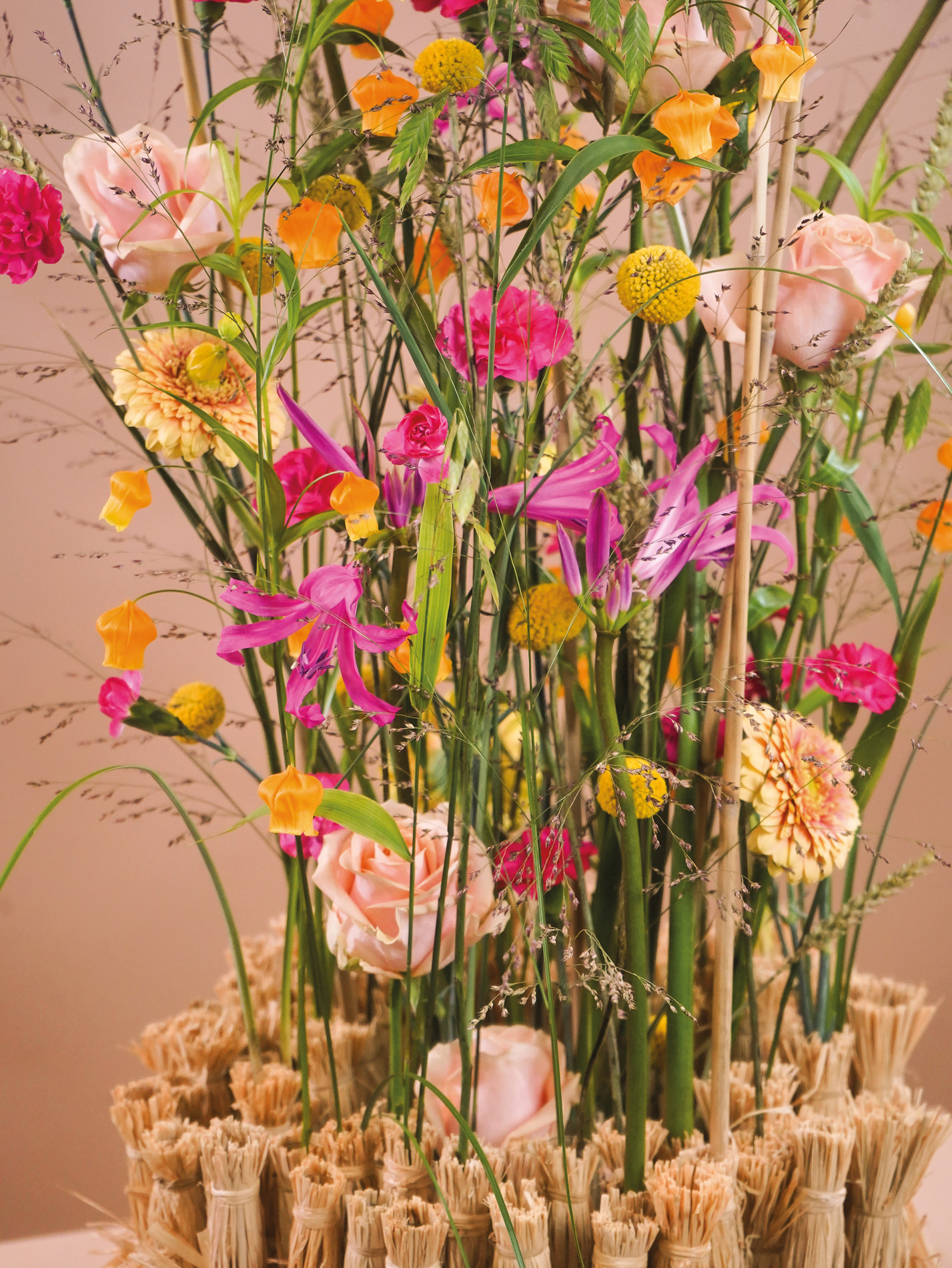
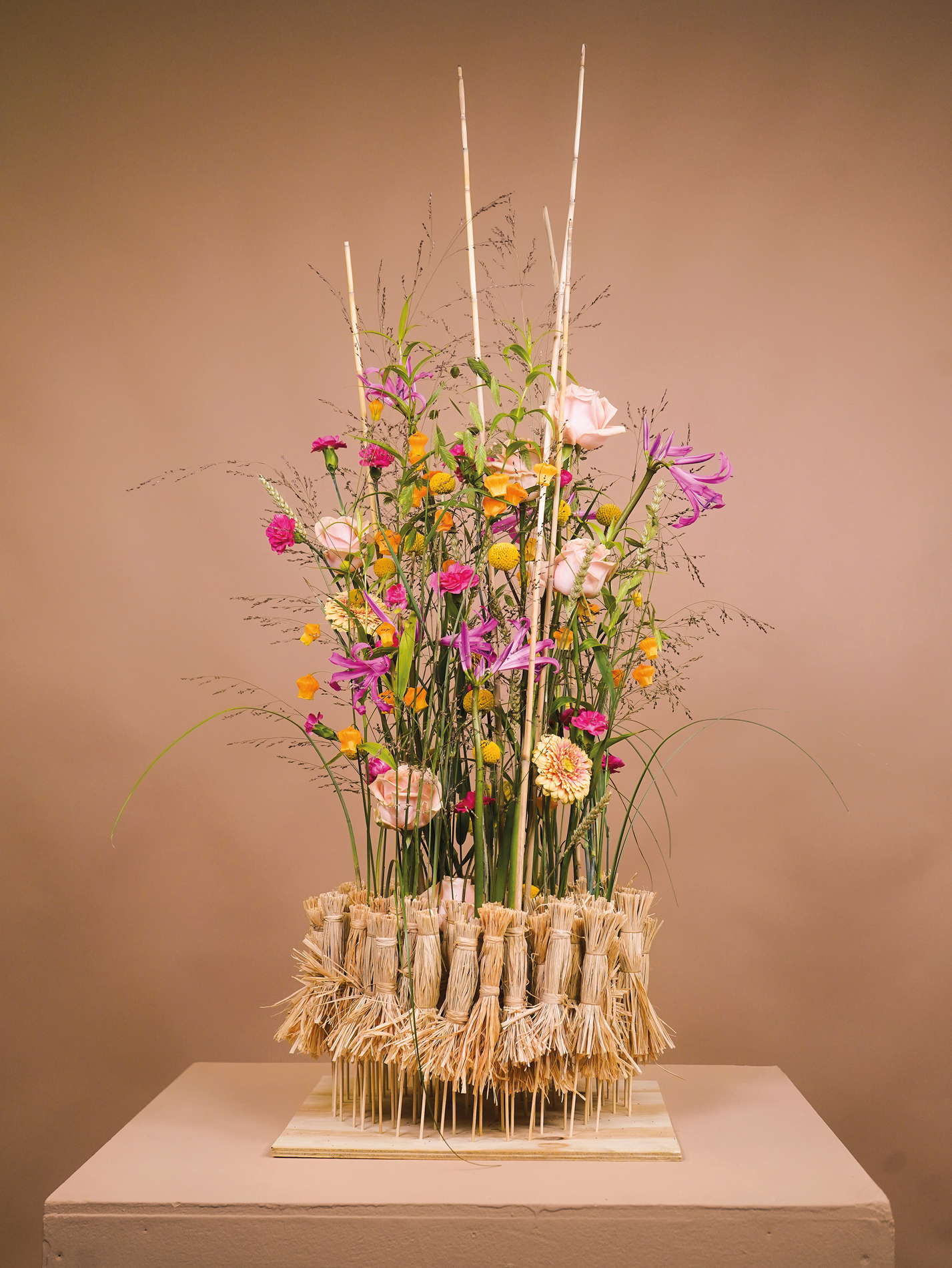
The second composition uses similar techniques, but changes in the proportions and construction materials give the design a completely different look. Whereas the previous design was more compact, this one has a distinct vertical orientation.
“I wanted to highlight the contrast between the raffia base—which is compact and looks very heavy—and a floral arrangement that is light, airy, and full of lines and movement.”
The raffia is tied to test tubes that are attached to bamboo skewers. By concealing the water source from view, the raffia serves both a decorative and a technical purpose.
The botanical materials used in this design range from delicate grasses and Craspedia from Marginpar to the beautiful Sweet Avalanche from Meijer Roses.
Designs 3 and 4: Classic Forms, Modern Personalities
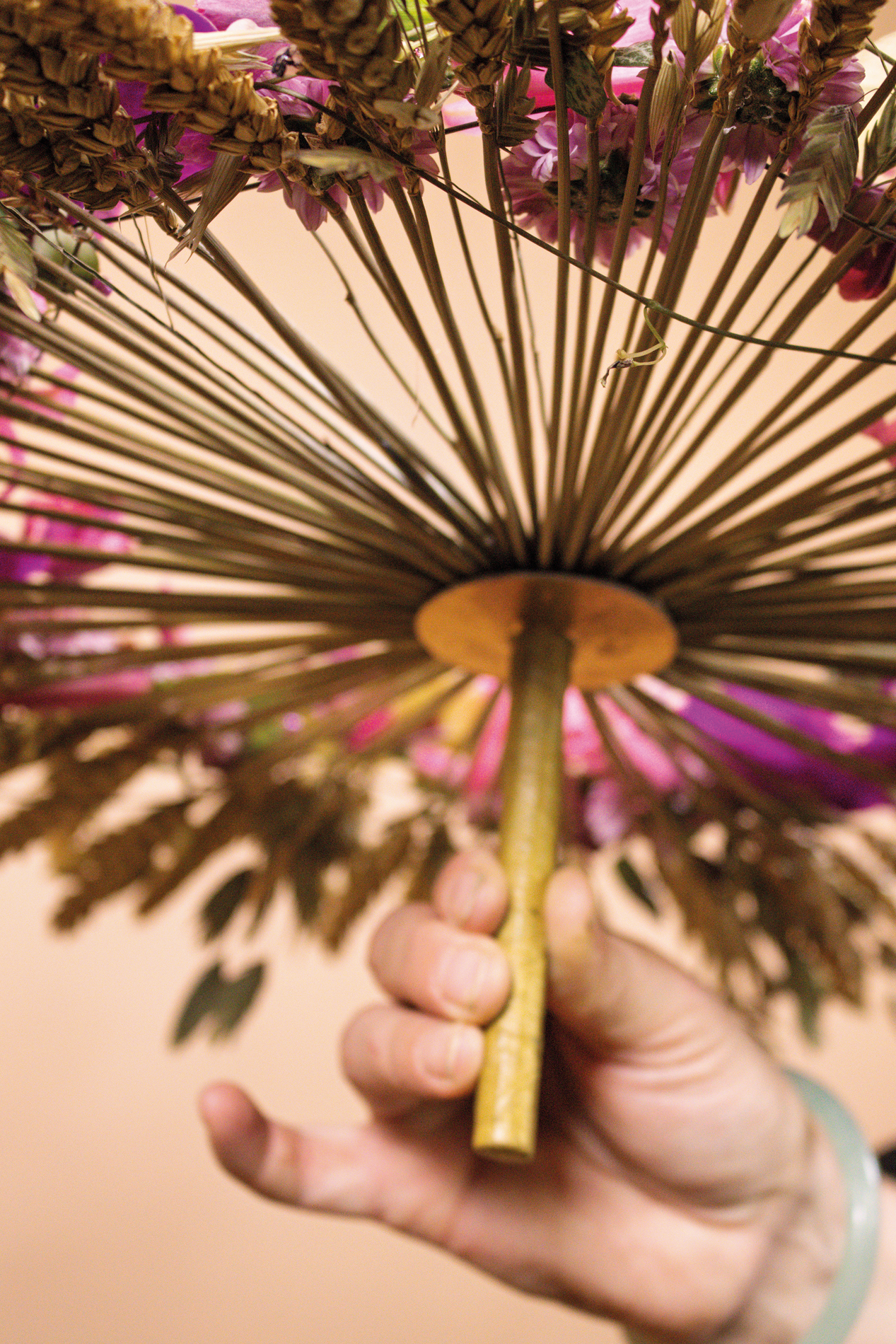
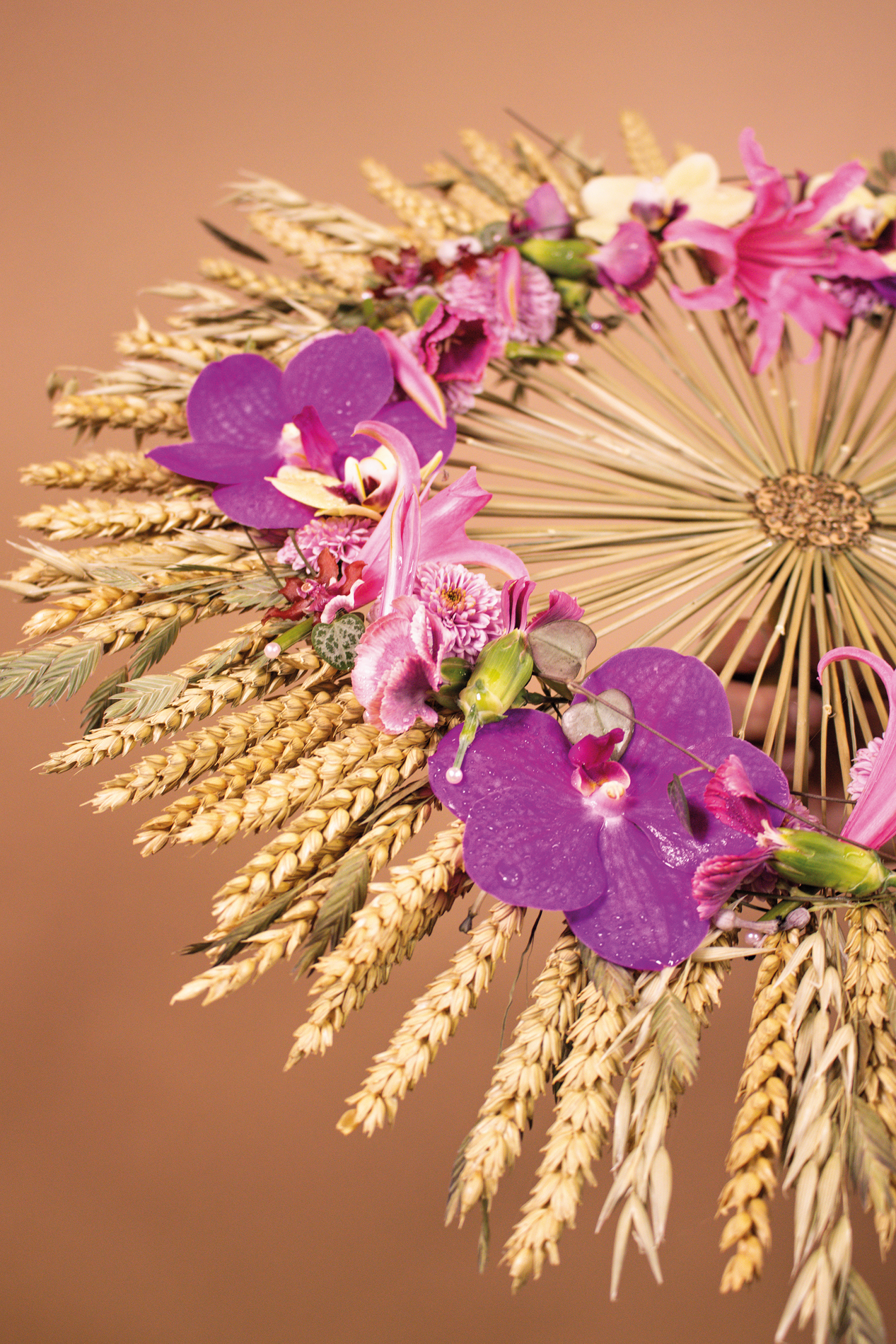
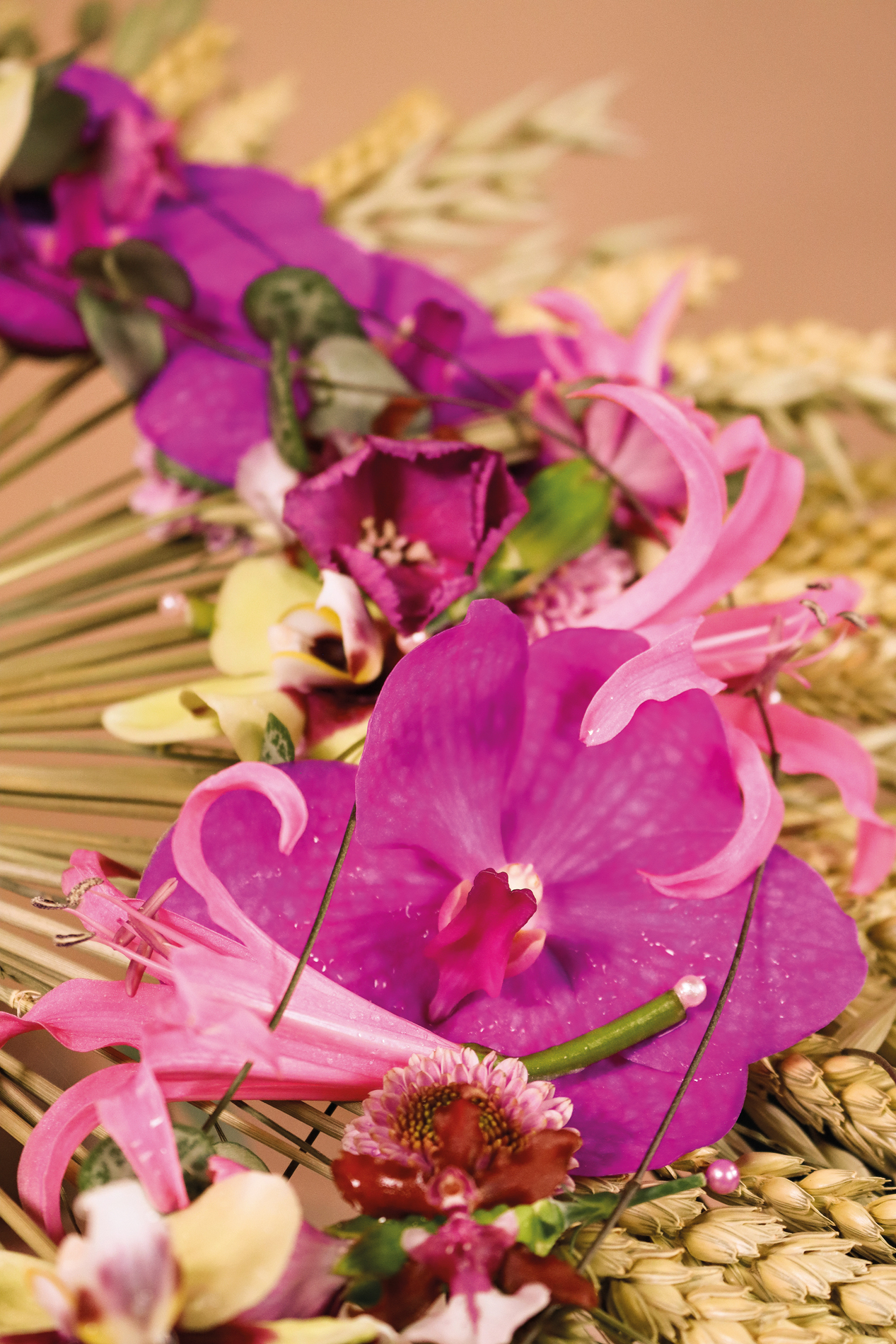
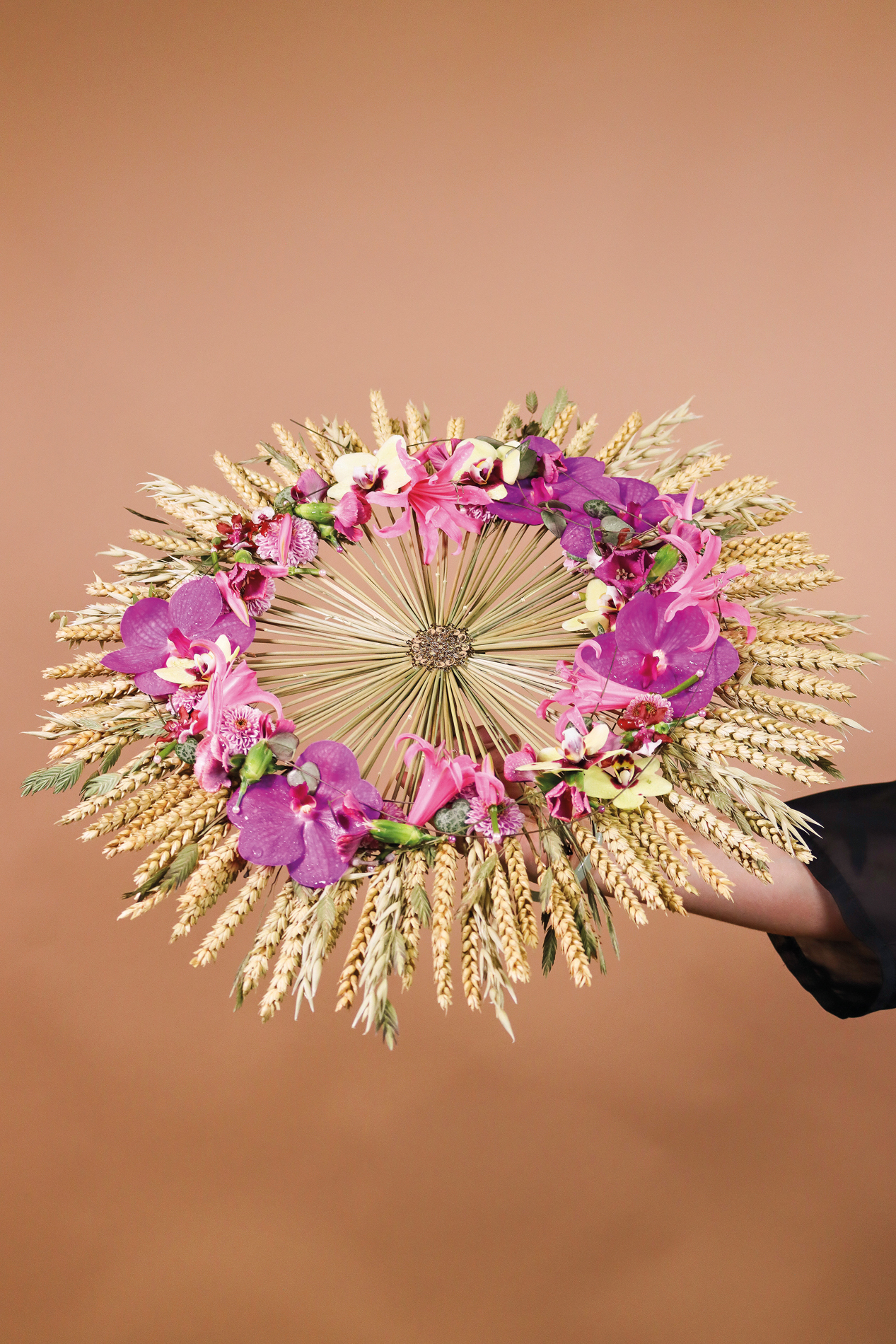
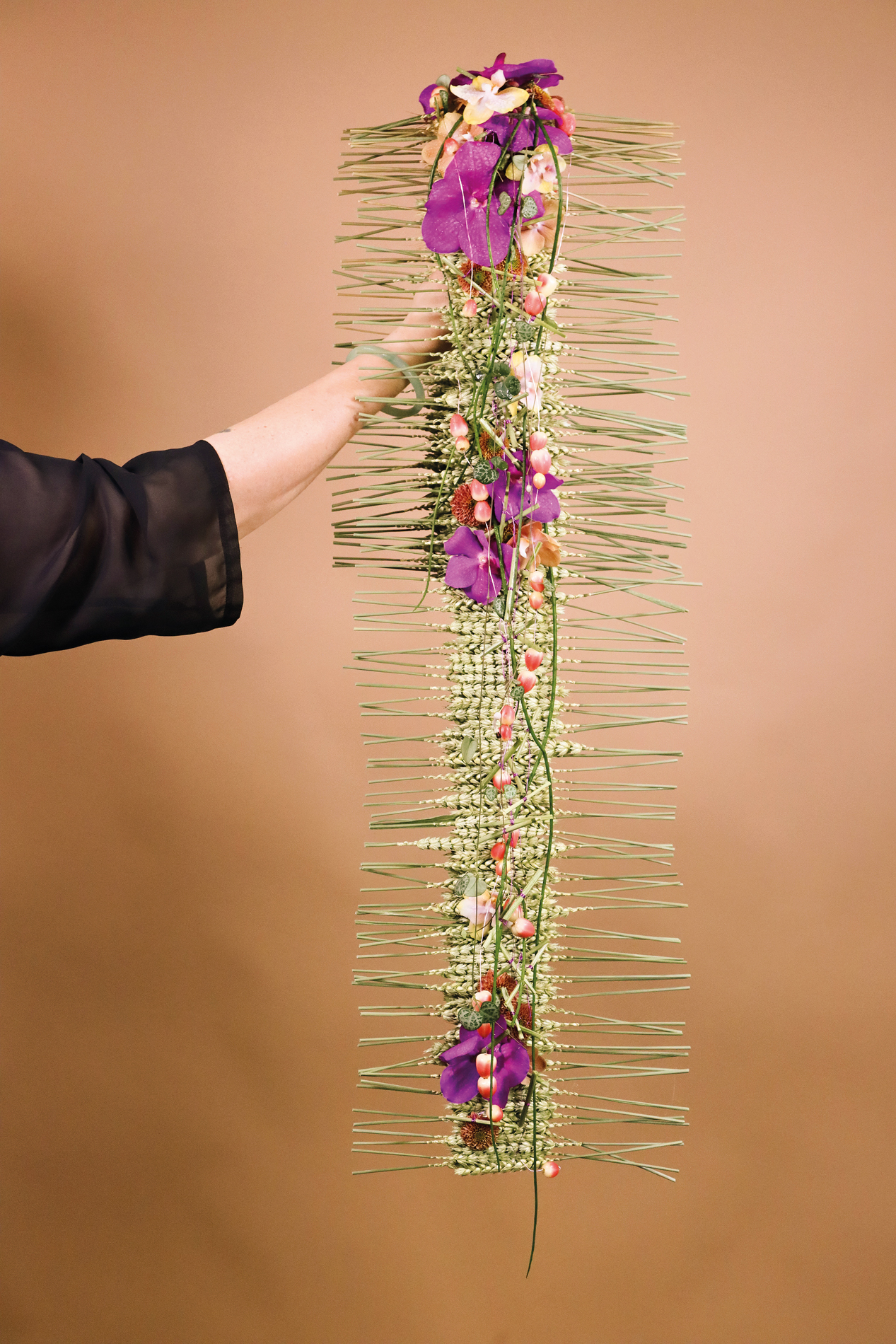
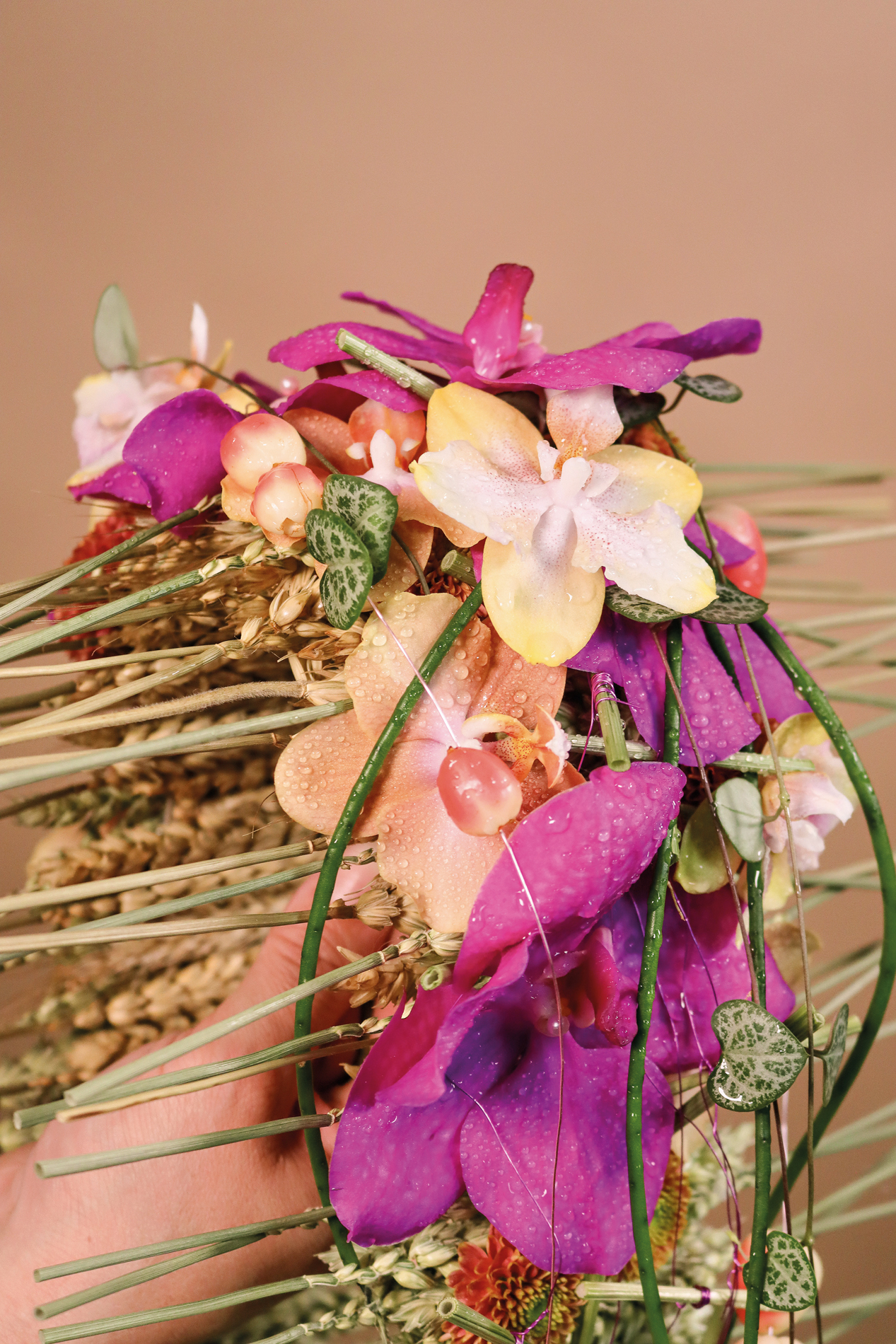
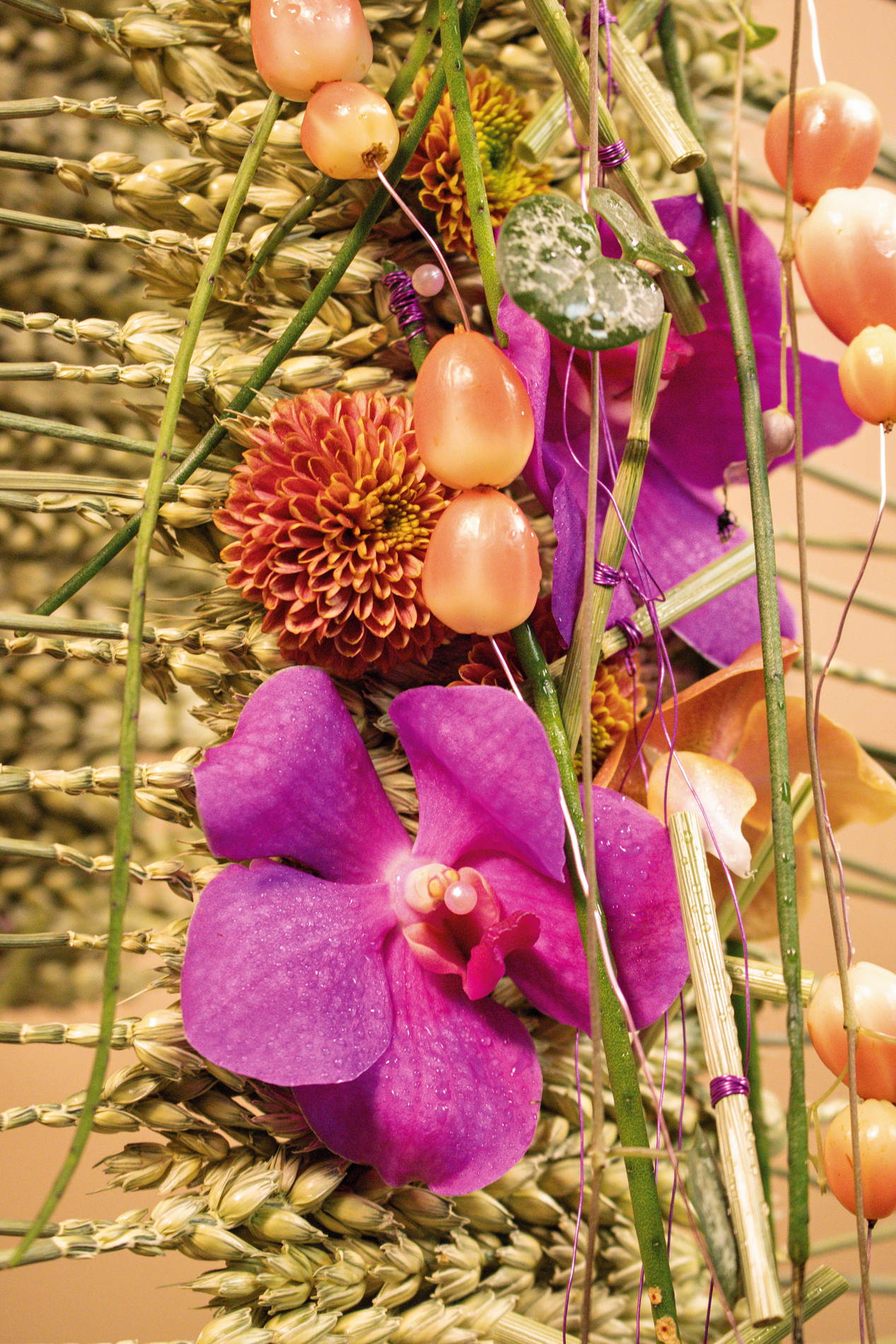
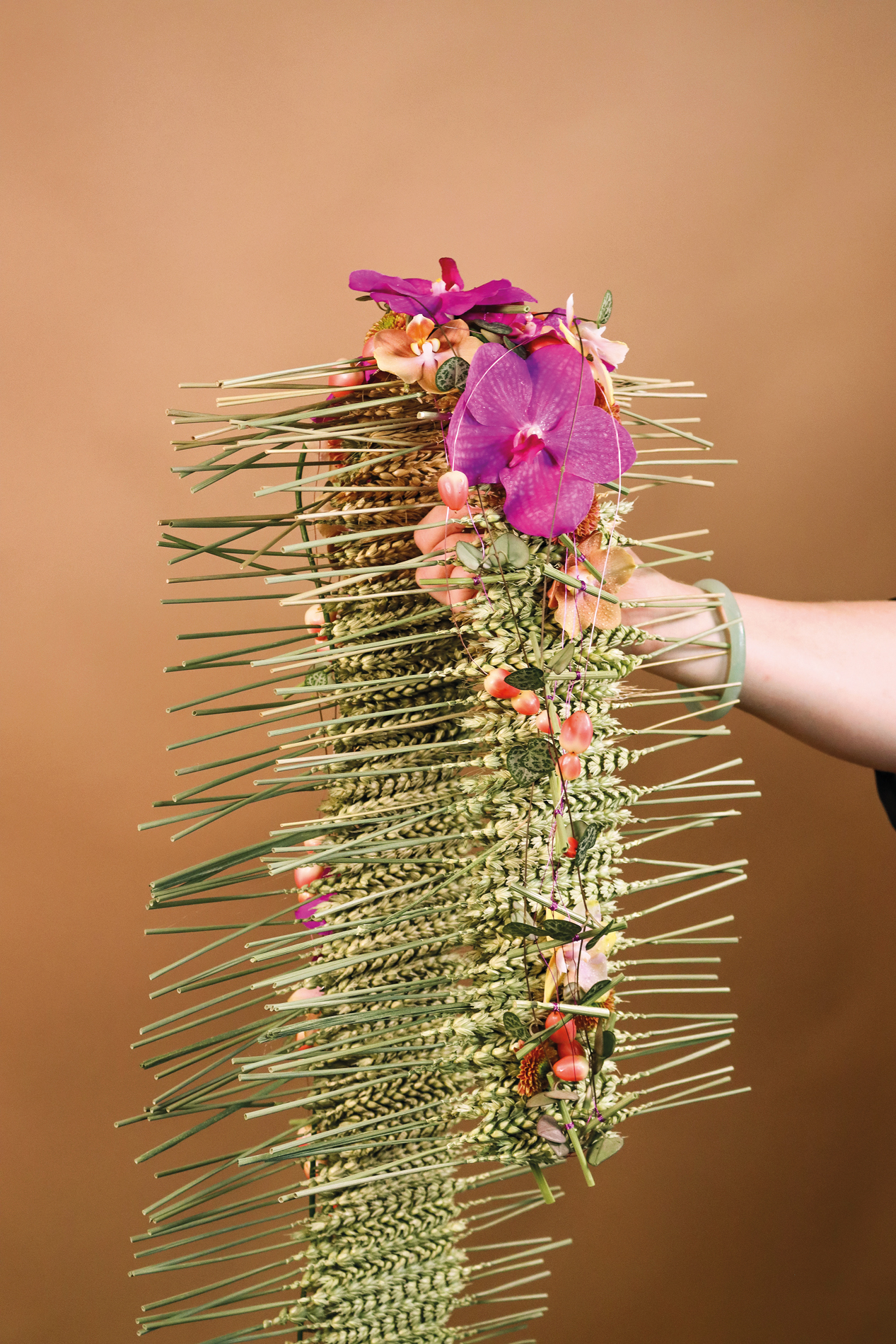
The last two bridal bouquets share one material in common: Triticum, or wheat. Both explore the relationship between traditional forms and contemporary expression. “Both bridal bouquets were deliberately designed with a classic form, yet at the same time they have a very modern character and a personality all their own.”
The initial design is based on the “spiderweb technique.” This creates a beautiful, rounded design with a strong focal line.
The second design uses a thin cardboard base to create a beautiful rectangular, cascading bridal bouquet. The golden ratio is applied to arrange the flowers across the shape of the design.
Together, the two bouquets demonstrate that the same materials can take on a completely different look by playing with geometry, the arrangement of the flowers, and the use of techniques.
How Wedding Floral Arrangements Have Changed
Alex has been working in the floral industry for over twenty years and has seen a significant change in the way wedding bouquets are designed and experienced during that time.
He recalls a time when the bridal bouquet was one of the most important commissions a florist could receive. It offered the opportunity to showcase technical expertise, artistic skill, and creativity, which often resulted in a very personal design.
These days, he feels that some of that exclusivity has faded somewhat. “Thanks to social media, people have access to more information, but it isn’t always of high technical quality. Social media has a major impact on weddings and influences the choice of flowers, materials, and colors. As a result, that sense of uniqueness has been lost.” Alex also sees the benefits of social media. Brides can discover a wider variety of styles, materials, colors, and shapes, while trends are evolving faster than ever before.
The Importance of Technique
Despite his enthusiasm for creativity and experimentation, Alex remains clear about the importance of craftsmanship. When asked about common mistakes in bridal floral arrangements, he highlights the relationship between materials, techniques, and longevity.
“I think the biggest mistake—and, for me, the most frustrating one—is a poor choice of flowers and materials, as well as the techniques used to arrange them. Especially when the flowers’ longevity isn’t taken into account. Wedding floral arrangements must remain beautiful throughout the entire event. That requires a good understanding of the materials being used. A design might look stunning in a photo for social media, but if the flowers wilt before the event is over because of poor techniques, what’s the point?”
Keeping an Open Mind
When asked how florists can develop their own creative style, Alex offers the following advice: “I believe that keeping an open mindand being free of preconceptions are the best ways to foster creativity. Of course, you also need initiative and the willingness to work, hone your skills, and experiment.”
This philosophy is reflected in all of his work: from exploring a single material to combining traditional forms with contemporary techniques.
Ultimately, Alex’s approach is all about understanding the person behind the bouquet, respecting the materials, and having the confidence to explore new possibilities. And for an incorrigible romantic, what better occasion than a celebration of love to bring all those elements together?