
Rhythm from the Sea and the Garden
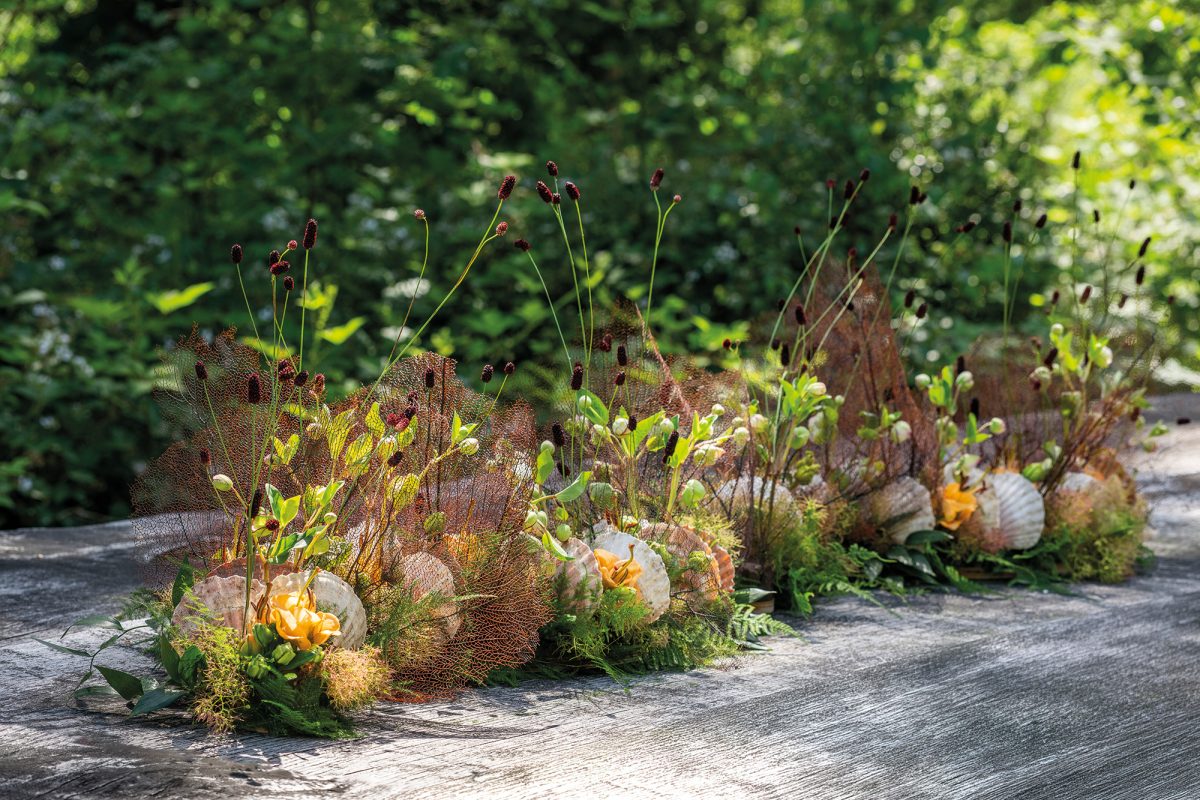
Two Oasis BioLine BioWave bases are joined together to form a single funeral arrangement. Scallop shells and dried coral add rhythm to the composition. At the base, Pascal combines the blossoms of Cotinus “Royal Purple” with the delicate foliage of Ruscus. Shortly cut buds of Lilium ‘Apricot Fudge’ provide accents among the greenery, while Helleborus ‘Classic Grace’ rises up from the arrangement. The airy flowers of Sanguisorba ‘Red Dream’ and small pieces of Asparagus setaceus soften the transition between the floral arrangement and the casket.
Lines Across a Heart of Peonies
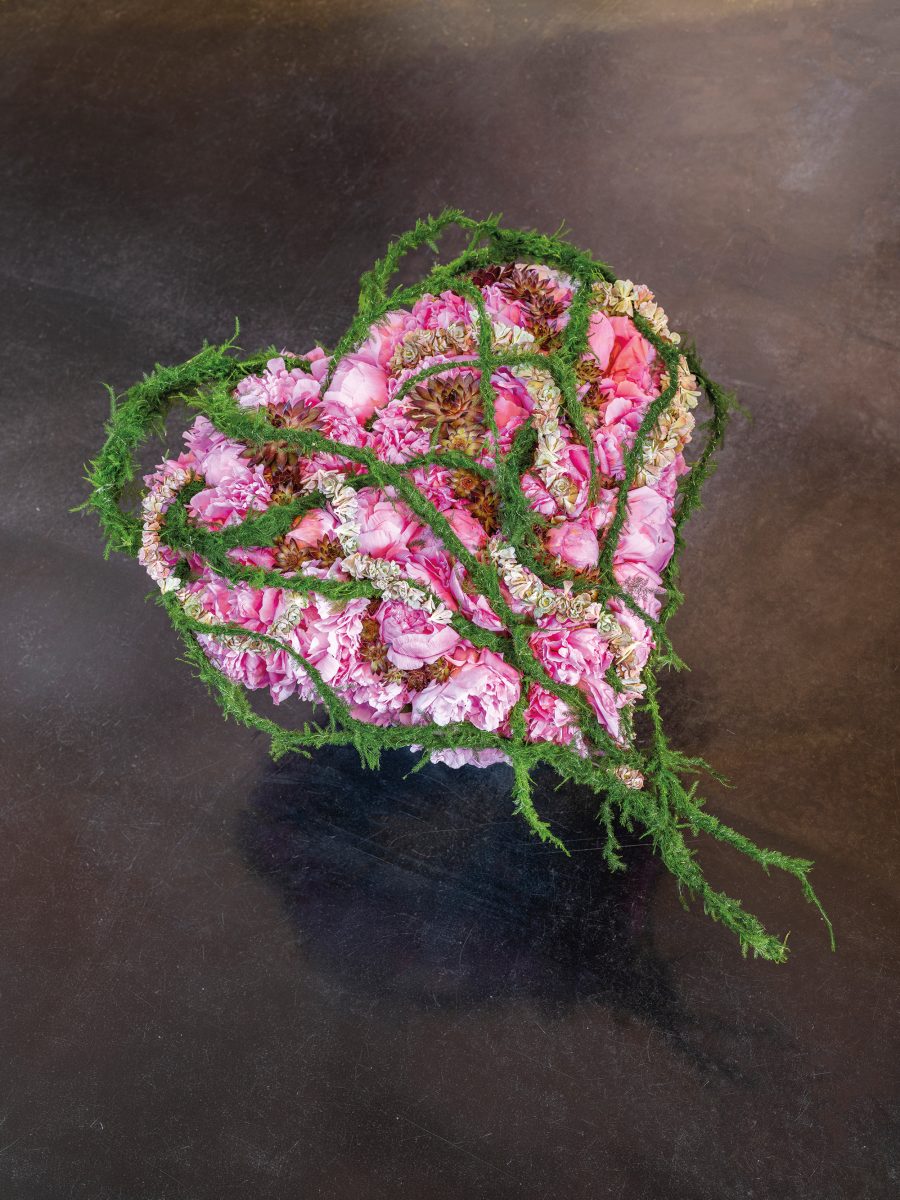
The fully open flowers of Paeonia ‘Sarah Bernhardt’ form a compact surface in which the outline of the center remains recognizable. Overlaying this is a refined interplay of lines created by Asparagus setaceus. Small sections of foliage are mounted on wire and wrapped in fine bouillon wire. Individual Sedum leaves strung on wire form a second green line running through the arrangement. Rosettes of Sempervivum are taken from the parent plant and secured to the center with pins in a clearly defined pattern. The repetition of the geometric rosettes contrasts with the full peonies and gives the design rhythm and an artisanal character.
Between a rosette and a line
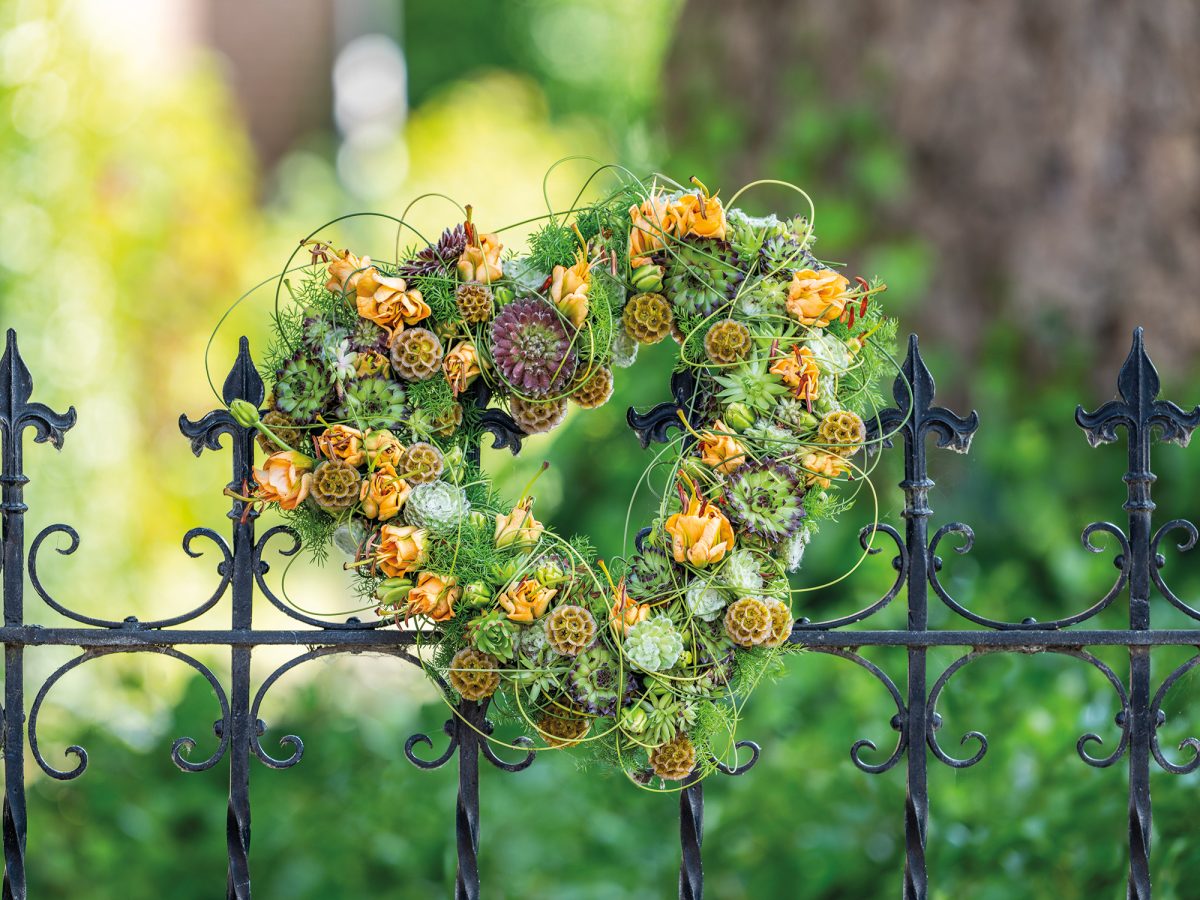
The distinctive shape of the open Oasis floral foam base remains visible in this design. Sempervivum rosettes were cut from the parent plant and attached directly to the base with headpins. Flowers and buds of Lilium ‘Apricot Fudge’ add various stages of development and soft apricot hues. Long strands of Flexigrass are woven through the floral arrangement, connecting the compact plant rosettes with the other materials. The seed heads of Scabiosa stellata provide a graphic accent; finely branched sections of Asparagus setaceus soften the transitions. In this way, compact and airy structures alternate within the open heart shape.
Growing freely on the box
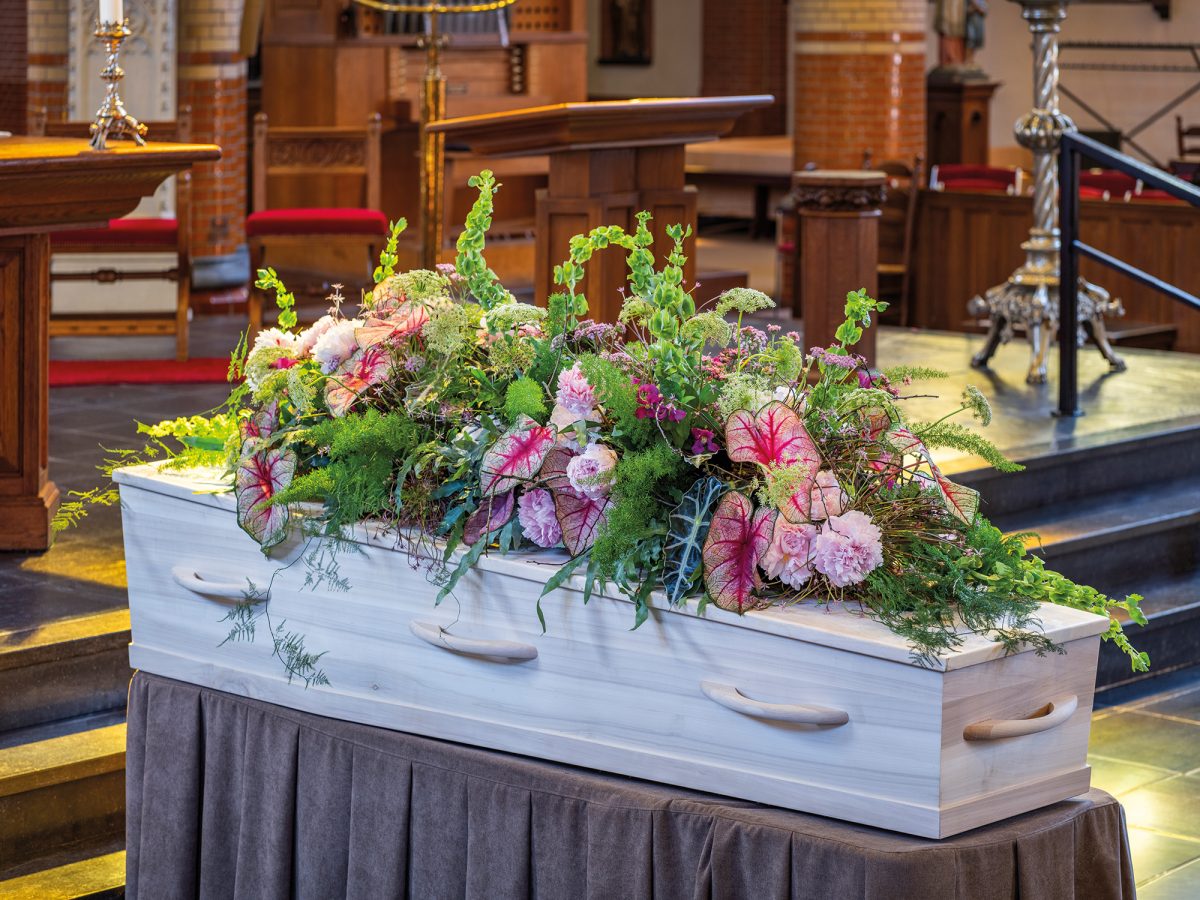
This casket arrangement is, of course, arranged loosely, creating a casual, botanical look. The foliage of Caladium and Alocasia ‘Polly’ provides bold shapes, contrasting with the delicate textures of Asparagus setaceus and Asparagus densiflorus. Low-growing Allium schubertii introduces a graphic interplay of lines to the base; Moluccella laevis, also known as Irish bells, adds vertical lines. The grayish hue of the Asplenium fern complements the casket lid. Panicles of Ammi majus and the soft pink flowers of Paeonia ‘Sarah Bernhardt’ soften the composition. A single flower of Clematis ‘Amazing Kyiv’ provides a subtle finishing touch.
A Growing Structure
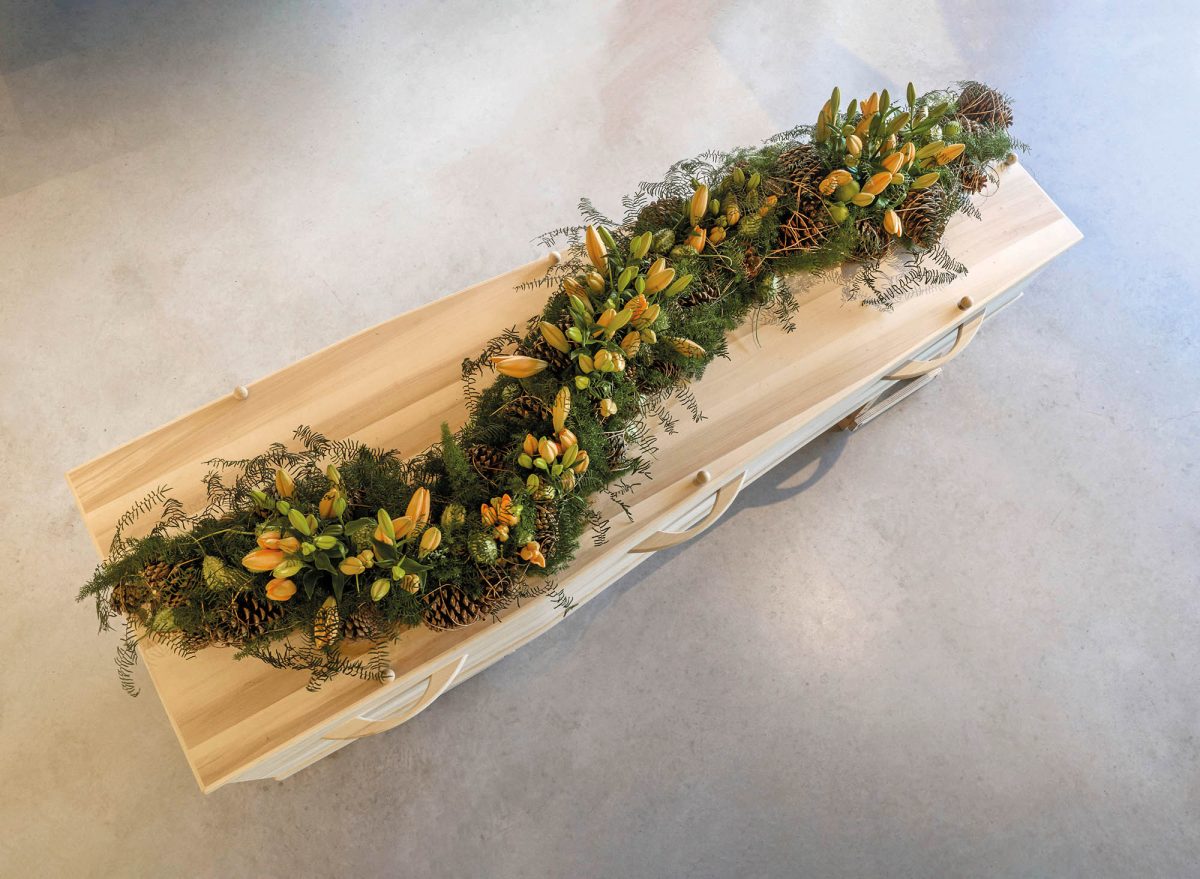
Two Oasis BioLine BioWave forms on the wooden box support the floral arrangement. Short wooden sticks have been inserted into drilled holes. Biodegradable Oasis BioLine twine runs from stick to stick, forming an open framework with pinecones wedged between them. The orange flowers of Lilium ‘Menton’ contrast with the tones of the wood and twine. Whole stems of Asparagus densiflorus are woven through the structure. Fresh and dried Gleichenia polypodioides (coral fern) add varied textures and soften the transition to the lid. The visible structure is thus a fully integrated part of the design.
Without a trail
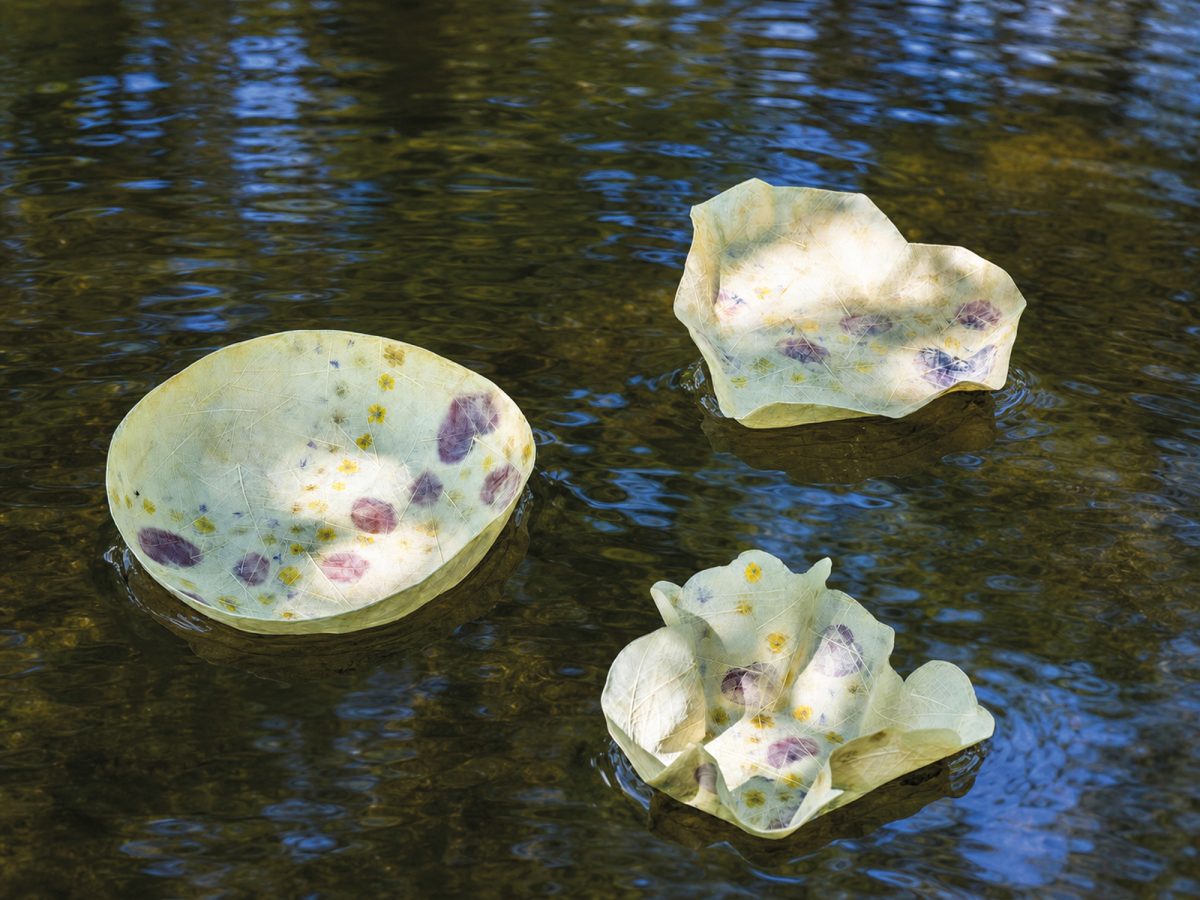
This temporary, floating memorial is made entirely of plant-based and biodegradable materials: skeleton leaves, dried flowers, and homemade natural glue made from flour.
As a symbolic gesture of remembrance and letting go, the object is placed on the water. It floats there for a while, after which it slowly absorbs water, sinks, and breaks down naturally. Here, transience does not represent loss, but rather forms an essential part of the design: something beautiful may exist temporarily and then return to nature.