
Calla in the Lead Role
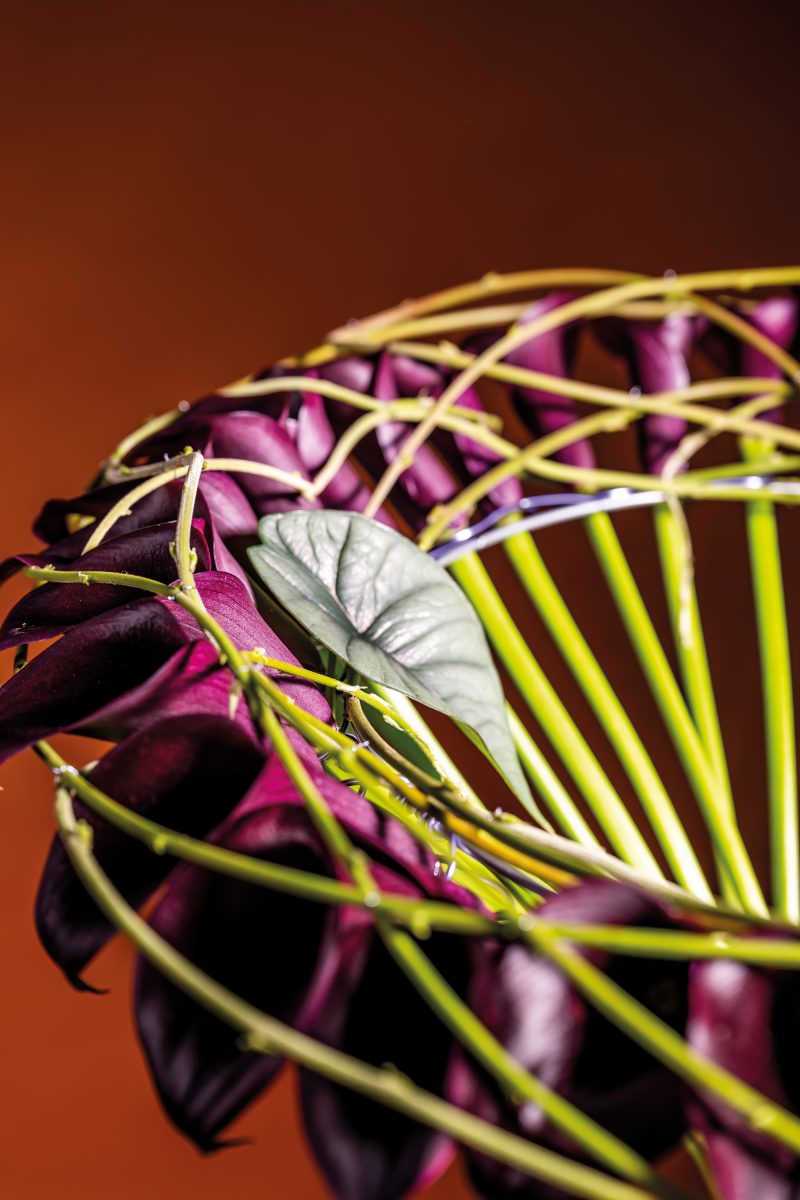
This bouquet features a single flower variety: Zantedeschia ‘Cantor,’ an almost black calla lily. Both its dark color and the fact that this calla grows outdoors in the field during the fall make it ideal for an autumn bouquet. The base is a metal ring to which small rings have been twisted using purple aluminum wire. Each stem passes through one of these openings and is secured individually, so that the flowers remain in place while being arranged and can be oriented outward. This requires precise placement: in the clear, bold form, every flower is visible. Wisteria tendrils follow the wreath and add movement, while Alocasia leaves provide points of calm within the composition.
Lanterns as eye-catchers
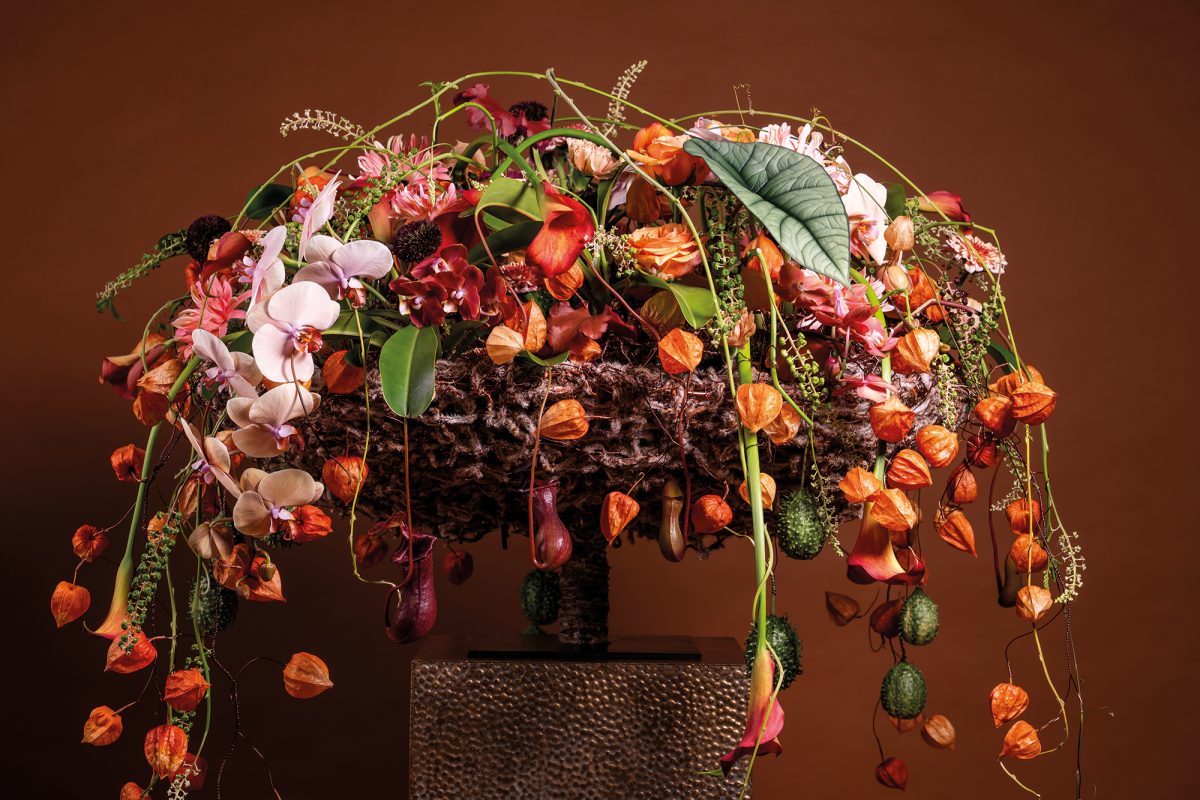
With its generous size, this arrangement is intended to be an eye-catcher in the store window. Dried lanterns remained in stock for a long time at Hanneke’s and were a popular item in fall displays. Here, they are mounted on 1-millimeter brown aluminum wire, so they can be positioned precisely within the composition and reused later. The bowl rests on a large pin with dried roots; this base is also reusable. The fresh flowers are arranged in tubes, though Oasis can also be used effectively in a plastic bowl. Crimson berries, chrysanthemums, fruits, and lanterns set the autumnal tone. Phalaenopsis, germini, Alocasia leaves, roses, vines, and Nepenthes add other shapes and lines.
3D Fall Bouquet
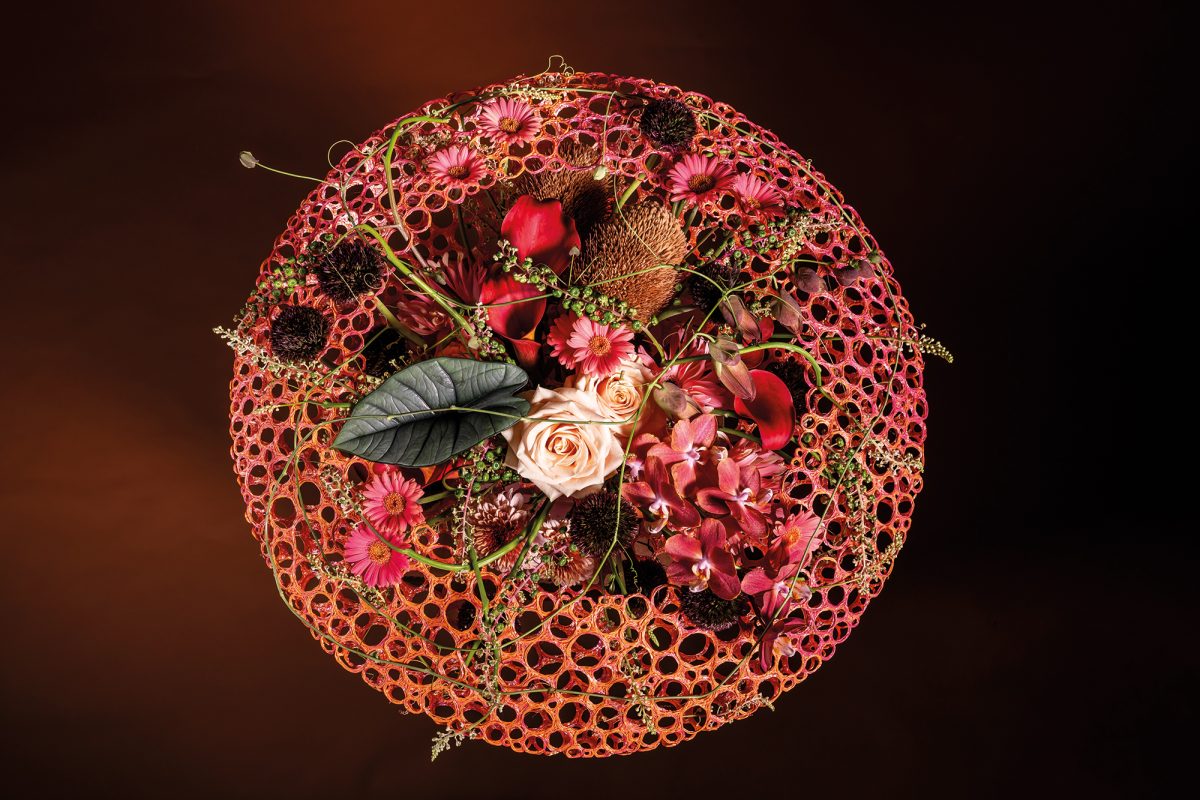
The base of this bouquet was drawn with a 3D pen on a dish lined with aluminum foil. Two separate dish shapes were stacked on top of each other, creating a three-dimensional frame. The openings guide the placement of the flower stems and give the bouquet structure without requiring many extra flowers. The two-tone filament complements the fall color palette. Cranberry, chrysanthemum, Phalaenopsis, germini, Alocasia leaves, rose, and various vines fill the frame. The reusable base is also ideal for rotating corporate arrangements.
Growing freely on the box
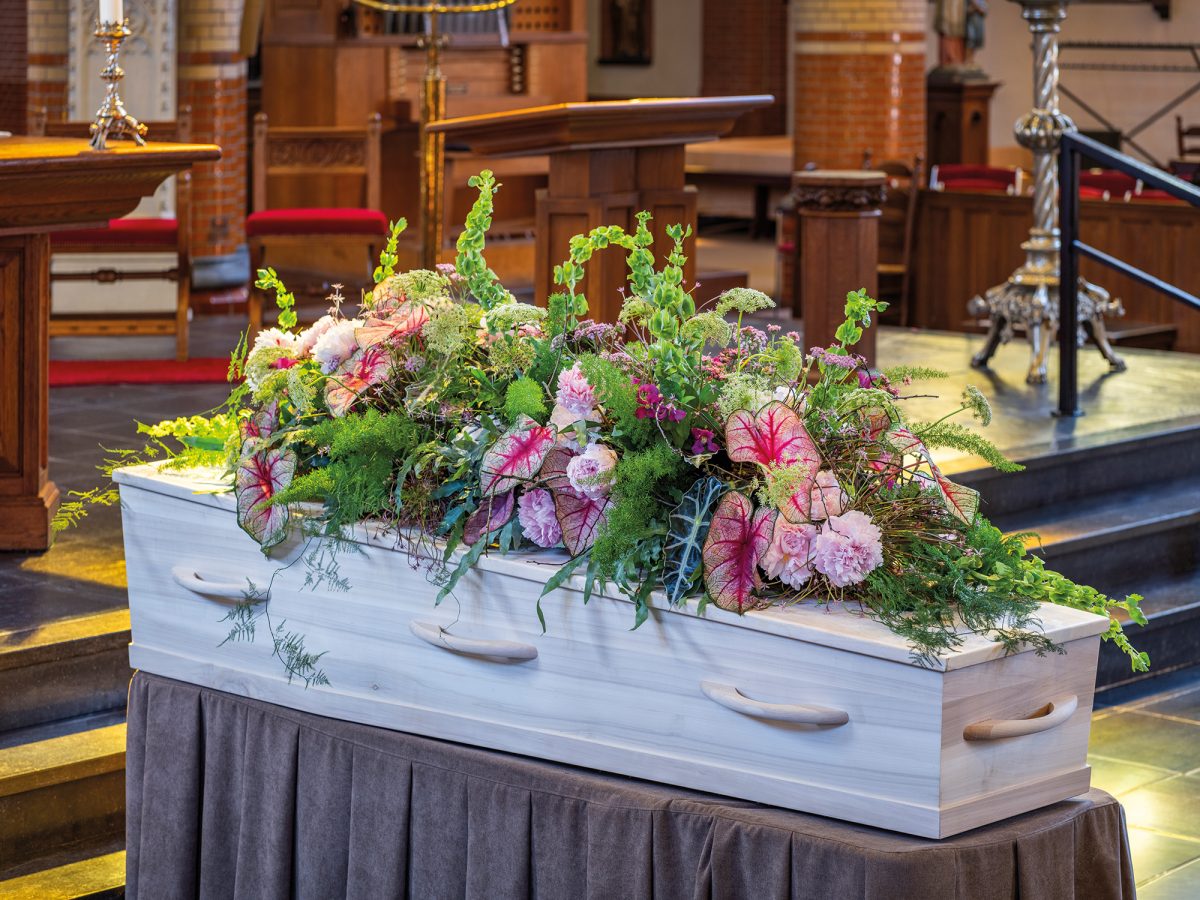
This casket arrangement is, of course, arranged loosely, creating a casual, botanical look. The foliage of Caladium and Alocasia ‘Polly’ provides bold shapes, contrasting with the delicate textures of Asparagus setaceus and Asparagus densiflorus. Low-growing Allium schubertii introduces a graphic interplay of lines to the base; Moluccella laevis, also known as Irish bells, adds vertical lines. The grayish hue of the Asplenium fern complements the casket lid. Panicles of Ammi majus and the soft pink flowers of Paeonia ‘Sarah Bernhardt’ soften the composition. A single flower of Clematis ‘Amazing Kyiv’ provides a subtle finishing touch.
Rhythmic
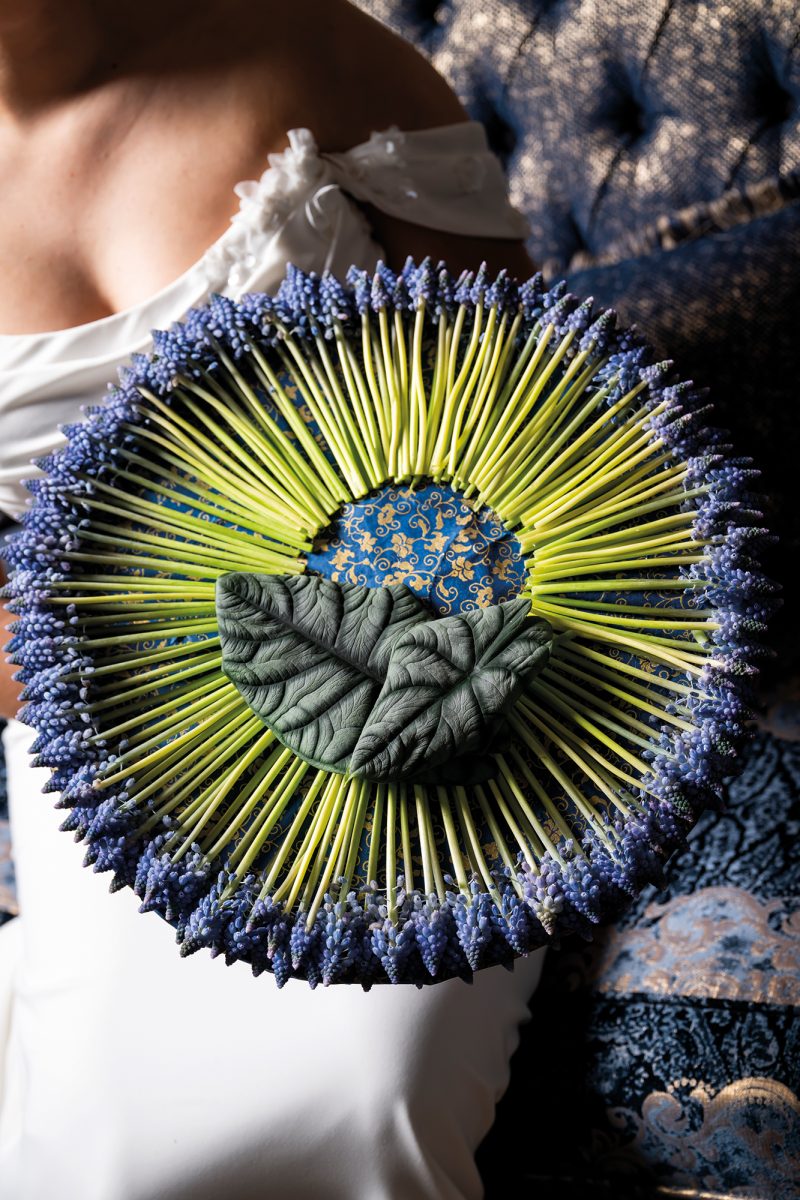
The base of this piece consists of a semicircular, decorative form made of dry Oasis (sec) with a plywood top. The handle is constructed from multiple wires and wrapped in silver-colored wire.
Torn, handmade paper in deep blue hues is applied layer by layer to the mold using wallpaper paste. This creates a layered surface where texture, color, and movement blend together, enhancing the decorative contours. On top of this base, a hundred blue Muscari flowers are carefully stacked and glued into a rhythmic, circular composition. A few accents of Alocasia leaves add a striking contrast.
Christmas wreaths
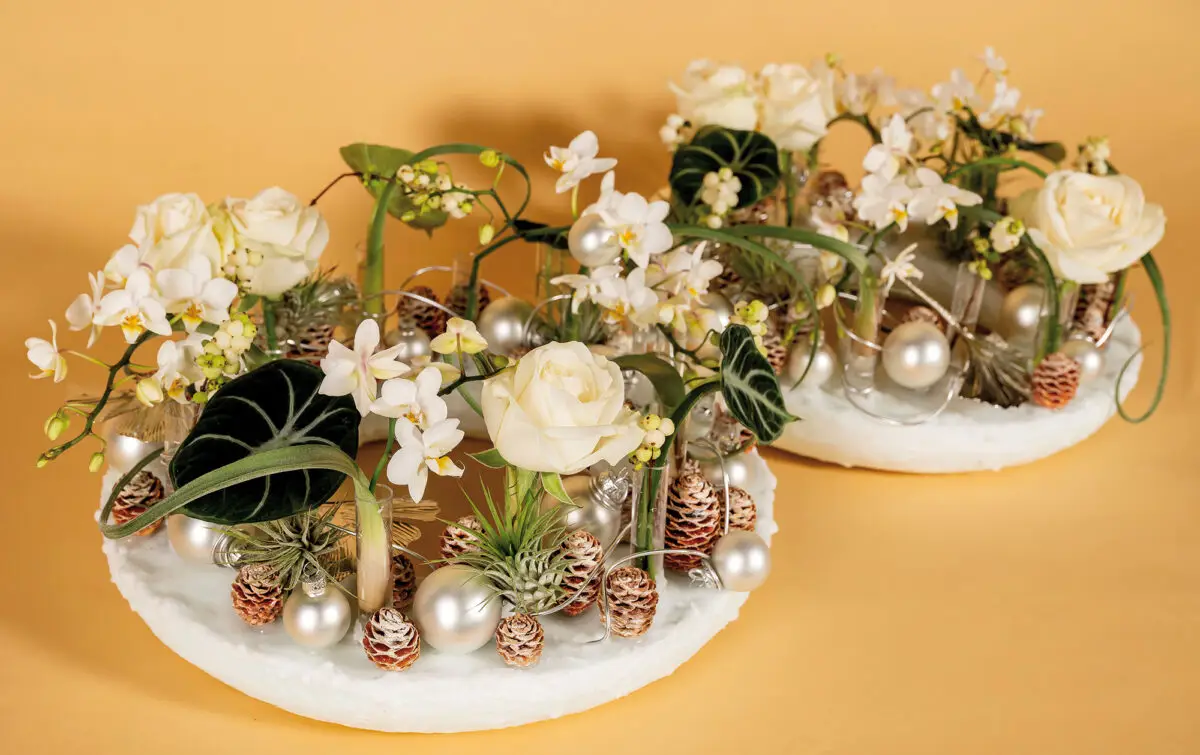
Polystyrene wreaths were used as the base for the Christmas wreaths.
Holes were first drilled into these
to insert plastic tubes. After that,
molten candle wax was applied. The materials
were glued or placed on silver-colored aluminum wire
that was inserted through the candle wax into the polystyrene.
Roses,
orchids, Tillandsia, snowberries and
Alocasia leaves were placed in the tubes.