
Challenging purple
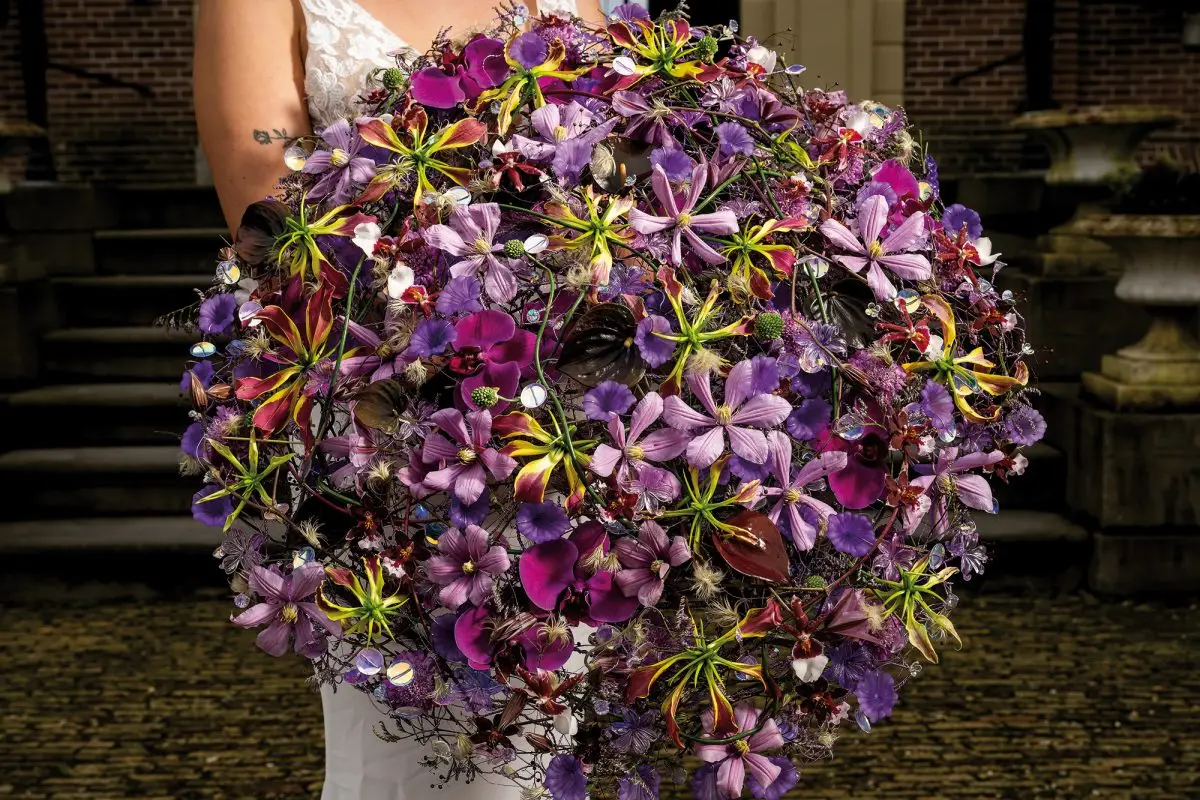
Purple is not often the first choice for people ordering a bridal bouquet, but it is very beautiful. This generous bouquet is full of details such as various purple plastic flowers, beads and other items that have been placed on beautiful branches of purple aluminum wire (1 mm). Different types of flowers have been incorporated in a matching color palette: Talinum 'Long John', Clematis, Gloriosa, Phalaenopsis.
Love tendrils
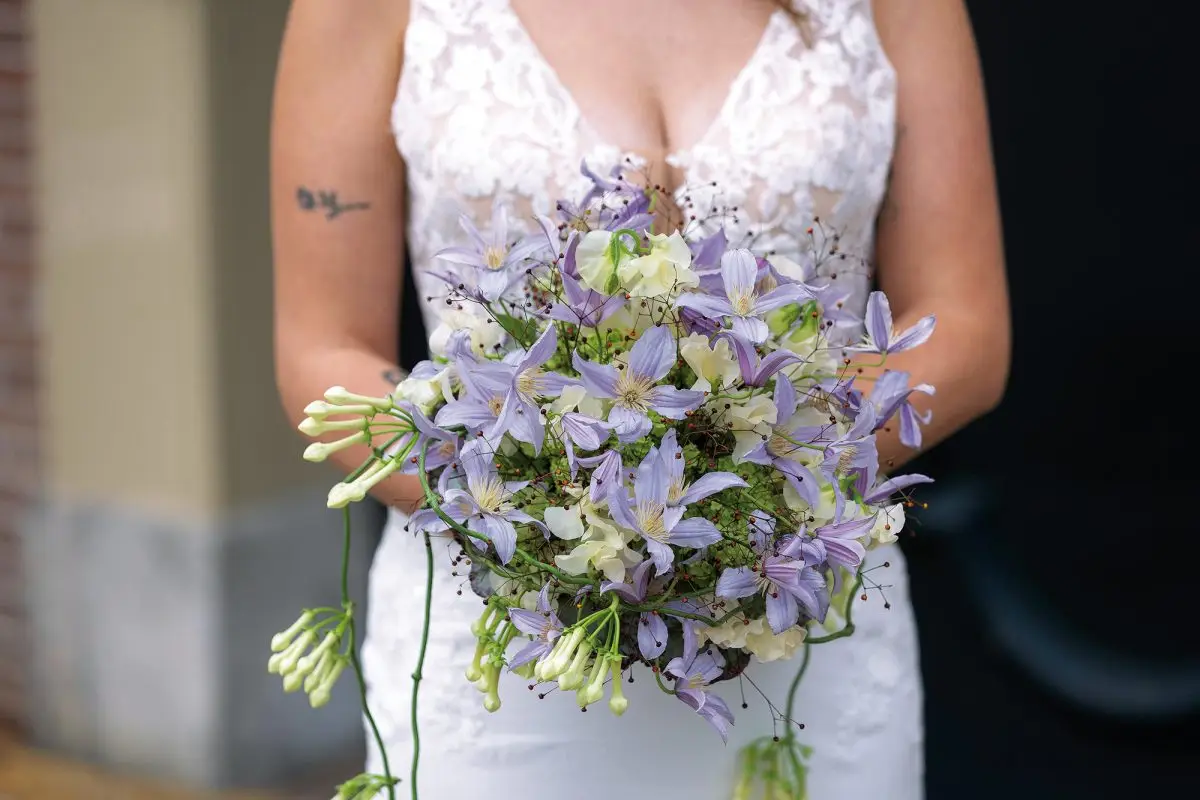
The base for this bridal bouquet is an Oasis bridy bridal bouquet holder. The insertion technique was used. The chosen flowers are Clematis, Lathyrus, Viburnum, and Stephanotis bridal flower tendrils in cream and lilac shades. Together with the fine structure of Talinum 'Long John', it becomes a graceful and refined whole of love vines.
New classic
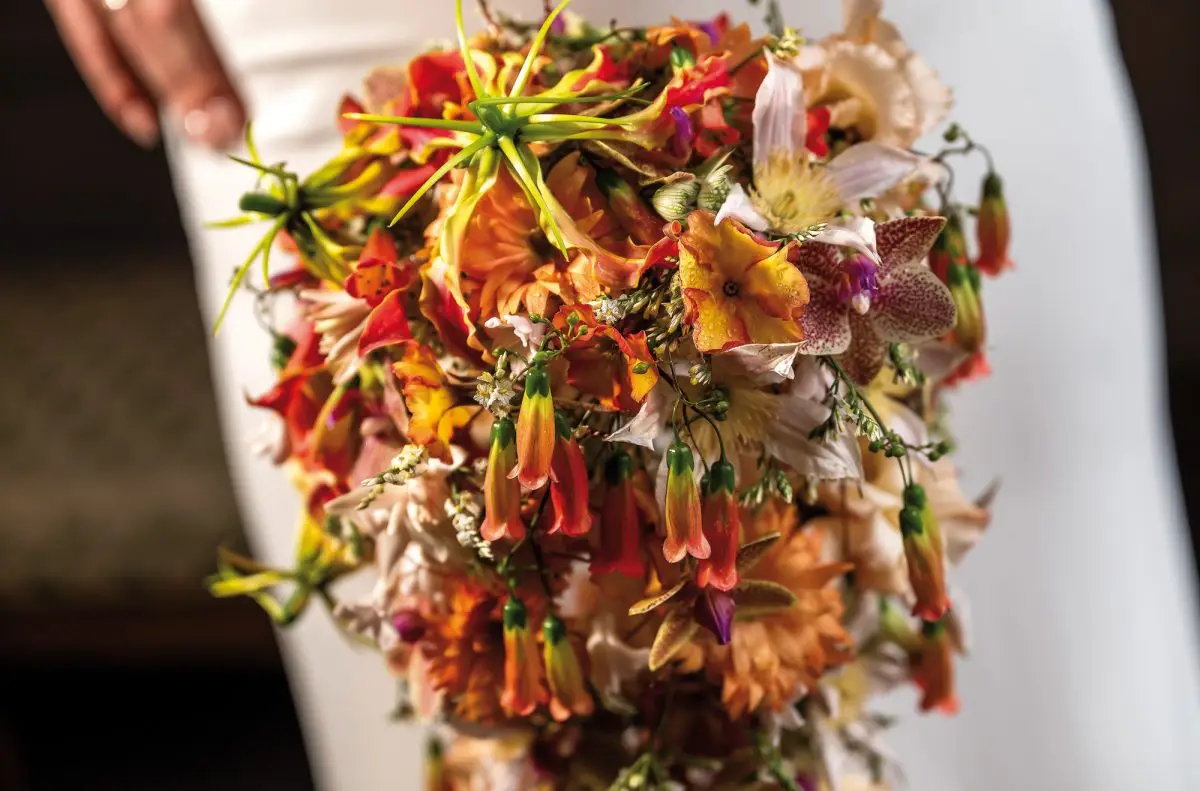
A classic teardrop shape is executed in cheerful colors, with the green being reduced. The wearing style is relaxed and nonchalant. The hanging Kalanchoe flowers give the bouquet extra dimension and movement. Flowers used: hyacinths, Clematis Amazing Kansas, lisianthus, Ranunculus, Primula, Phalaenopsis, Limonium and Gloriosa.
Intertwined
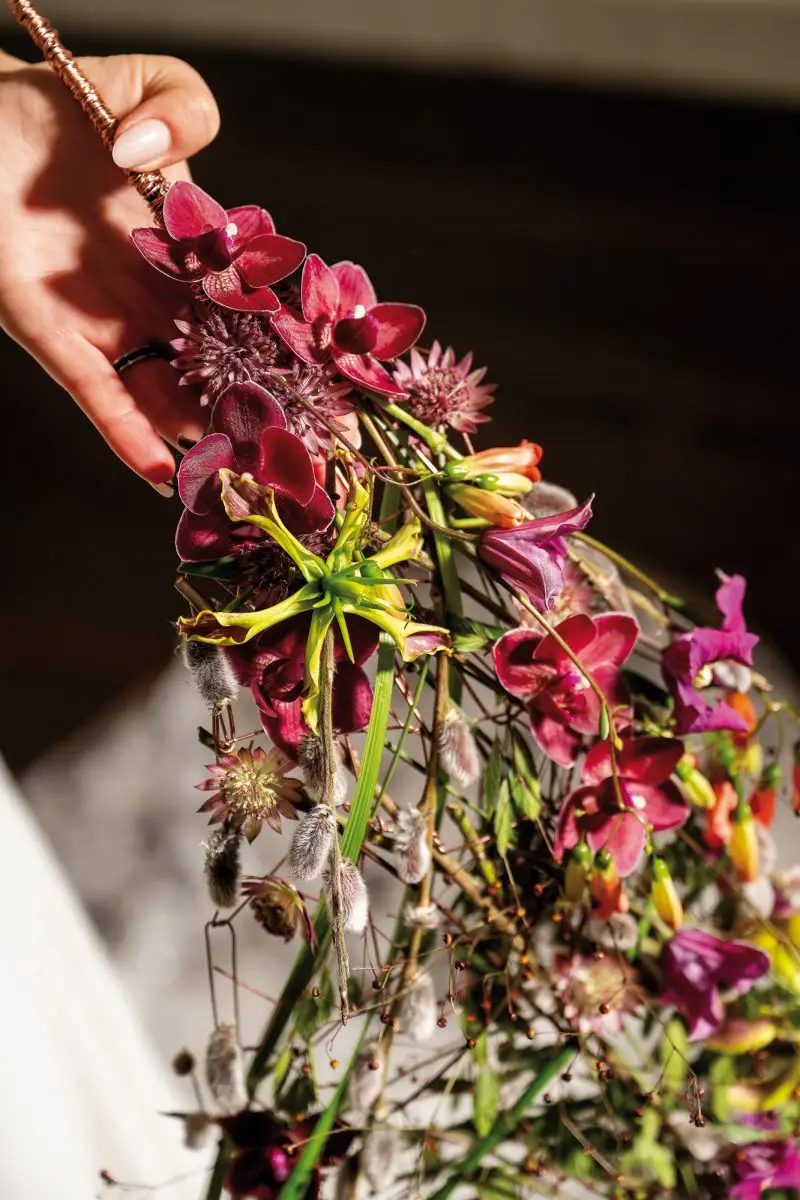
In a conical shape, made from a base of 1.4 mm wire, a multitude of flowers are horizontally interwoven, with alternating transparency and compaction. Flowers used: Chasmanthium, Talinum ‘Long John’, Astrantia major ‘Roma’, Gloriosa ‘Fifty Shades’, Clematis Amazing Kyiv, Salix, Kalanchoe ‘Mirabella’, Phalaenopsis multiflora ‘Red Lion’.
Wedding Blue
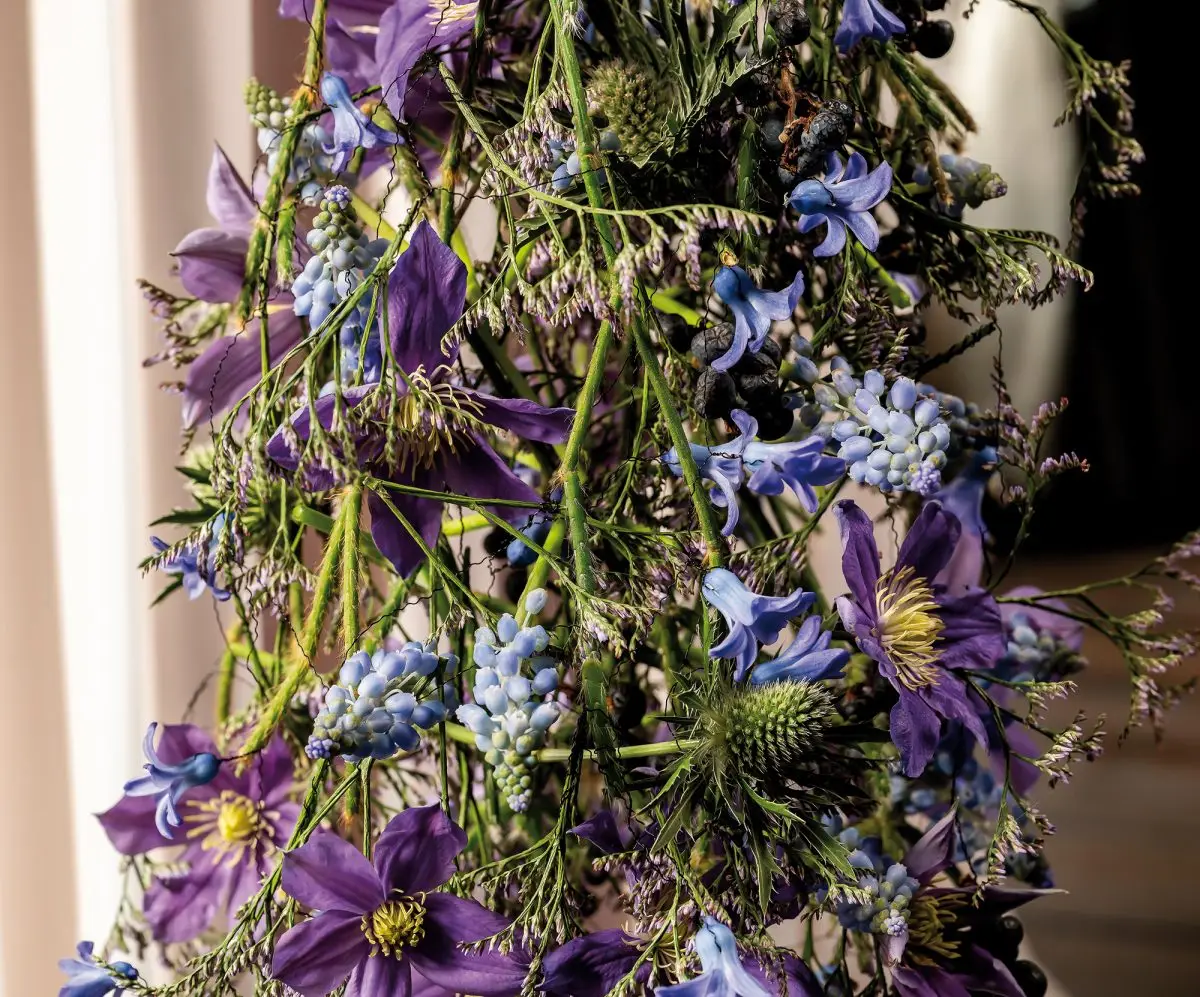
Blue stands for loyalty and chastity, an appropriate color for a bridal bouquet. A hanging bridal bouquet has been created between two Kalanchoe leaves with garlands of various flowers. The base is Limonium 'Skylight', but Clematis Amazing Sofia plays the leading role. The processed bright blue Muscari and hyacinth nails provide sparkling accents.
Personality
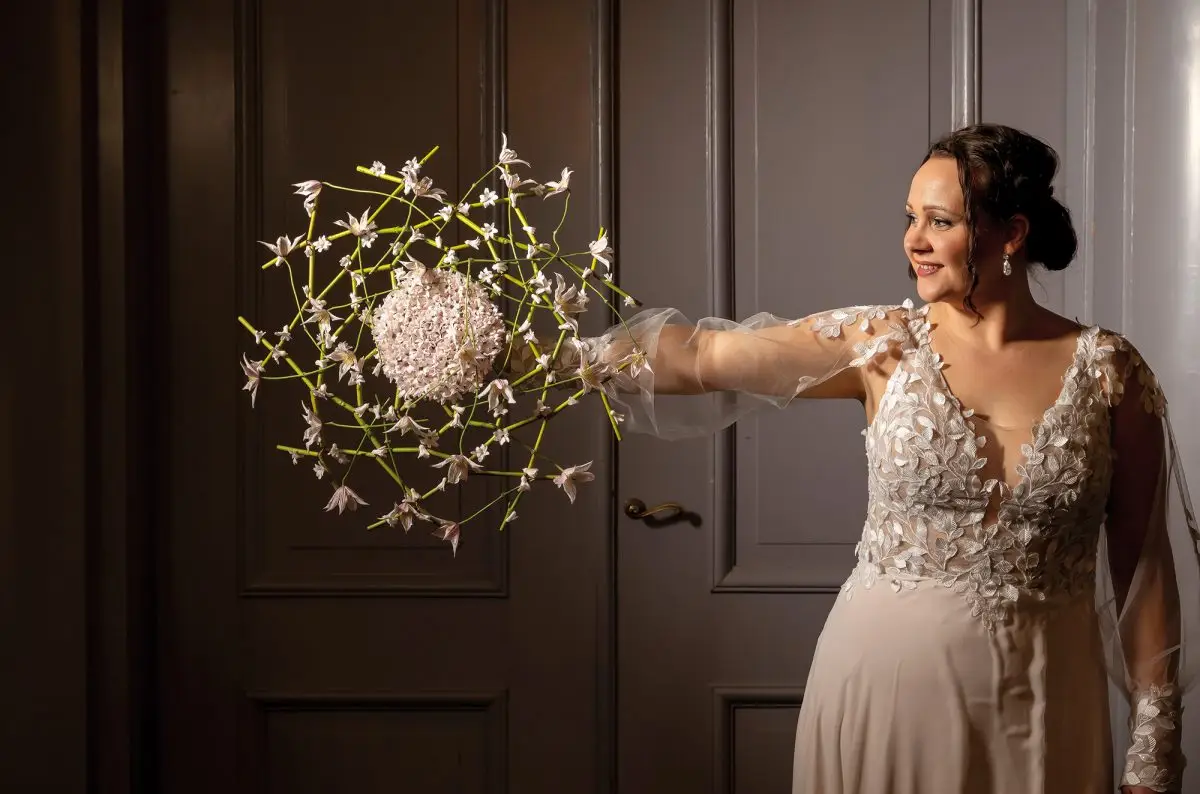
Aluminum wires are tied to a wooden base. These are knotted in a star shape with Cornus branches in between. A base of glued white hyacinth nails is made from the center – these extend over the entire frame. Flowers of Clematis Amazing Kansas are glued onto the frame.