
Transparent spring wreath
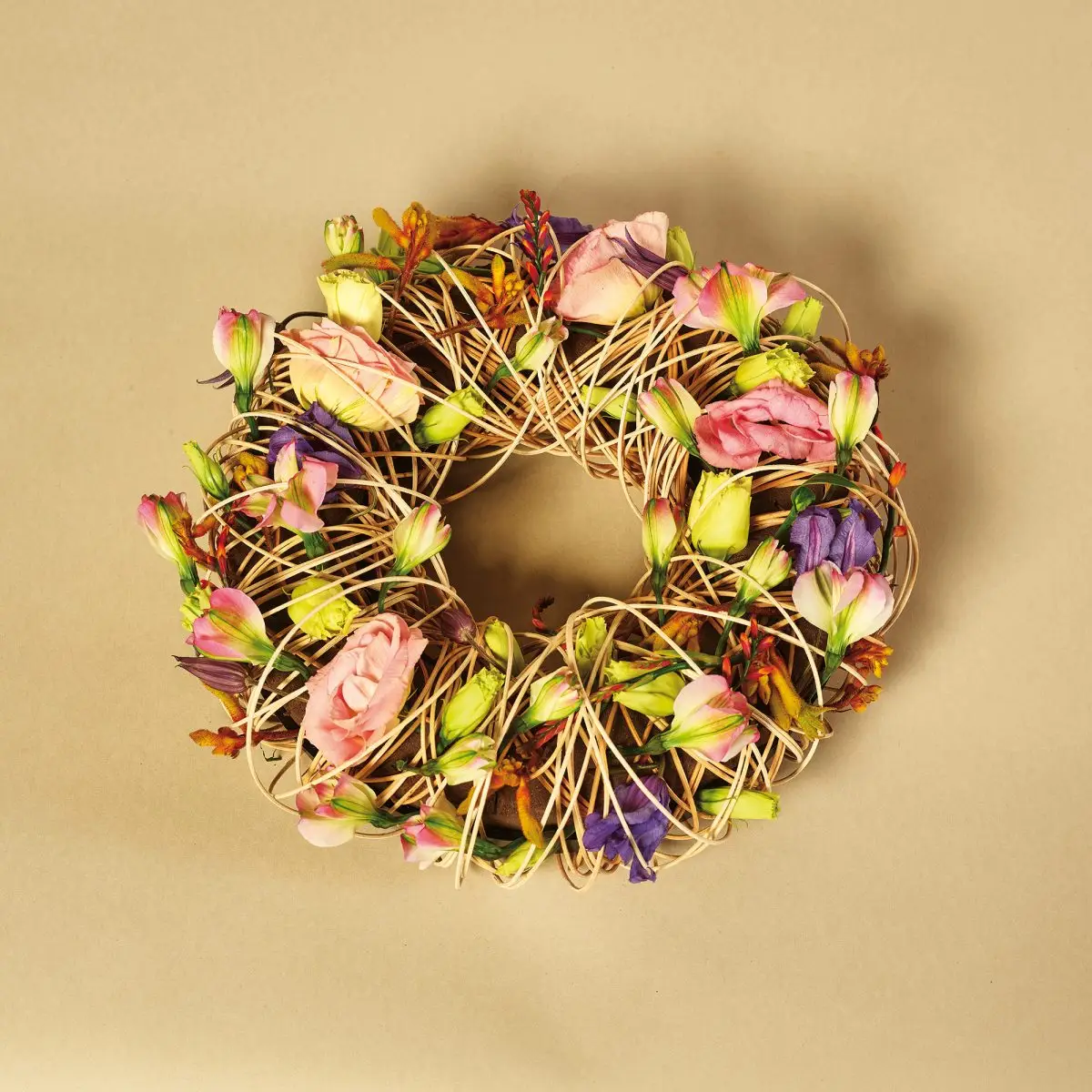
The base of this transparent spring wreath is an Oasis Floral Foam Bio ring wrapped with rattan. The basic filling of the wreath is formed by Eustoma in light green and pink shades and light pink Alstroemeria. Yellow-orange Anigozanthos, Crocosmia and purple Clematis give extra color accents. After processing the flowers, the wreath is loosely wrapped with rattan a number of times.
Circle of blue grape hyacinths
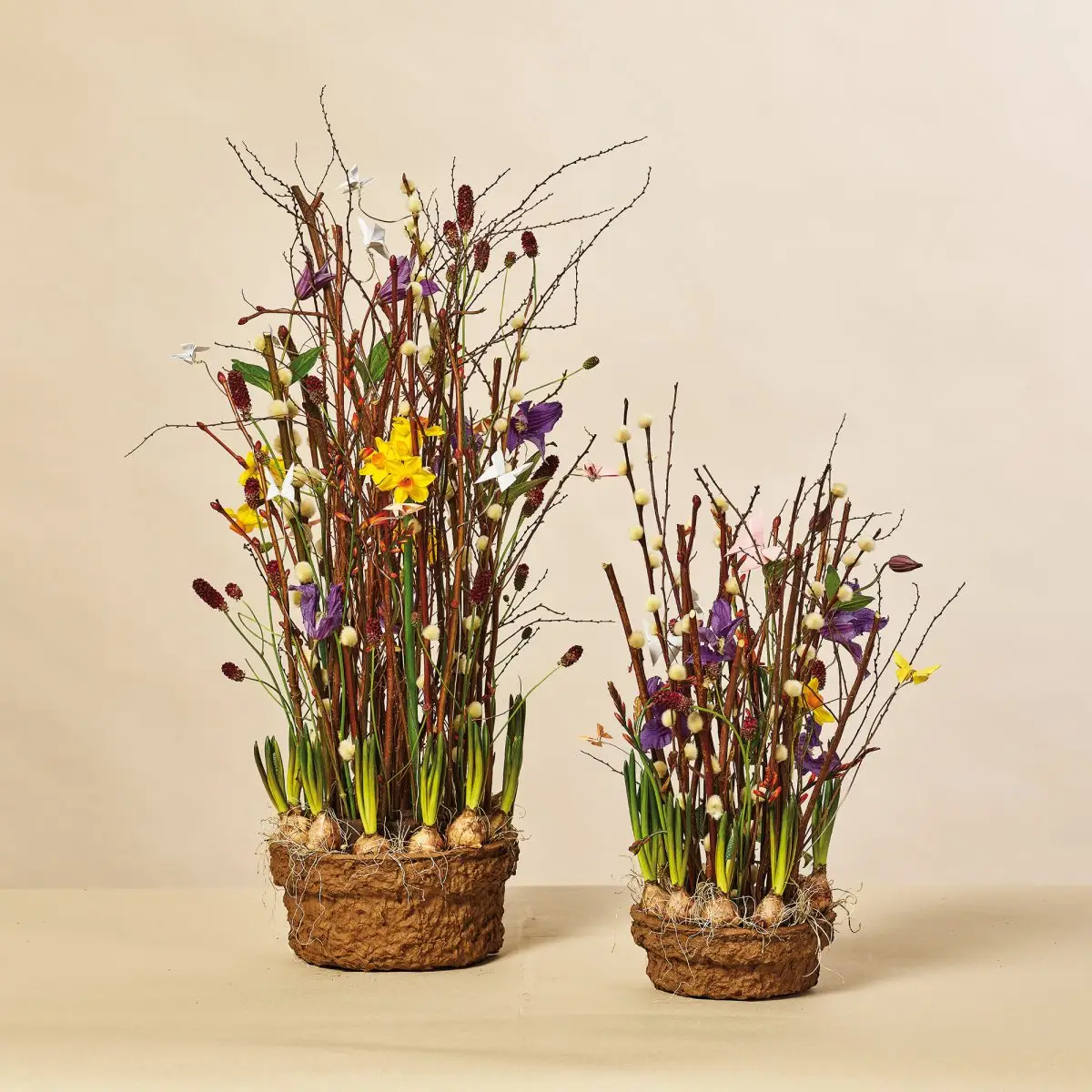
First, two different sizes of Oasis Biolit Bio dishes are filled with branches, after which the flowers are incorporated. Floral materials used: Narcissus, Clematis, Crocosmia, Sanguisorba and Salix. The edge of the floral foam is finished with Muscari bulbs that are clamped between the floral foam and the edge of the dishes. Butterflies folded from paper provide an extra spring feeling.
Wooden flower
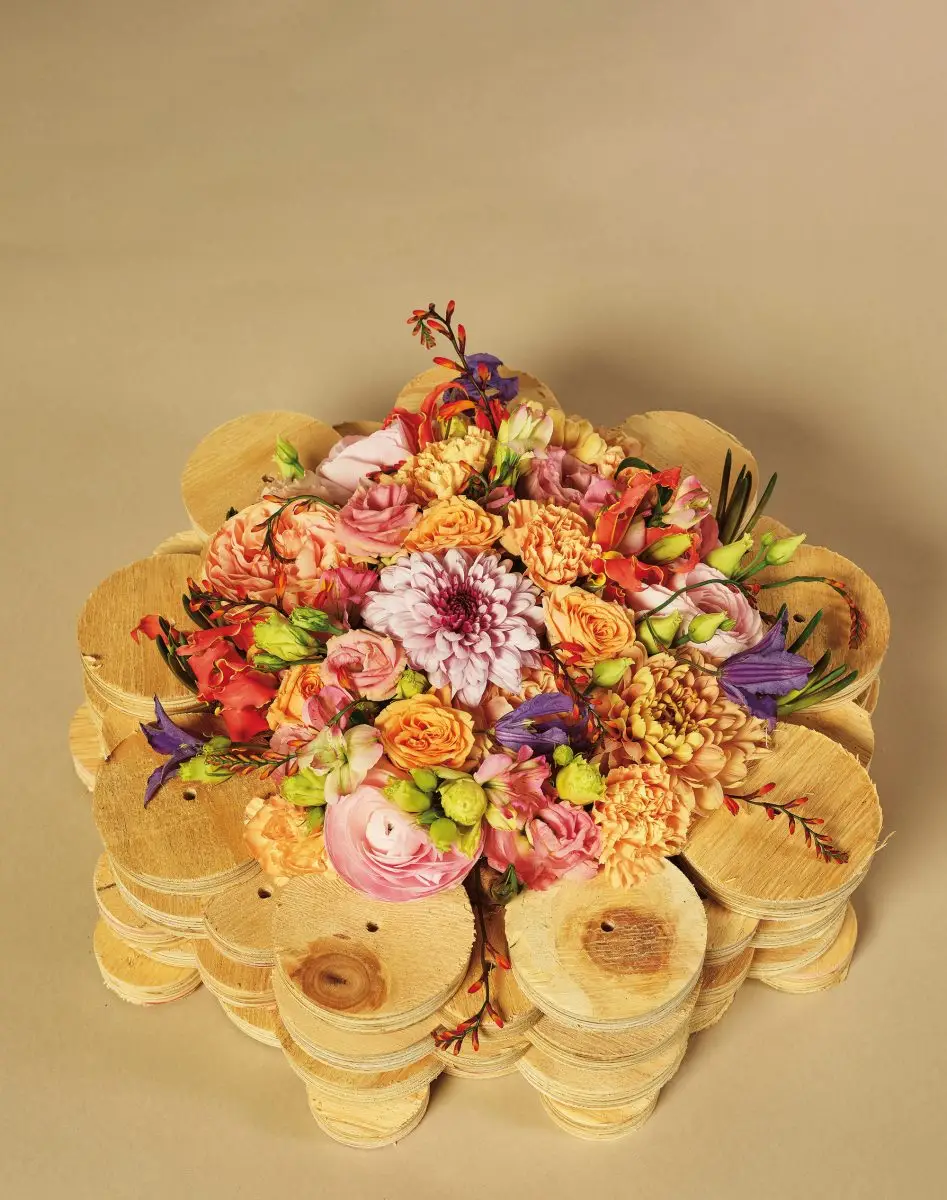
By stacking several wooden discs in a ring shape around an Oasis Floral Foam Bio cylinder and gluing them together with hot glue, a fun and reusable base is created. Before use, the floral foam is wrapped in foil, after which it is slid into the center of the base. An assortment of pastel-colored flowers, Chrysanthemum, Ranunculus, Rosa, Dianthus, Crocosmia, Clematis, Eustoma, Gloriosa, provides a fresh spring look.
Sustainable spring
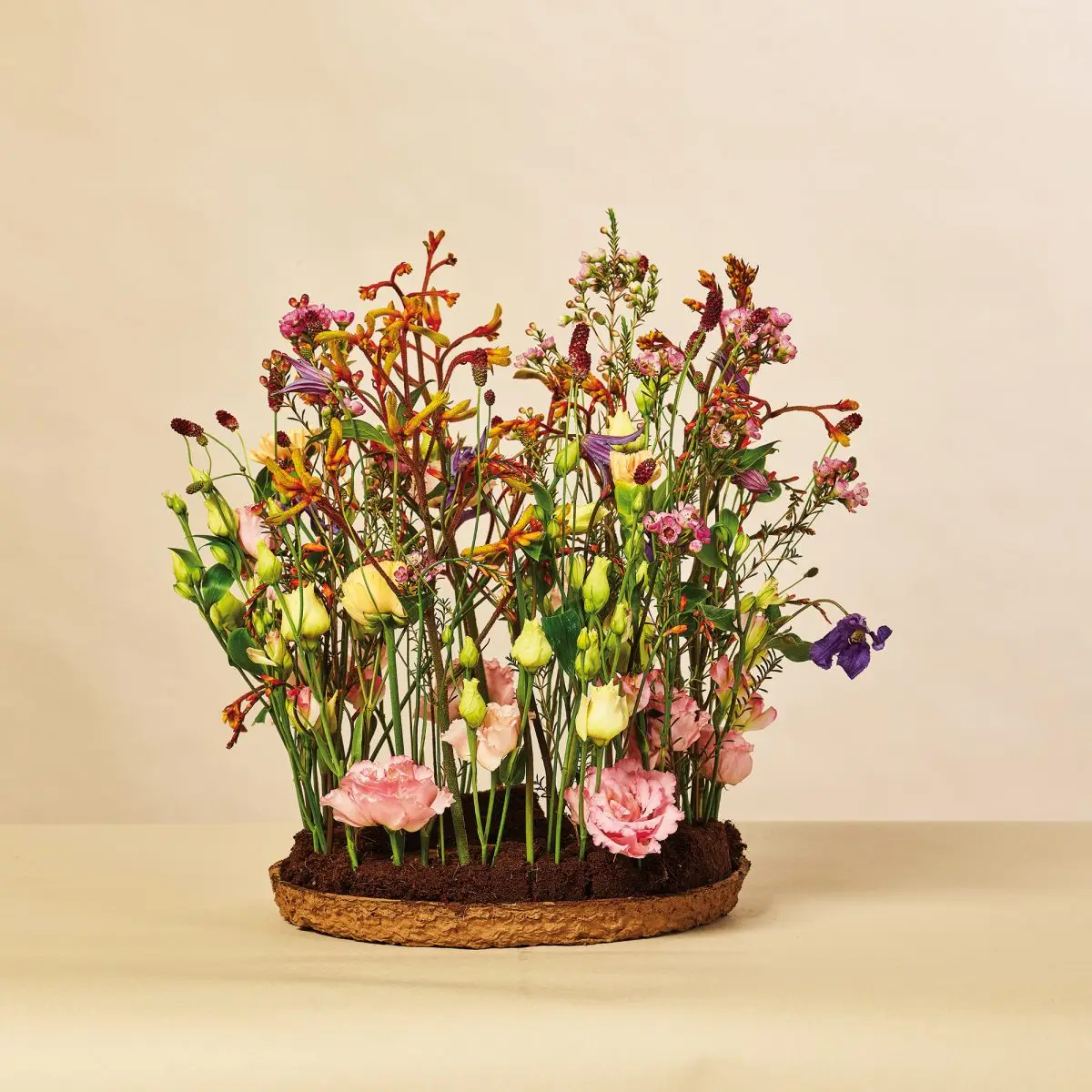
The base of this arrangement is an Oasis Biolit Bio bowl filled with Oasis TerraBrick Floral Media. The base is playfully and 'wildly', in a natural-looking way, filled with flowers: Clematis, Dianthus, Eustoma, Tulipa, Gloriosa, Anigozanthos, Sanguisorba. A special feature of this arrangement is that it is completely biodegradable.
Spring garden
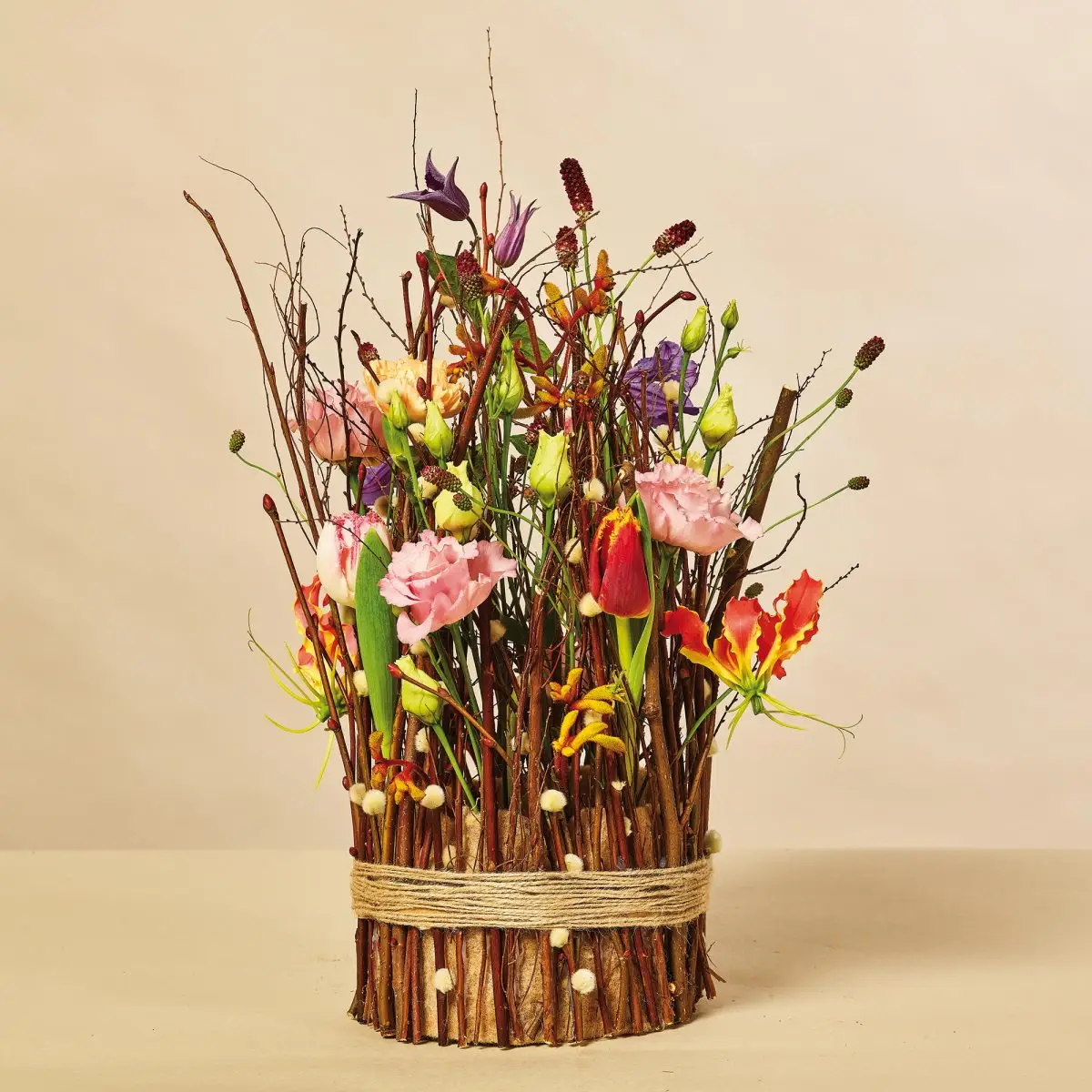
For this arrangement, an Oasis Floral Foam Bio cylinder is wrapped in foil and then covered with felt – a quick way to create a practical base. Branches are glued onto the felt, which are then further secured with rope. Flowers are inserted between the branches and in the center into the wet floral foam. Floral materials: Eustoma, Tulipa, Clematis, Gloriosa, Anigozanthos, Sanguisorba.
Cycle
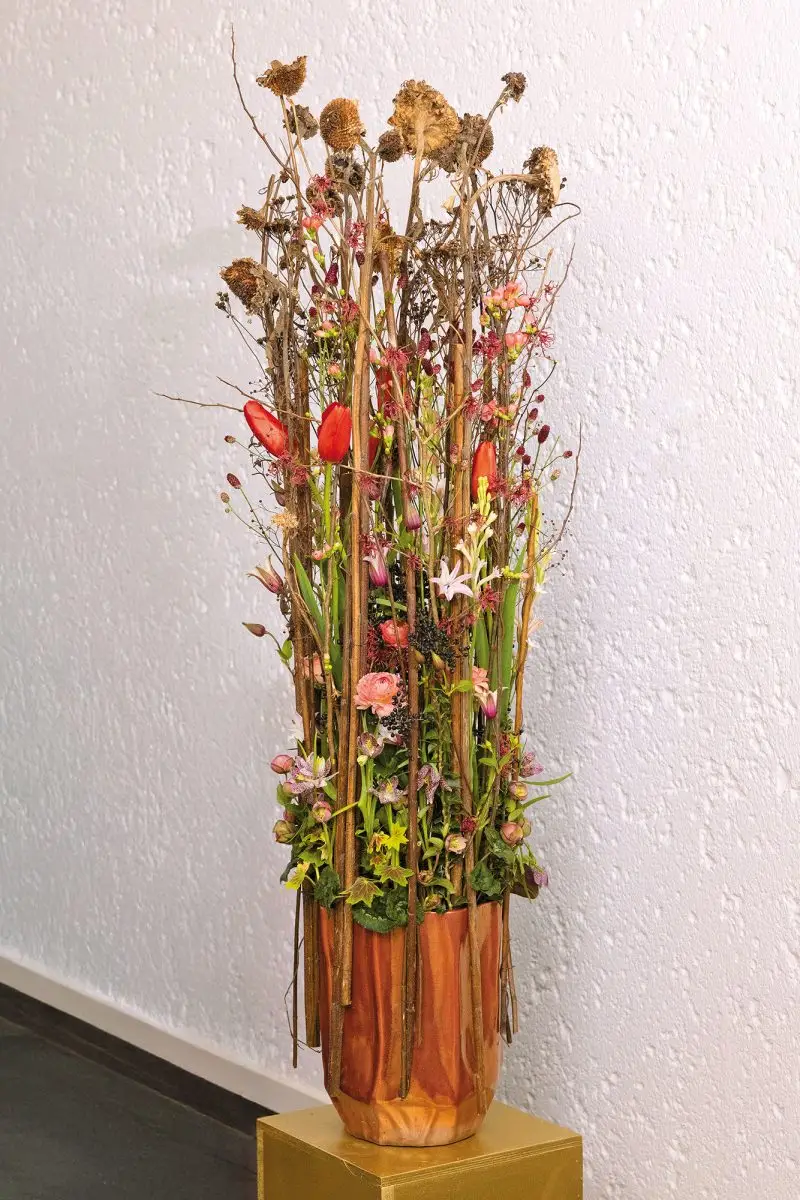
For this base, a vase is three-quarters filled with Oasis Floral Foam Bio for the heavy stems; the upper part of the vase is filled with Oasis TerraBrick for the softer stems and a beautiful finish. The base is made of dried sunflowers and dried roadside flowers from last summer. The tulips, Clematis Amazing Sevilla, Sanguisorba 'Red Dream', Talinum 'Long John', Chaenomeles, Fritillaria meleagris, Geranium, Hamamelis, Helleborus 'Bella Belles', Ranunculus, and Polianthes tuberosa 'grow' through this frame. All materials are arranged in a natural-looking parallel manner.