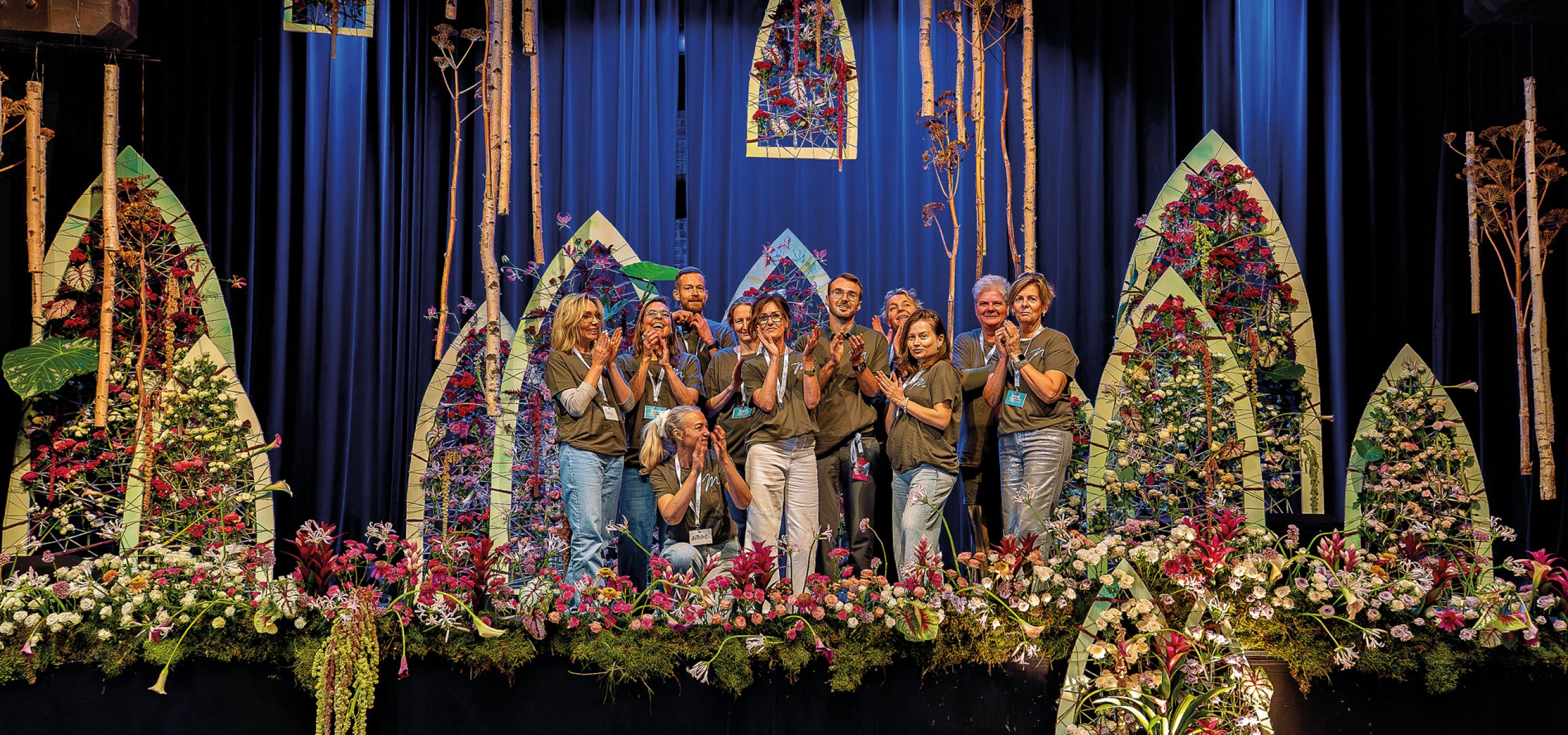
Group photo: Hilde Juressen
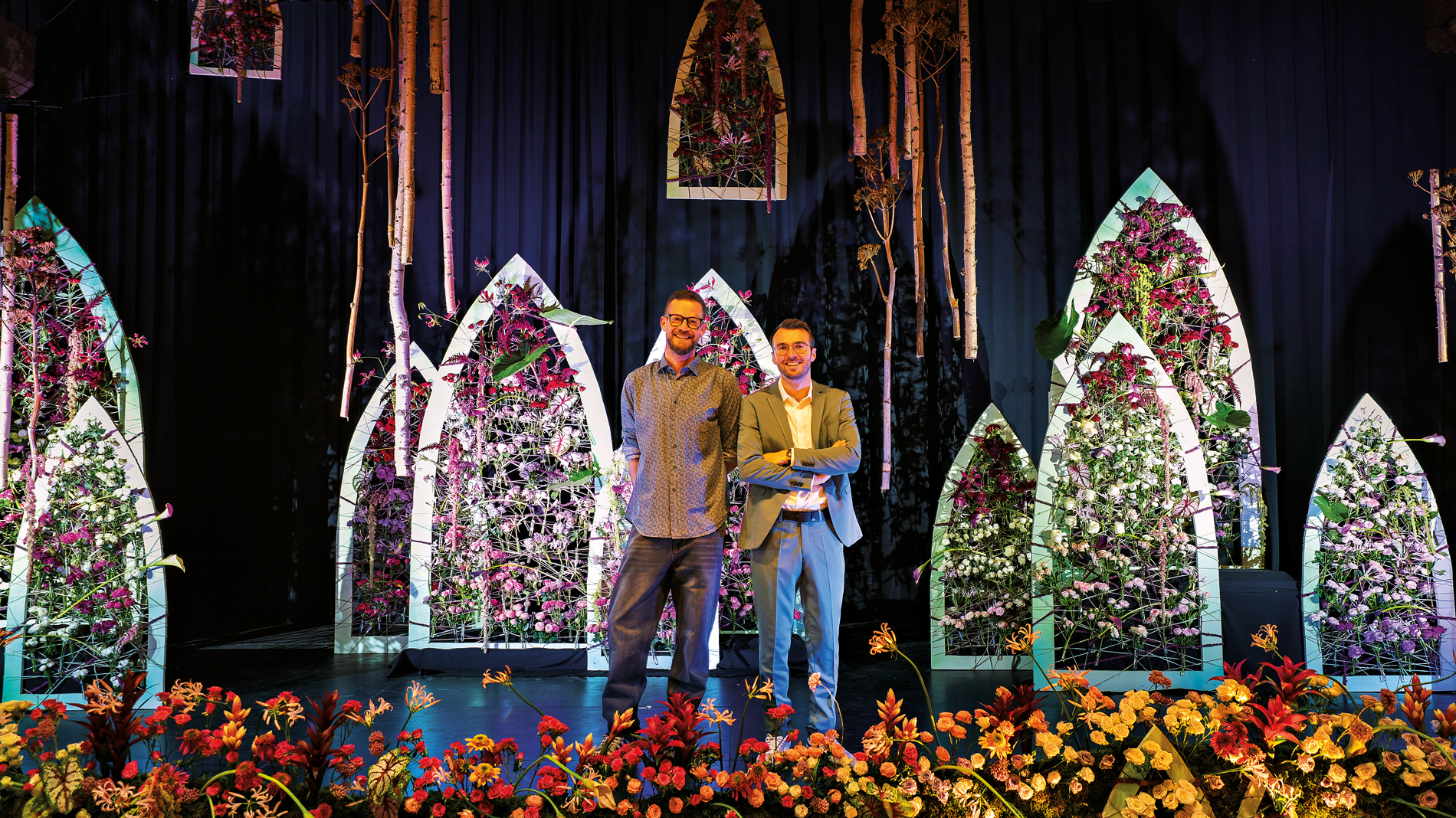
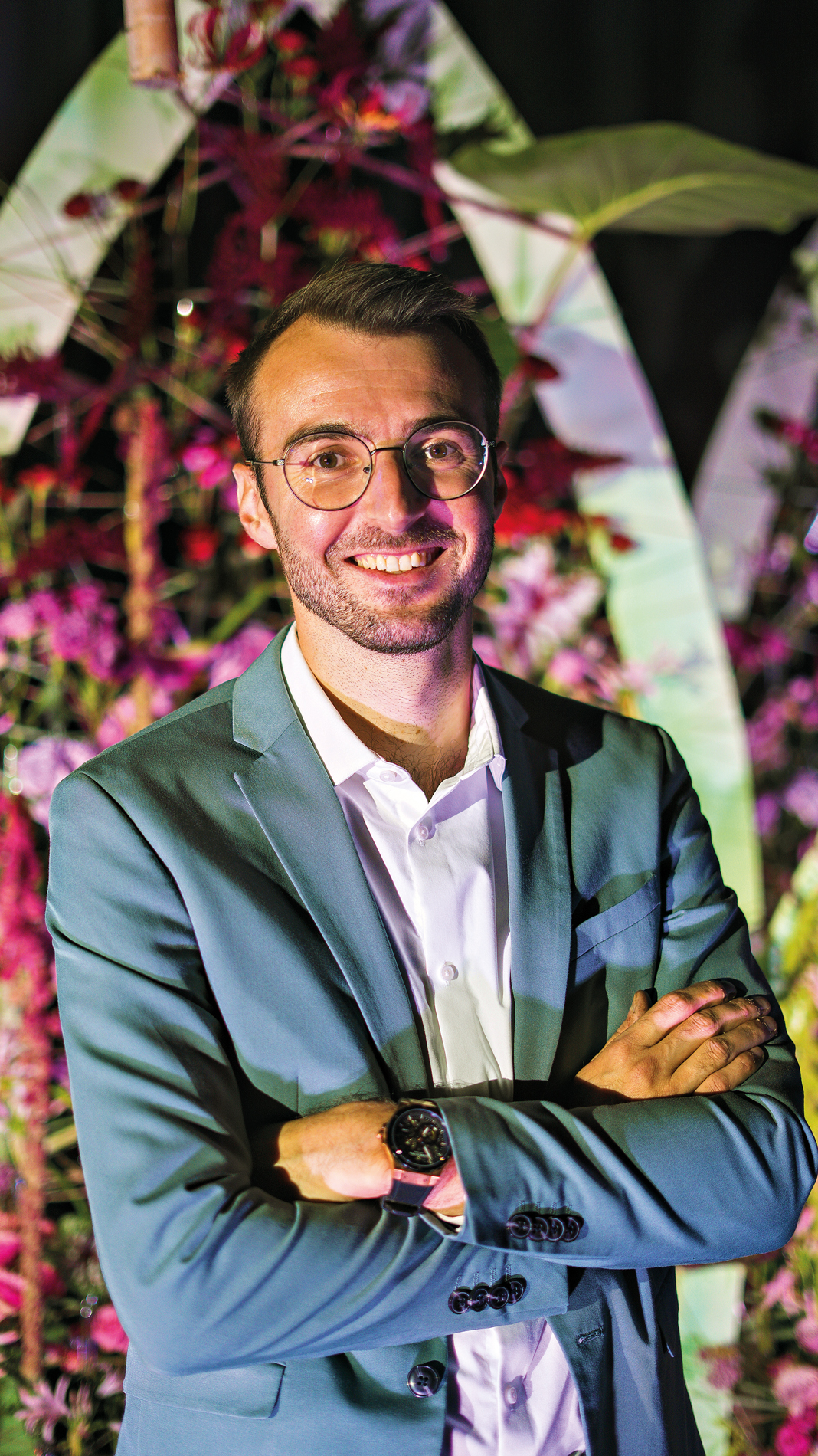
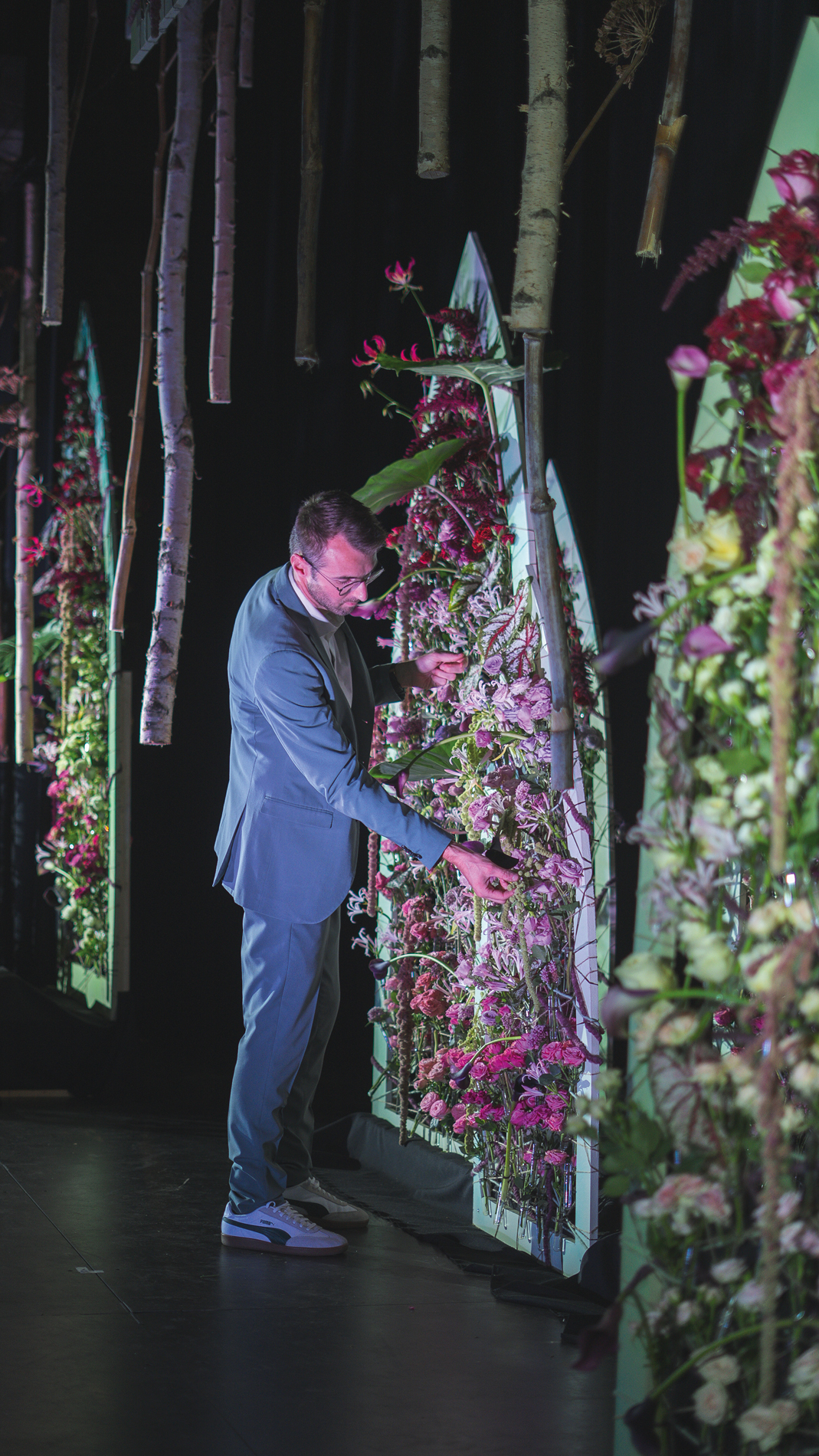
“Ever since I was a child, I’ve been fascinated by the similarities between ancient forests and Gothic cathedrals. When you look up in a forest, the tree trunks become columns, the branches form vaults, and the light filters through the canopy, just as it falls through the stained-glass windows of a cathedral. That resemblance served as the starting point for my entire concept. With *The Cathedral of the Woods*, I wanted to bring these two worlds together and create a living architecture in which nature itself forms the structure.’
Architecture Inspired by Nature
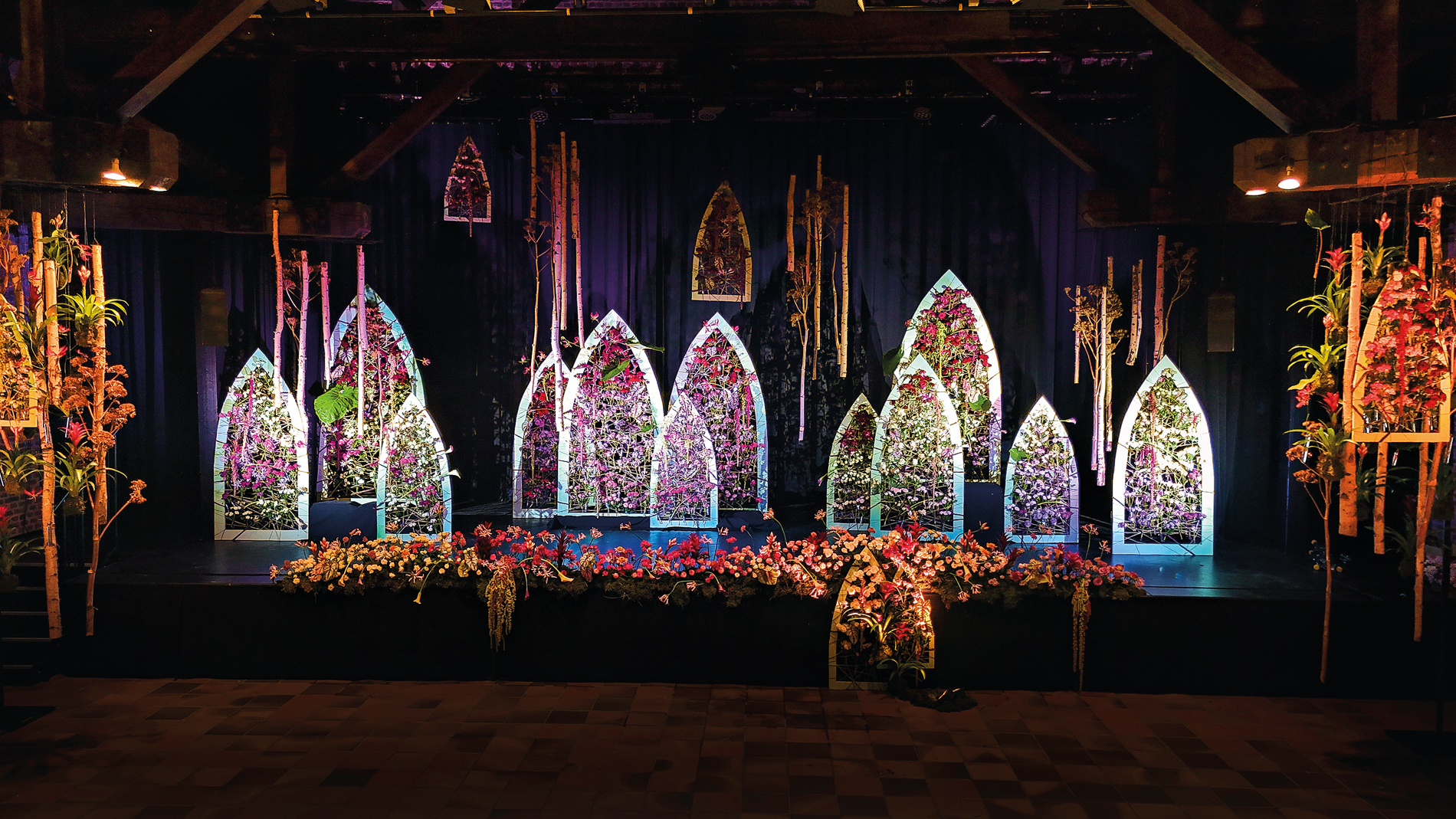
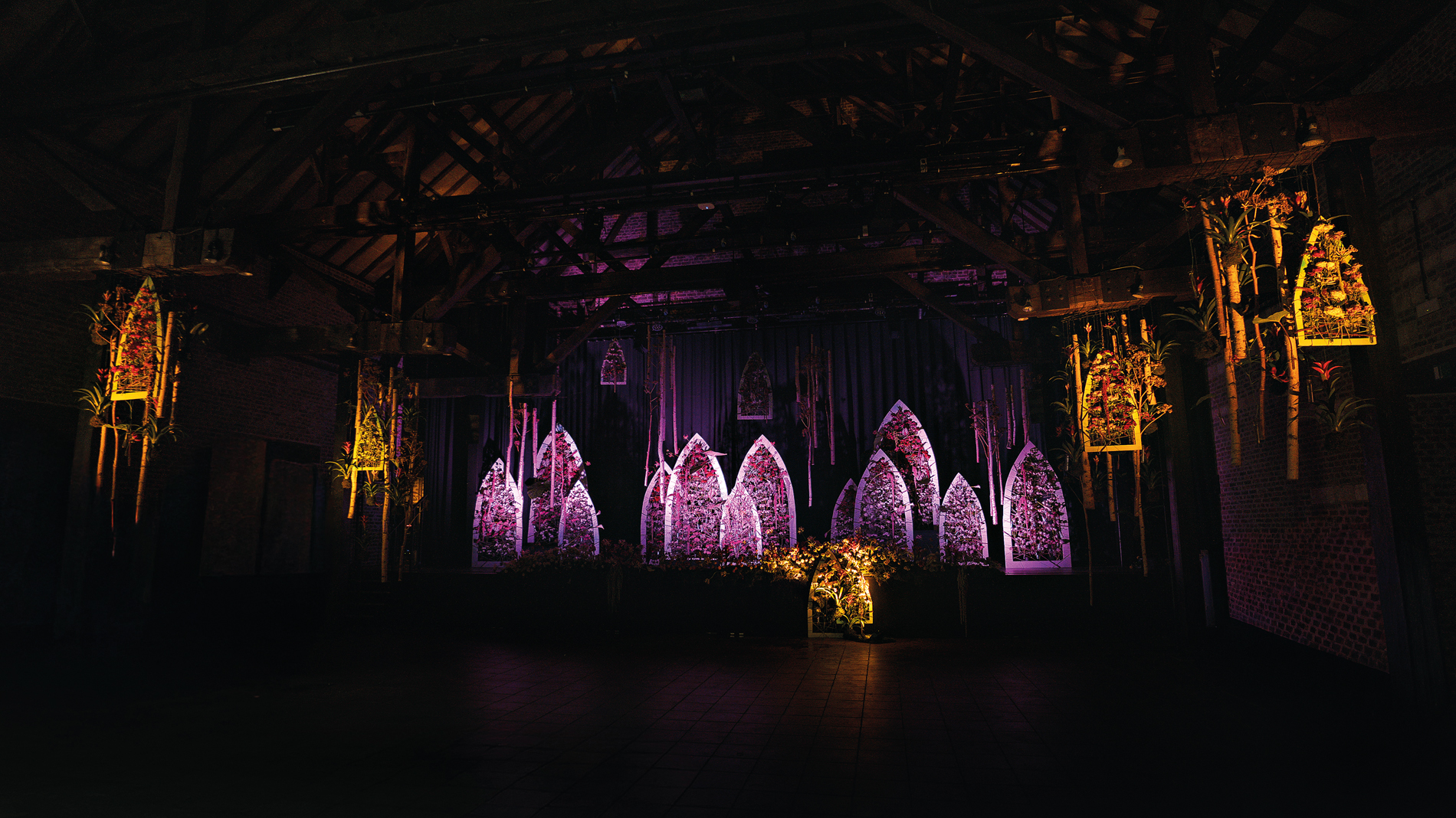
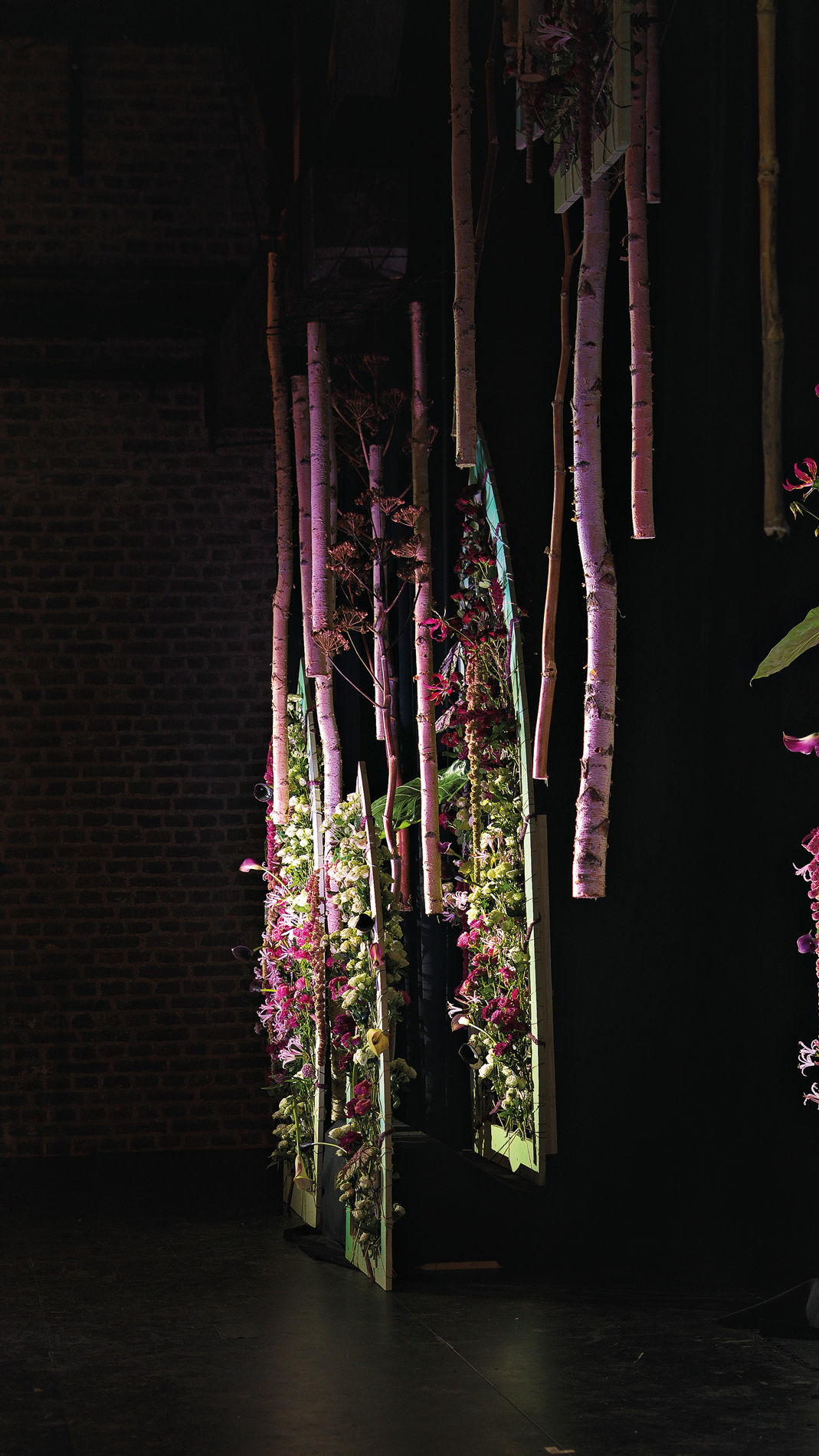
The set design aims to evoke the sense of grandeur one experiences in large, sacred spaces. The plant-like columns evoke the monumental trunks of a primeval forest and naturally draw the eye upward, toward the sky.
“I wanted visitors to feel small in the face of nature’s grandeur, yet at the same time to be surrounded by it. The vertical lines evoke a sense of respect, tranquility, and wonder, just as when you step inside a cathedral.”
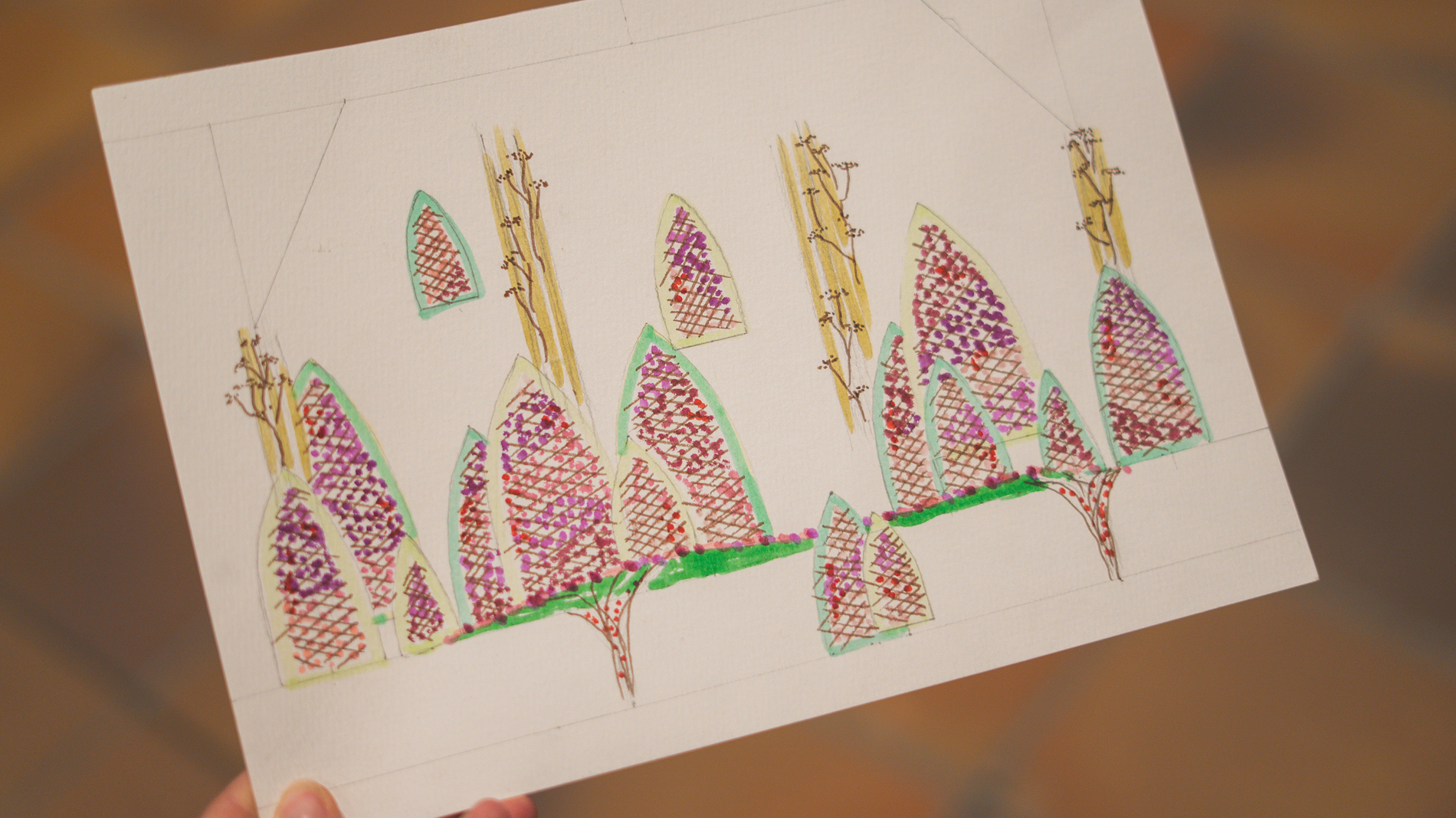
The floral stained-glass windows arean essential part of the project at
. They symbolize the connection between architectural heritage and the plant world. Their function goes far beyond decoration: they capture the light, color it, and diffuse it. As a result, the atmosphere in the space is constantly changing, depending on the time of day. Light thus became a material in its own right in Max’s creative process.
The choice of color
He gave the color palette a great deal of thought, because the colors were meant to reinforce the desired emotion. “I deliberately chose various shades of blue, violet, and purple to create a mysterious, poetic atmosphere. These colors are reminiscent of the shadows that pass through a forest at twilight, but also of the hues of the stained-glass windows in religious buildings.”
Shades of blue convey depth and tranquility. They invite calm and reflection. Shades of violet and purple particularly emphasize the spiritual dimension of the installation. Because these colors have traditionally been associated with the sacred and with royalty, they enhance the emotional power of the work. At the same time, they create contrasts between light and dark.’
A few lighter accents break through the composition like rays of sunlight filtering through the canopy. They lend the composition depth and vitality and create a constant interplay between light and shadow. “With this color palette, I also wanted to move away from the traditional depiction of a forest. I wanted to transport visitors to a dreamlike world, one that is almost timeless.”
The Choice of Flowers and Plants
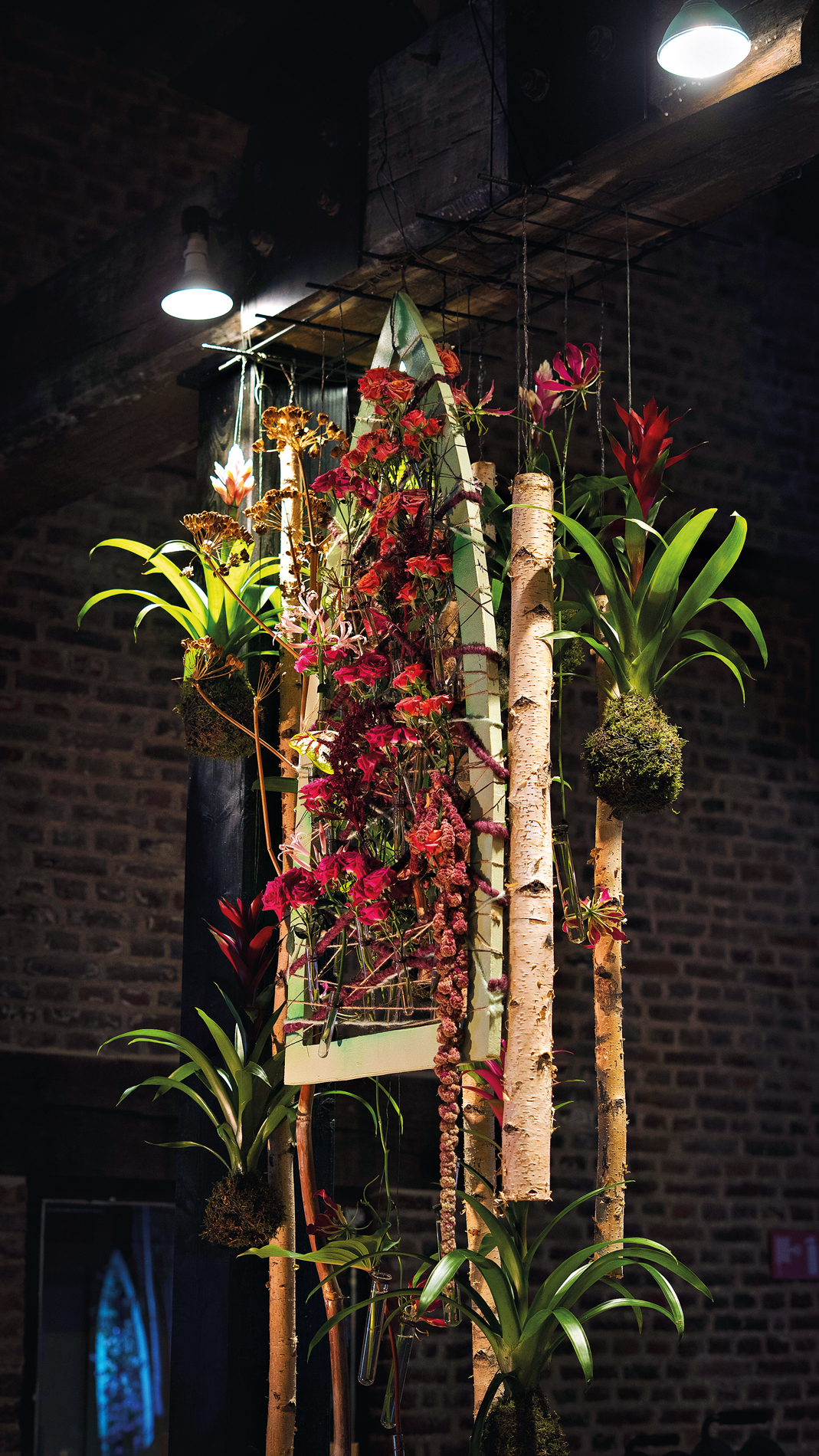
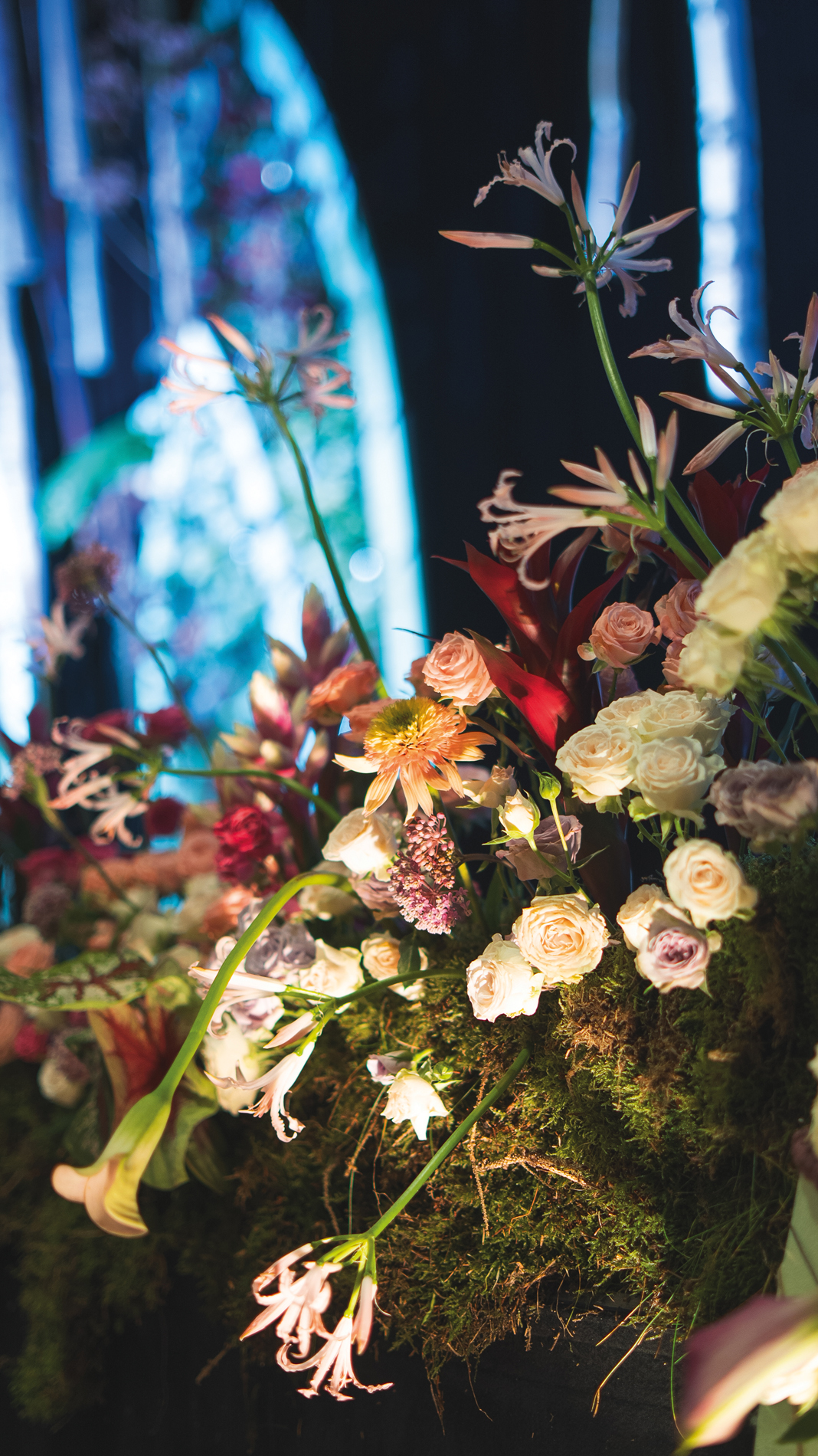
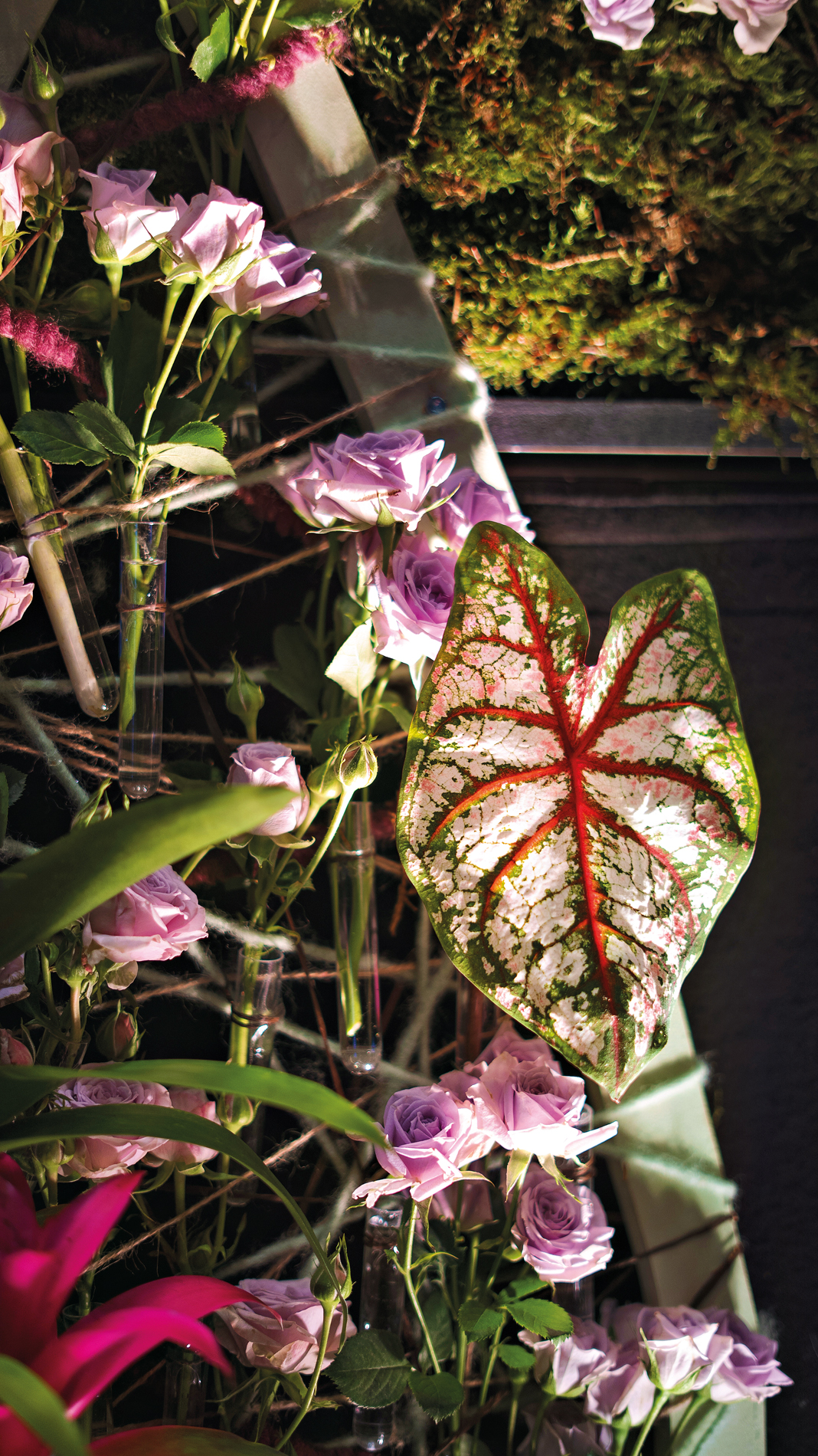
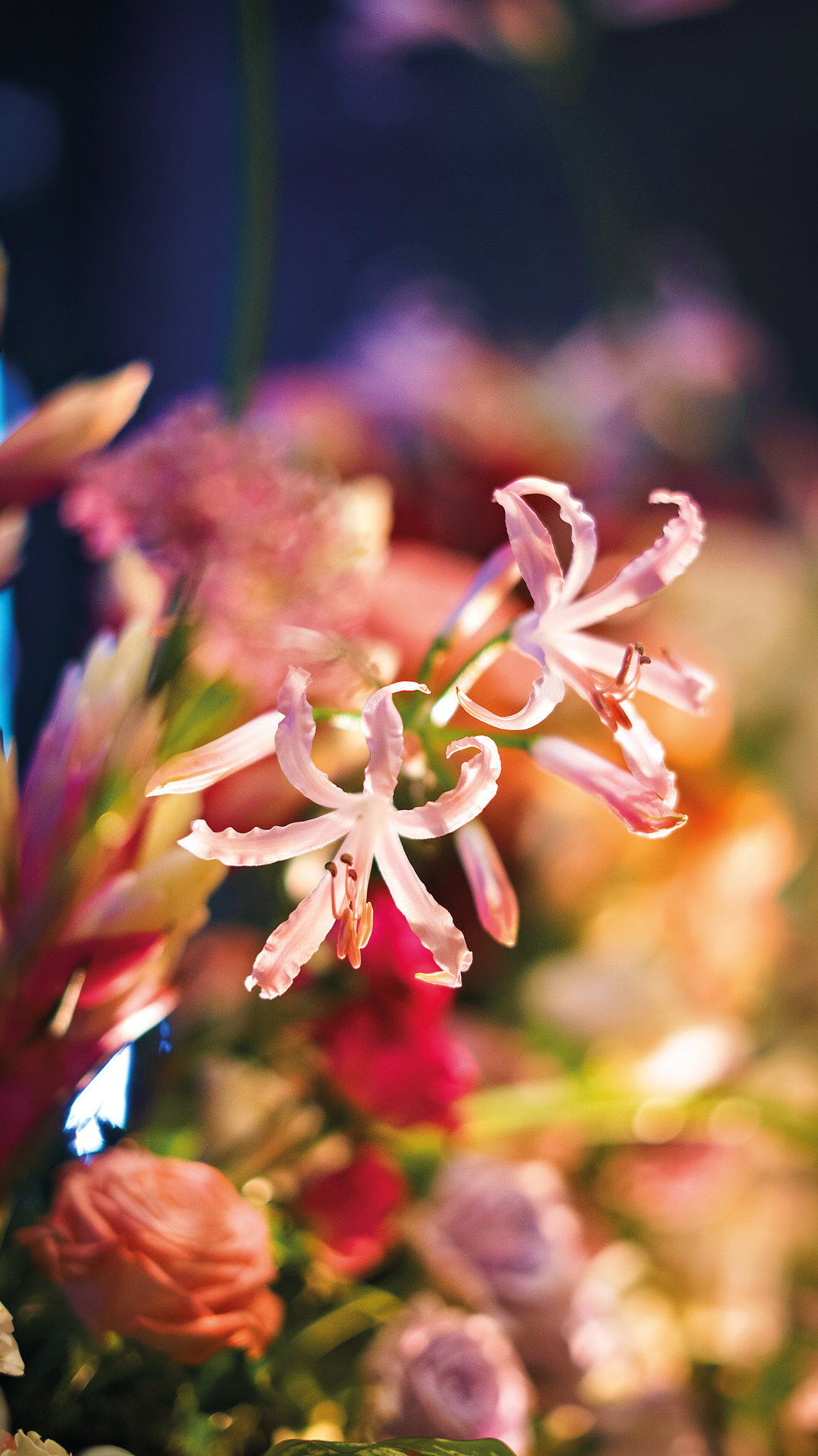
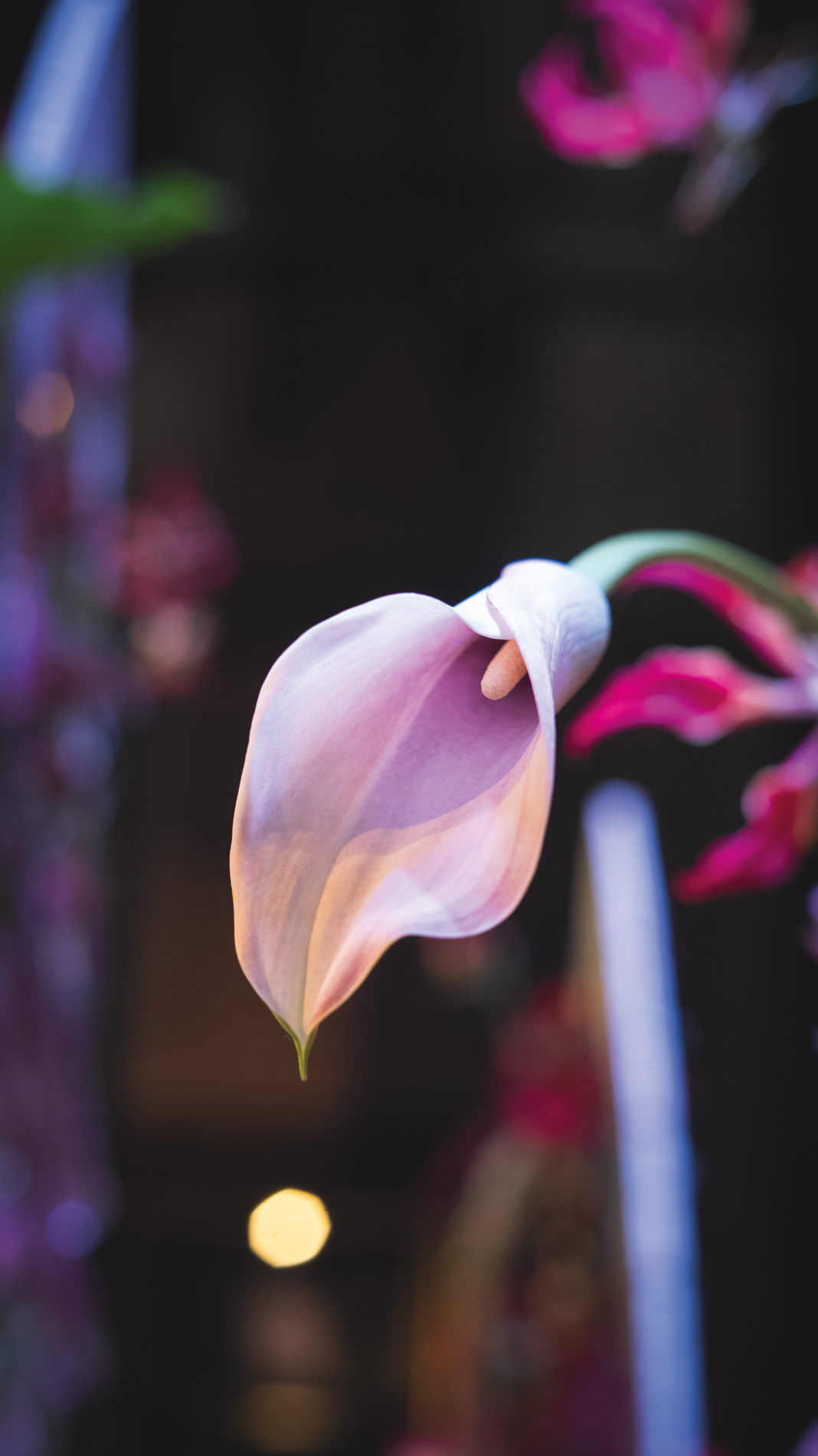
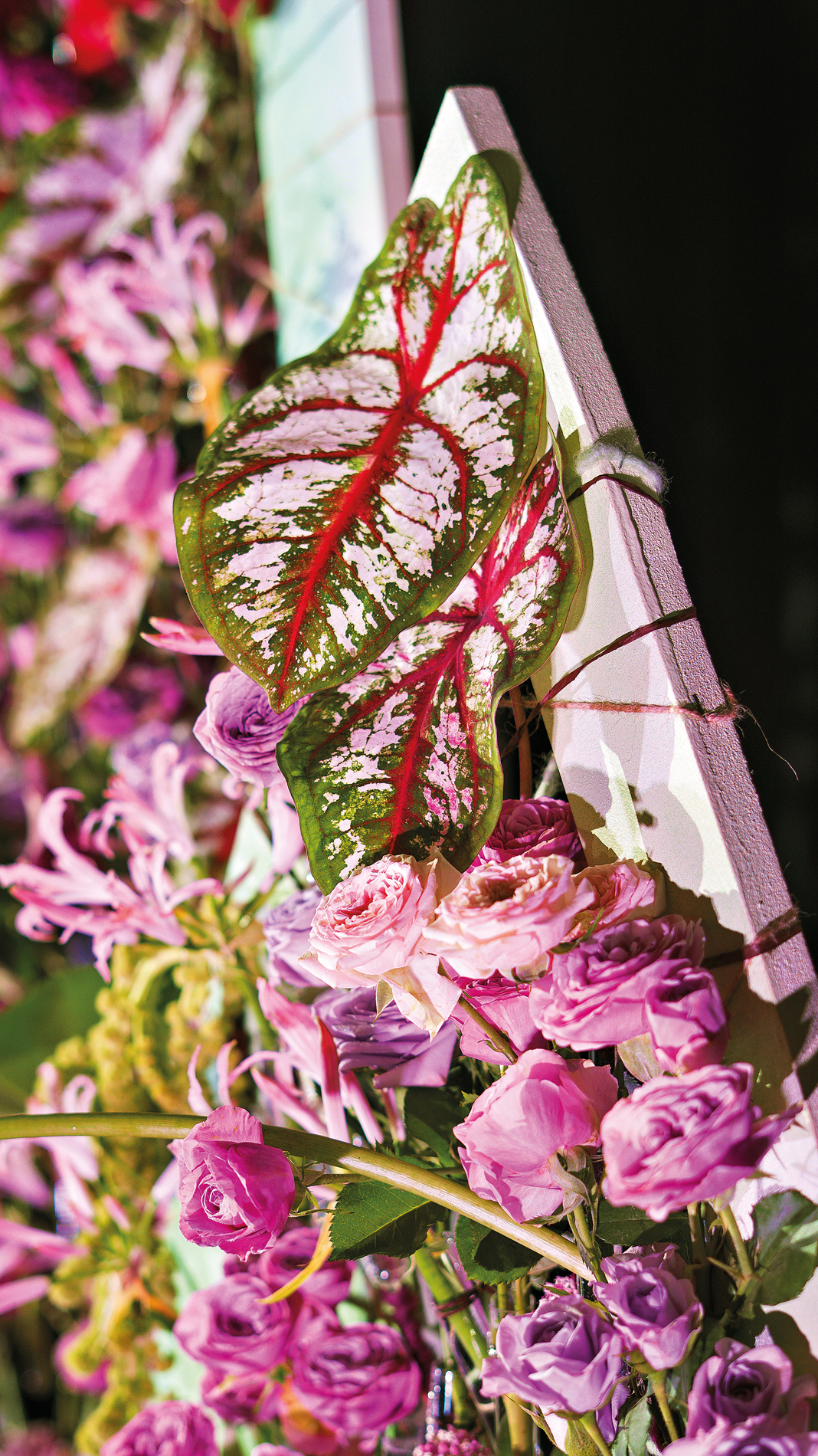
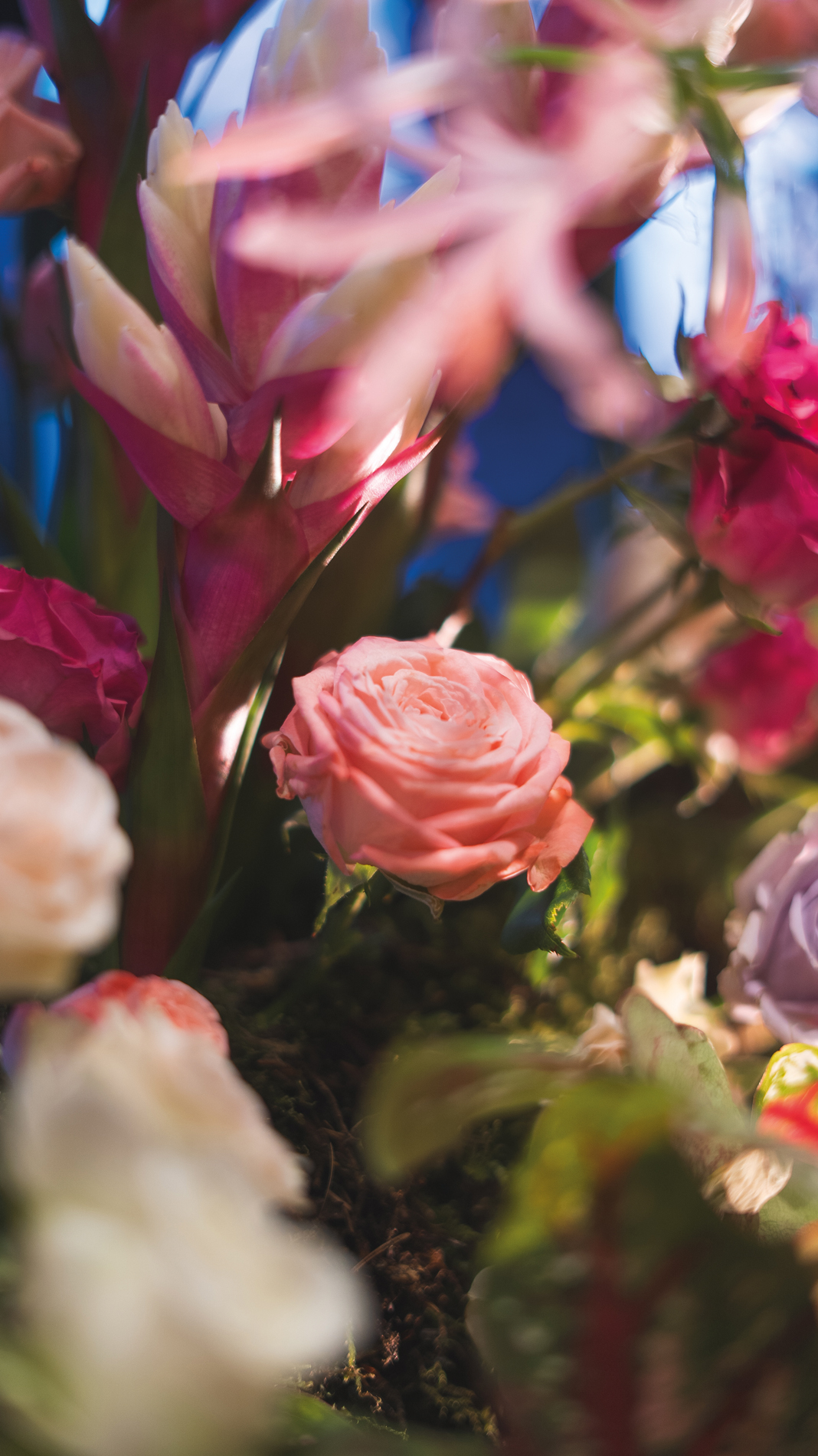
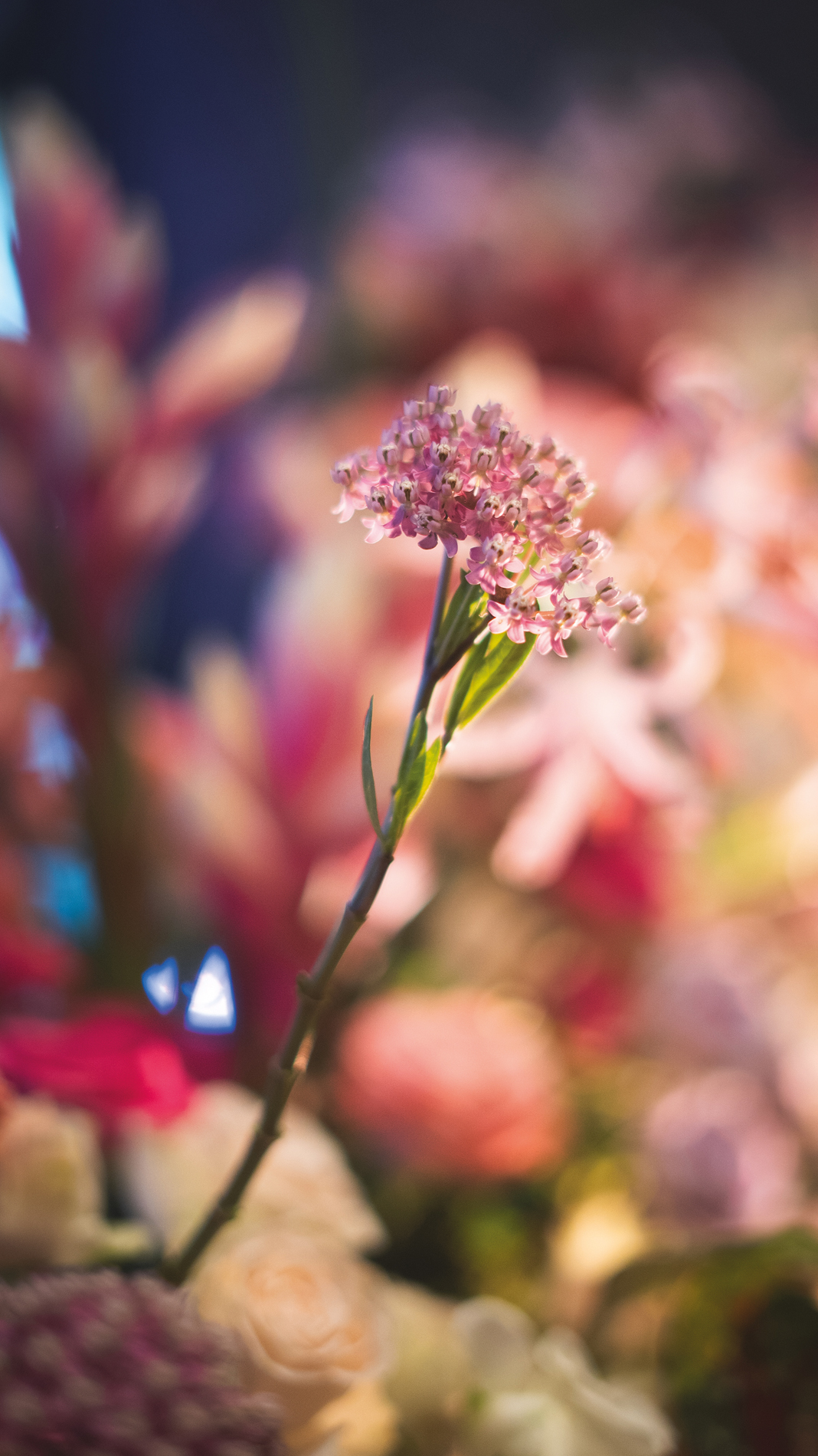
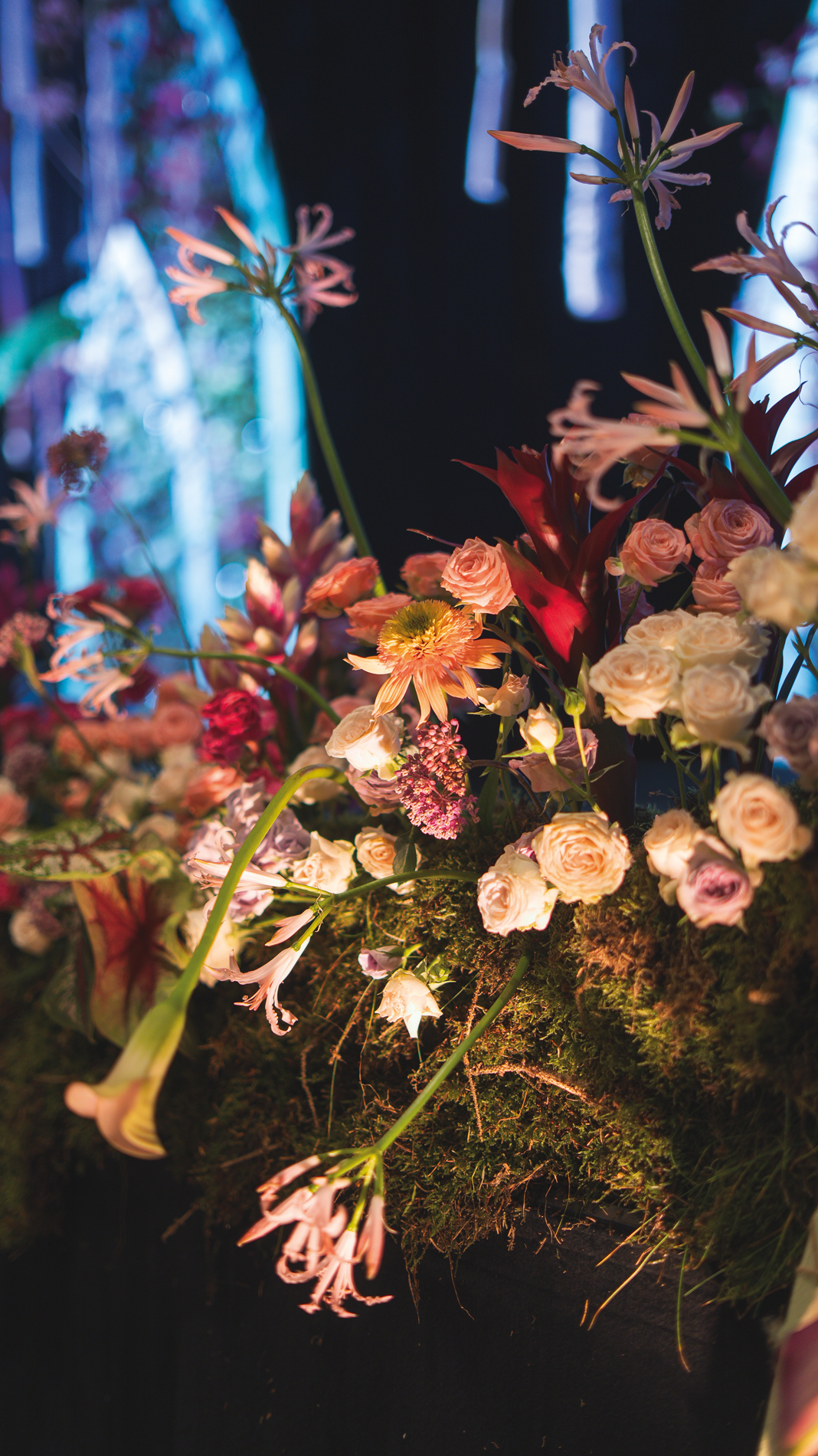
For this creation, Max did not choose the flowers solely for their individual beauty. He selected them primarily for their ability to tell a story and contribute to the composition of the space. “Some varieties have a distinct architectural character, strength, and volume. This allowed me to create strong floral volumes that visually support the installation. Other flowers, on the other hand, are light and airy and bring movement and refinement to the whole. They seem to float within the structure like flashes of light, as if they were suspended in the air.”
Foliage, branches, and other natural plant materials also play an important role in the project. They reinforce the connection to the forest and give the whole a natural and untamed character, despite the scale and complexity of the set design. Max: “I wanted the installation to look lively and almost spontaneous, as if nature had slowly reclaimed the architecture.”
An experience that appeals primarily to the emotions
A project of this scale requires extensive technical preparation. Yet for Max, technology isn’t the top priority. “For me, it’s first and foremost about emotion. I wanted to offer visitors a moment of peace—a moment when they can slow down, look up, and take the time to observe and experience. In a world where everything is moving faster and faster, I feel the need to create spaces that invite people to breathe and marvel. The Cathedral of the Forests is, of course, about flowers, but it’s also about light, architecture, nature, silence, and our connection to all living things.”
’s Vision on Floral DesignThis creation perfectly reflects how Max views floral design today. He likes to go beyond mere decoration and create immersive experiences in which flowers engage in a dialogue with a place, a story, and an emotion. “At Alden Biesen, I didn’t just want to decorate a space; above all, I wanted to transform how visitors experience it. I wanted to blur the boundaries between architecture and nature, between reality and imagination, and between heritage and contemporary creation. With *The Cathedral of the Woods*, I wanted to show that floral art can evolve into a fully-fledged form of scenography: a visual language that tells stories, creates atmosphere, and leaves a lasting impression in the visitor’s memory. Just as stone cathedrals tell the story of humanity, the Cathedral of the Woods tells the story of the power, beauty, and poetry of nature.’