
A Personalized Farewell
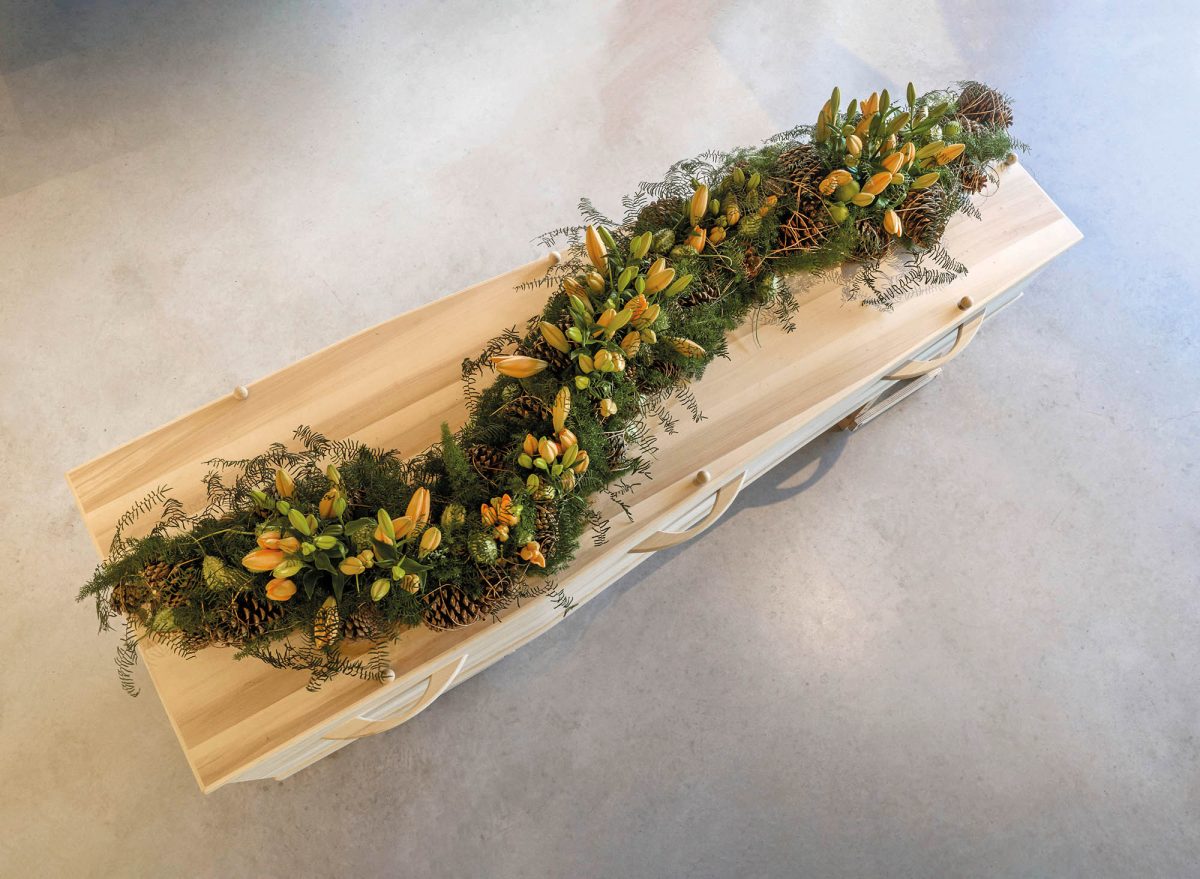
Customization is becoming the norm in today’s funeral floral arrangements. Bereaved families are increasingly choosing colors, shapes, and materials that reflect the personality of the person they are saying goodbye to. A handwritten message, a favorite flower, or an unexpected presentation makes all the difference. At the same time, new solutions are emerging around reusability, biodegradable materials, and natural burial grounds. This special issue shows how current developments and inventive craftsmanship come together in floral arrangements that are shaped not by fixed conventions, but by a personal story.
Autumn in Motion
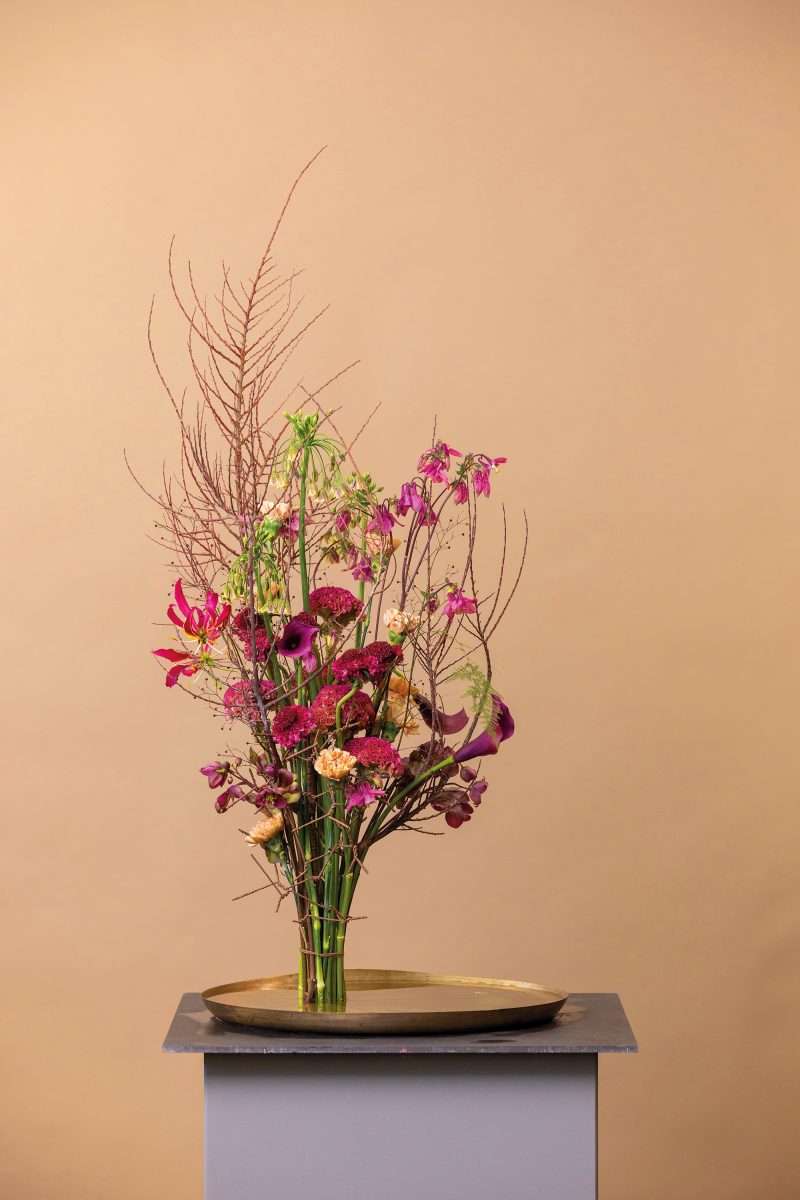
This fall is about more than just warm colors and familiar seasonal materials. New arrangements are pushing the boundaries of the bouquet, while 3D techniques and reusable bases open up new possibilities for design and production. Materials from nature meet cultivated flowers; grand, eye-catching arrangements are complemented by compact, commercially accessible variations. In this way, the season becomes a testing ground for balance, form, and technique. This special issue showcases how experimentation and craftsmanship are shaping the autumn tradition.
Standing bouquets

“A striking development in floral art is the rise of freestanding bouquets. This fascinates me because it challenges us to define more clearly what a bouquet actually is. The concept has its origins in the bound works from Gregor Lersch’s *Standing Ovations*, in which botanical materials were bound to structures. Since then, designers such as Lersch and Frédéric Dupré have adapted this technique for use in bouquets.”
During the 2025 International Floristry Teacher Seminar, international floristry instructors at our school arrived at this definition of a hand-tied bouquet: tied by hand, with a single dominant binding point, allowing flowers to be supplied with water and maintaining its shape when moved from the binding point.
This definition leaves the choice of technique open: sheaf-style, parallel, or, for example, binding at a single point. Whichever you choose, what matters is craftsmanship, durability, respect for the material, and a strong aesthetic appeal. Still, the debate will likely continue: when is something truly “hand-bound”? How many tubes are allowed?
“It is precisely this exploration of boundaries and the freedom that comes with it that makes freestanding bouquets interesting and results in surprising designs: florists can experiment with balance, proportion, and construction. This technique is now also being taught in various programs at the Boerma Institute.”
Dreamy
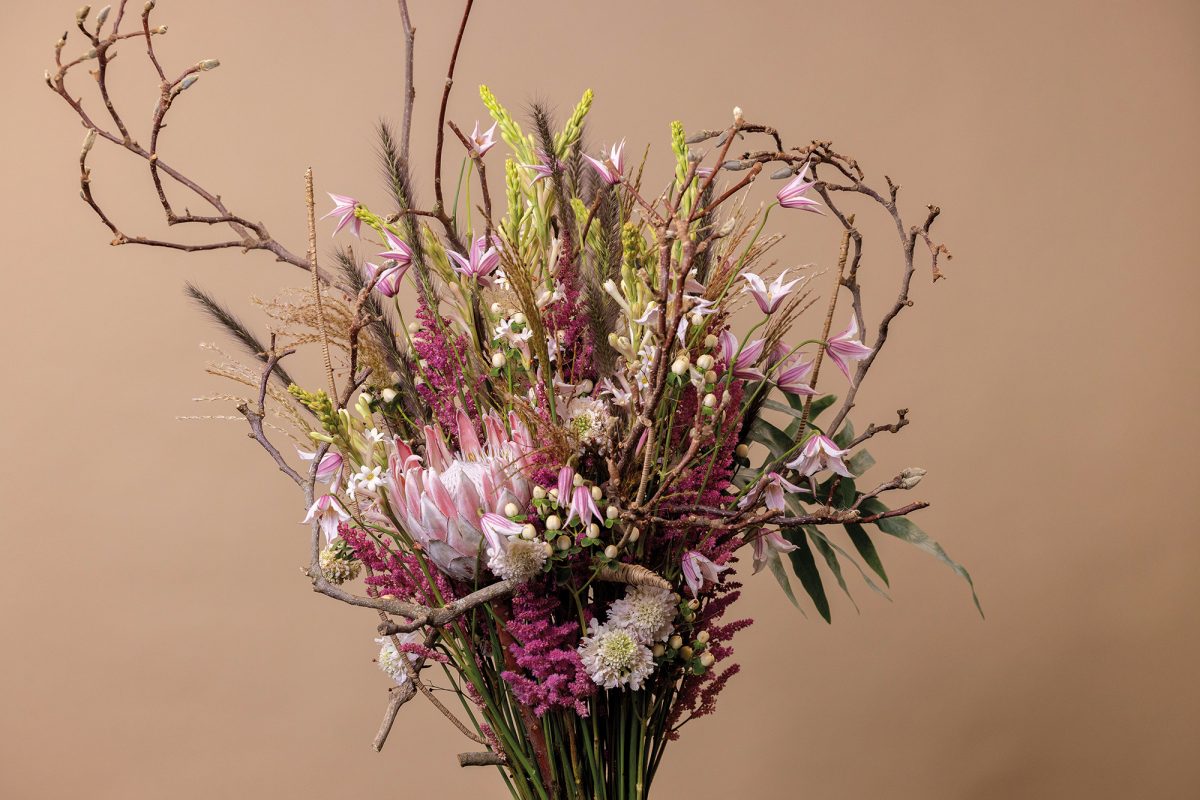
This bouquet also features an asymmetrical design, but with a softer, more dreamy look, both in terms of color and texture. Magnolia branches form the base, using the same simple arrangement. The soft textures of the magnolia buds are echoed in the soft textures of the ornamental grasses, as well as in the Astilbe ‘Vision in Pink’. In addition to these Marginpar flowers, their Polianthes and Clematis are also incorporated into the bouquet.
Mysterious
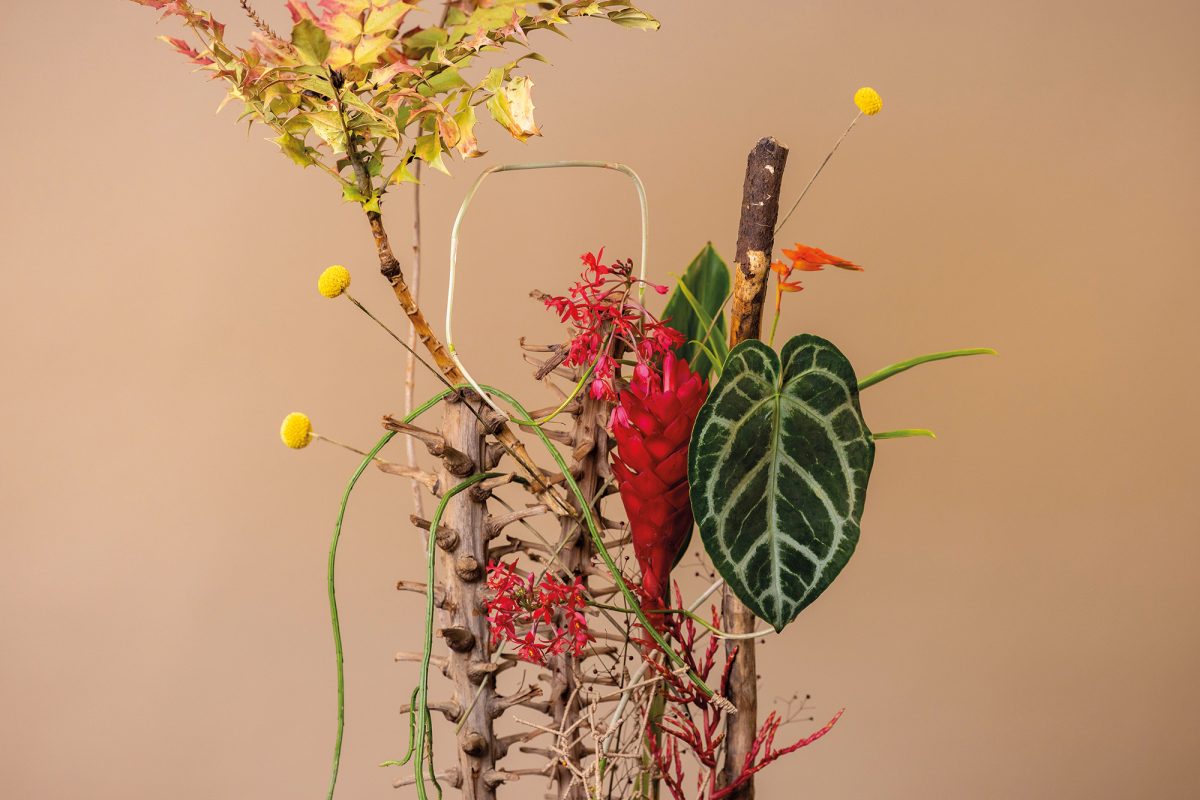
This design posed a major physical challenge. However, thanks to the correct wire thickness and careful placement of the supporting structure, the design is very stable. Only one hidden water tube was used, for the leaf of the Anthurium clarinervium. In addition, Epidendrum from Gloriosa van Ruiten was incorporated. The skeletal branches and the dried Mahonia branch give the design a slightly mysterious look.
Sickles
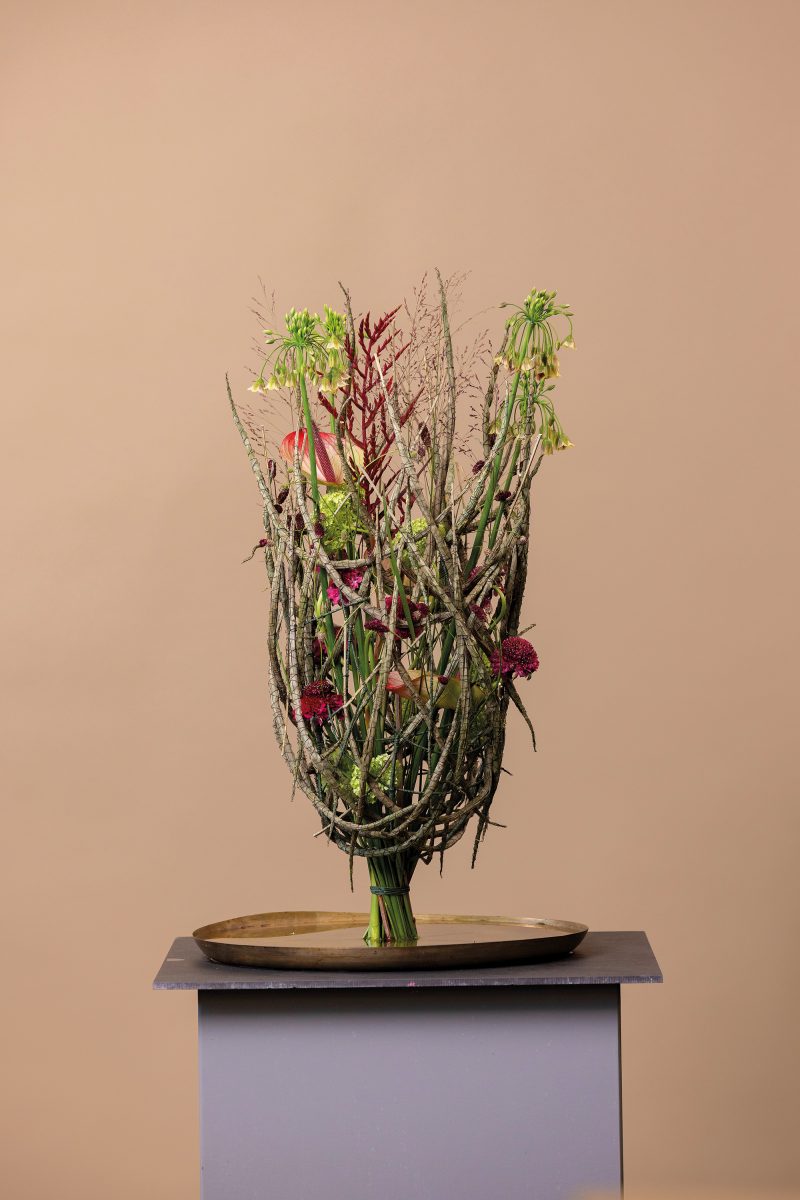
This design has a somewhat more symmetrical layout, especially in its silhouette, and features a more complex construction. Notable are the sickle-shaped elements, which are made from dried bamboo leaves that are then attached to a frame. A small selection of the flowers incorporated into this bouquet: Allium Nectaroscordum, Tillandsia, Anthurium, Scabiosa, Viburnum. This arrangement also includes materials from Marginpar, such as their ornamental grasses and Sanguisorba.