
In full swing
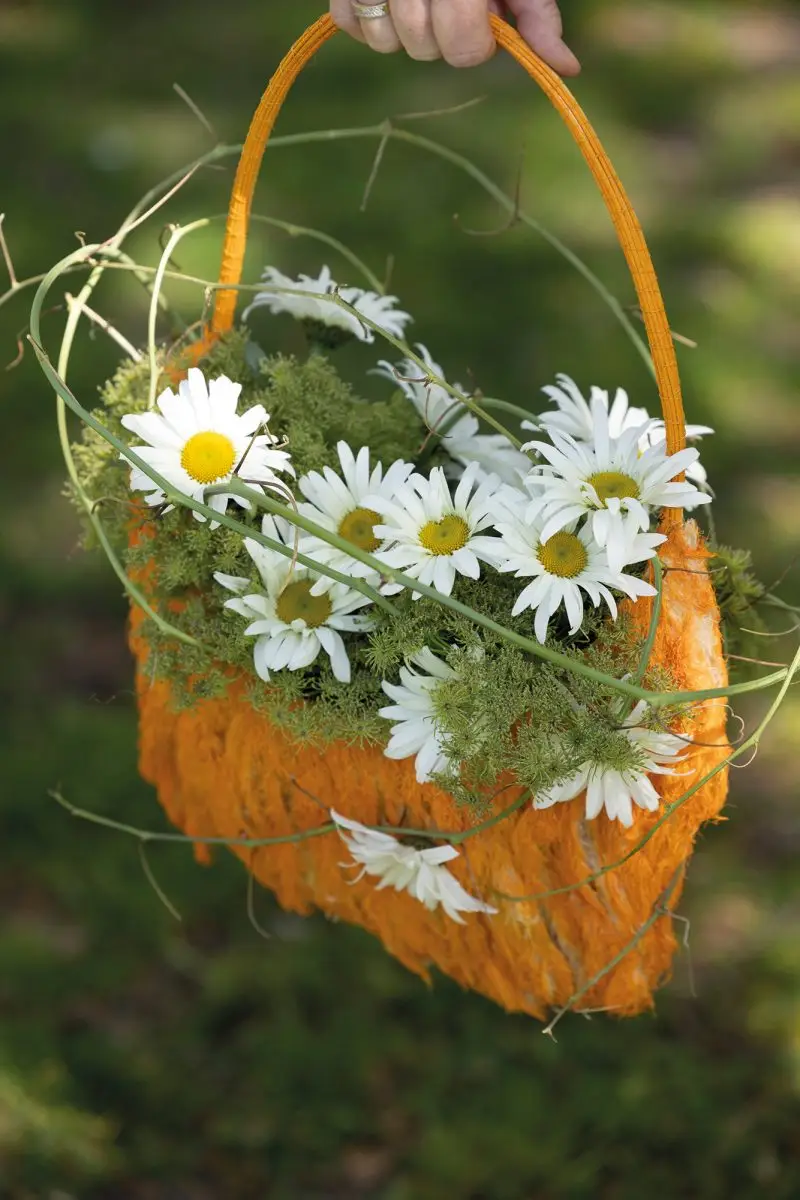
This summery little bag is trendy and modern, made from cardboard with pampas grass glued to it. Spraying it orange with floral paint makes it even more summery. Simple daisies on a bed of Daucus flowers complete the look, making this bag the perfect summer festival accessory.
Endless Summer
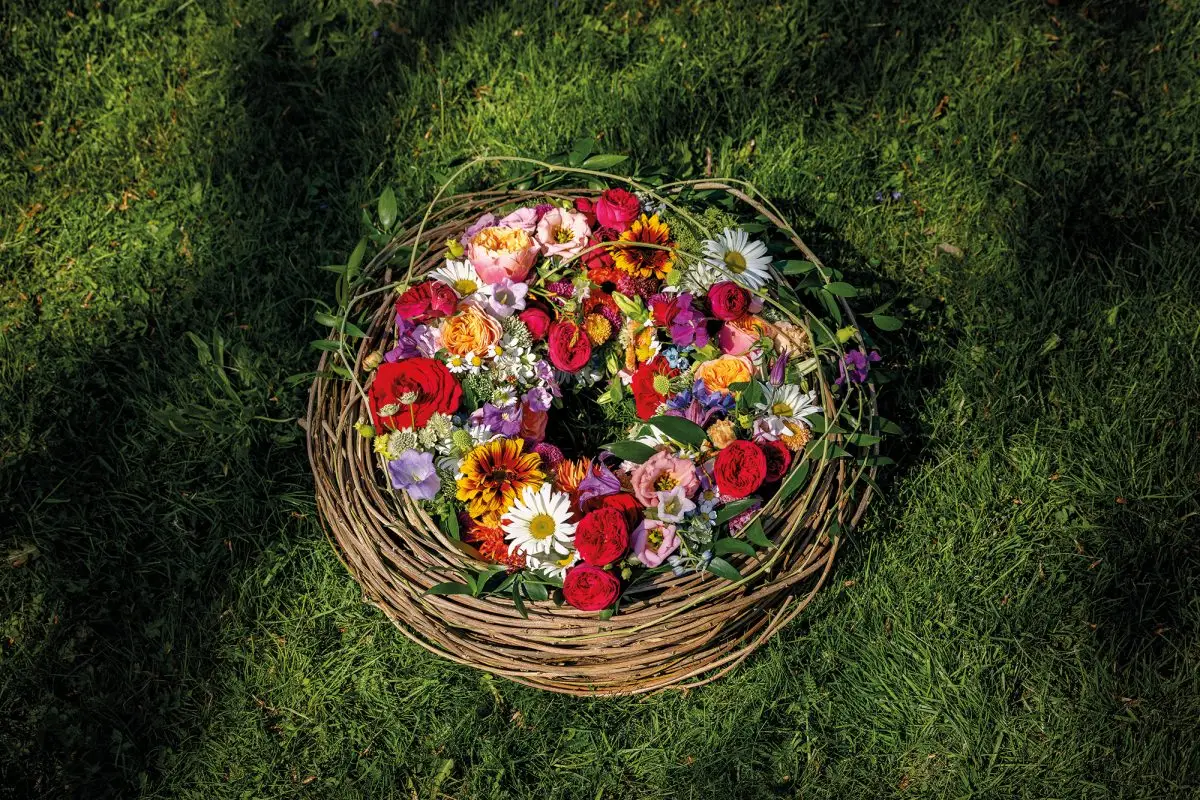
Dried vines have been arranged in a black Eychenne Oasis wreath. Additional vines are also wrapped around it in a three-dimensional pattern. The floral foam contains various summer flowers, such as (garden) roses, clematis, and daisies. By arranging the stems in layers with space between them, a sense of depth is created.
Playful tenderness
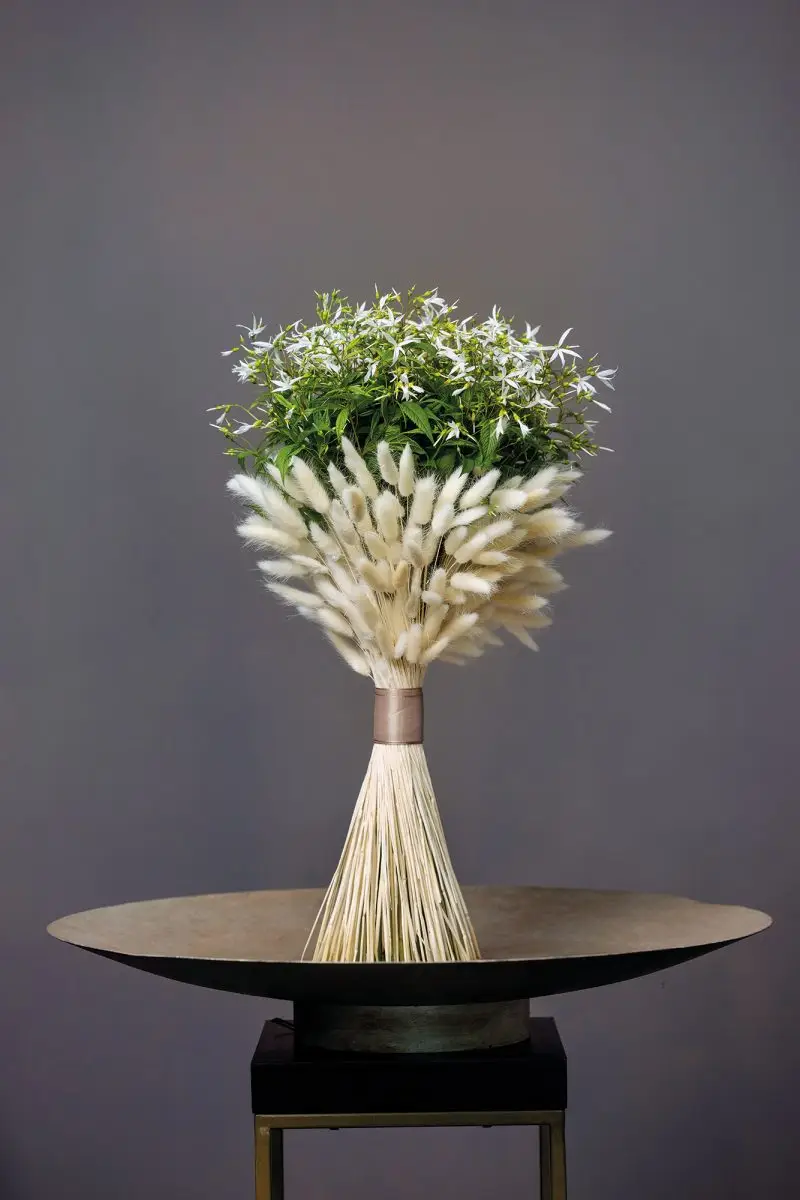
The delicate Gillenia trifoliata flower is perfect for a summery, wheat-sheaf-style bouquet, especially when presented in a large bowl rather than a vase. Dried and bleached Lagurus is arranged in layers beneath the Gillenia. The white, bleached stems add the finishing touch and create a beautiful overall effect.
Green
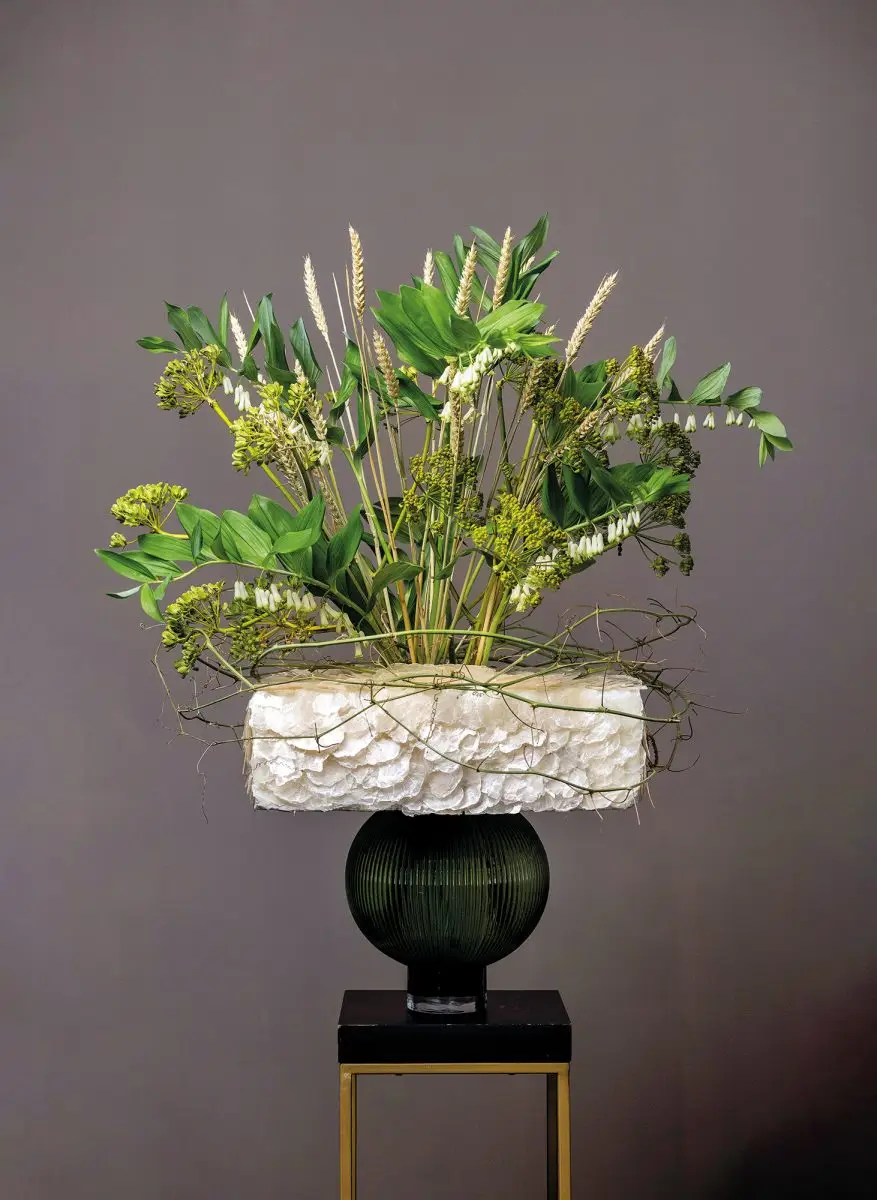
In nature, the summer season brings a wide range of green hues, from fresh, budding shades to deep greens. This arrangement features a variety of green tones, combined with two contrasting shapes. A square piece of Styrofoam is covered with pieces of Placuna shell and rests on the round vase. Ferula branches sparkle in the vase, interspersed with wheat and Solomon’s seal. With the Solomon’s seal refreshed weekly, this arrangement can serve as a reception desk arrangement at a business during the summer, as the rest of the arrangement can dry out beautifully.
“Everything in nature has form and value”

Gerrit van Aalst, a 22-year-old floral designer, works part-time at a flower shop and spends the rest of his time on various freelance projects. He also regularly participates in competitions. For example, he recently won the Dutch Junior Floral Art Championship and is now preparing for Eurofleurs Murcia 2027 in Spain.
“I work a lot with frames and mainly design frames that are cut out using a laser cutter. These frames can be used for a long time; they’re like a puzzle that you can easily take apart. That makes them not only sustainable, but also easy to store and transport.”
“Summer is one of my favorite seasons. There are so many different types of summer bloomers and cut flowers that are only available during this season. You can also use a lot of materials from your own garden. I was born in Ukraine, and back then I used to wander through my father’s nursery to gather the most beautiful materials for bouquets for my mother. I also love working with plants: with roots, stems, leaves, and of course flowers. Everything you see in nature has its own shape and value and can be used beautifully in floral arrangements.”
Cosmopolitan
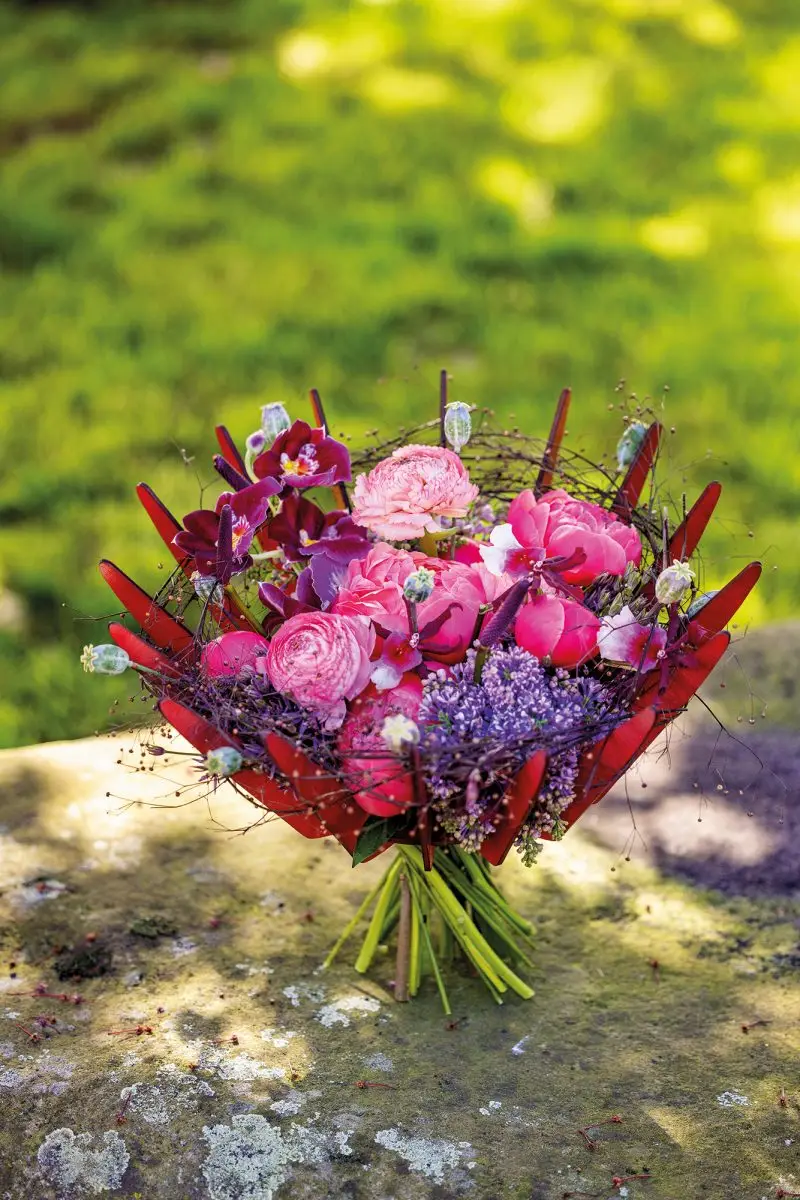
This wooden frame was cut using a laser cutter. The reddish-pink color gives the arrangement a fresh and contemporary look. Thanks to the frame’s clever design, the flowers stay in place on their own. This means there’s no need to tie the bouquet. The bouquet is richly filled with the beautiful colors and textures of peonies, lilacs, and ranunculus. As a finishing touch, various types of orchids, mini-poppy seed pods, and Talinum ‘Long John’ have been added, giving the arrangement a playful and refined look.