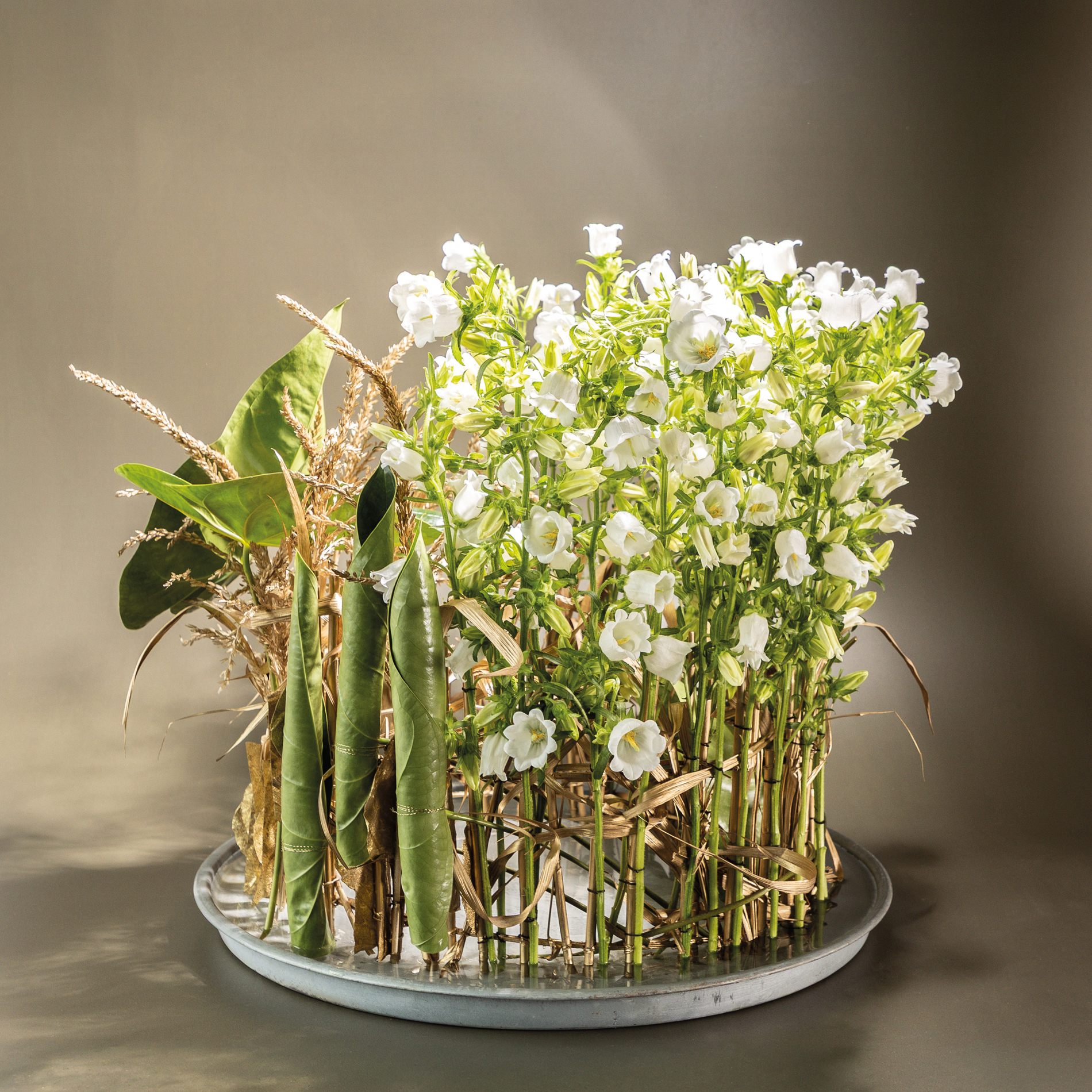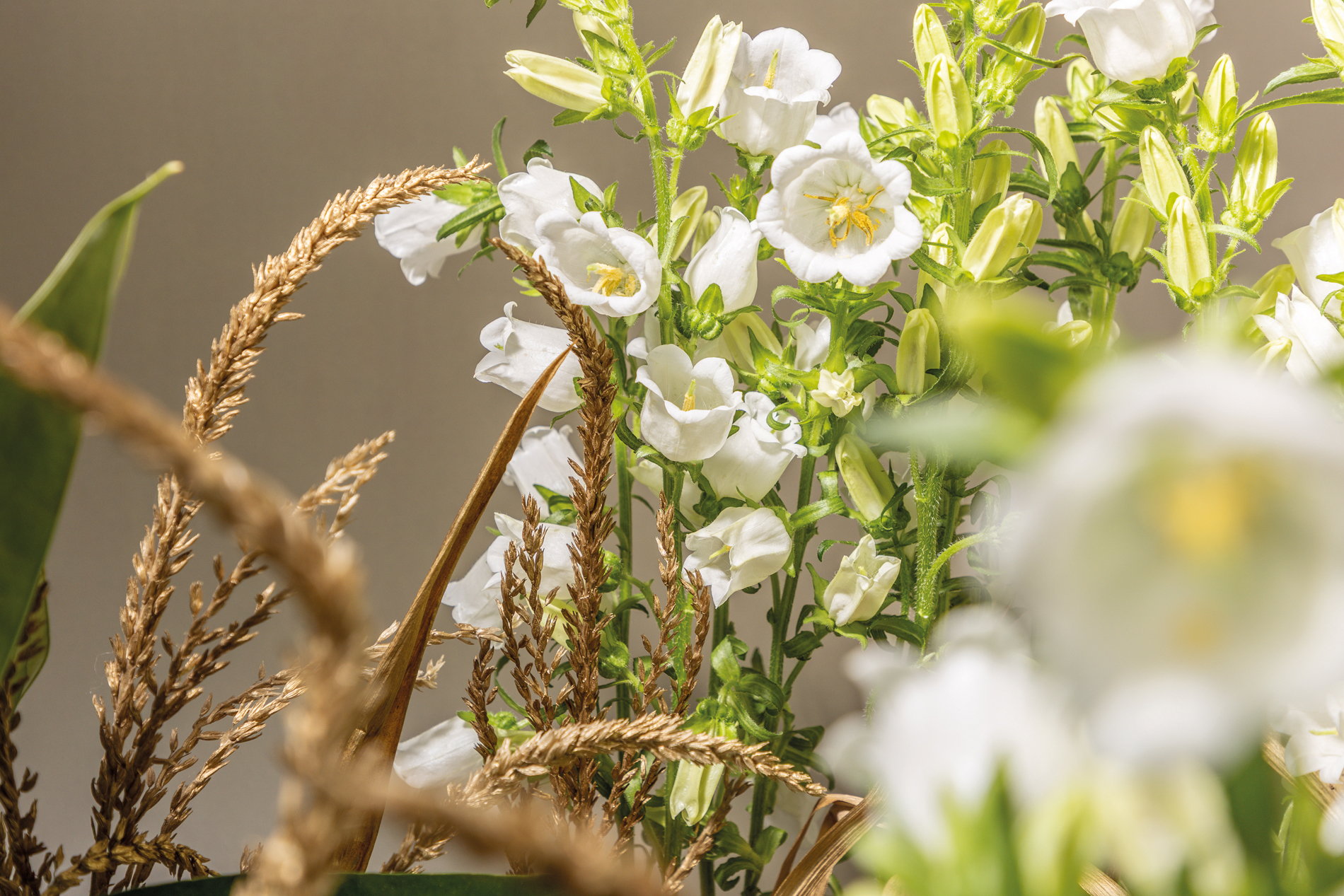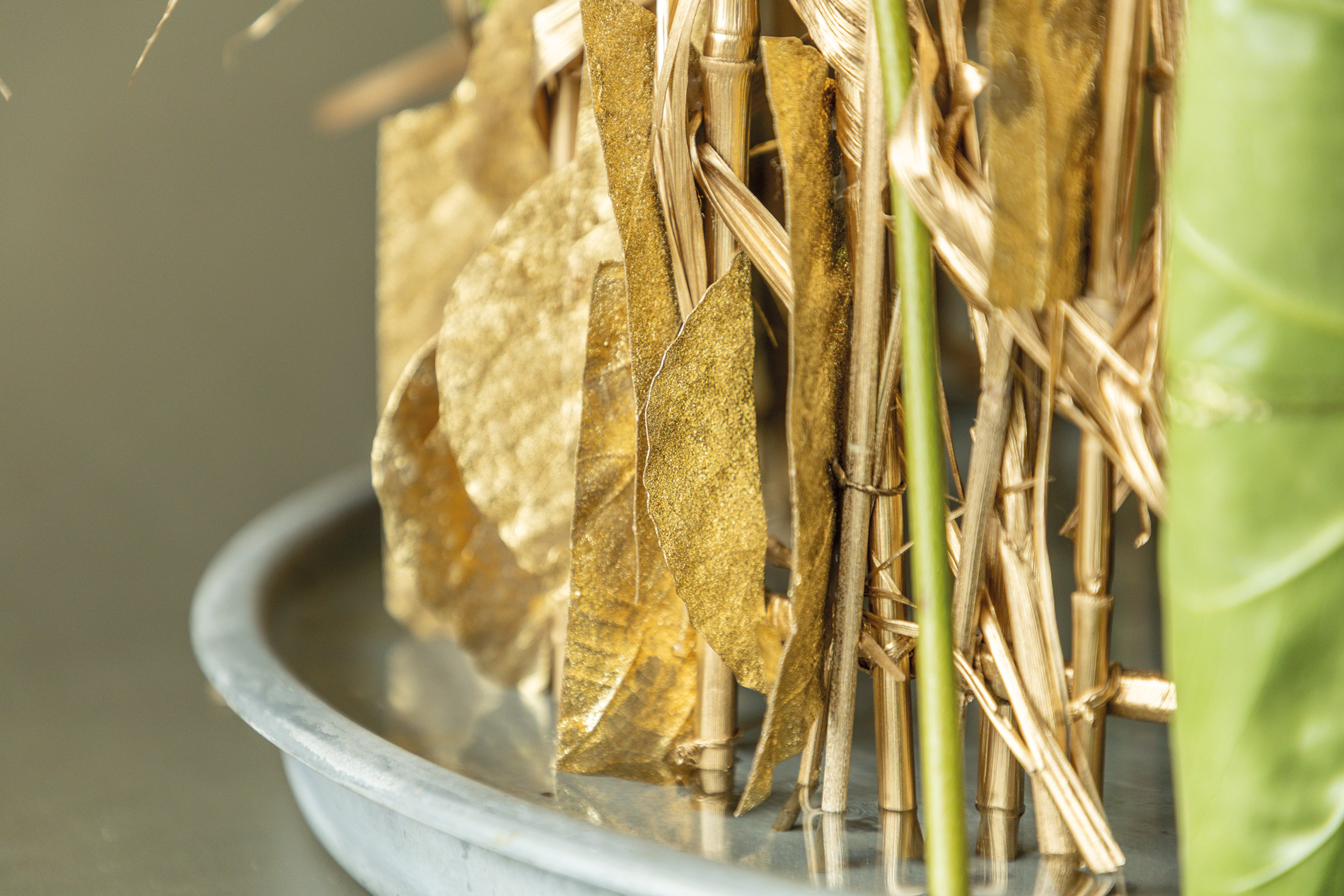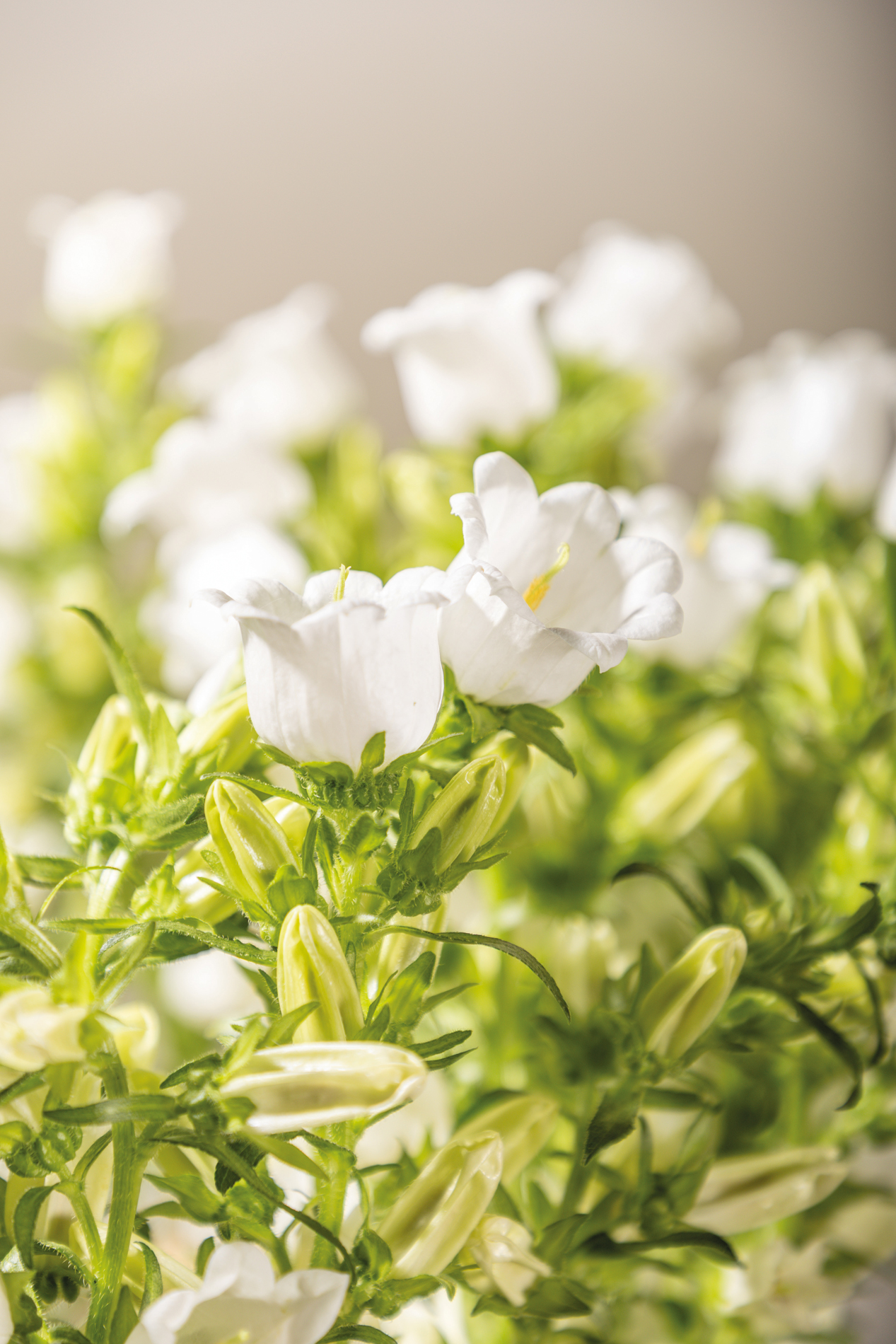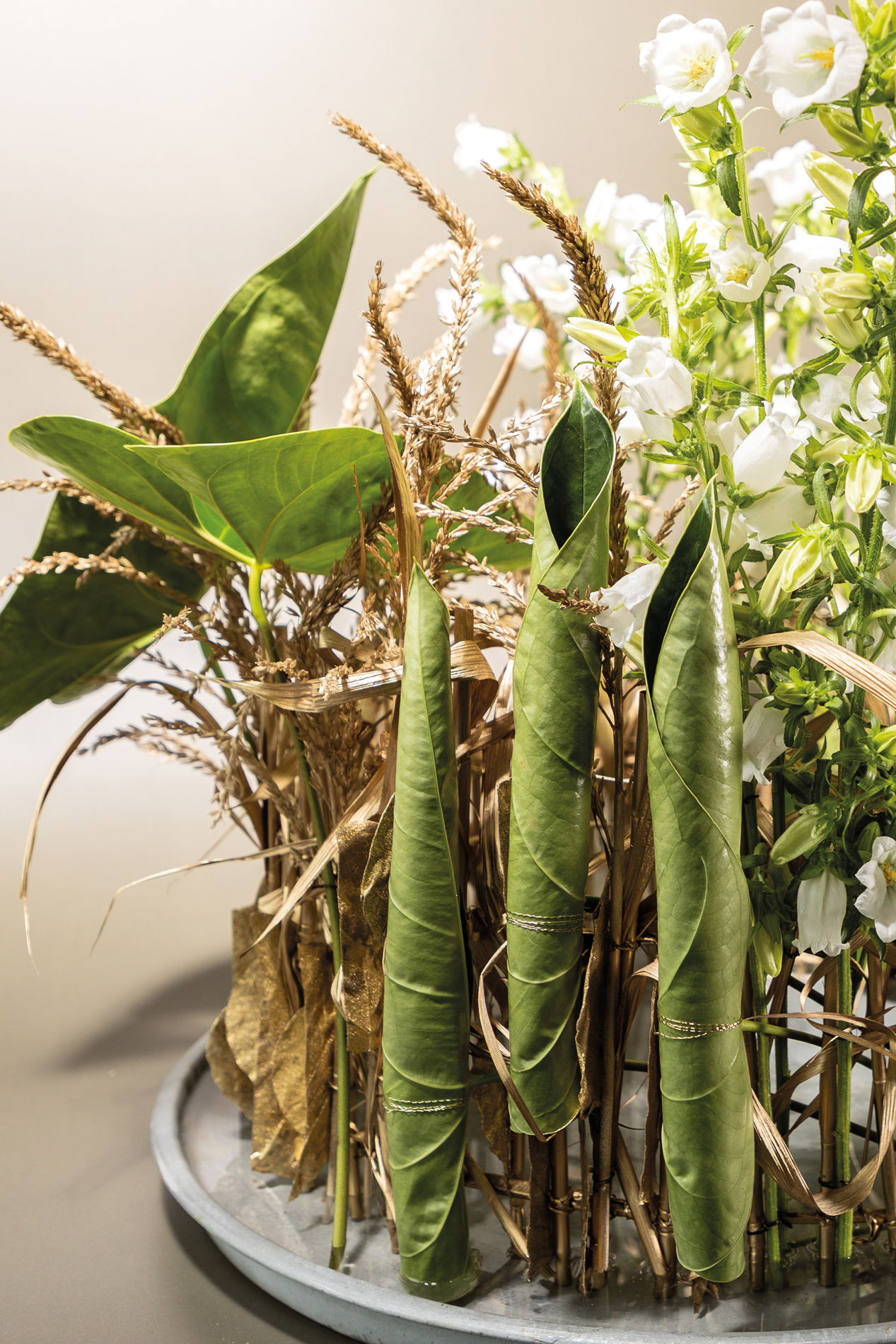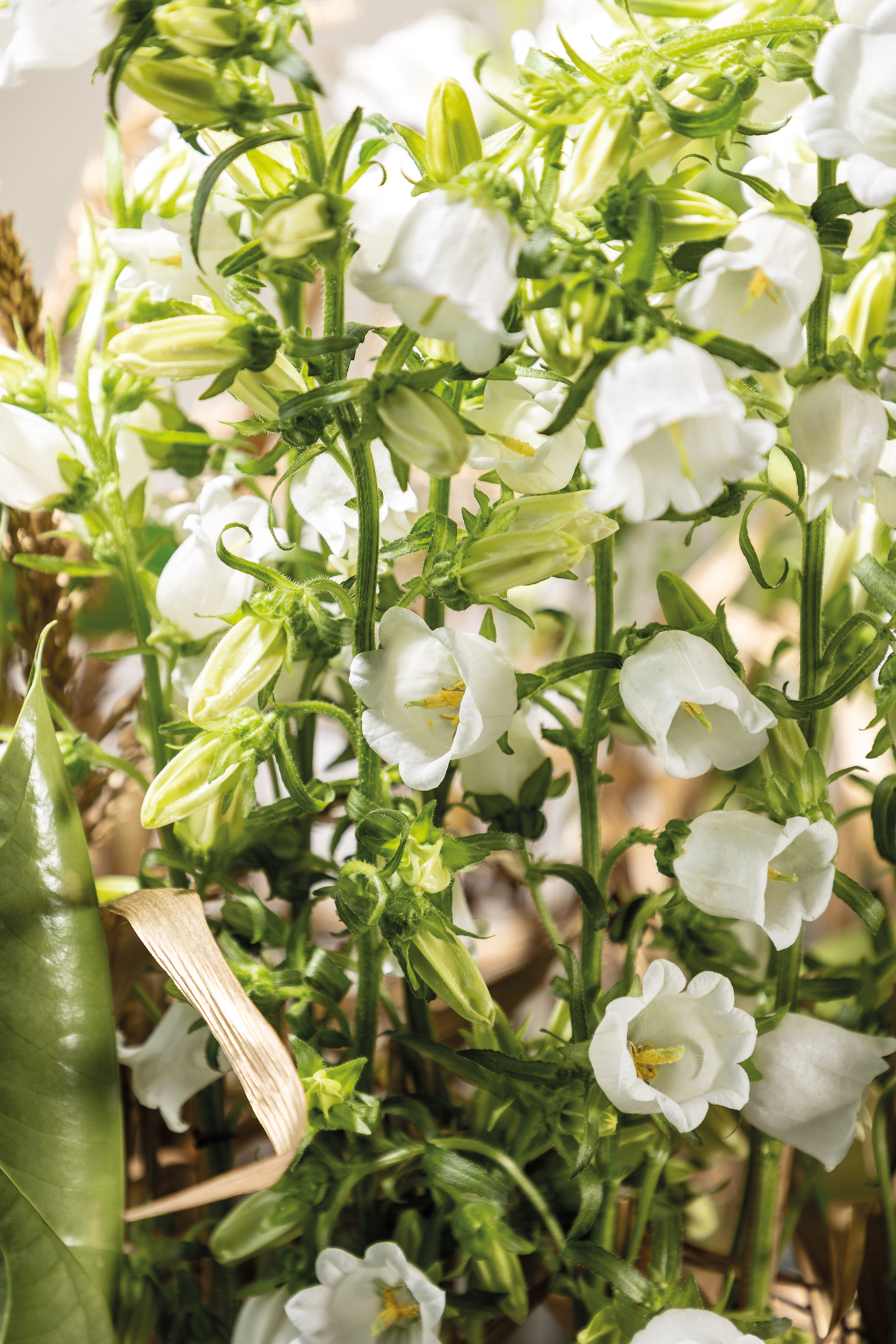
A Campanula and an elegantly curled Anthurium leaf form an open, graphic composition. The ring of gold-sprayed dried grass is attached at two gold-colored points. The curled leaf serves as a natural counterweight and echoes the ring’s curved line. The open structure gives the Campanula plenty of space and subtly references the round shape of Stéphane’s company logo.
Chanteloube opened his flower shop in Gerzat, in the Auvergne, in 2001. A second shop followed in Riom in 2018. He became the French champion in 2011 and earned the title of Meilleur Ouvrier de France in 2018. In addition to his work at the shop, he enjoys passing on his expertise to his team.
The round shape and gold font of his company logo reappear in Stéphane’s floral arrangements. Sometimes directly, in the form of a ring; sometimes in a smaller detail: a curled Anthurium leaf or a gold-colored finish. This creates a sense of recognition among designs that differ from one another in form and material.
In doing so, he constantly monitors the balance between structure and flowers. The structure may be present, but it must prevent the flowers from disappearing into a dense mass. Variations in height and openings give individual flowers their own space. The technique enhances this clarity.
For him, nature and the lines of the flower are the most important elements of a floral arrangement. “There is no secret to floral art; nature itself is the secret.” His preference for opulence goes hand in hand with an attention to lines. This does not necessarily result in a single, consistent trend: he adapts and draws inspiration from the seasons.
A Stage for Campanula
In Campanulove’s creation featuring Campanula, that concept literally becomes a stage. A golden ring frames the flowers without enclosing the entire arrangement. Stéphane first lets the grass in front of the ring dry completely and then sprays it with gold. The ring is attached at two golden points. In his design concept, the lightness and transparency evoke the reflective surface of water. Incidentally, Campanula is often mistakenly regarded as a summer flower, but it is available year-round.
The Anthurium leaf serves as a visual counterbalance. When curled, it brings a sense of calm to the composition and echoes its rounded shape. It is a detail in which technique, composition, and personal style come together.
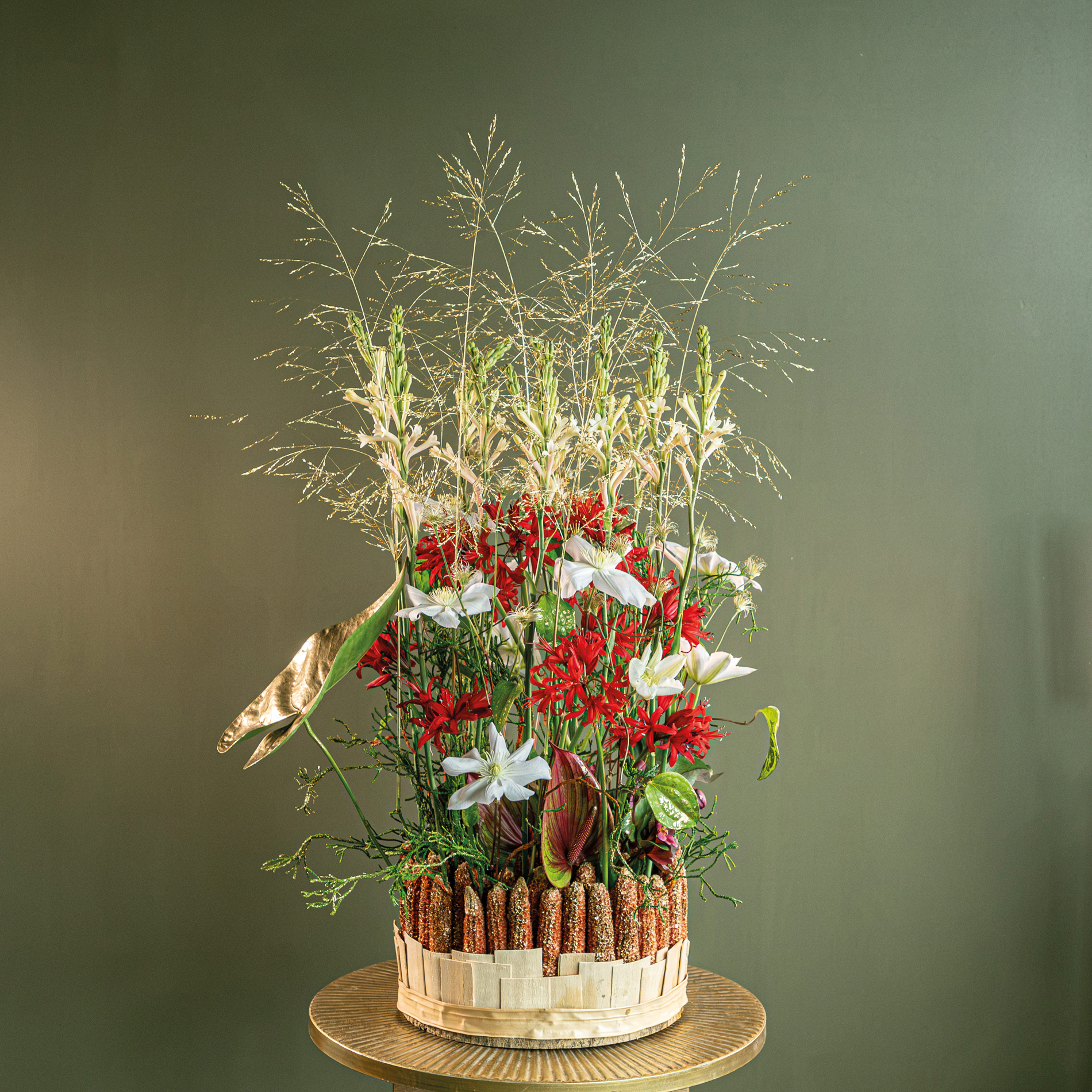
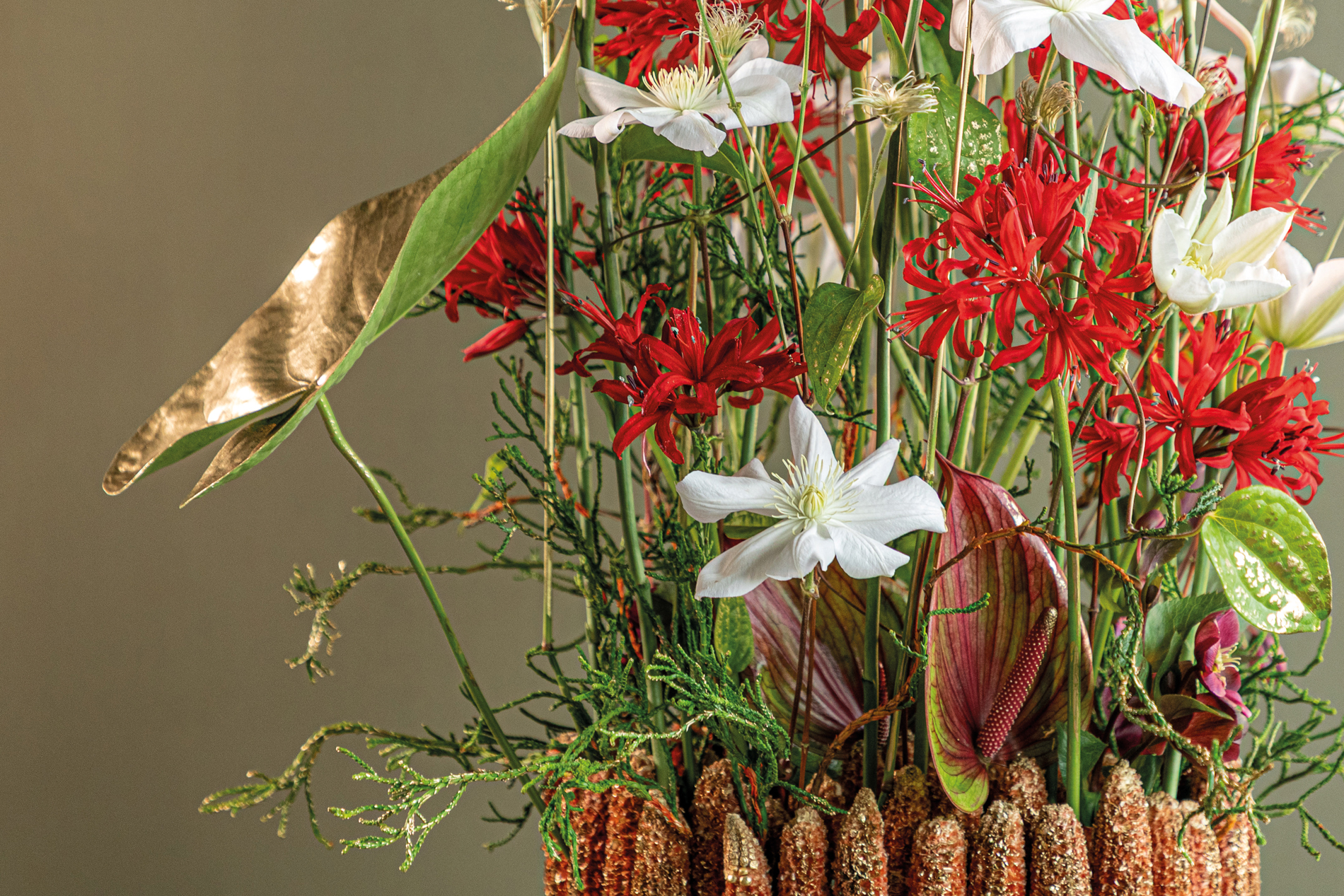
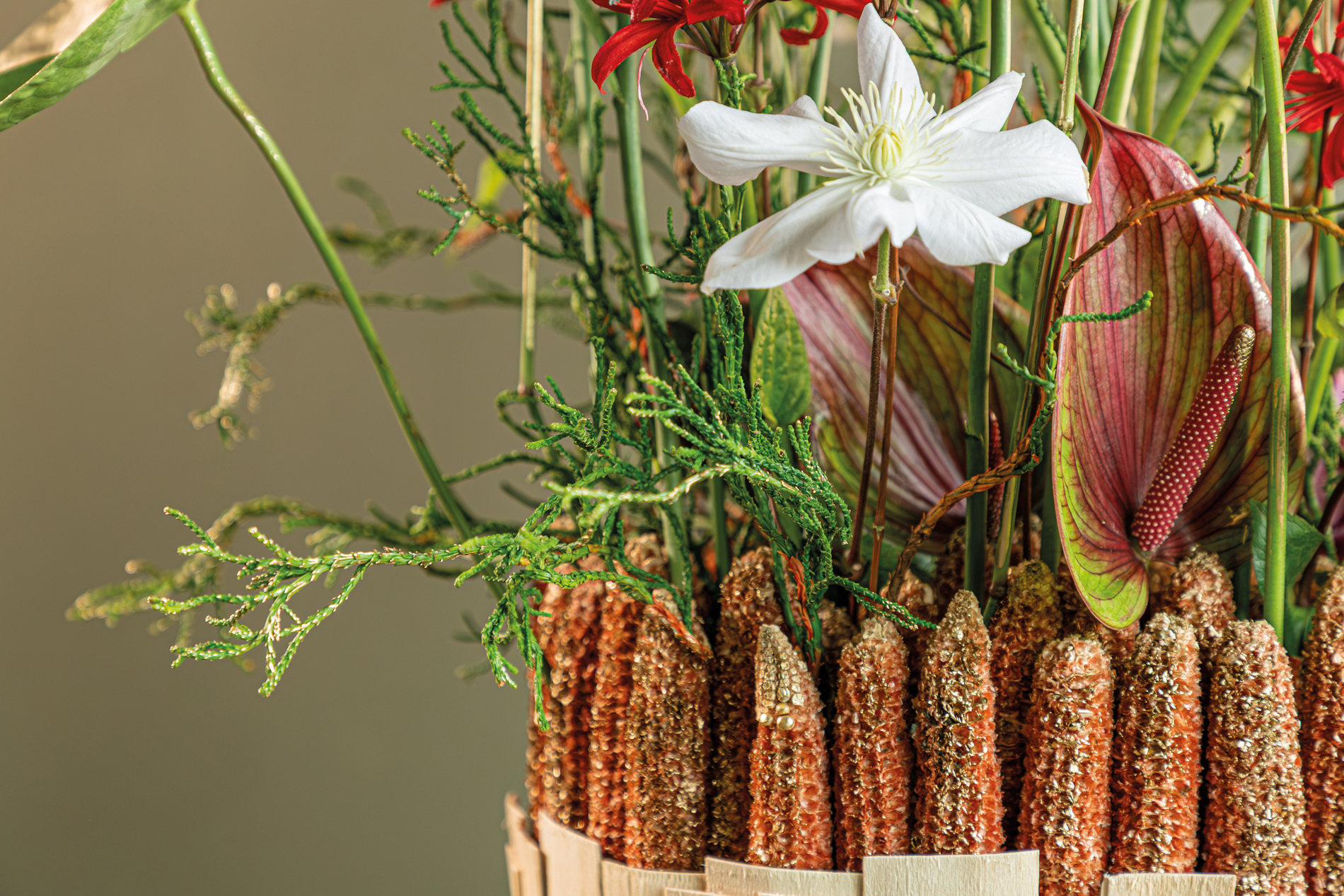
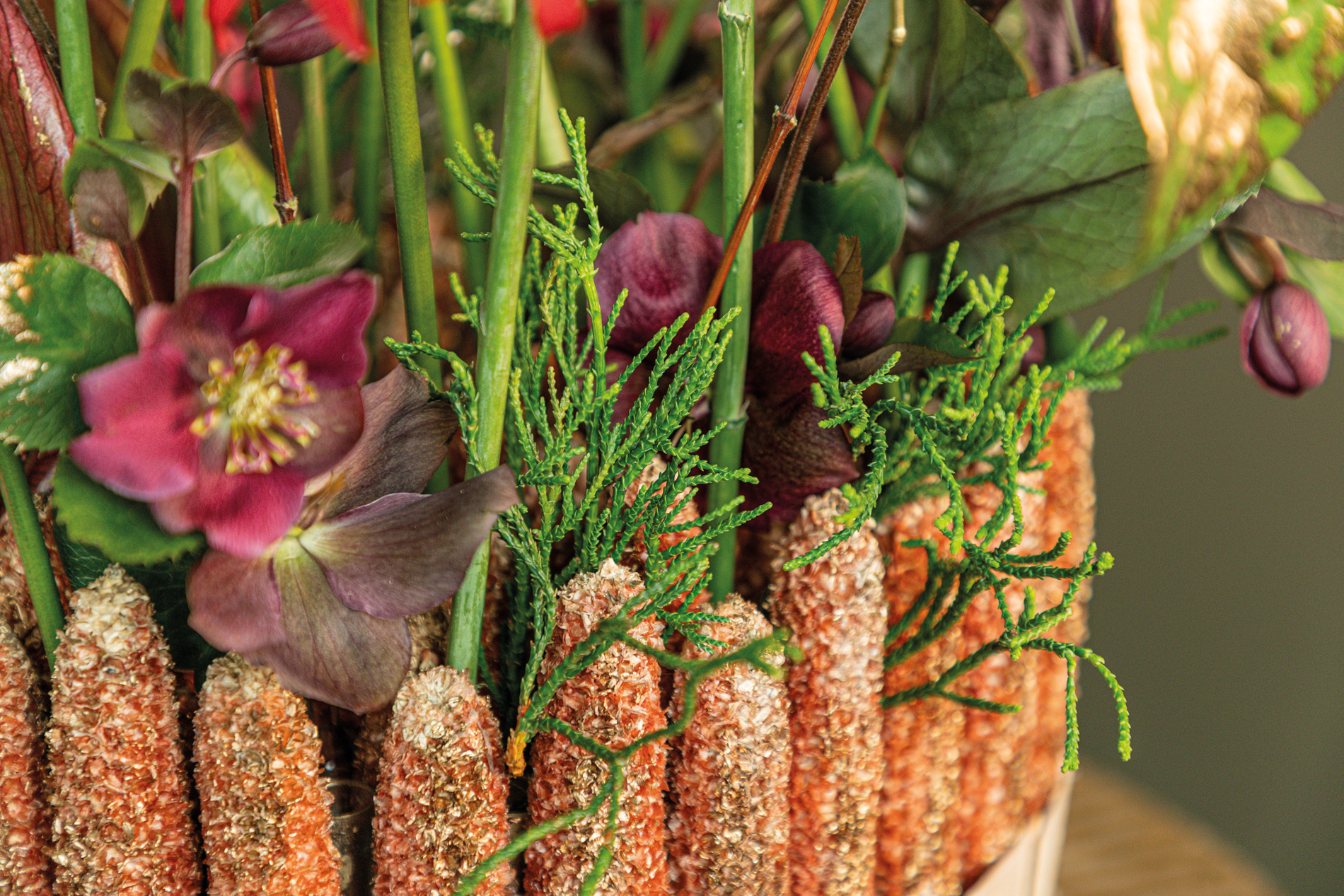
Nerine, clematis, polianthes, jatropha, red hellebore, clematis seeds, and green andromeda. Black floral foam forms the base; corn cobs are arranged parallel to one another, and small test tubes provide the water supply. Corn leaves and stalks are also repurposed. Polianthes form the centerpiece. To create the golden accent, gold is first sprayed onto plastic, which is then stamped onto the flowers in specific spots. This keeps the effect subtle.
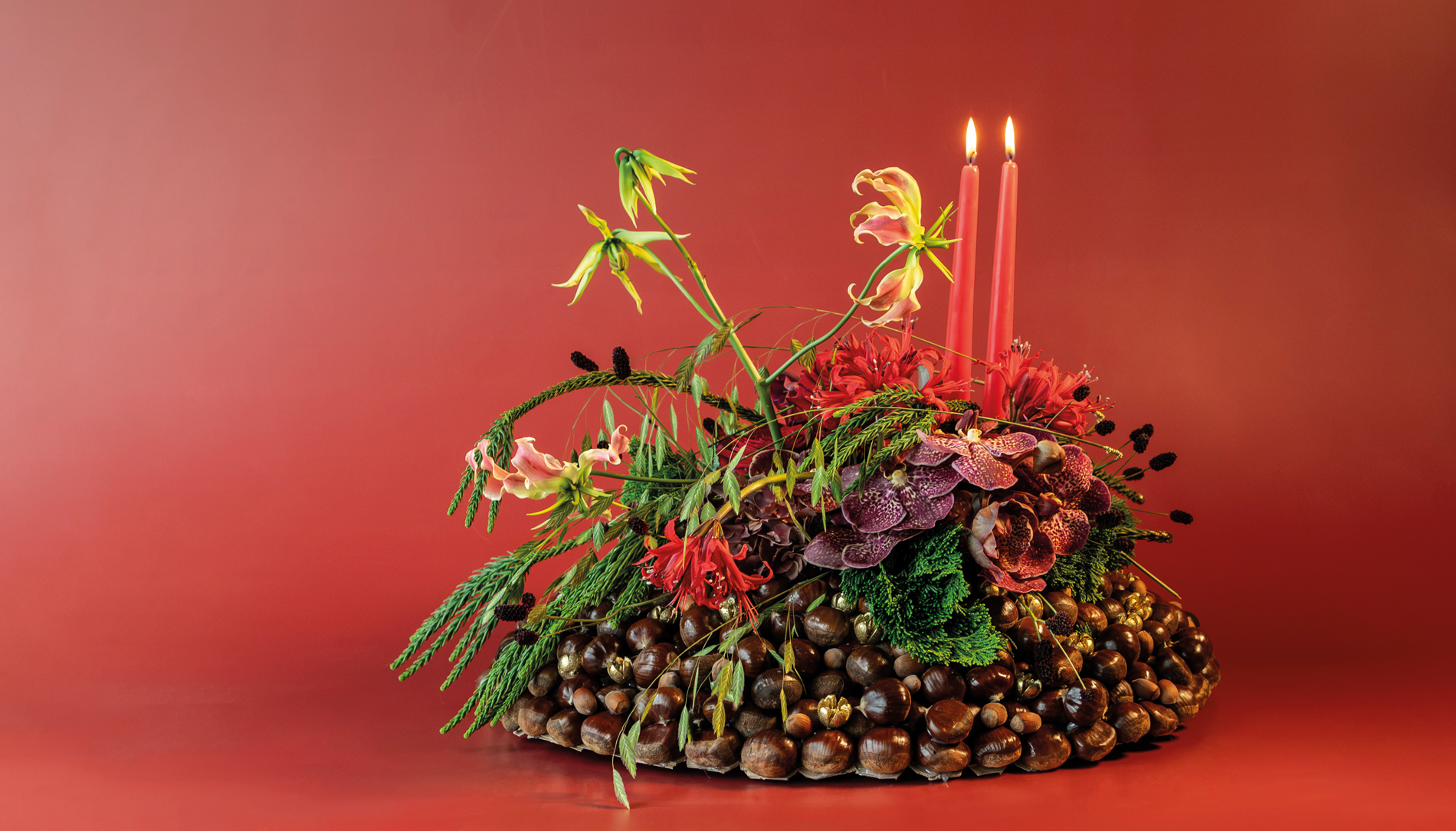
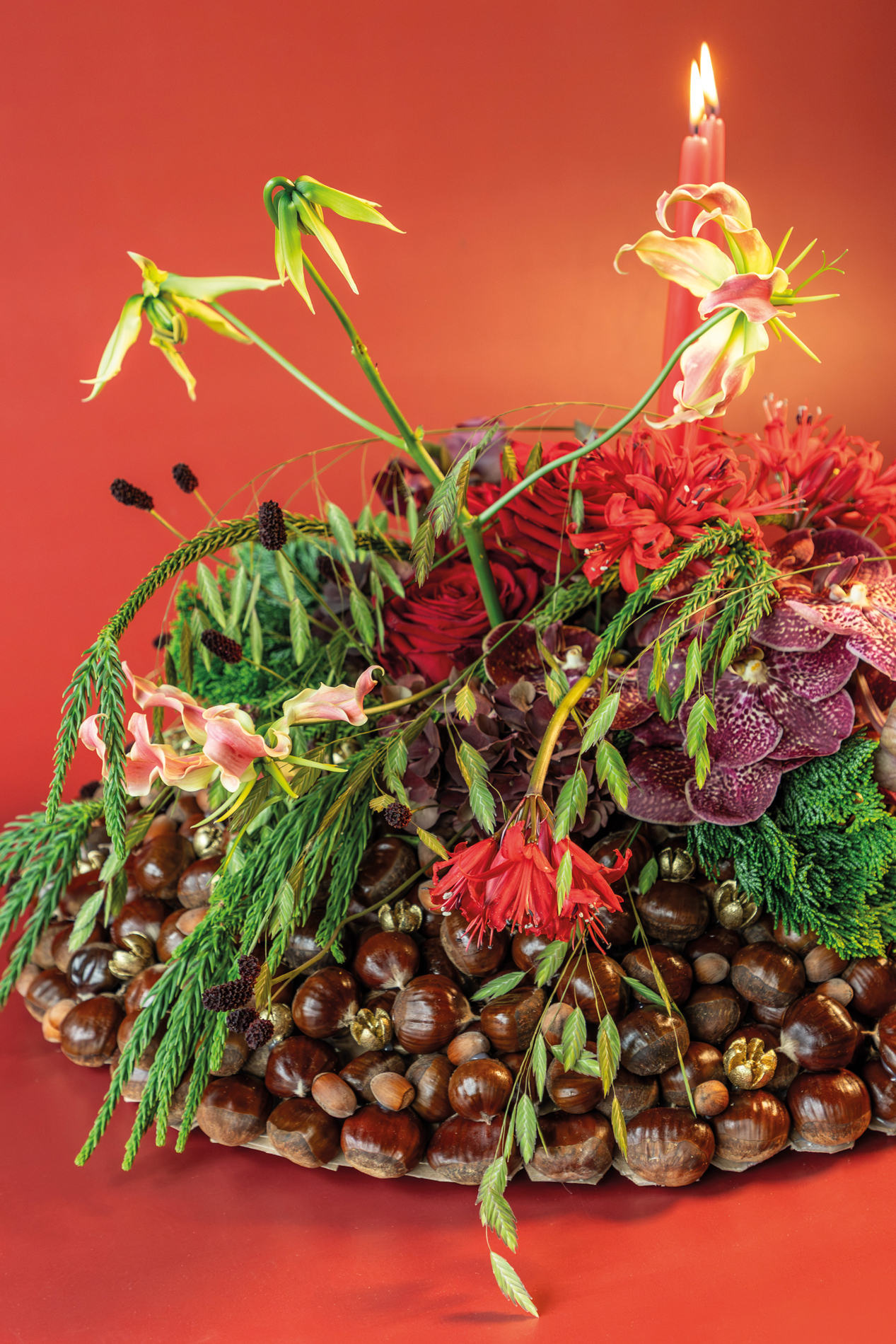
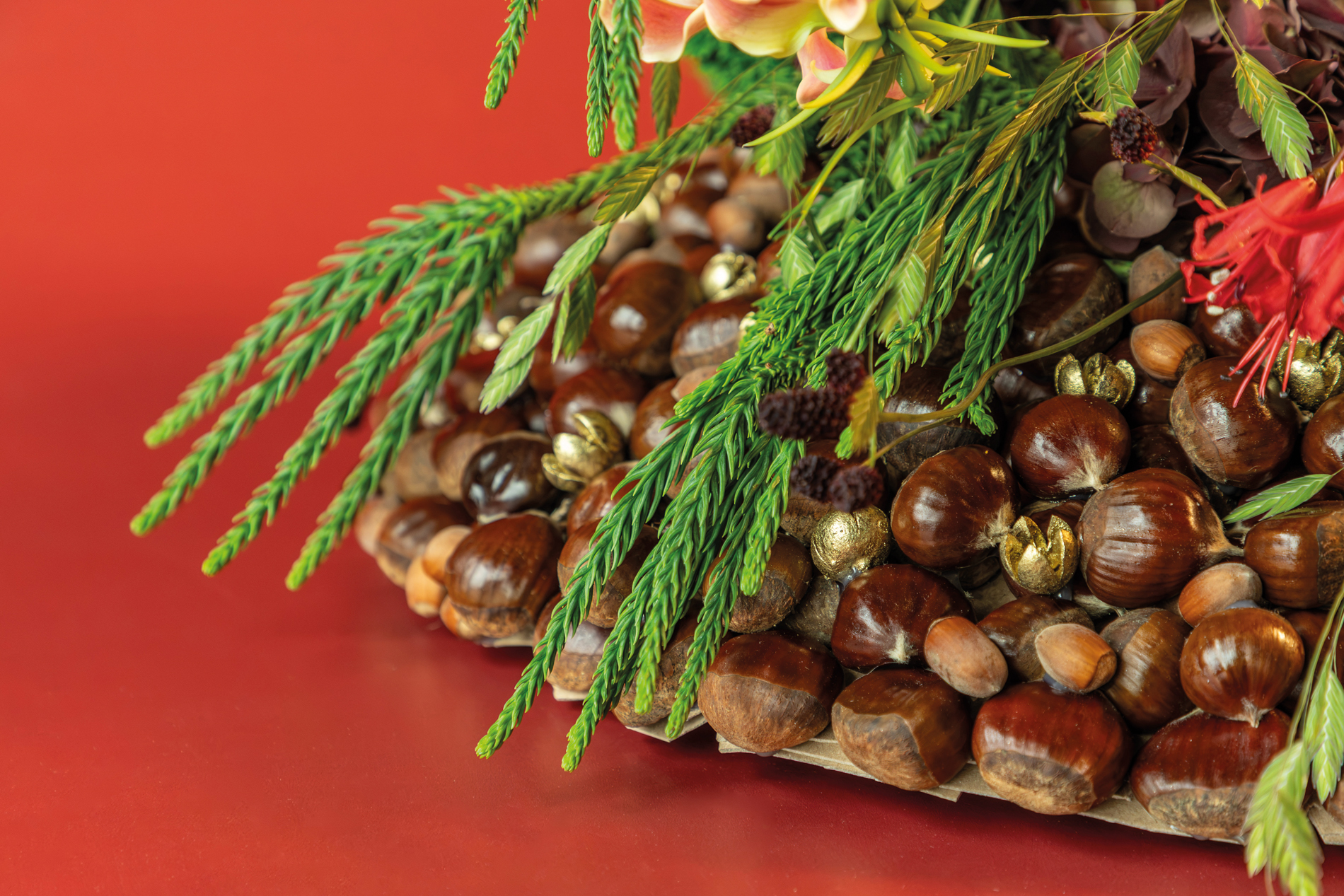
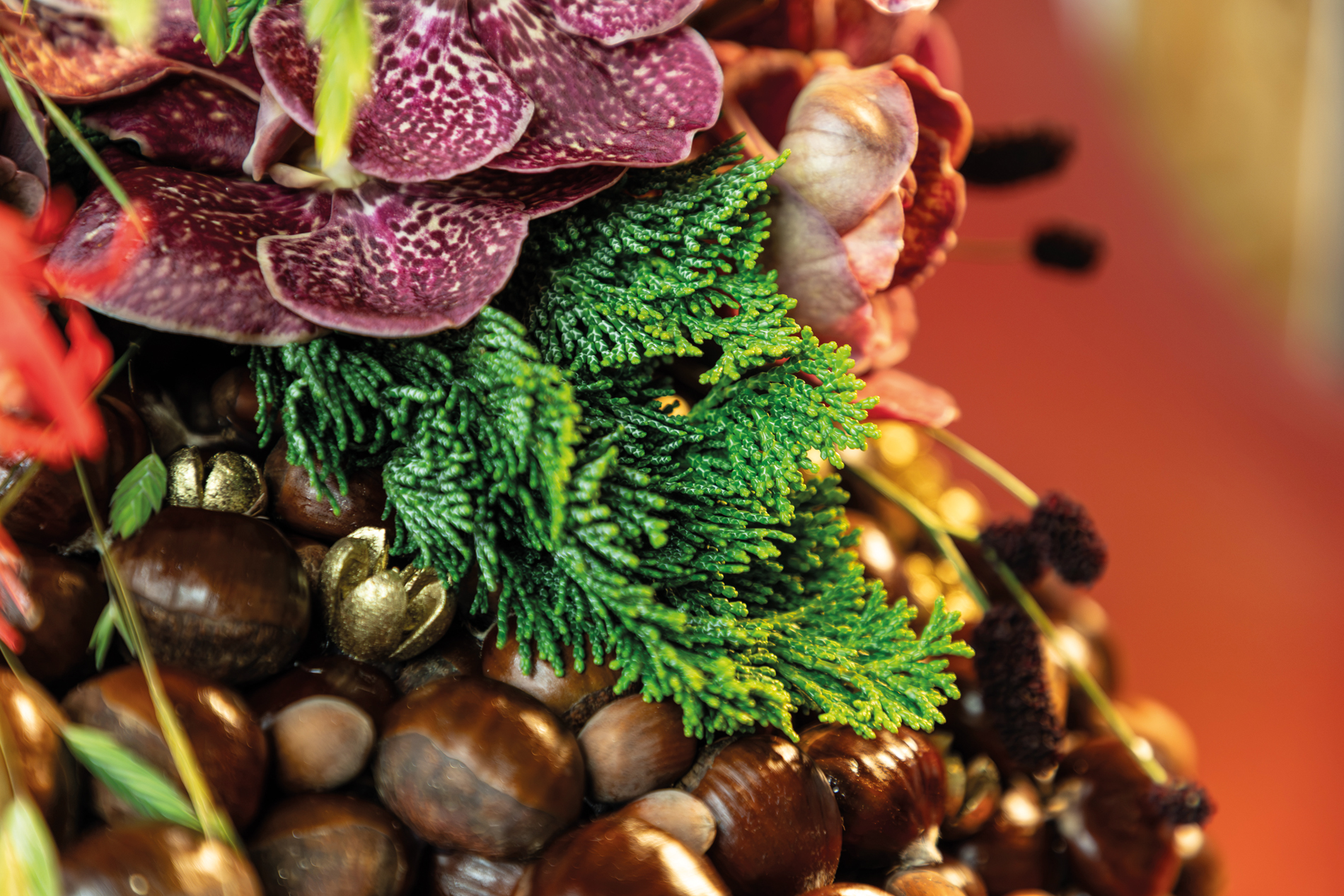
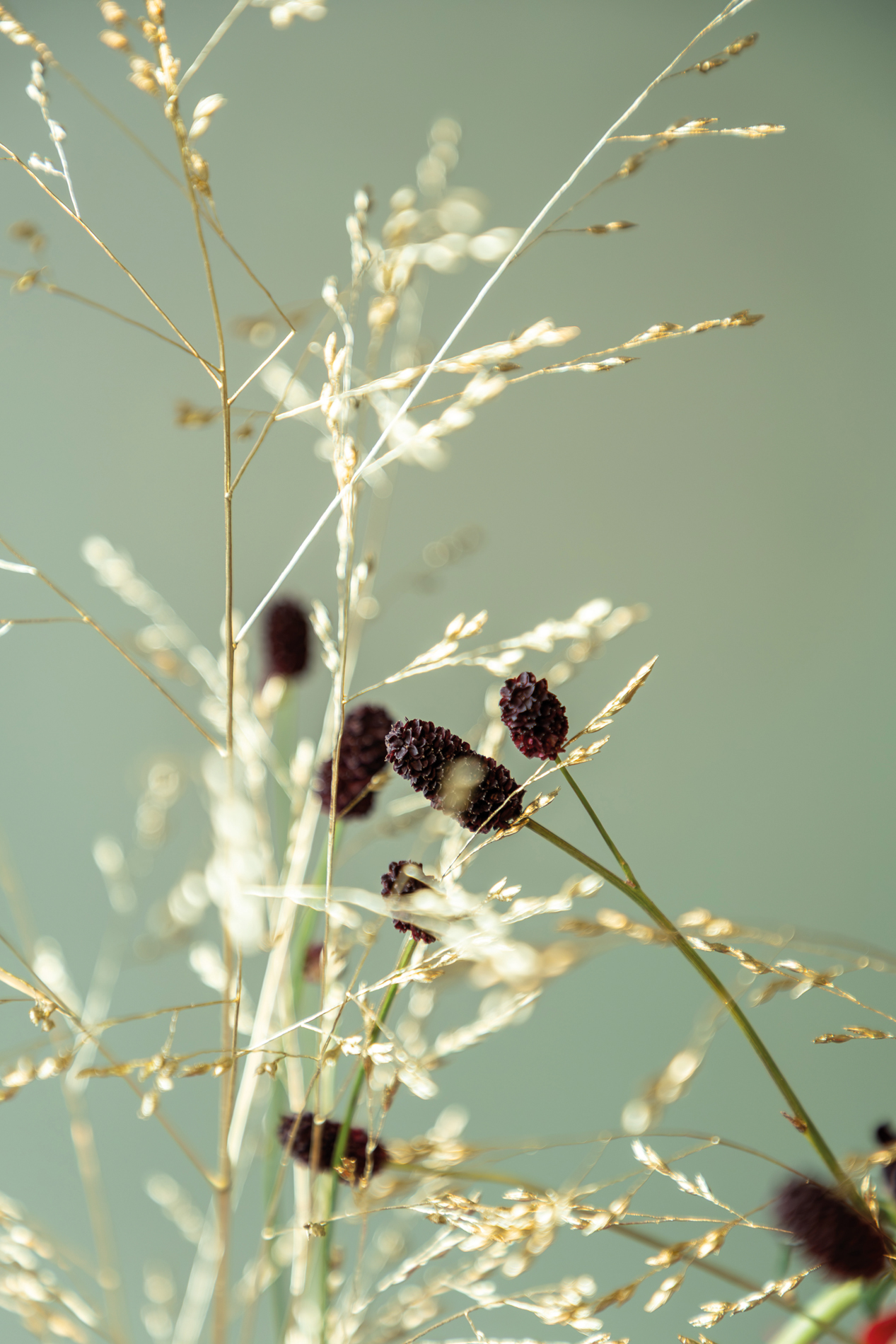
The red Vanda, Nerine, Helleborus, and rose are combined with Gloriosa, Panicum, and Sanguisorba. The greenery, sourced from Andromeda, consists of Cryptomeria japonica ‘Ballerina’ and Chamaecyparis obtusa ‘Nana Gracilis’. Chestnuts add volume to the rounded structure and provide a warm color. Gold-colored brass wire wrapped around the grass stems helps shape the arrangement and integrates the technical element into the overall design.
Corn as a Building Material
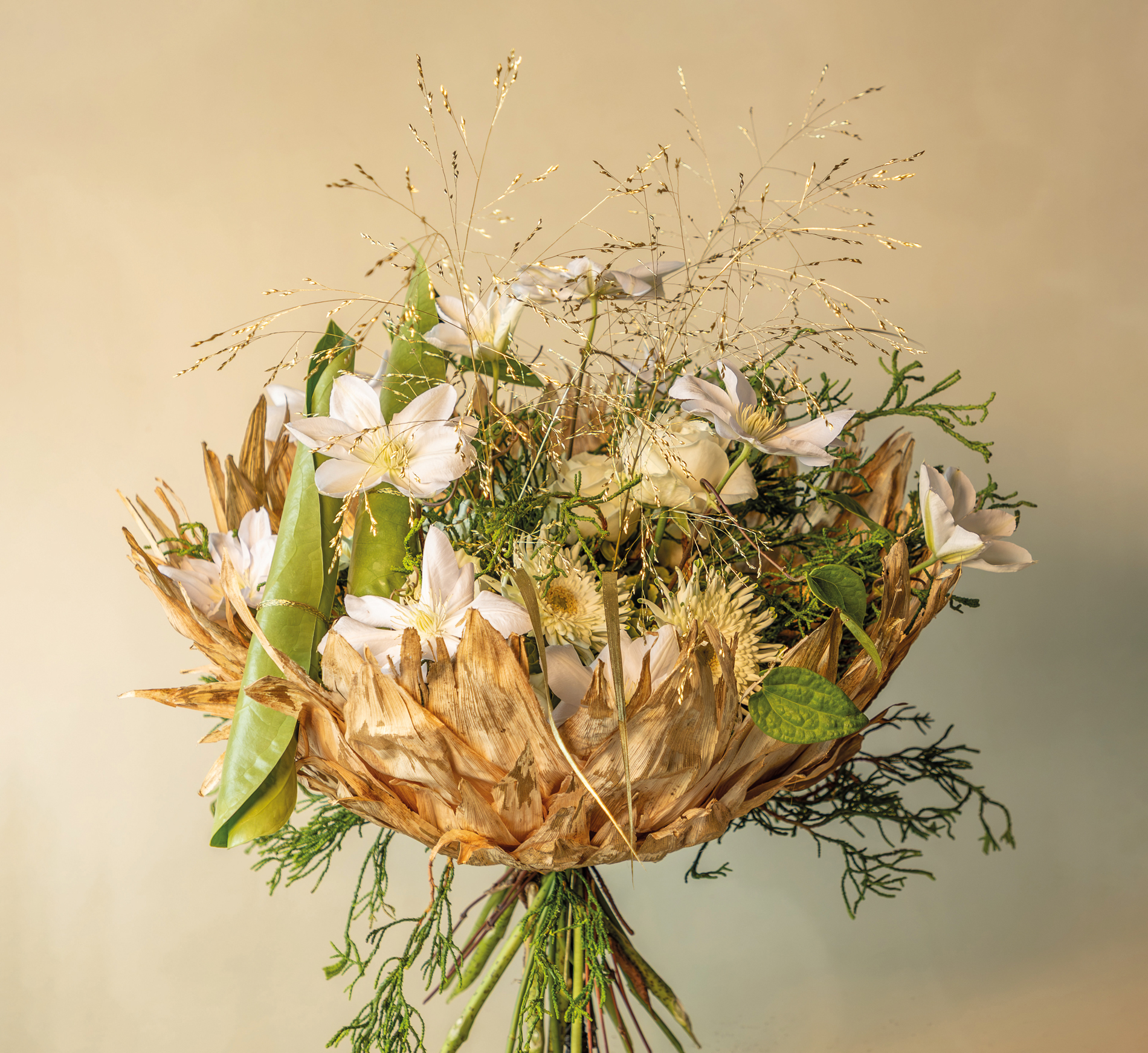
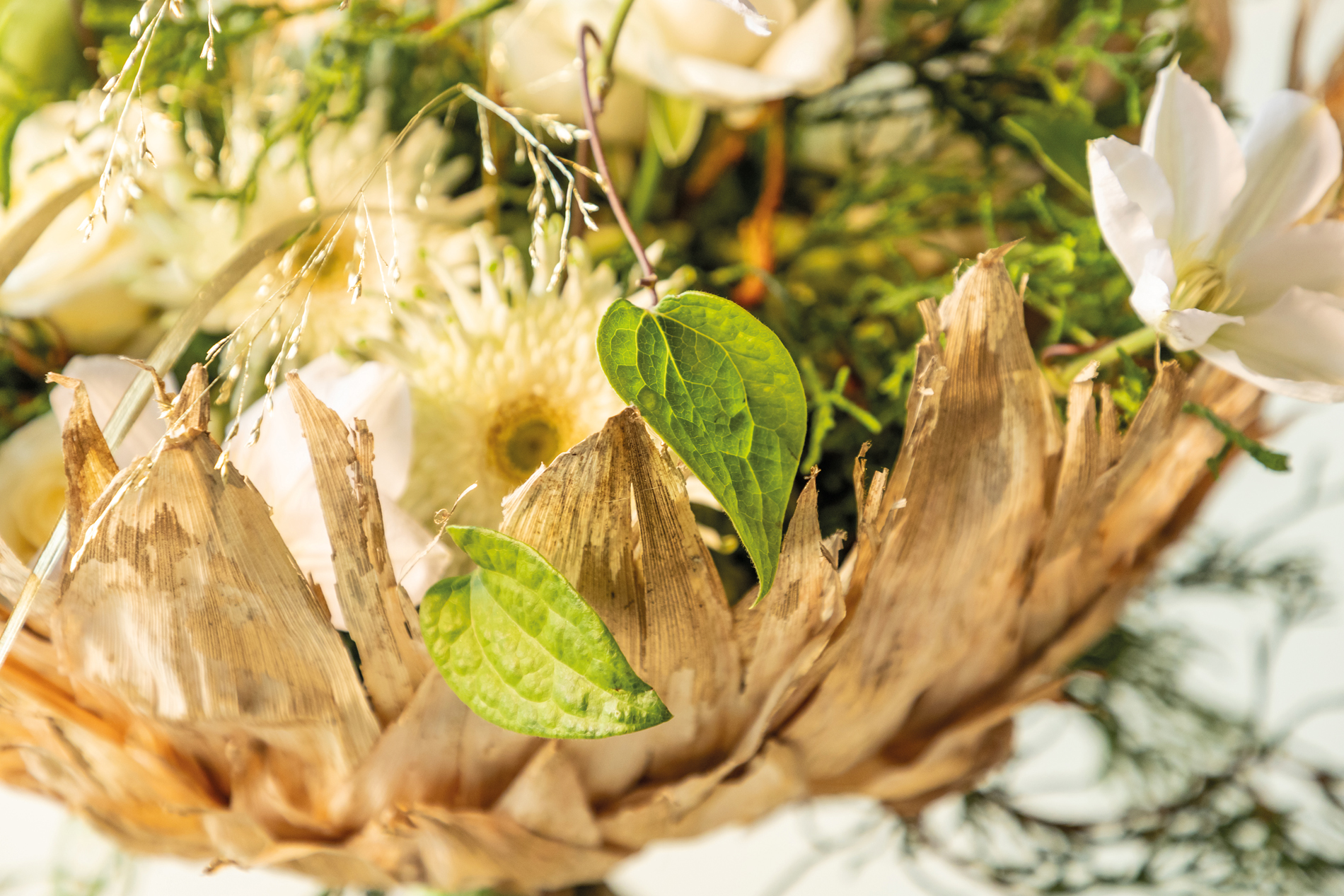
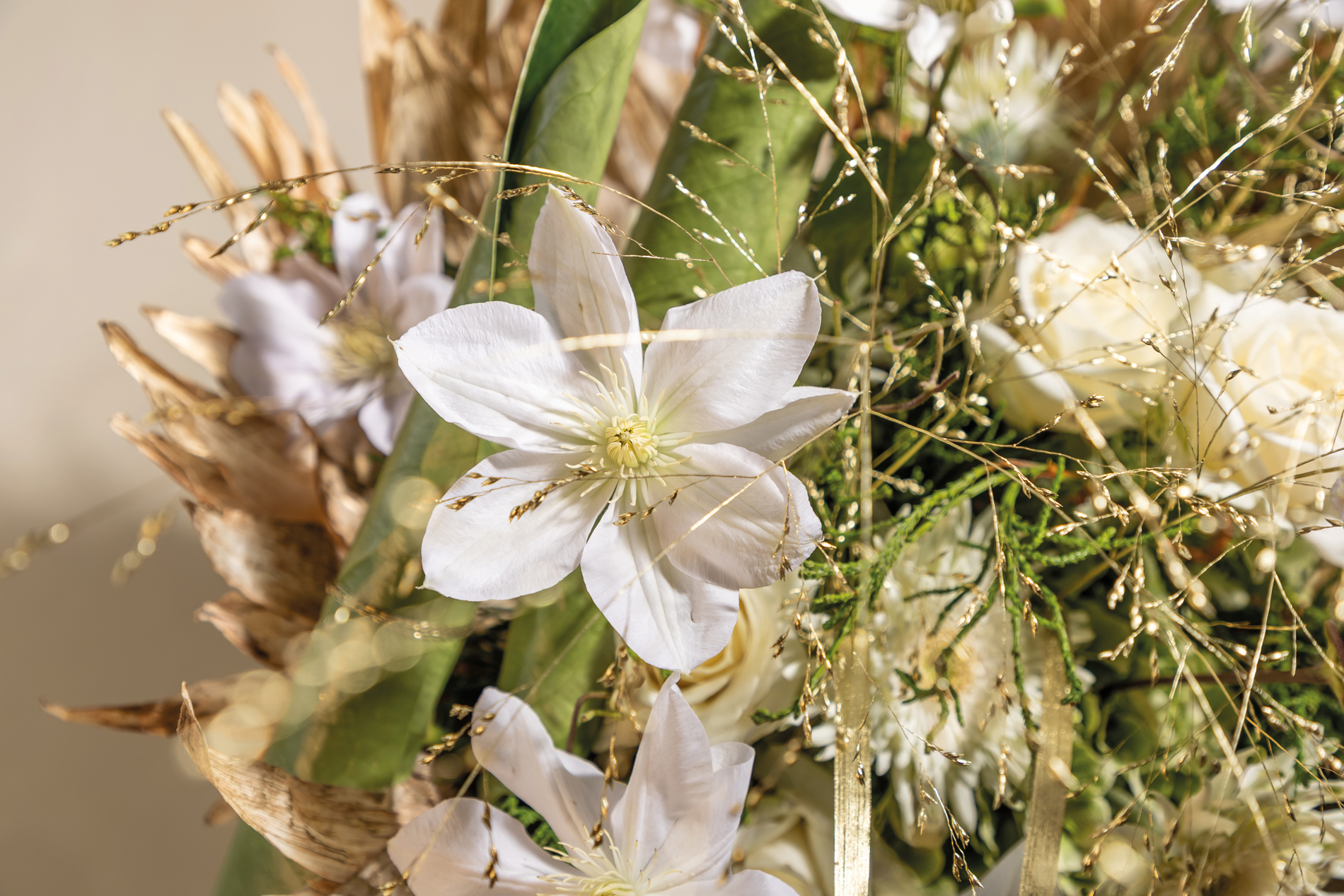
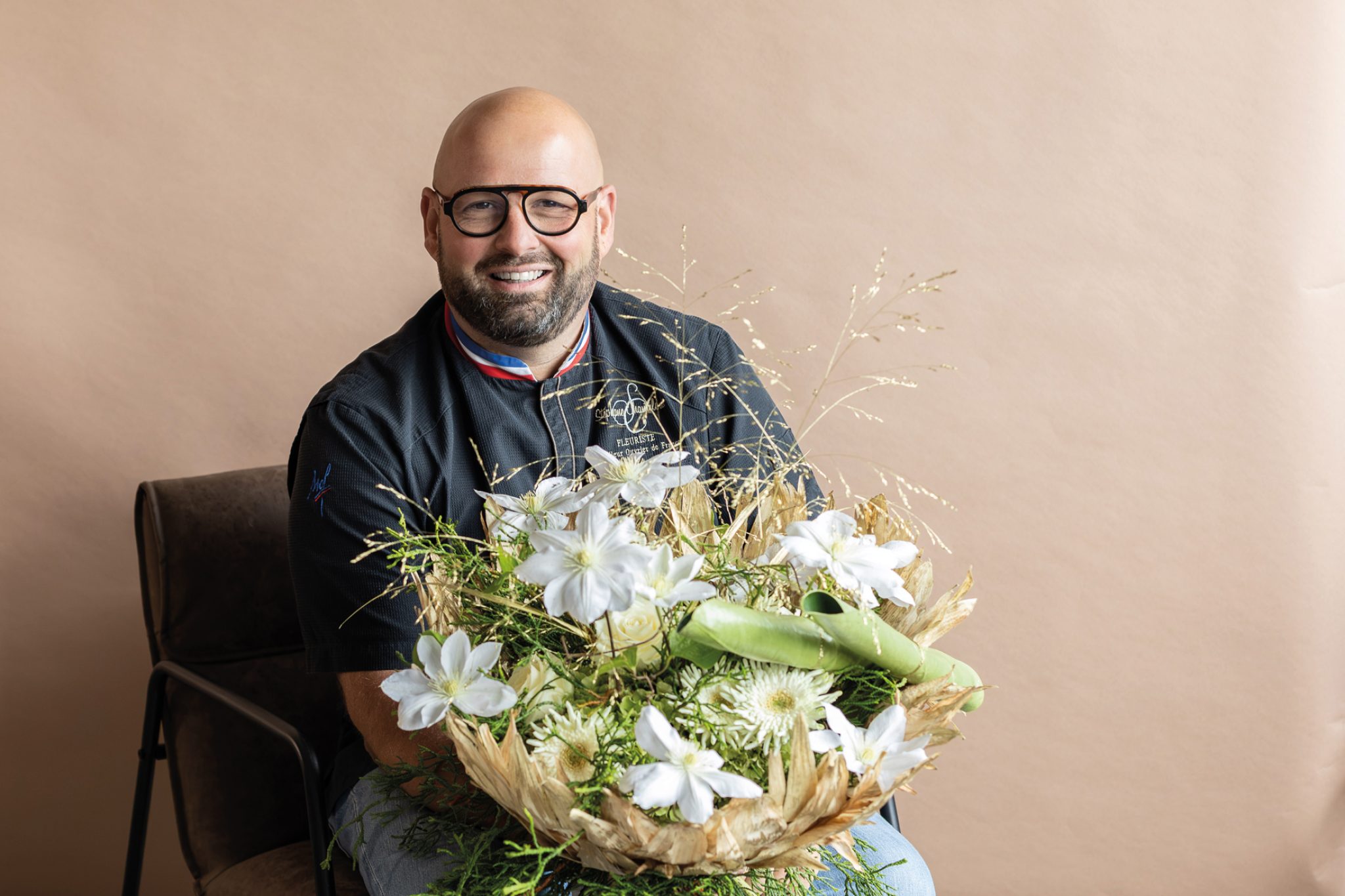
Corn materials also serve a structural function. In the white bouquet, the dried leaves around the cob form a nest-like structure. As a result, the material is more than just a decorative addition. The wide-opening white clematis takes center stage among Gerbera ‘Pasta,’ Rosa ‘Avalanche,’ and green hydrangeas.
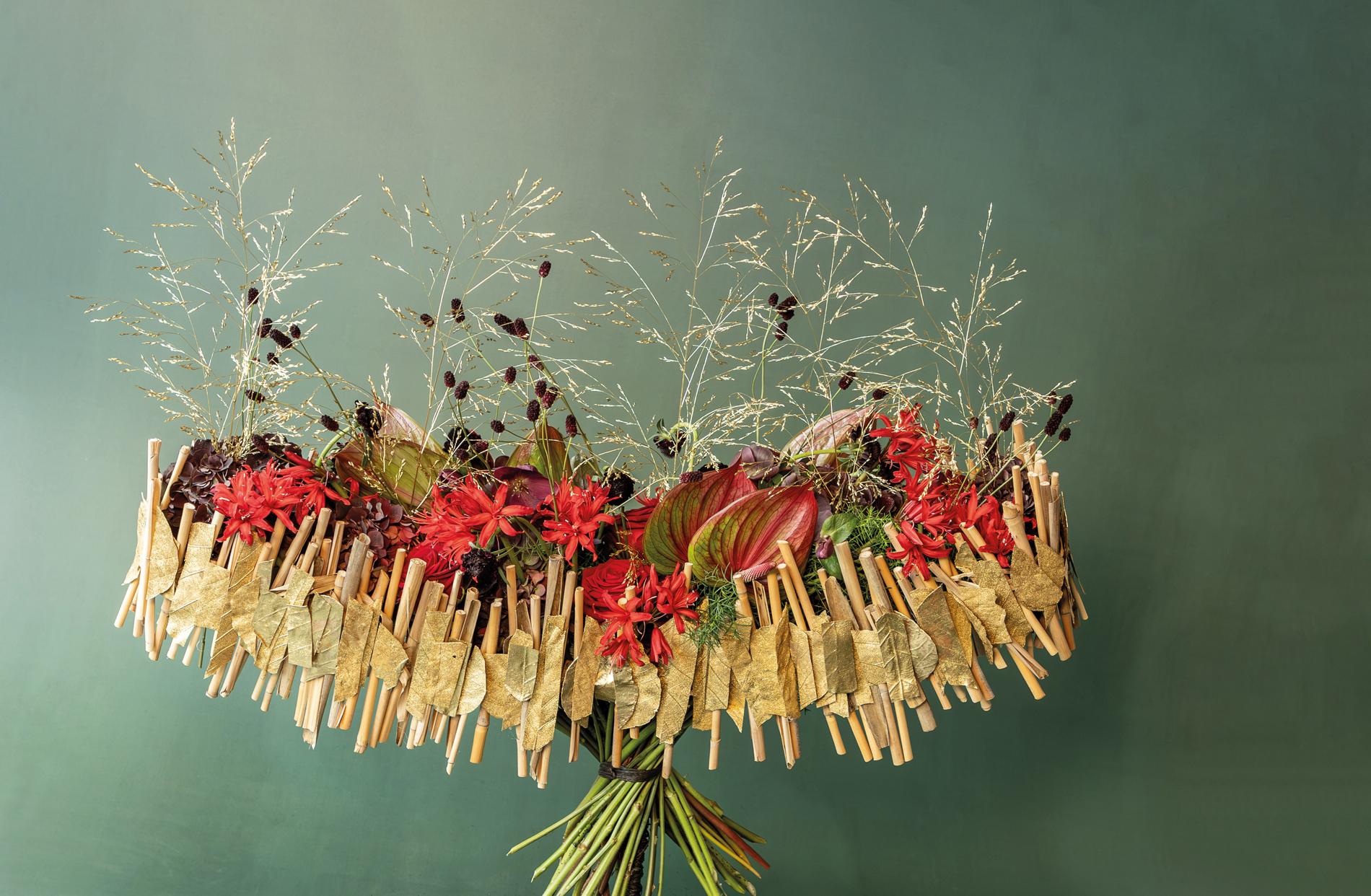
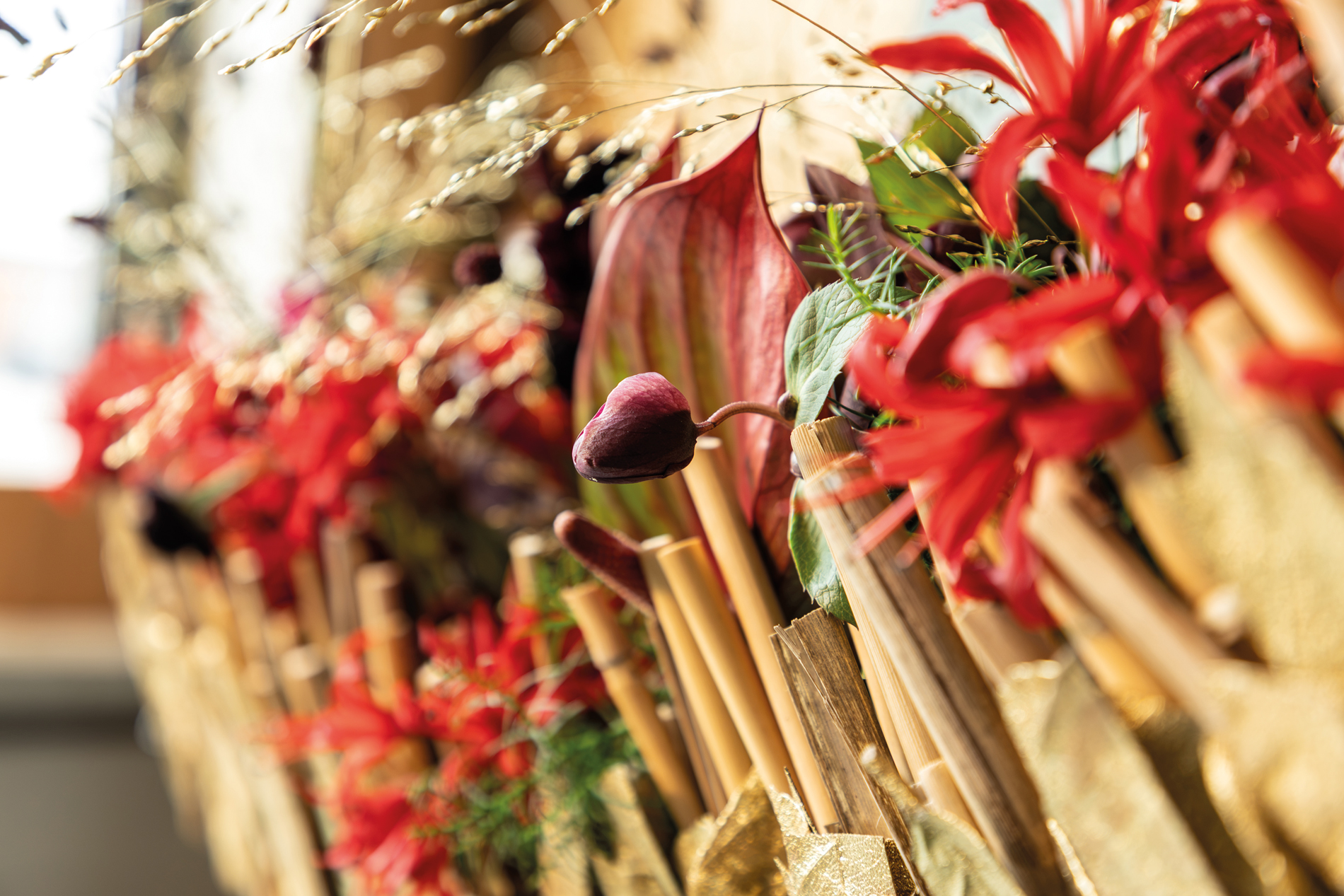
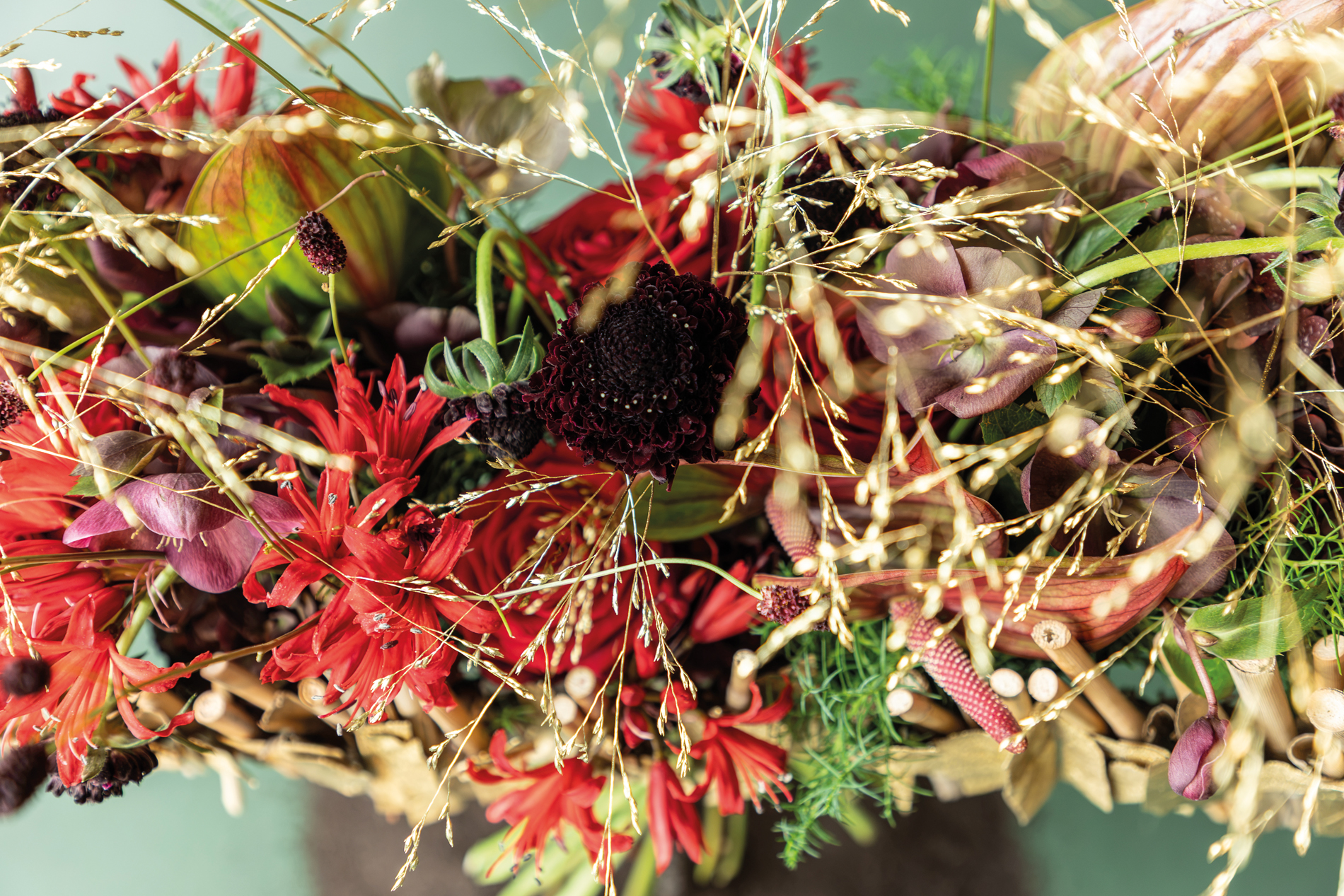
For a red, elongated arrangement, Stéphane draws inspiration from the colors he associates with Christmas: red, garnet, gold, burgundy, and white. The design is a contemporary interpretation of traditional table decor. The structure made of corn stalks remains open, allowing the scabiosa and nerine to stand out between the lines. He calls Christmas his favorite holiday: a family celebration, with children, Christmas trees, and lavishly set tables. That personal preference provides context for the festive color palette of this series.
Polianthes take center stage in this circular arrangement featuring corn cobs. The cobs are arranged parallel to one another on a base of black floral foam; small test tubes provide the water supply. To create the gold accents, Stéphane first sprays the gold onto plastic, which he then uses to stamp the gold onto the flowers. This allows him to apply the gold sparingly and subtly.
Leaves, stems, and parts of the cobs are reused. Stéphane wants to explore the possibilities of these materials and reduce waste. Their natural structure remains the starting point; the gold accents add a different finish.
Large-flowered white clematis, anthurium leaves, white Gerbera “Pasta,” Rosa “Avalanche,” green hydrangea, golden Panicum, and green Andromeda foliage. Dried corn leaves form the nest around the bouquet and are part of its structure. The wide-open blooms of the clematis are a key design element: the flower is given ample space among the dried leaves.
Volume and Sophistication
This round arrangement featuring chestnuts is all about creating volume. Stéphane chose this material for its color and its association with the holidays. The full texture is meant to feel rich and warm. Recognizable flowers and foliage are combined with elements such as red Vanda orchids, providing a more sophisticated counterbalance to the simple character of the natural base.
A small brass wire combines design and technology here. Because it is wrapped around the blades of grass, it can be bent or broken without leaving a visible break. The gold-colored line thus serves as both a finishing touch and a functional element.
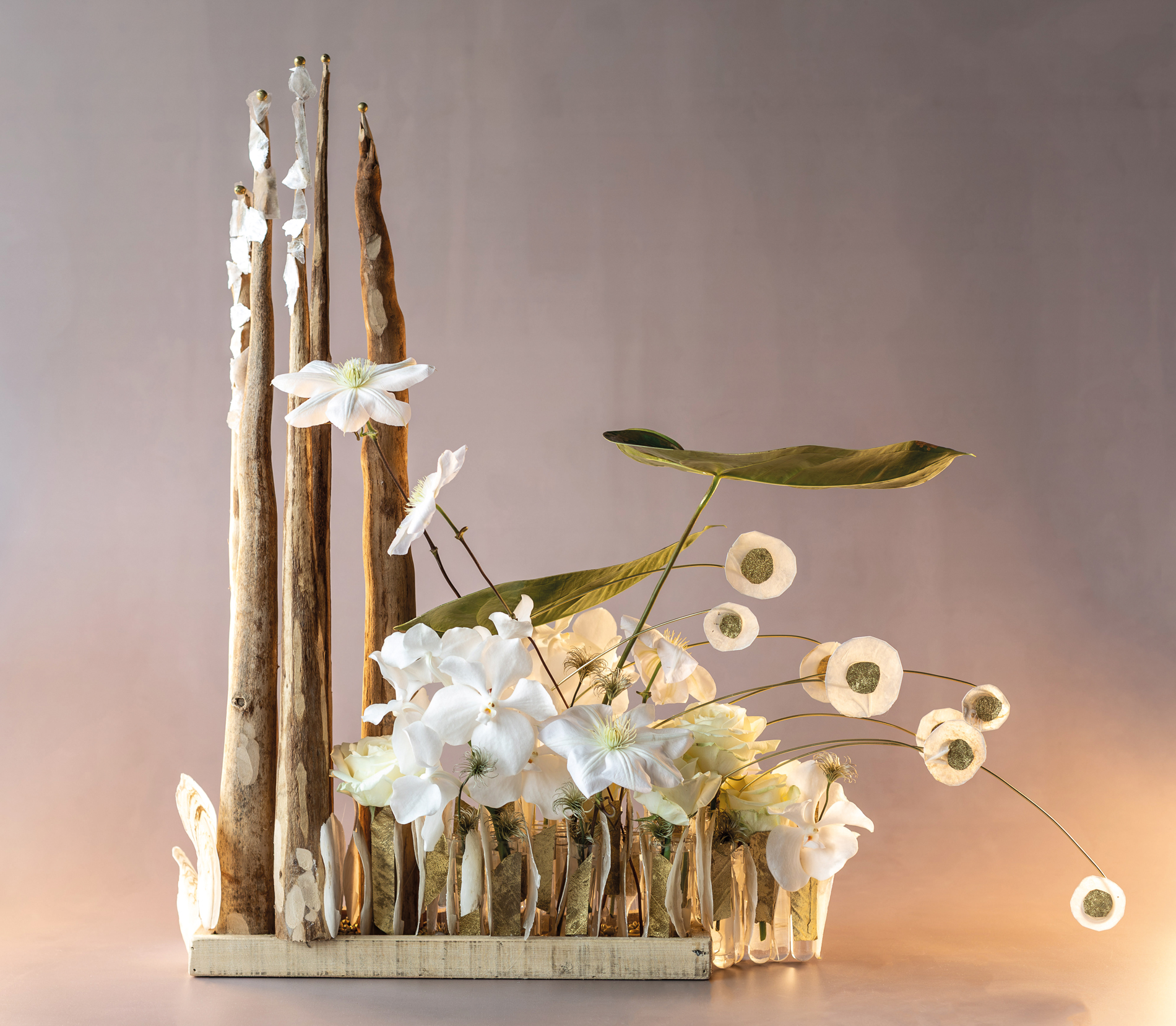
In the sixth creation, mother-of-pearl shells form an important part of an elongated structure, combined with Vanda orchids, clematis, and white roses, among other elements. The materials change, but the design question remains the same: how much presence does a structure need to give the flowers their own space?
Sanguisorba, red rose, Anthurium, golden Panicum, red Scabiosa, hydrangea, Nerine, and Helleborus, with Cryptomeria japonica ‘Elegans’. A slender, elongated structure made of corn stalks forms the base. Stéphane gives the traditional table arrangement an open composition, in which the Scabiosa and Nerine in particular remain visible between the lines. The color scheme is based on his Christmas palette of red, garnet, gold, burgundy, and white.
Vanda orchids, various clematis—including large-flowered varieties—clematis seeds, white roses, and anthurium leaves are incorporated into an elongated structure. Pearl oyster shells play a key role in this arrangement. The combination of shells, flowers, and foliage aligns with Stéphane’s exploration of natural materials as a medium for his floral arrangements.

Get to know Stéphane through 52 questions. Scan the QR code and check it out!