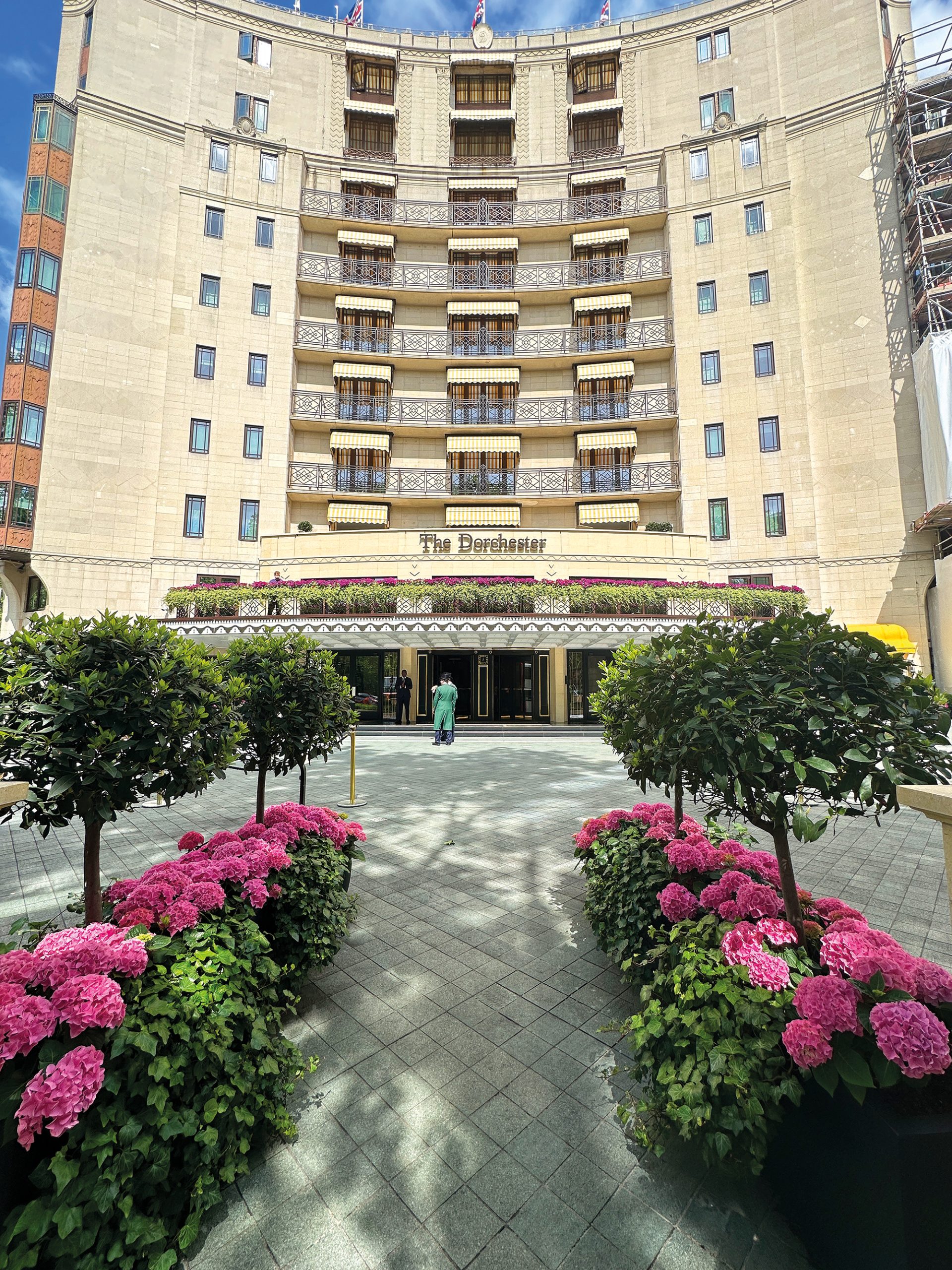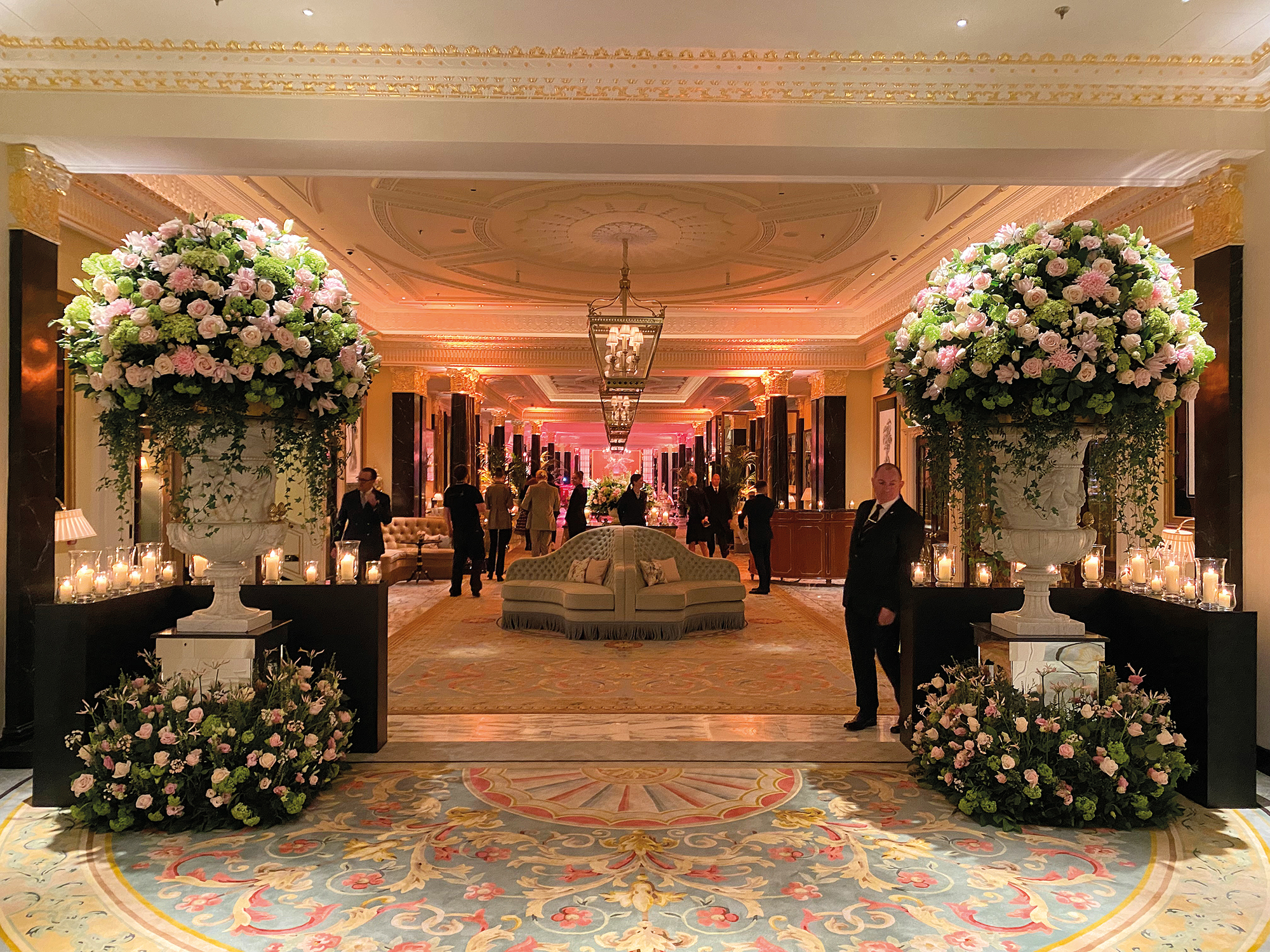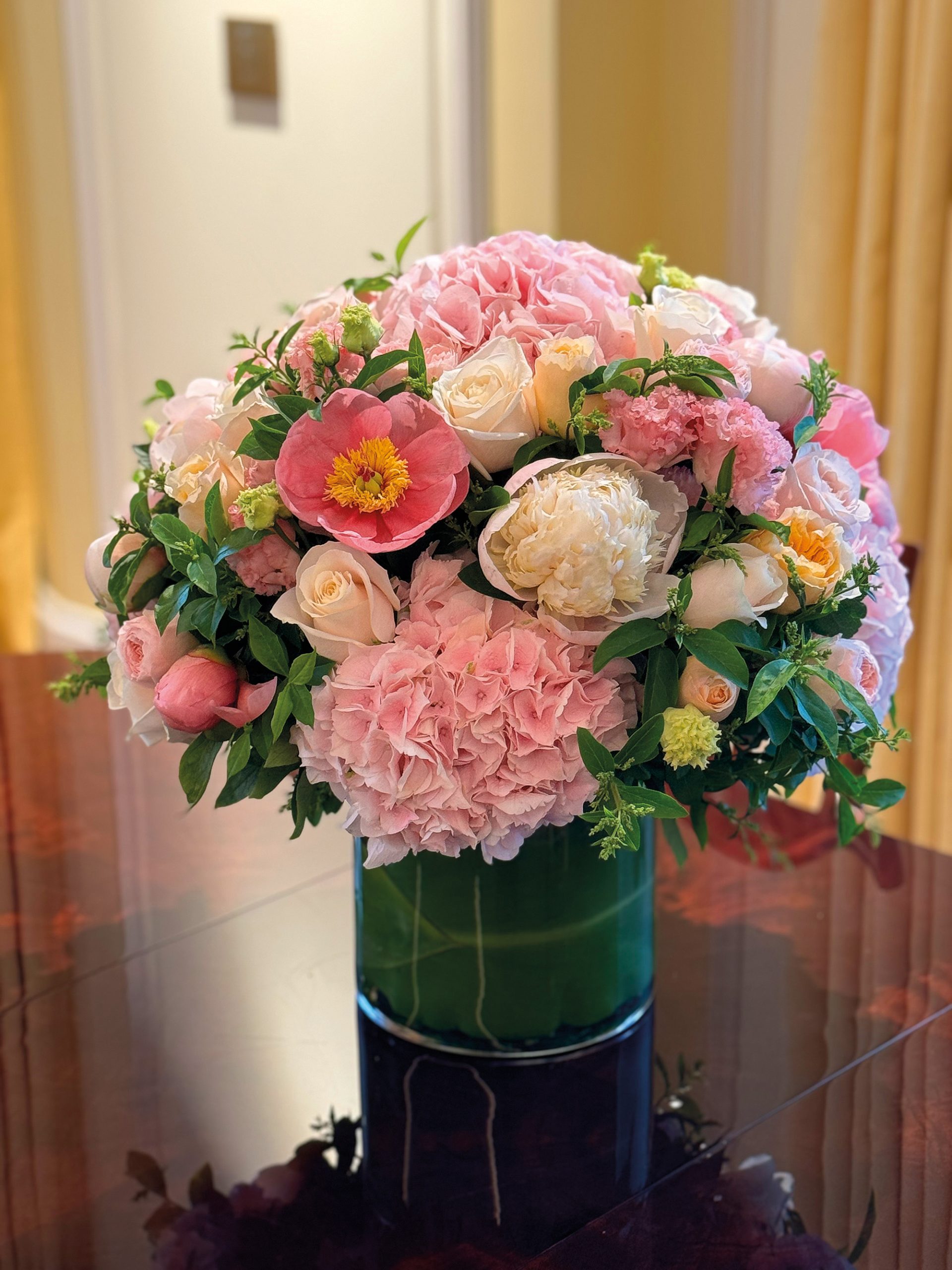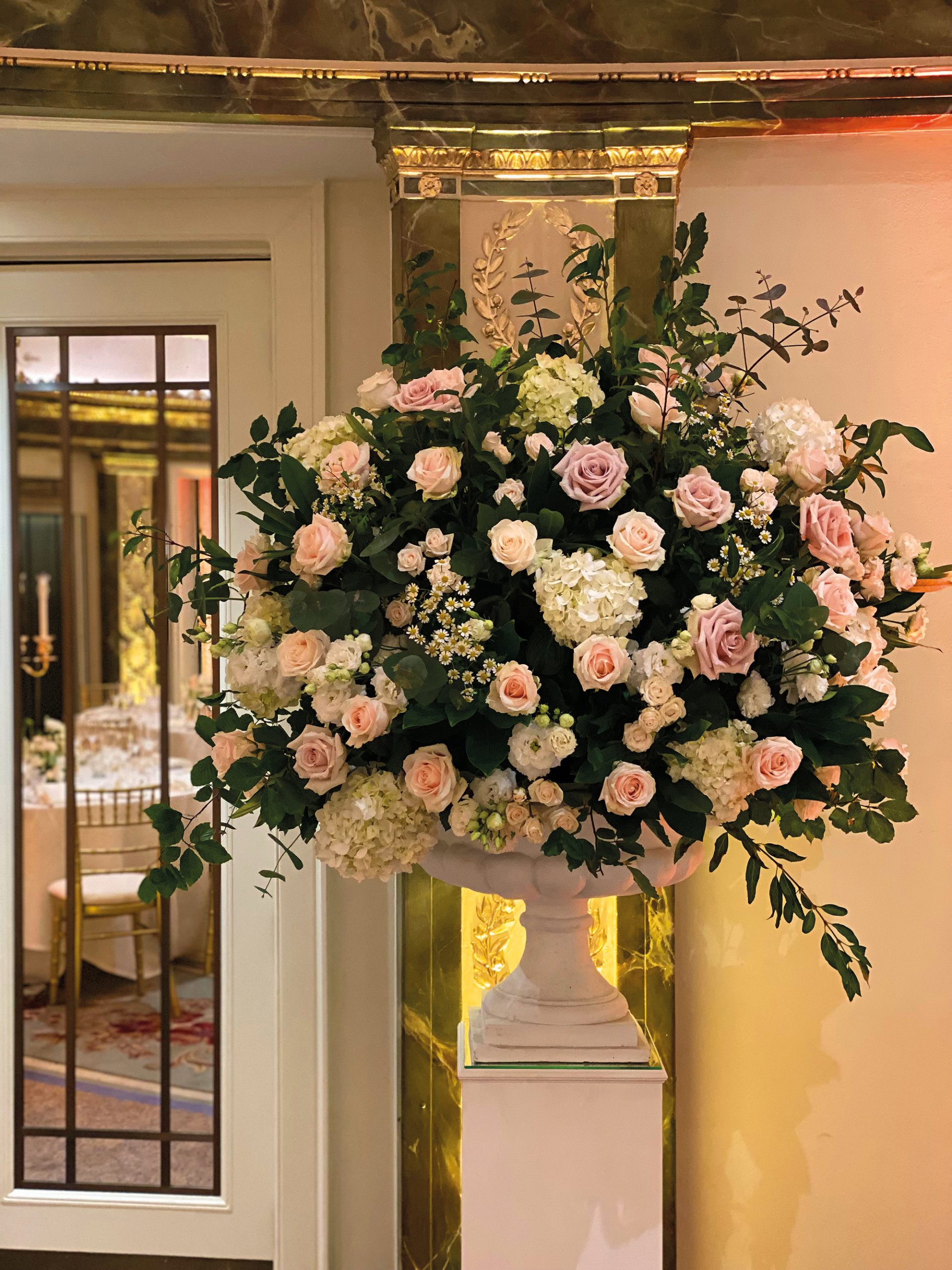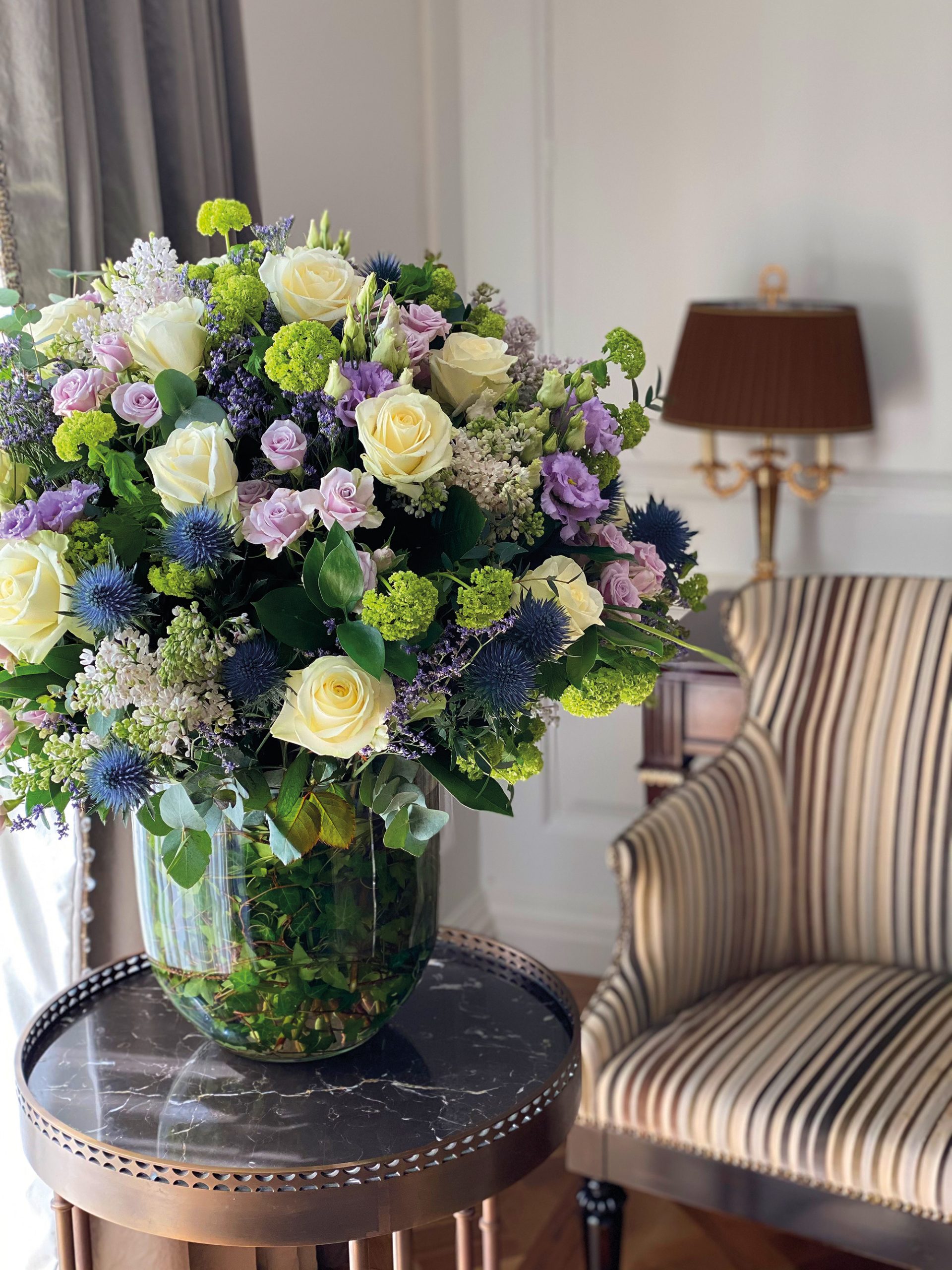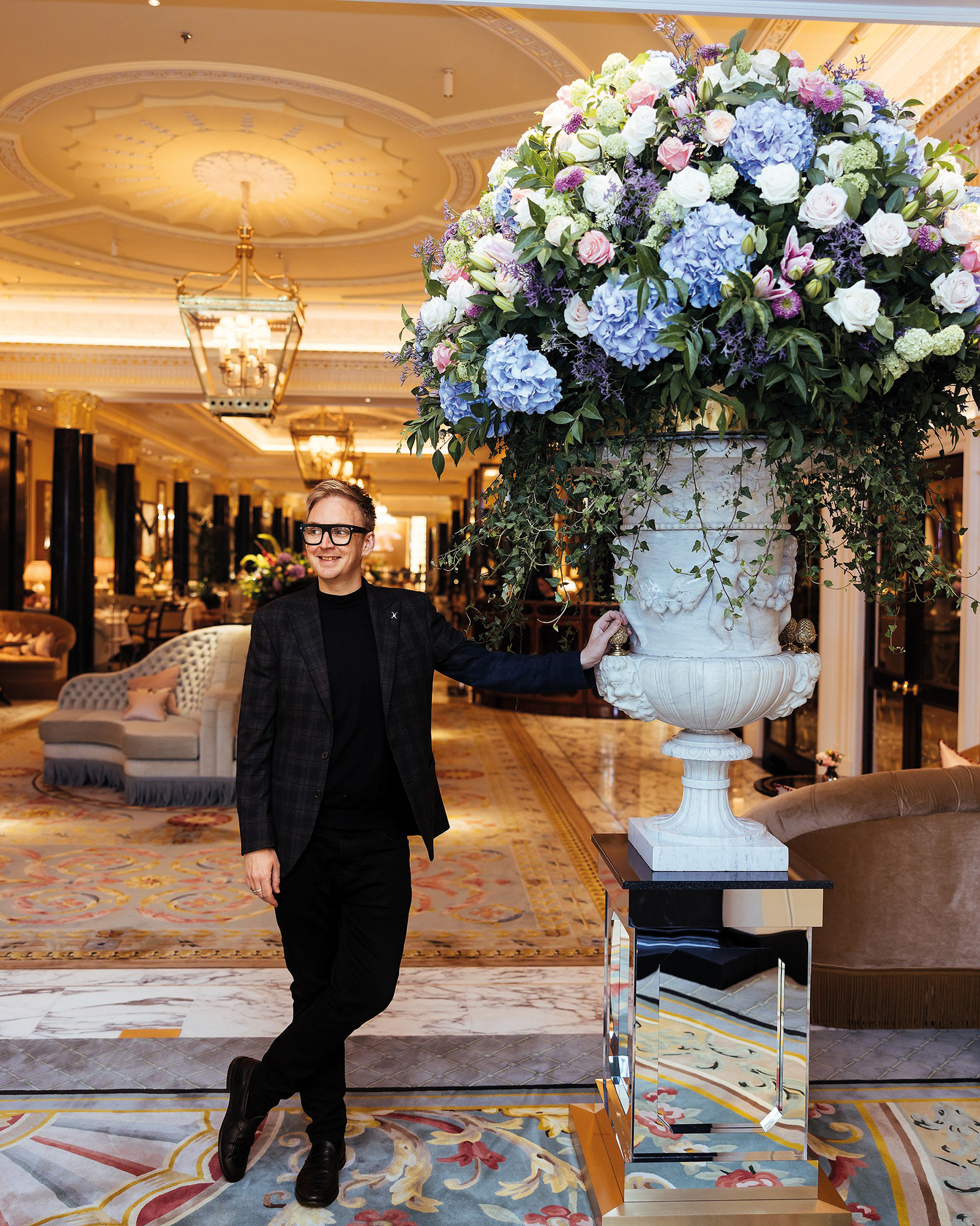
There are very few hotels where flowers play such a prominent role. Anyone who enters through the Art Deco entrance on Park Lane immediately notices how color and scale define the space. Towering floral arrangements mark The Promenade, while changing seasonal displays ensure that the public spaces never look the same for long.
The floral arrangements follow different rhythms. The displays in The Promenade are refreshed every week, while larger seasonal installations are developed months in advance, often around key events on the British social calendar. The result is a balance between continuity and change: guests recognize The Dorchester’s floral signature, but rarely see exactly the same arrangement twice.
That visibility is enhanced by the surroundings. The Dorchester opened in 1931 and has been associated with royal guests, politicians, and Hollywood stars for decades. Thanks to its reinforced concrete construction, the hotel was also considered a remarkably safe base in London during World War II. General Eisenhower used a suite there as his headquarters while preparing for the Normandy landings. Against this historical backdrop, flowers play a distinctly contemporary role: they bring a sense of the seasons, movement, and renewal to an interior characterized precisely by its timeless nature.
A brand within a brand
Phil was introduced to the floristry trade at age fourteen, when he was looking for a part-time job. The trade ran in the family, too: his grandfather was a florist and greengrocer. “I loved it right from the start, even though it was hard work and I had a lot to learn,” he recalls.
After school, he managed local flower shops for several years before starting as a supervisor at The Dorchester. Phil has now been with the hotel for sixteen years, fourteen of which as a designer florist. The transition meant working on a completely different scale: larger budgets, prominent guests, and some of the hotel’s most important spaces. Even more important was the opportunity to develop a recognizable floral identity over the years, rather than simply creating isolated arrangements one by one.
He describes his style as “classic with a contemporary twist,” inspired by the city around him. That balance is essential in a hotel with such a distinctive architectural and decorative character. The floral arrangements must blend naturally into the surroundings without becoming predictable. At the same time, it must reflect the hotel’s standards while retaining the creator’s own signature style. According to Phil, creating “our own brand within a brand” is “the greatest honor.”
“Creating ‘our own brand within a brand’ is the greatest honor”
The Dorchester Rose
The clearest embodiment of this approach is The Dorchester Rose, developed in collaboration with the Dutch rose grower Meijer Roses. The rose has a loose, lush bloom and a soft blush-pink hue that becomes more intense as the flower opens. The rose was specially developed to complement the hotel’s interior color palette.
“That was a dream come true. It’s amazing to see how much the hotel has embraced the rose. It’s even featured in the painting hanging in the hotel lobby.”
The rose is now making a comeback in floral arrangements throughout the hotel: from the large vase arrangements along The Promenade to the bouquets guests find in their rooms. Its value lies not only in its exclusivity but also in the sense of continuity that the rose creates. By using a single, recognizable flower on various scales and in diverse contexts, a sense of cohesion is created between the public displays, personal touches, and the hotel’s broader brand identity.
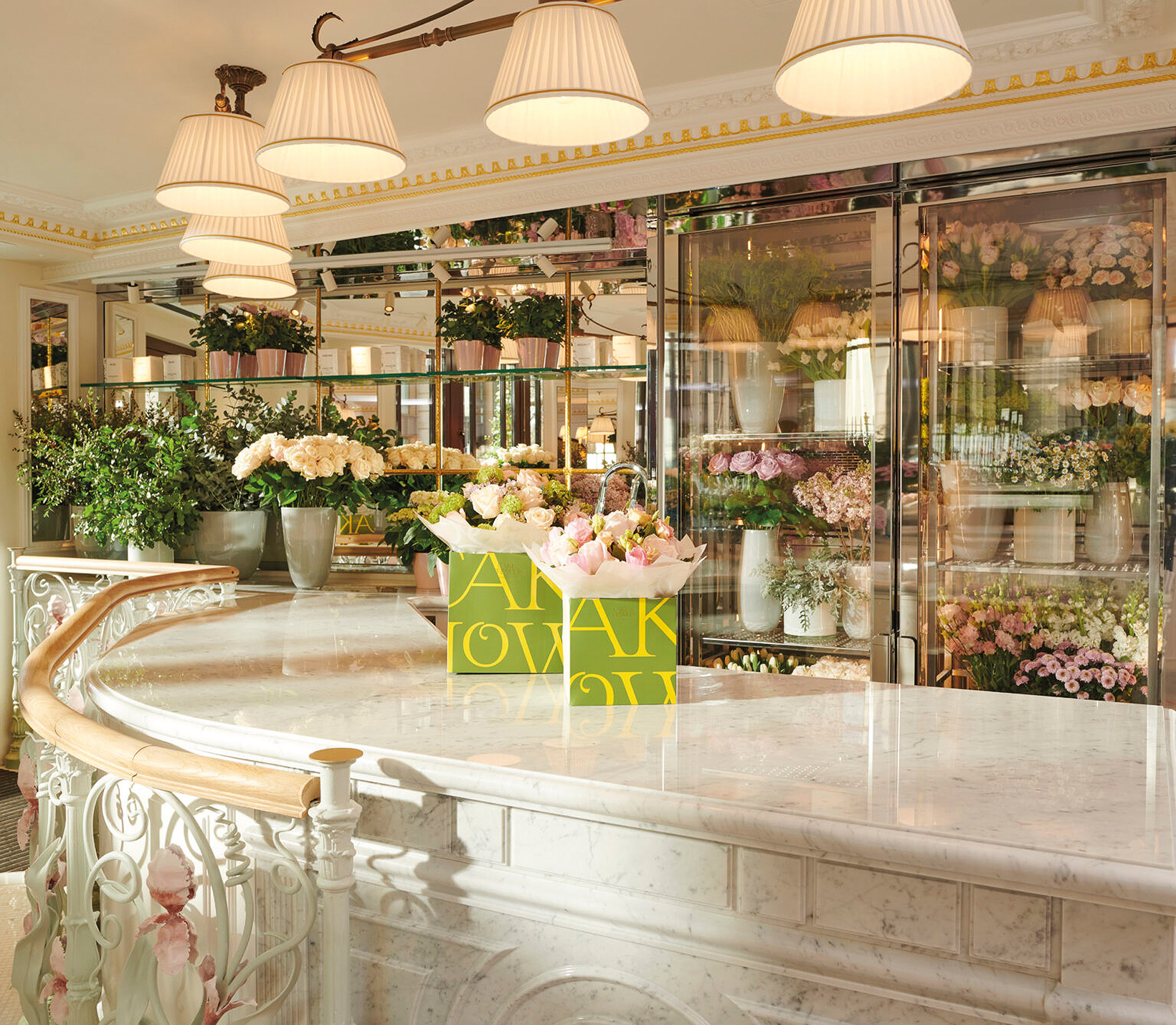
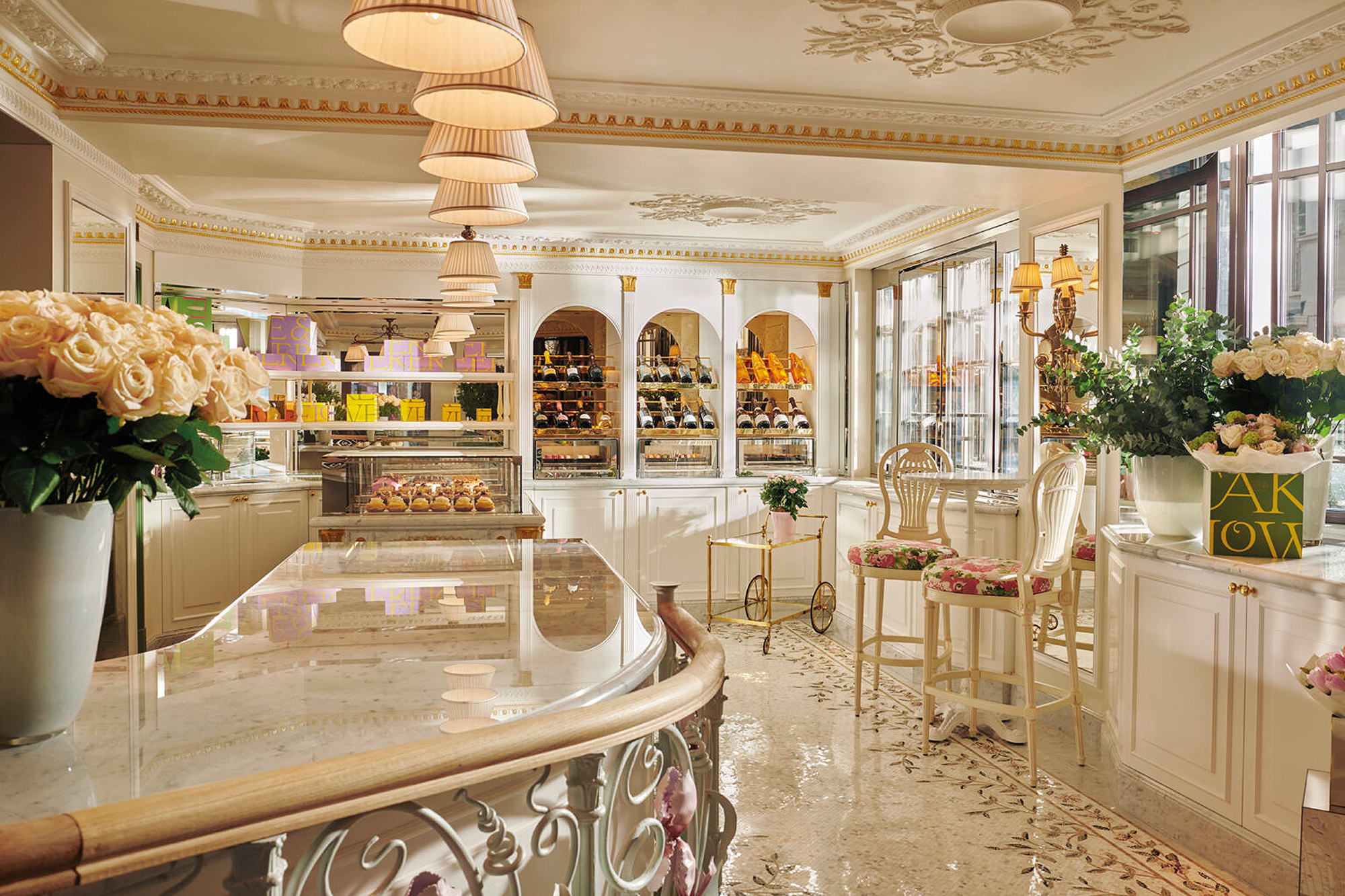
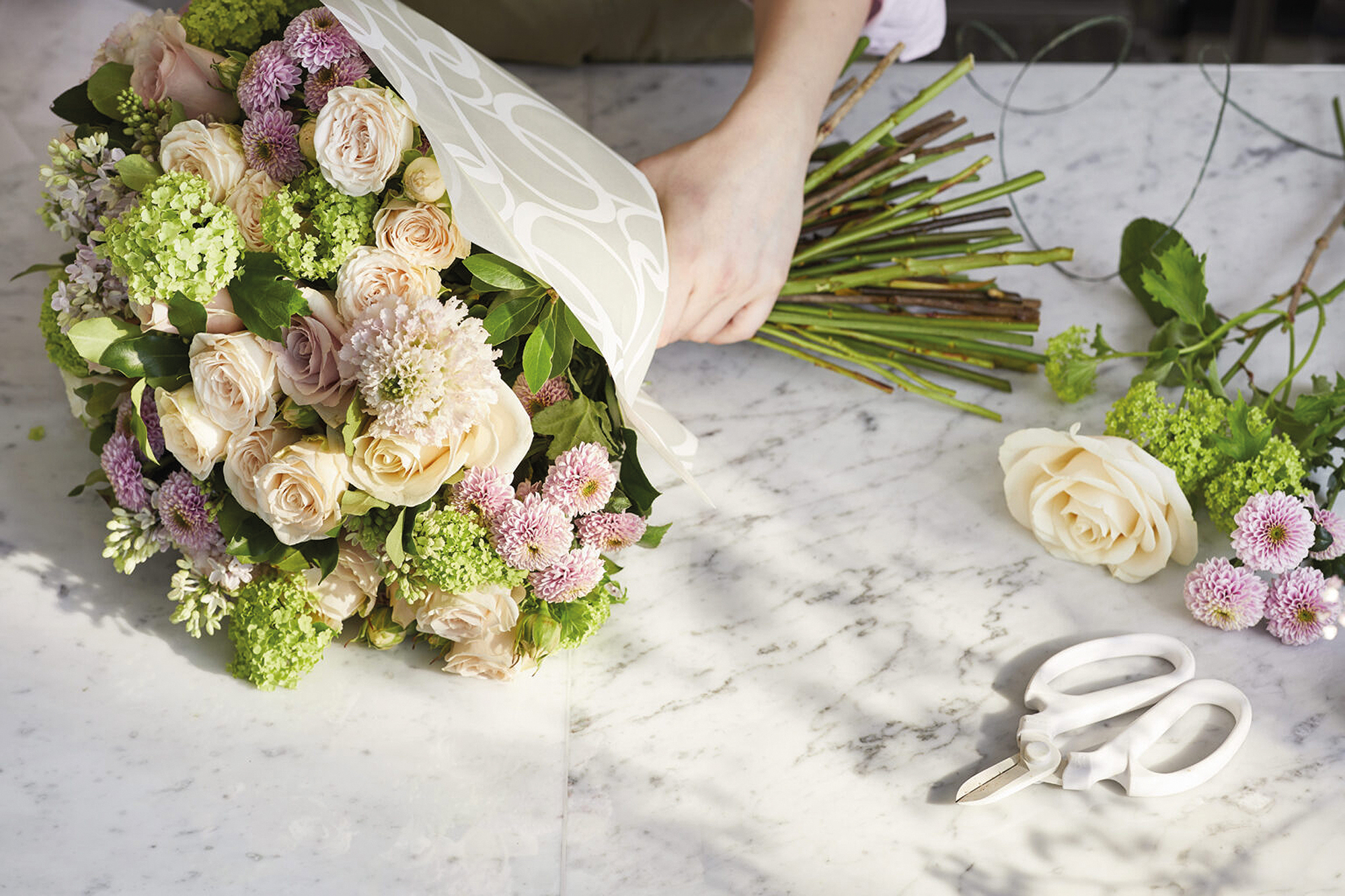
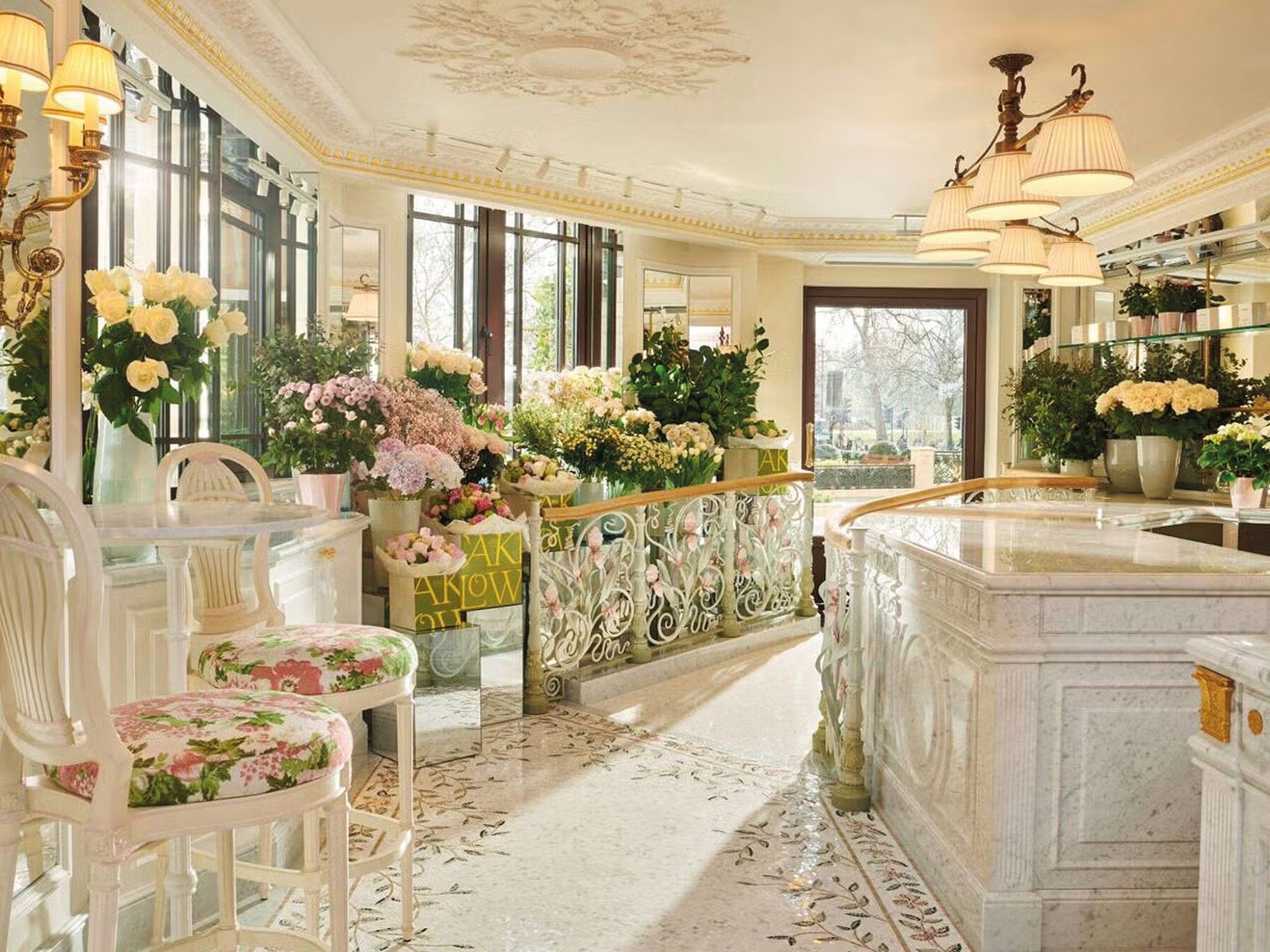
In 2023, that identity was given its own retail concept with the opening of Cake & Flowers. The boutique is located on the corner of the building on Deanery Street and brings together Phil’s floral arrangements with the pastries from The Dorchester. As a result, the floral identity extends beyond the lobby: guests and visitors can take a piece of the hotel’s aesthetic home with them.
“Guests and visitors can take a piece of the hotel’s aesthetic home with them.”
Designing on a Hotel Scale
Floral design for the hospitality industry requires more than just a series of striking installations. A large arrangement in a public space, a bouquet for a suite, and flowers for a private event must each complement their surroundings while remaining part of the same visual world.
Phil selects flowers based on the season, the space, and the occasion. At the same time, the weekly updates to the displays at The Promenade and the planning of large-scale installations—months in advance—require a reliable organizational structure to support the creative process. Consistency depends not only on the original design concept, but just as much on timing, availability, and execution.
That’s why the team and the network of suppliers are also essential. When asked why he’s been working at The Dorchester for so long, Phil points not only to the variety in his work but also to the people around him. “Every day is completely different, and there’s always something keeping me busy. I work with an amazing team and a strong network of suppliers who support me in everything I do.”
For florists working in the hospitality industry, it is precisely this combination that matters. The most visible displays may shape the public image, but their impact depends on consistently applied quality standards in every floral arrangement. At The Dorchester, luxury is expressed not only through scale, but above all through consistency: a single birthday bouquet must be given the same attention as a large seasonal installation.
“Luxury is expressed not only through scale, but above all through cohesion.”
A signature style that continues to evolve
After sixteen years at the hotel, Phil’s influence is evident in virtually every floral display at The Dorchester. The strength of his work, however, lies precisely in its ability to continue evolving. Seasonal flowers change, installations are updated, and individual arrangements are tailored to specific guests, spaces, and occasions, while the underlying design language remains recognizable.
Perhaps that is the most important lesson to be learned from The Dorchester’s floral approach. A strong signature is not a fixed image that is endlessly repeated. It is a cohesive set of aesthetic choices that can be adapted without losing its own identity. In a hotel built on history and continuity, flowers provide the counterbalance: ephemeral, attuned to the moment, and constantly renewed, yet an unmistakable part of the establishment.