
Wool strands
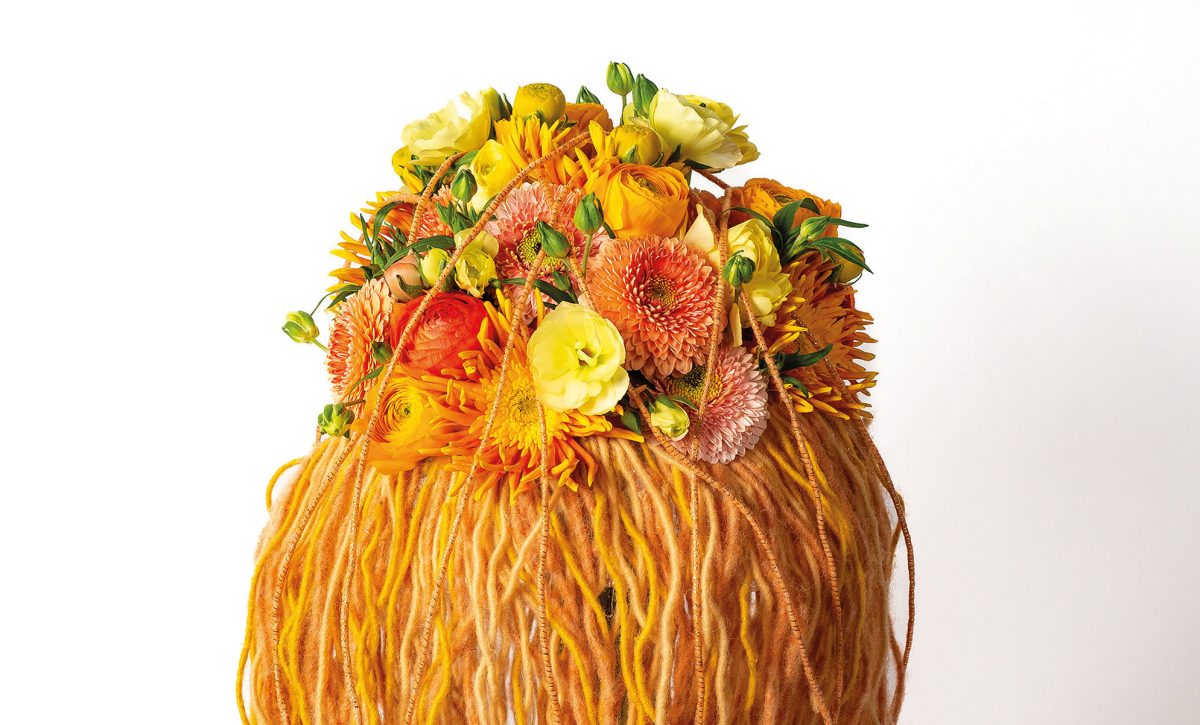
Strands of tone-on-tone wool hang gracefully from a hand-tied bouquet. The flowers are carefully arranged in a spherical shape. Wire wrapped in wool completes the arrangement and beautifully highlights the material.
More depth
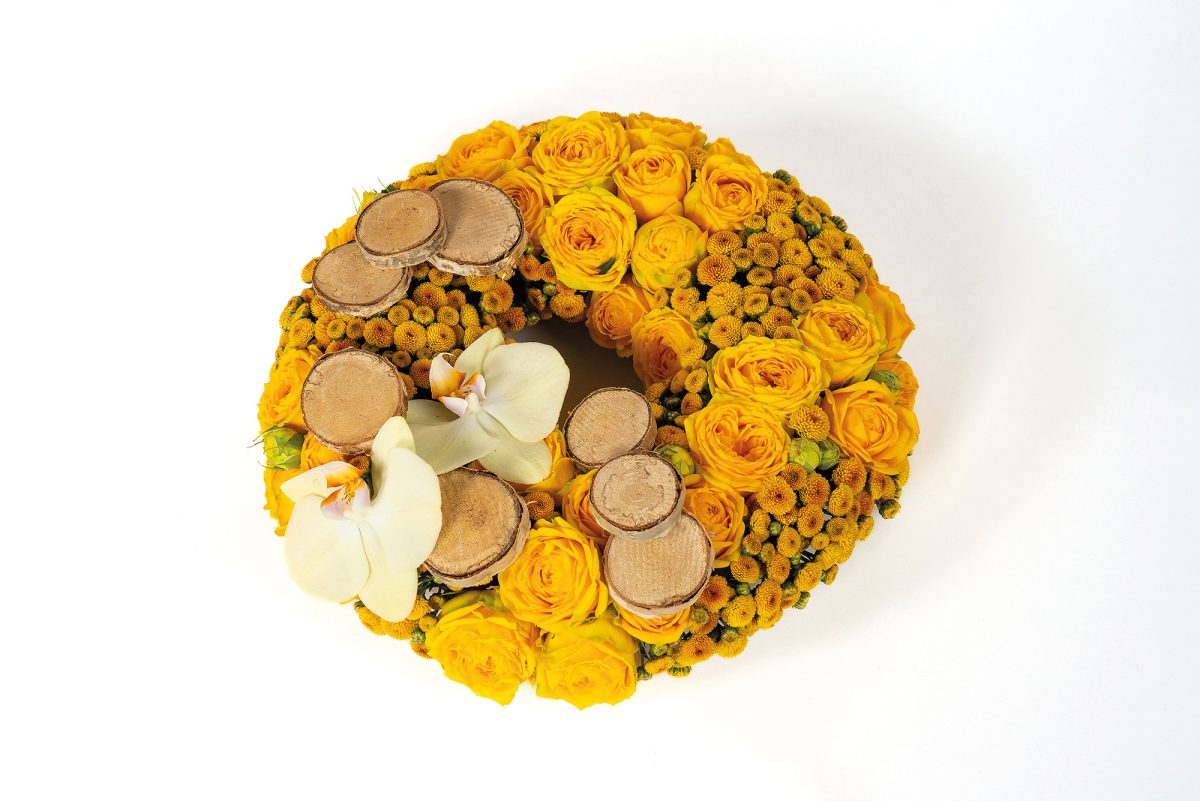
Cutting the edges of an Oasis wreath form at an angle creates more depth. Cluster roses, Santini chrysanthemums, and Phalaenopsis orchids fill the form; small wooden discs are glued in between them.
Circle around the candle
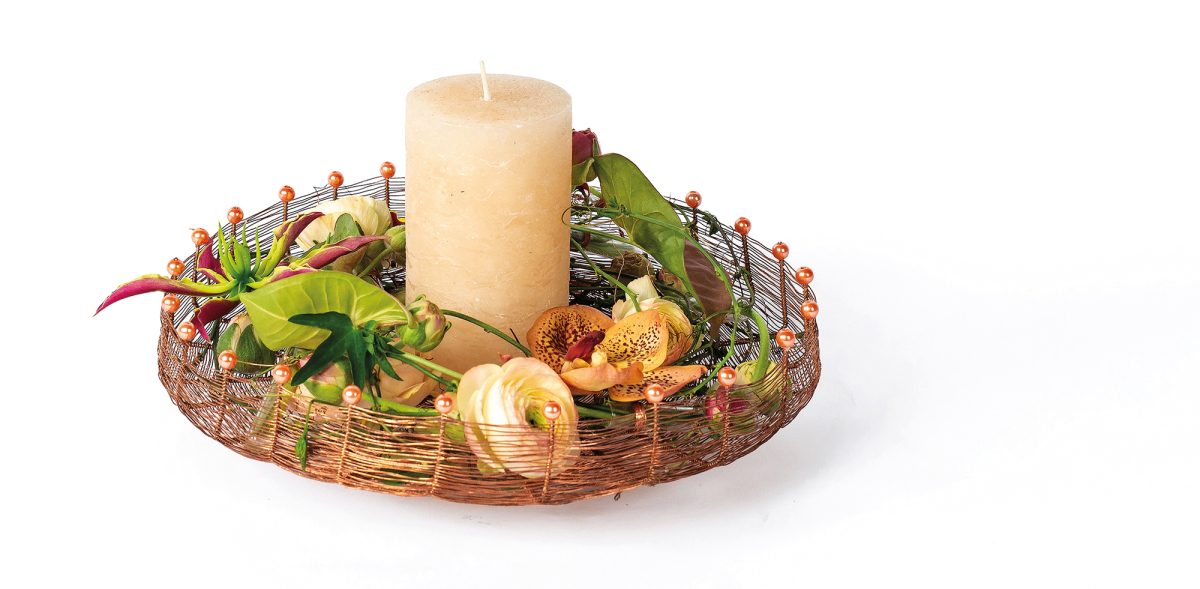
A wire bowl forms the base of this design. The visible wires are accented with Hypericum berries. Gloriosa, Anthurium, and tone-on-tone Vanda orchids are arranged in a floral circle around the candle.
Bound Together
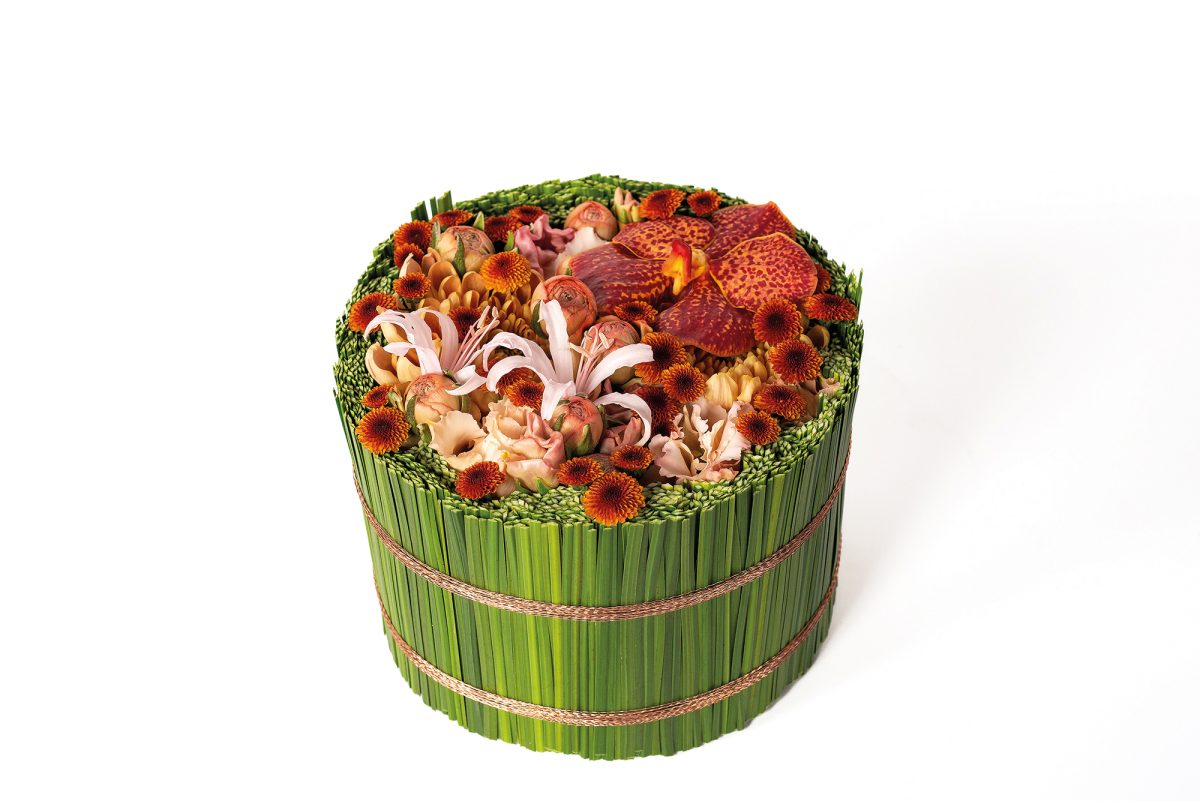
On a lined Oasis base stands a structure made of Xanthorrhoea australis (Steel Grass), which is tied together in two places with wire from The Wire Man. Cluster roses, chrysanthemums, Lisianthus ‘Alissa Light Apricot,’ Nerine, and Vanda orchids complete the design.
Double Circle
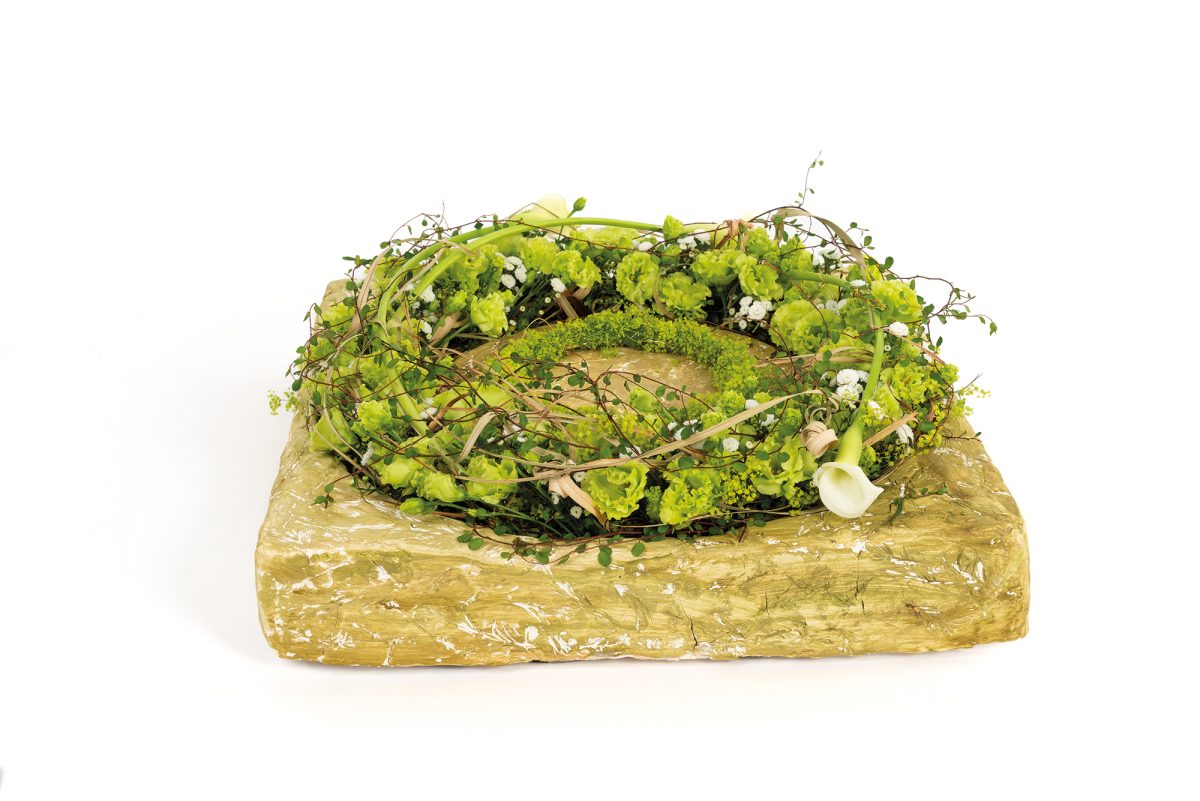
A handmade base forms the foundation for this moving farewell arrangement. The outer circle features Muehlenbeckia complexa, Lisianthus ‘Roseanne Emerald,’ Chrysanthemum, Alchemilla mollis, Calla, and ornamental grasses. The Alchemilla mollis in the inner circle is secured with wire.
Fall Essentials
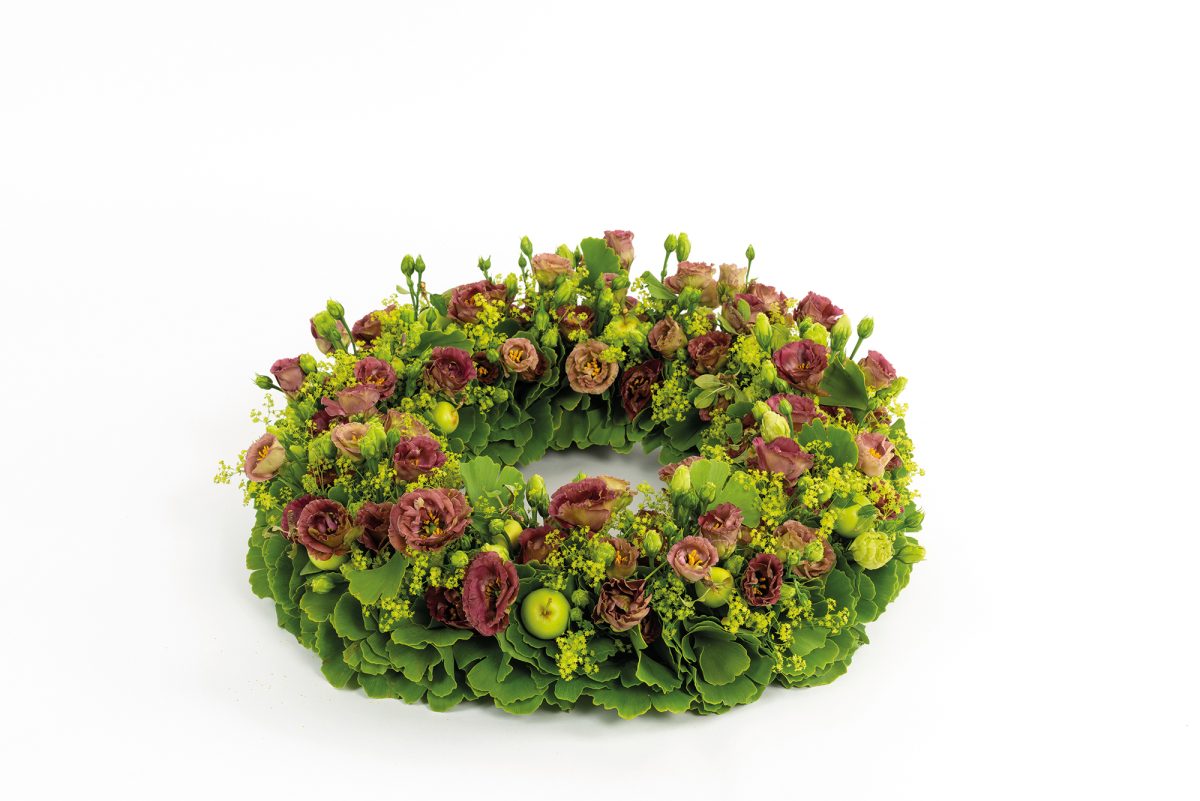
This somewhat more traditional design combines an Oasis base with leaves of Ginkgo biloba, Alchemilla mollis, Hypericum, and Lisianthus “Roseanne Light Terracotta” from Lugt Lisianthus, while Malus brings the autumn scene to life.