
Strong together
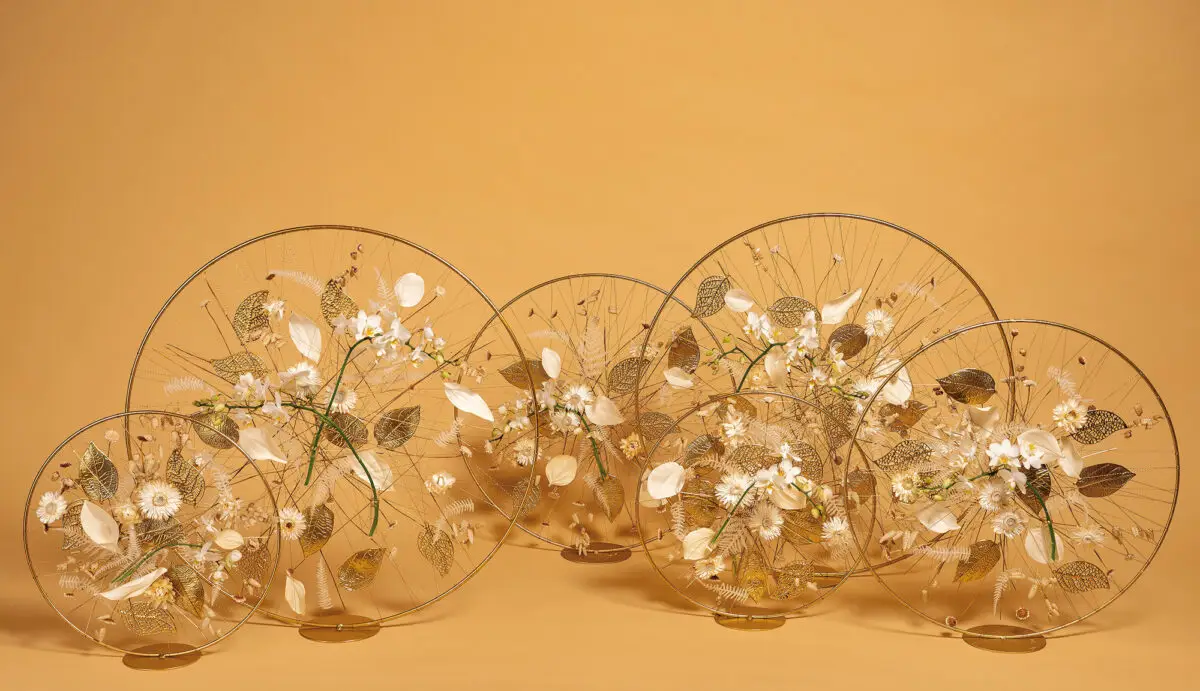
A series of multiple sizes sells better in the flower shop than a single item. People
like to have a choice in terms of size and budget. These rings already have a nice base on which
they stand, and are quick to arrange.
The rings are tightly wrapped with gold-colored bullion thread – which is both decorative and
technical here because all the processed materials are attached to it. All dried and preserved
materials have a long shelf life, with the exception of the white mini Phalaenopsis.
Cylinder
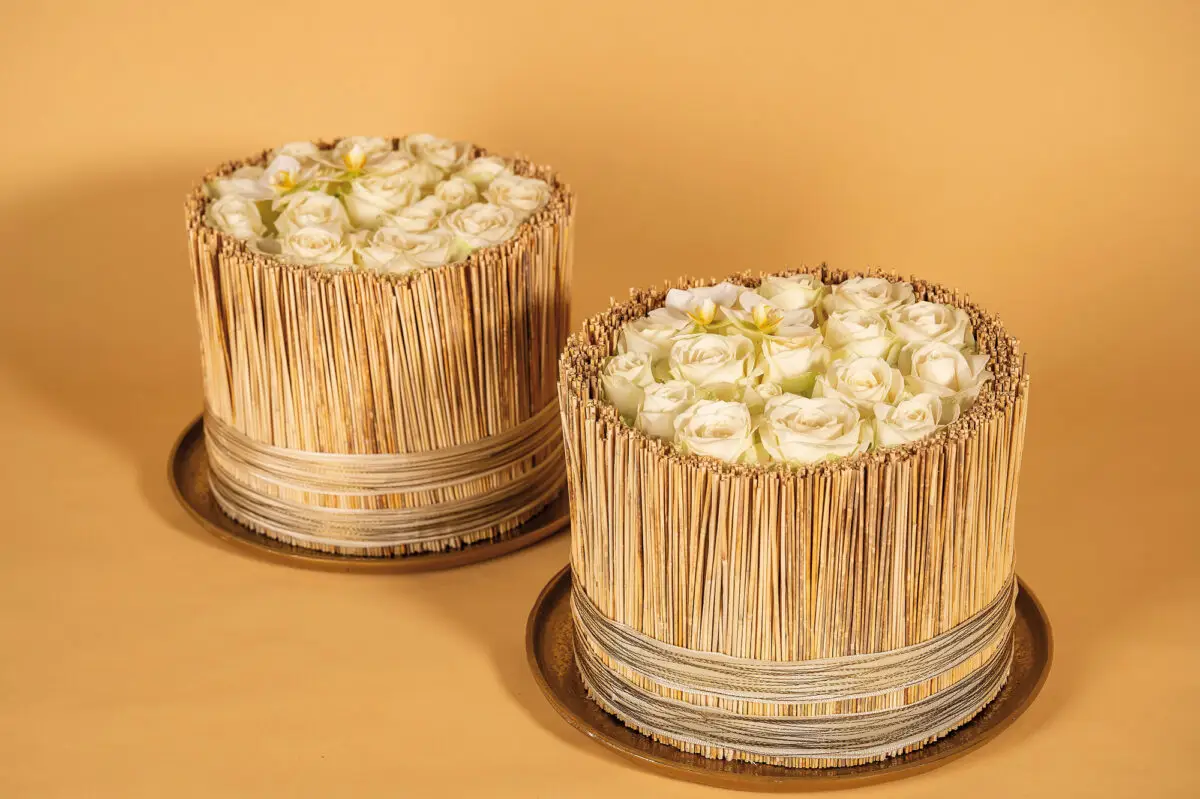
The base for this cylindrical table piece is a Bio cake form from
Smithers Oasis. A number of elastics are placed around this.
Sticks can be clamped between the elastics and the floral foam. These
sticks are, with the correct quantity, cut off at the same length at the same time
– a quick, easy technique with which branches or sticks can be processed in a beautiful way, and possibly
well in advance. For the arrangement, beautiful white Avalanche roses are simply processed.
Pampas grass jacket
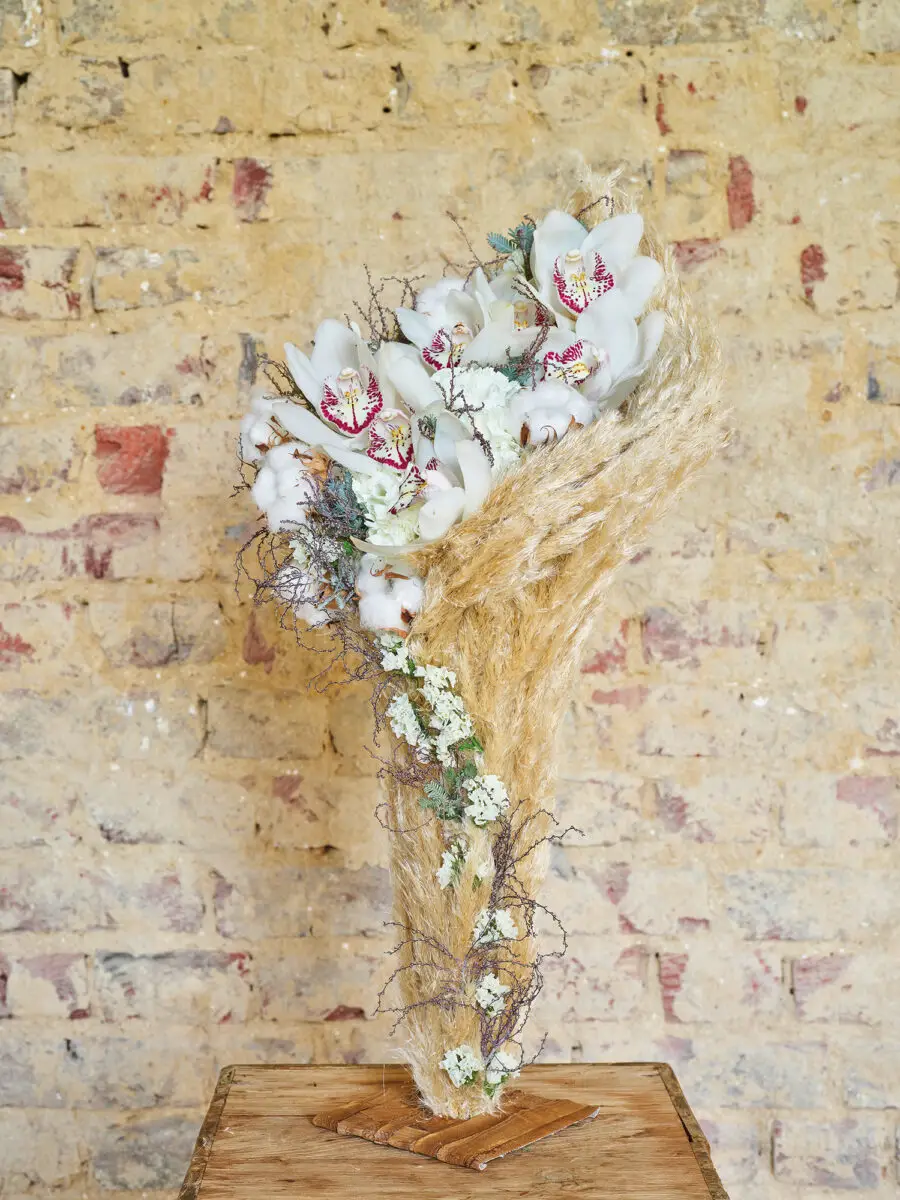
The base of this natural vase is
a number of Paperweb bouquet holders
that have been crafted into a vase shape with
an Oasis Lady placed centrally.
The shape is covered with plastic foil,
then pasted with pampas grass and
attached to an iron stand that
has been pre-covered with banana leaf.
White Cymbidium orchids and carnations
are inserted into the floral foam
– the flowers are, as it were,
cherished by the grass.
The whole is finished with cotton fluff
(Gossypium), white Limonium
and Acacia twigs – which creates a
playful counter-movement.
Cymbidium bell jar
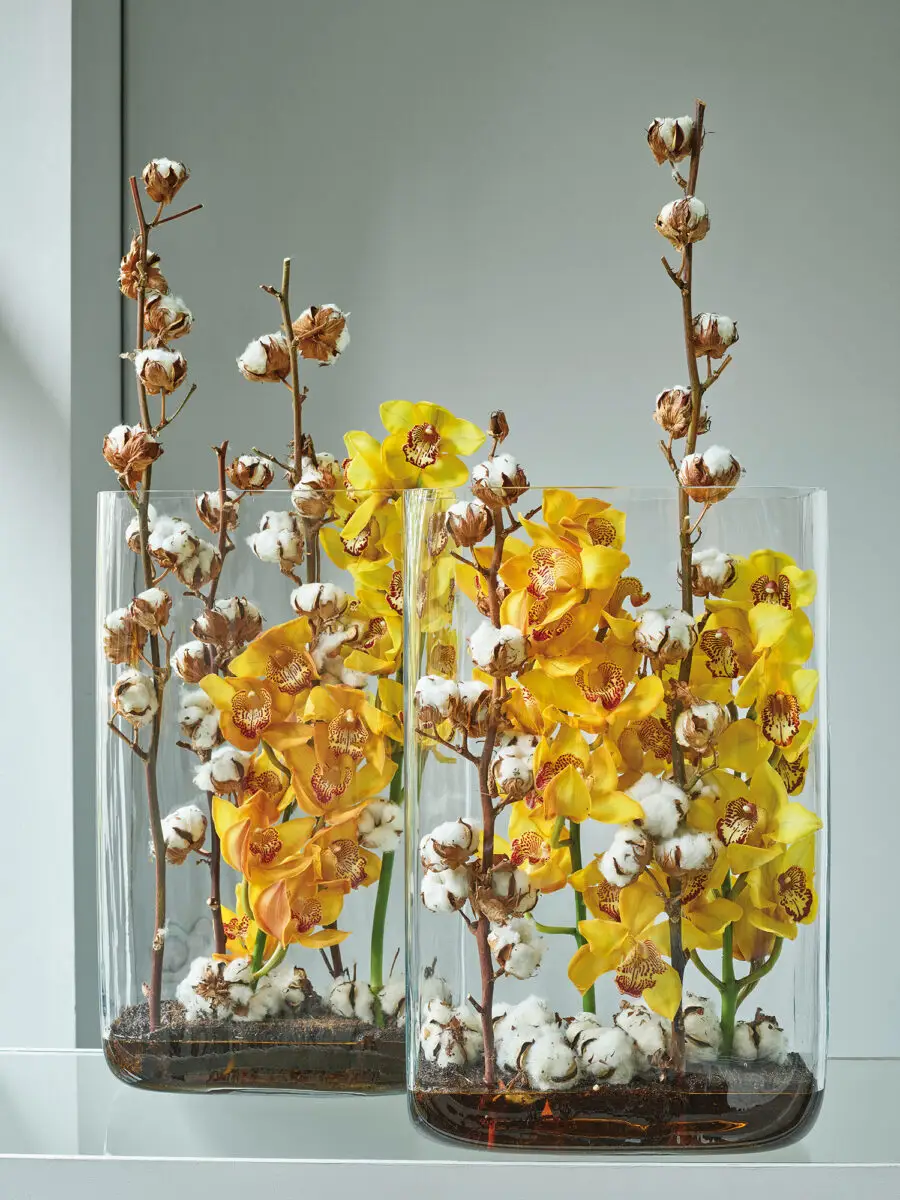
In two glass containers, layers of Oasis Terrabrick Floral
Media have been applied. Carefully pour some water over it until
the floral medium is just below water level. Arrange the Cymbidium
flowers and cotton wool branches (Gossypium) in the container and
wedge them together. The beautiful Cymbidium comes into its own
in this combination with the cotton wool branches.
3D Botanical painting
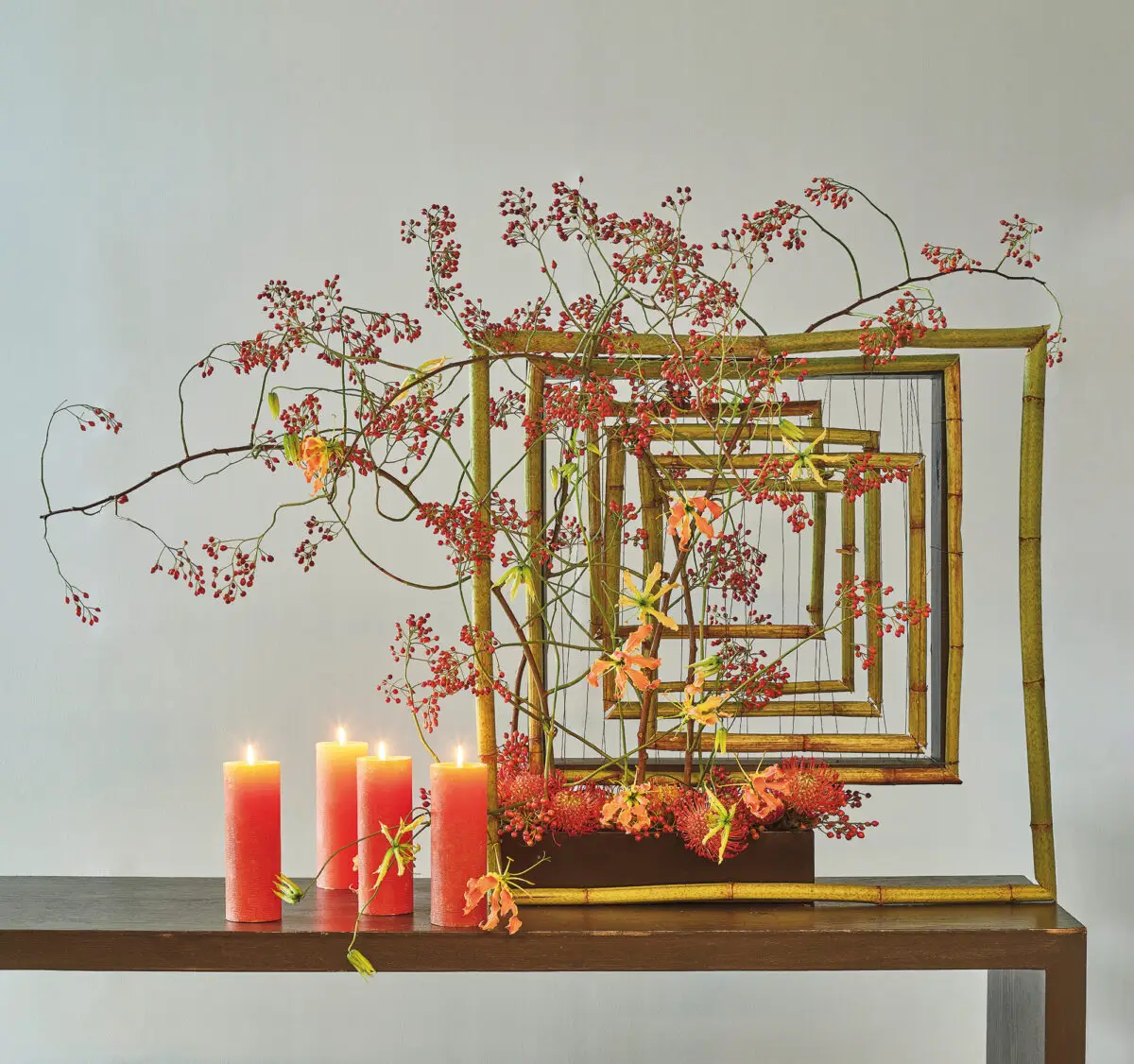
The basic forms of this arrangement are the frames of Polygonum branches
– four equal stems cut at an angle are connected to each other by
sliding four folded thick wires into them. Oasis is placed in the rectangular
container. A wooden frame is wrapped with wrapping wire and attached to the
base. The Polygonum frames are attached to these wires.
This creates a construction between which the rosehip
branches are clamped. The arrangement is finished with
Gloriosa, Leucospermum (Nutans) and short rosehips
– an orange color palette was chosen for this,
in pale and dark shades. The rose hips
and Leucospermum have a strong appearance.
Gloriosa provides contrast
and symbolizes fragility.
Trendy natural scene
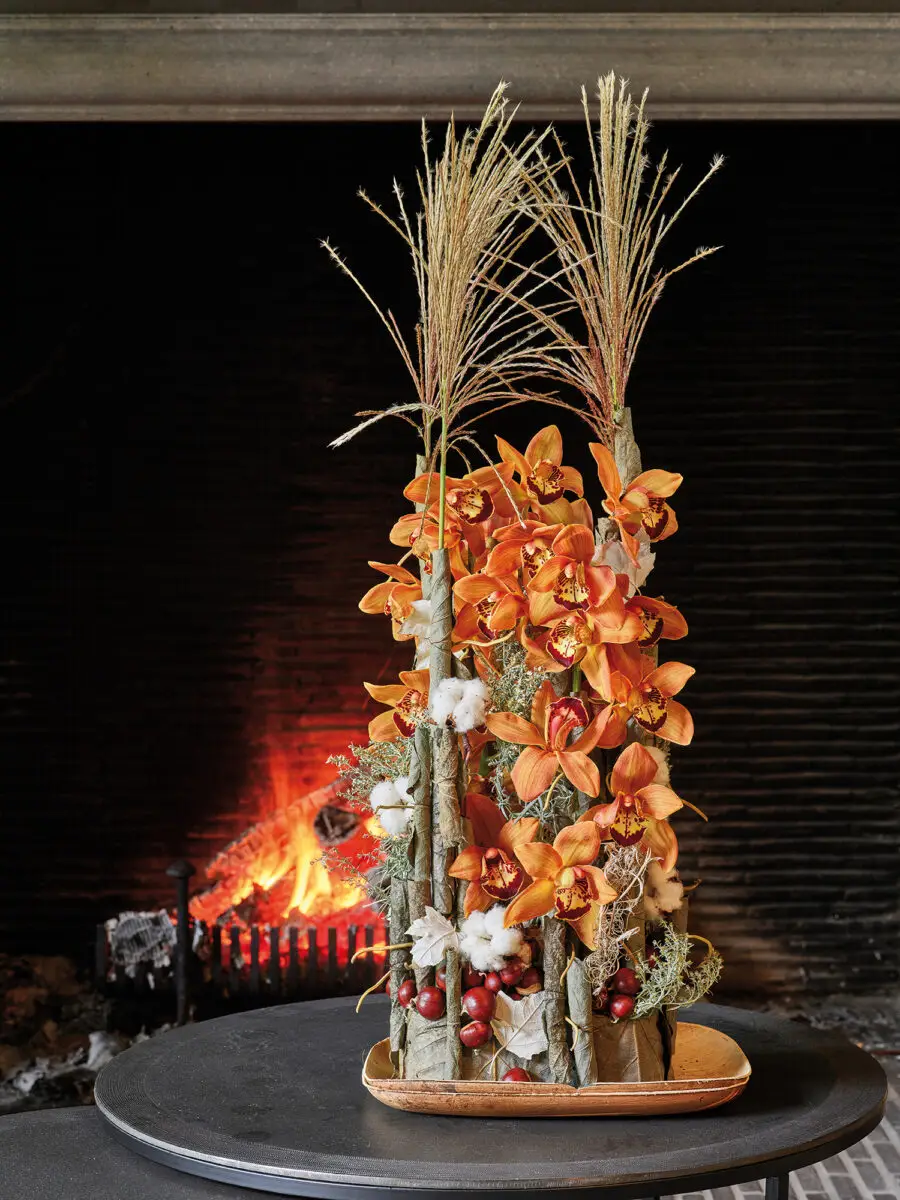
On two biodegradable banana leaf dishes, a block of floral foam is placed, the sides of which are covered with leaves of Aristolochia. Subsequently, the position of the Cymbidium is first determined. Artemisia and some cotton flowers (Gossypium) are placed in between. Subsequently, chestnuts placed on toothpicks and Miscanthus – with Aristolochia leaf rolled over the stems – are incorporated into the arrangement. ‘The bronze-colored Cymbidium fits in perfectly with the autumn trend in terms of color. In this trend, the collection and study of objects or materials from nature is also important. In this arrangement, material colors are constantly reflected in the flowers used – the dark chestnuts, the bronze sheen on the Miscanthus plumes, the light-colored cotton flowers.’