
Lanterns as eye-catchers
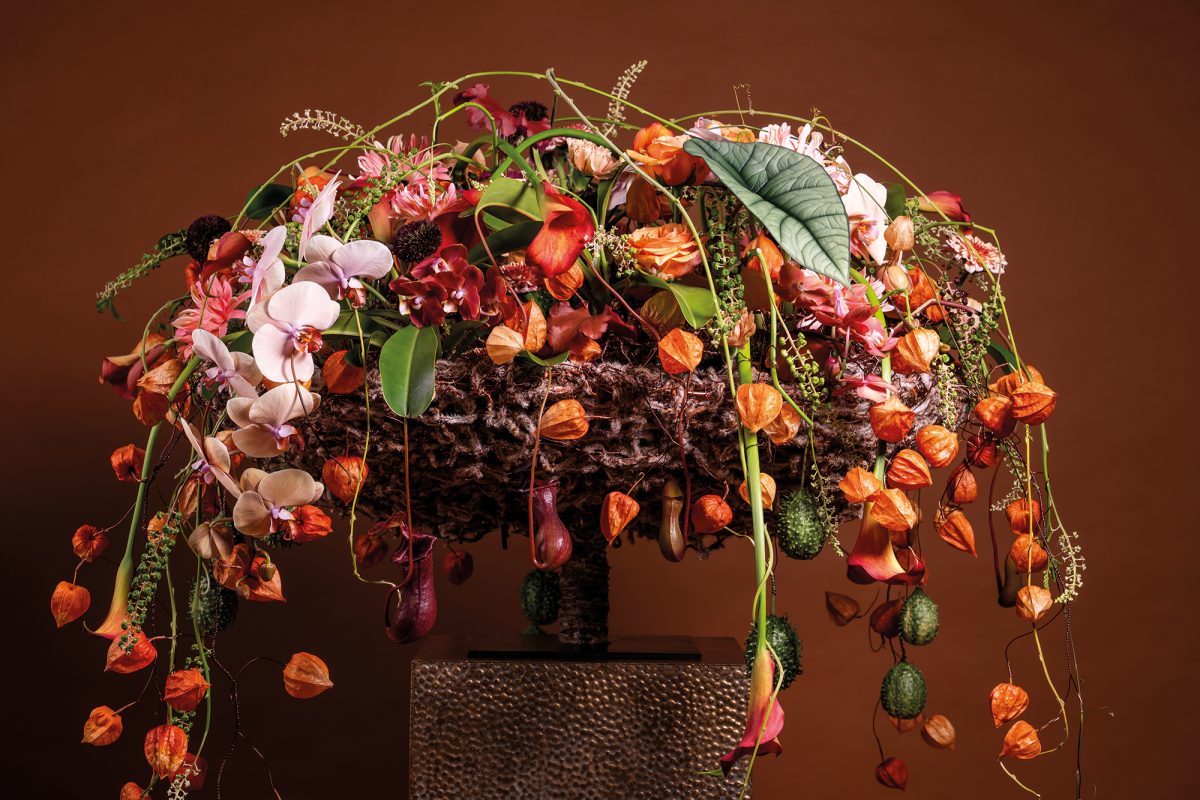
With its generous size, this arrangement is intended to be an eye-catcher in the store window. Dried lanterns remained in stock for a long time at Hanneke’s and were a popular item in fall displays. Here, they are mounted on 1-millimeter brown aluminum wire, so they can be positioned precisely within the composition and reused later. The bowl rests on a large pin with dried roots; this base is also reusable. The fresh flowers are arranged in tubes, though Oasis can also be used effectively in a plastic bowl. Crimson berries, chrysanthemums, fruits, and lanterns set the autumnal tone. Phalaenopsis, germini, Alocasia leaves, roses, vines, and Nepenthes add other shapes and lines.
Small 3D version
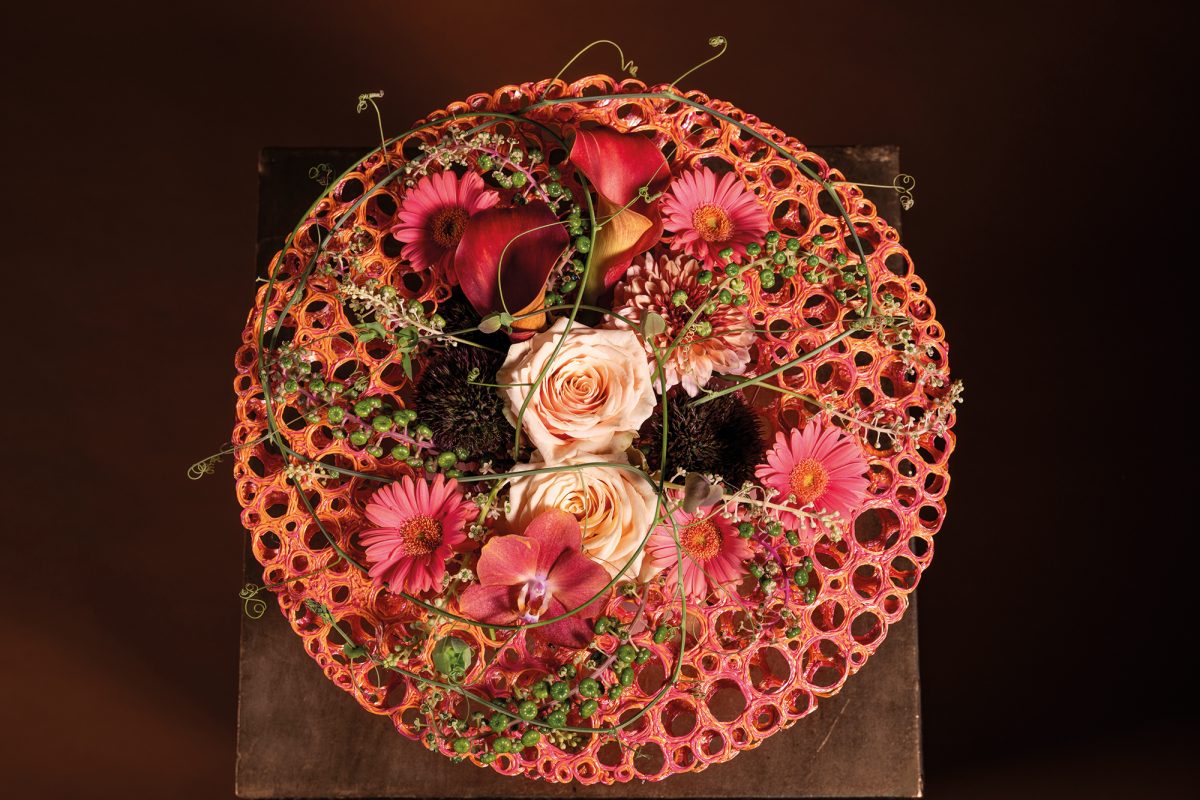
The mini version follows the same principle as the large 3D pen bouquet: an open, reusable base that provides direction and stability for the flowers. Because of its smaller size, fewer materials are needed, and the arrangement can be put together more quickly. Frankema sees opportunities to produce the frames in advance in batches and in various colors. Here, the construction has been applied as a bouquet, but the same technique can also serve as the basis for a vase arrangement. This creates room for different sizes, applications, and price points within a single, recognizable design principle.
3D Fall Bouquet
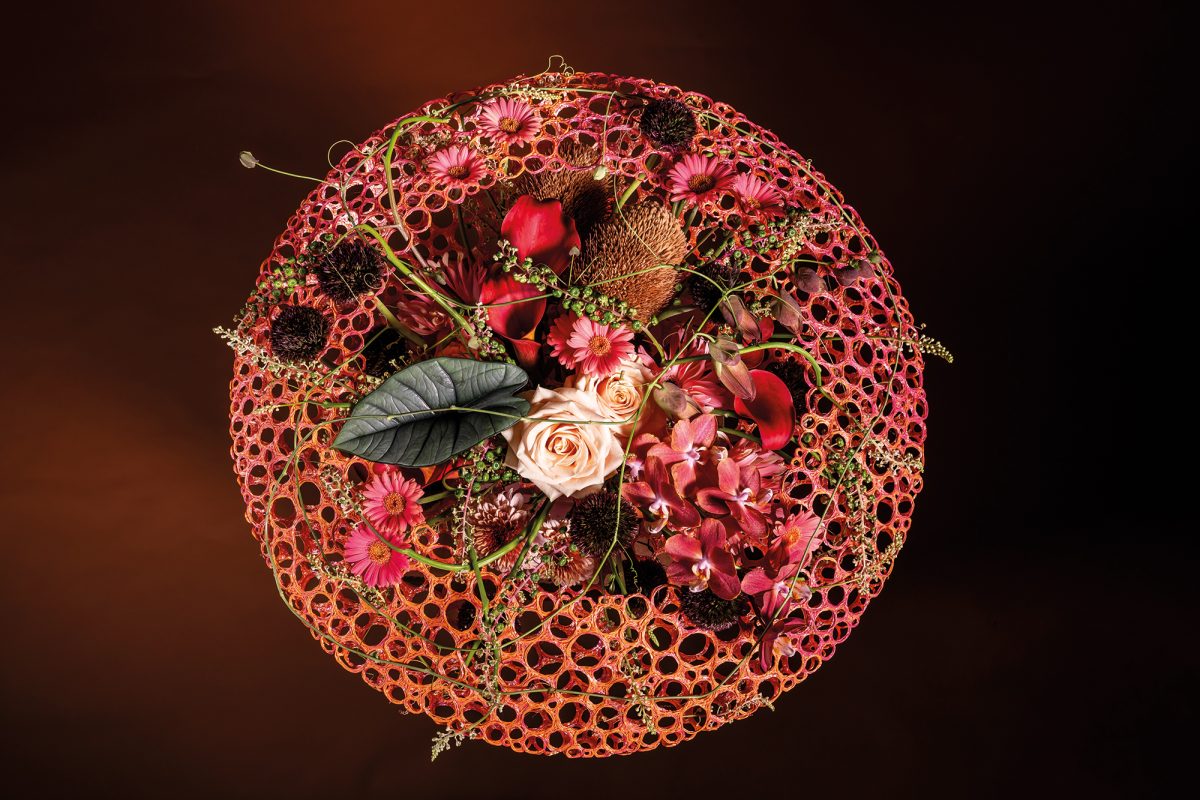
The base of this bouquet was drawn with a 3D pen on a dish lined with aluminum foil. Two separate dish shapes were stacked on top of each other, creating a three-dimensional frame. The openings guide the placement of the flower stems and give the bouquet structure without requiring many extra flowers. The two-tone filament complements the fall color palette. Cranberry, chrysanthemum, Phalaenopsis, germini, Alocasia leaves, rose, and various vines fill the frame. The reusable base is also ideal for rotating corporate arrangements.
Flowers in a lamp frame
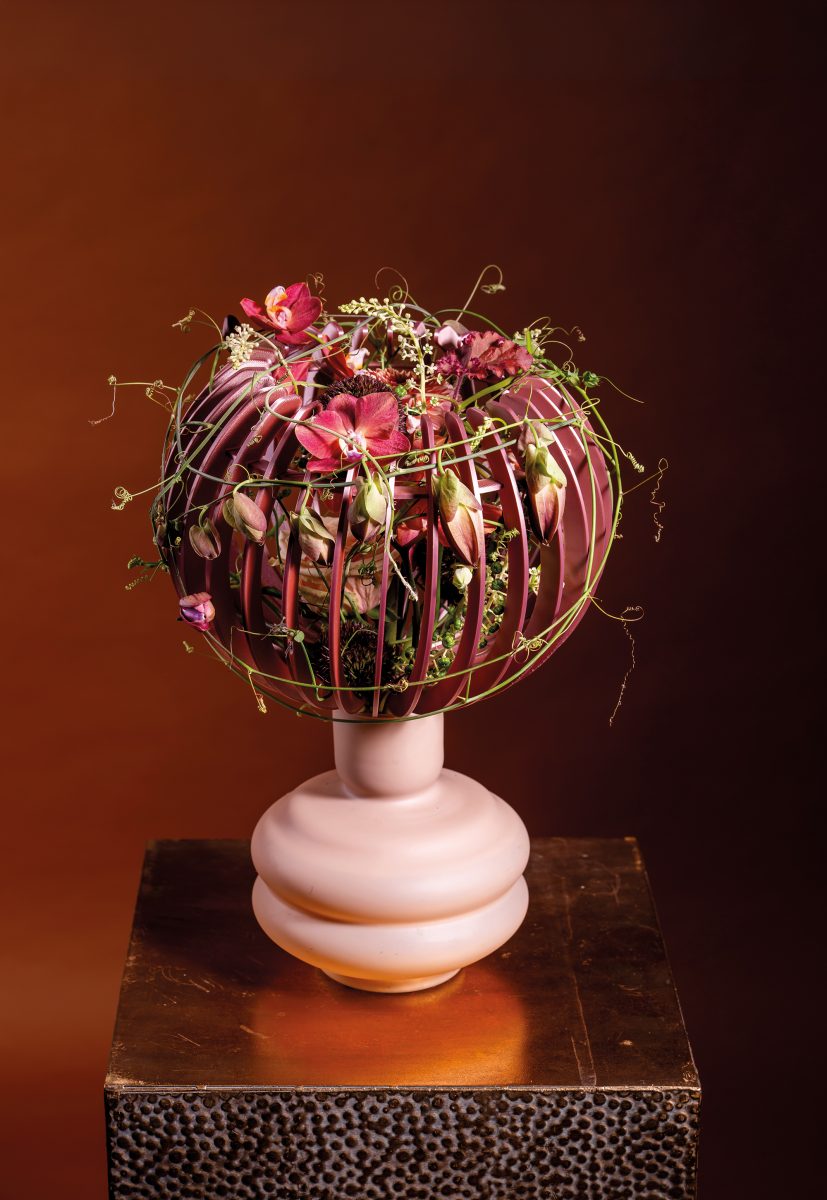
The base of this bouquet is a 3D-printed lamp structure that is assembled from separate parts. The open structure provides space to position the stems precisely between the parts and allows for a unique arranging technique. The frame is reusable and can be printed in various colors, tailored to the season or choice of flowers. For this arrangement, Frankema chose crimson berries, chrysanthemums, Phalaenopsis, Germini Chocoloco, roses, and Passiflora vines. The flower forms and vines flow through the geometric structure.
“You can’t sell what isn’t listed”
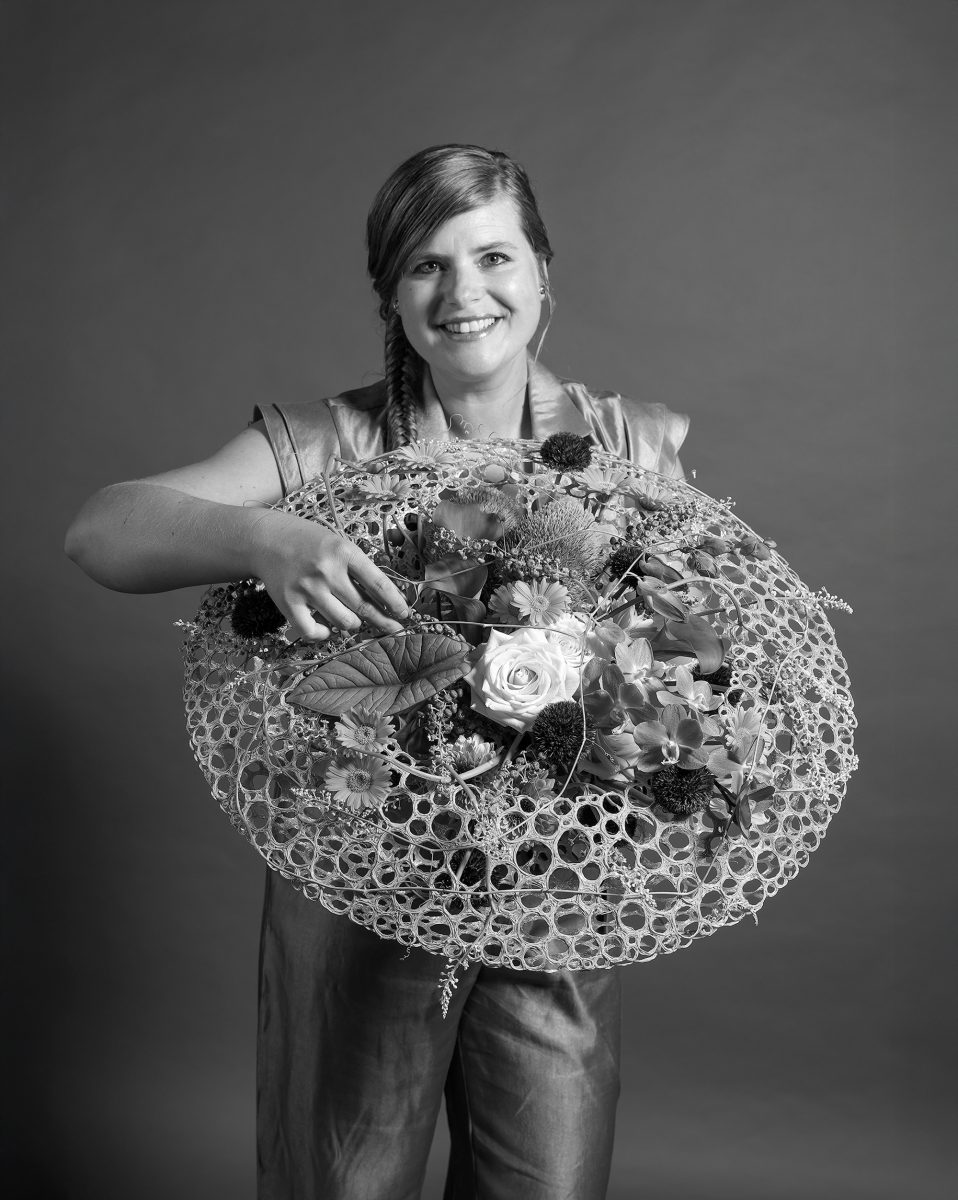
According to floral designer Hanneke Frankema, large floral arrangements can also be quite commercial. When she still had a shop in Friesland, she also sold large-scale arrangements. These immediately caught the eye in the storefront window or on a display table. Not every customer has the space or the budget for them, but that’s precisely why Frankema placed smaller “brothers and sisters” next to them: more accessible versions with the same design language.
That principle recurs in her fall series. A large object featuring 3D-printed maple leaves is paired with compact counterparts on a simpler base. Lanterns appear as striking focal points as well as in a smaller size. The frames created with a 3D pen are also available in maxi and mini versions. The technique and material appearance remain recognizable, while the size, number of flowers, and production time vary.
The process requires preparation, but according to Frankema, it also offers commercial potential. Reusable frames and bases can be mass-produced during quiet hours and refilled later. In her store, she sold the small versions individually and as sets. The large pieces drew customers in during the presentation; the smaller objects made the pieces accessible to a range of budgets and spaces. Her experience: “In some cases, volume really does mean profit.”
Floating Autumn
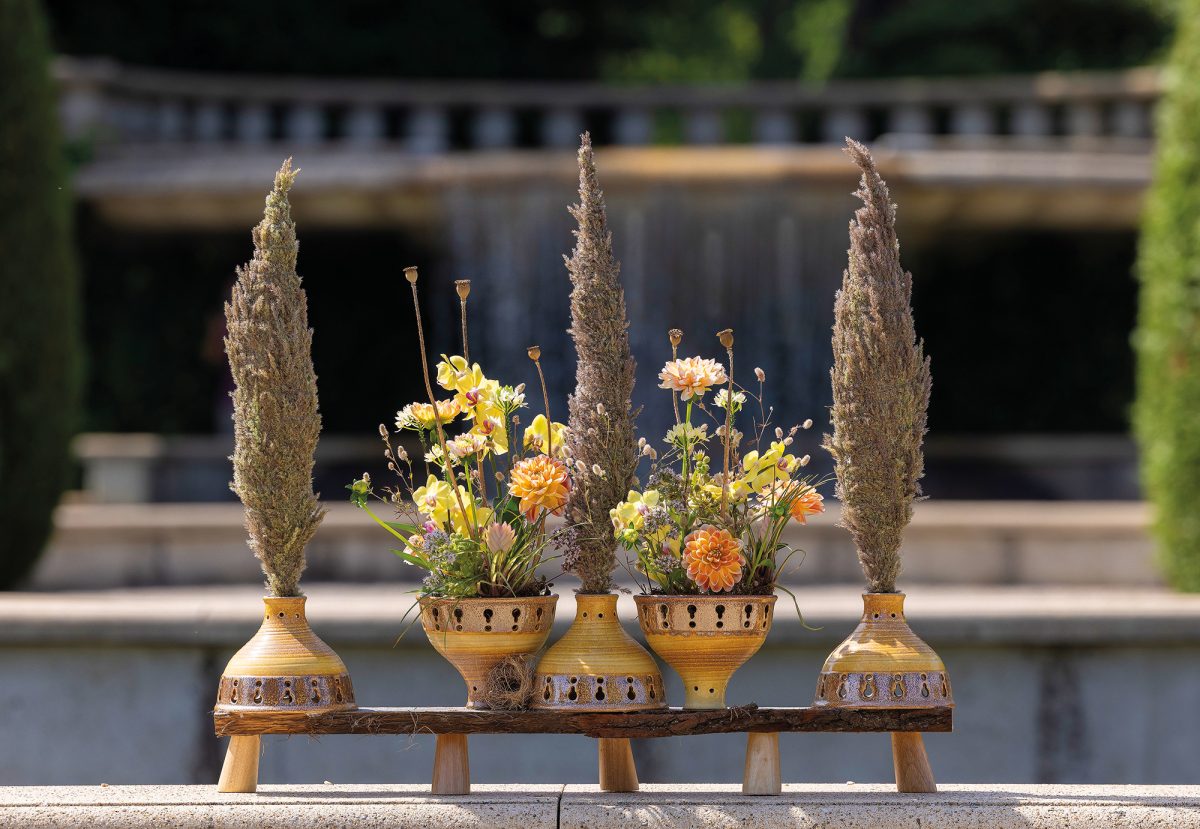
The base of this arrangement consists of a wooden plank to which five lampshades are attached. The wooden legs make it appear as if the plank is “floating.” The lampshades were filled with coiled grasses. A bird has even built its nest here—which remained among the lampshades after the eggs hatched. The inverted lampshades are filled with Oasis and arranged with, among other things: Dahlia ‘Hapet Harmony,’ Epidendrum, Phalaenopsis, Tillandsia, poppy seed pods, Sempervivum, wild marjoram, and Lagurus ovatus (hare’s tail).