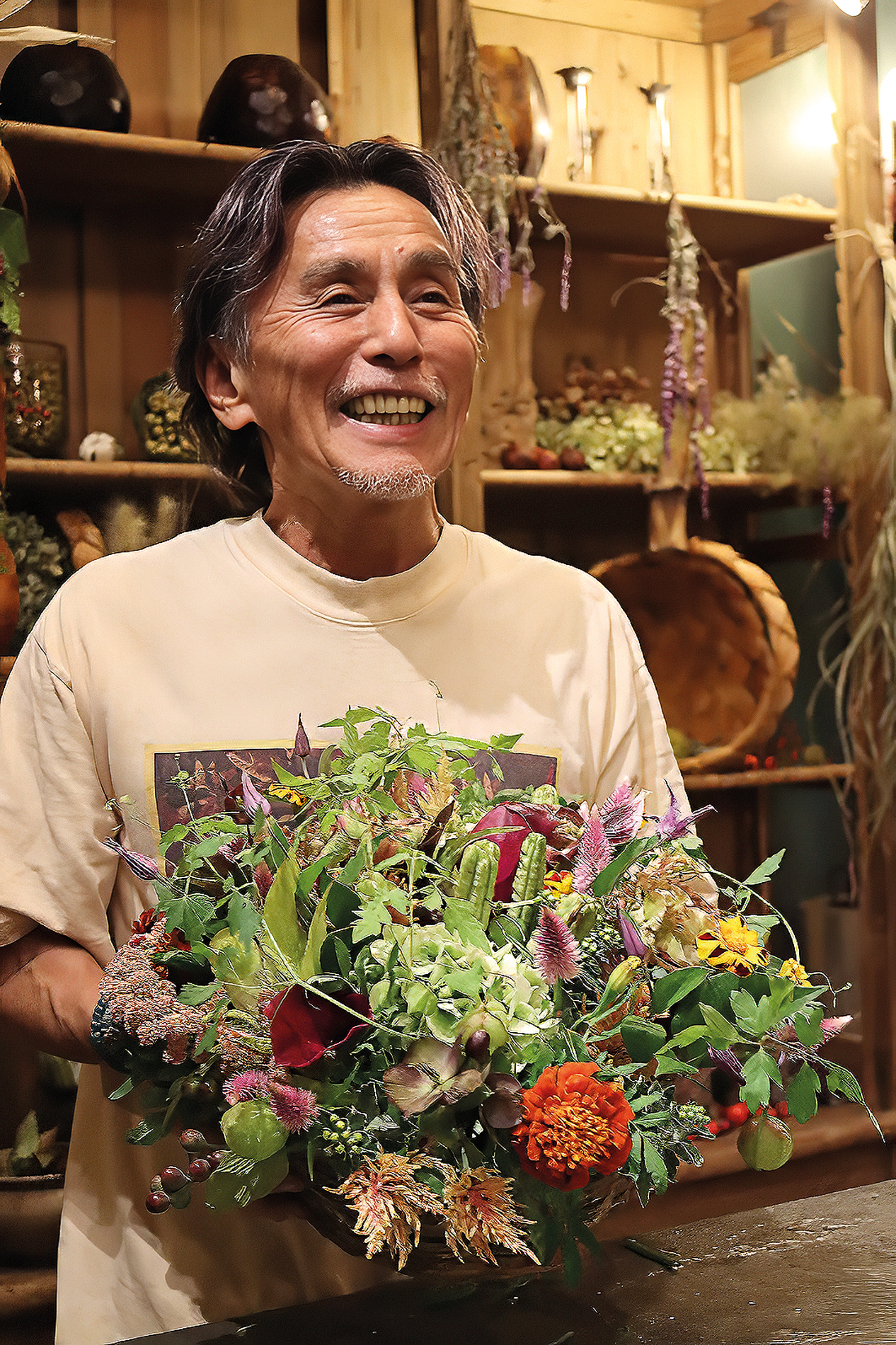
As a florist and teacher, I travel around the world regularly. This gives me the opportunity to meet many interesting people in our field. One of them is Junji Noritake, whom I first met through Kodai Shiraishi, a former student at the Boerma Institute.
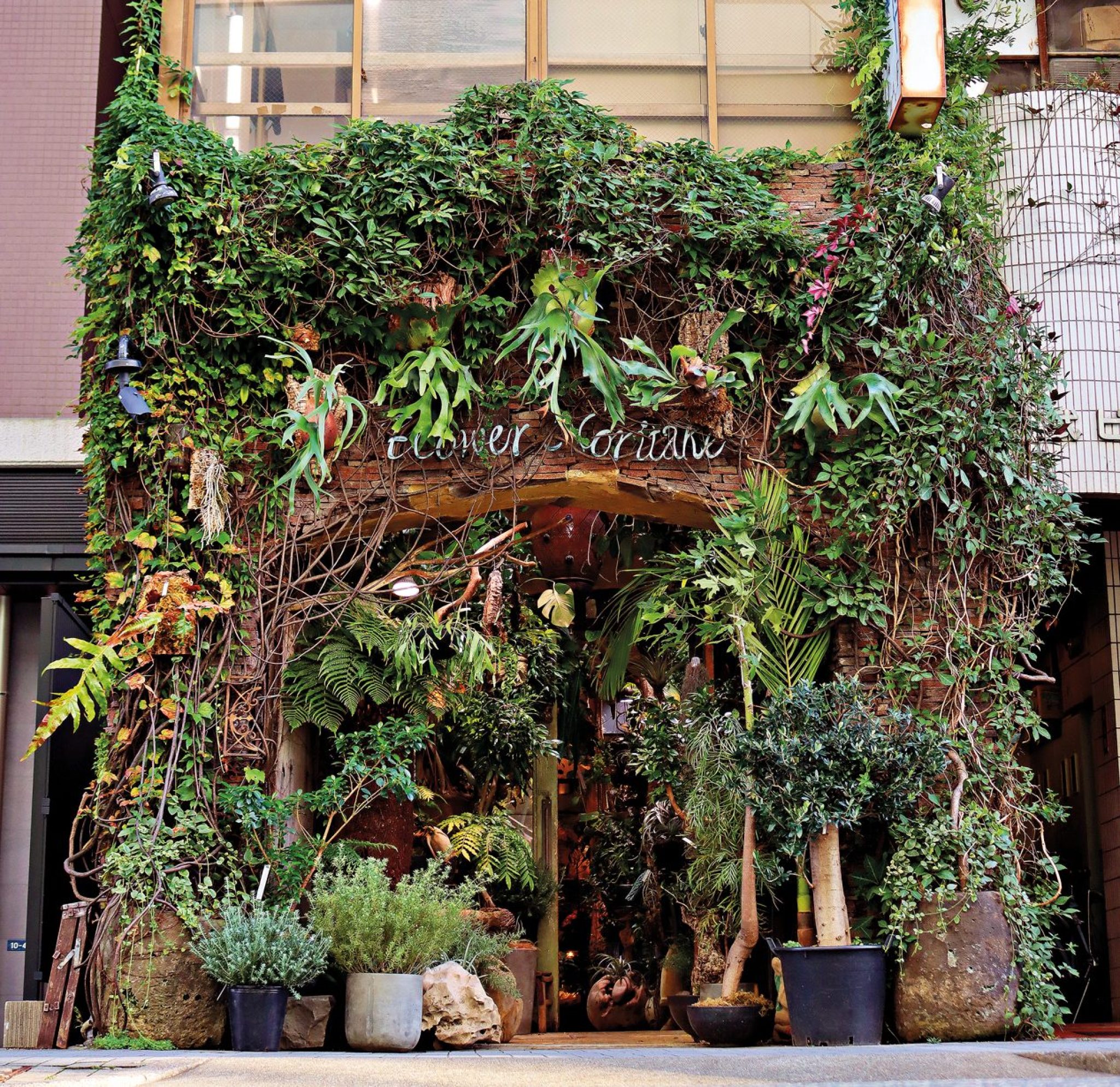
From the street, Flower Noritake is impossible to miss. Amid the rather ordinary buildings in Nagoya, it seems as if nature is slowly taking over the entire building. Vines wind their way across the facade, and ferns and other plants are growing outward. It seems as if the store is alive and constantly expanding, with the vegetation slowly taking over the building.
Just stepping into the store is a special experience in itself. Visitors first walk through a narrow, jungle-like passageway, surrounded by a collection of unique potted plants. Large leaves hang overhead, branches jut out over the path, and every now and then you have to duck to get through the foliage. It feels as if you’re stepping into another world. Only after passing through a second door do you enter the actual store.
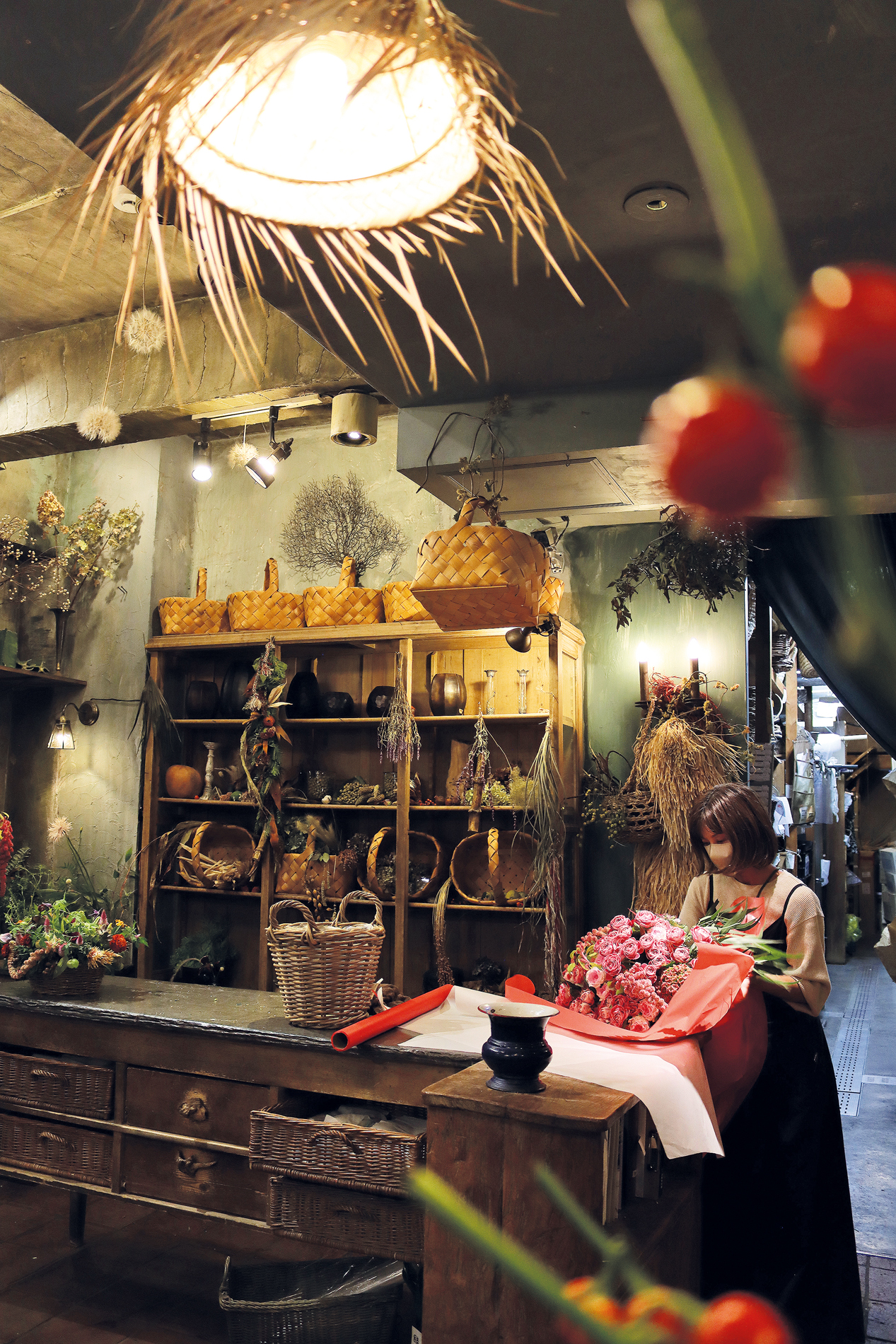
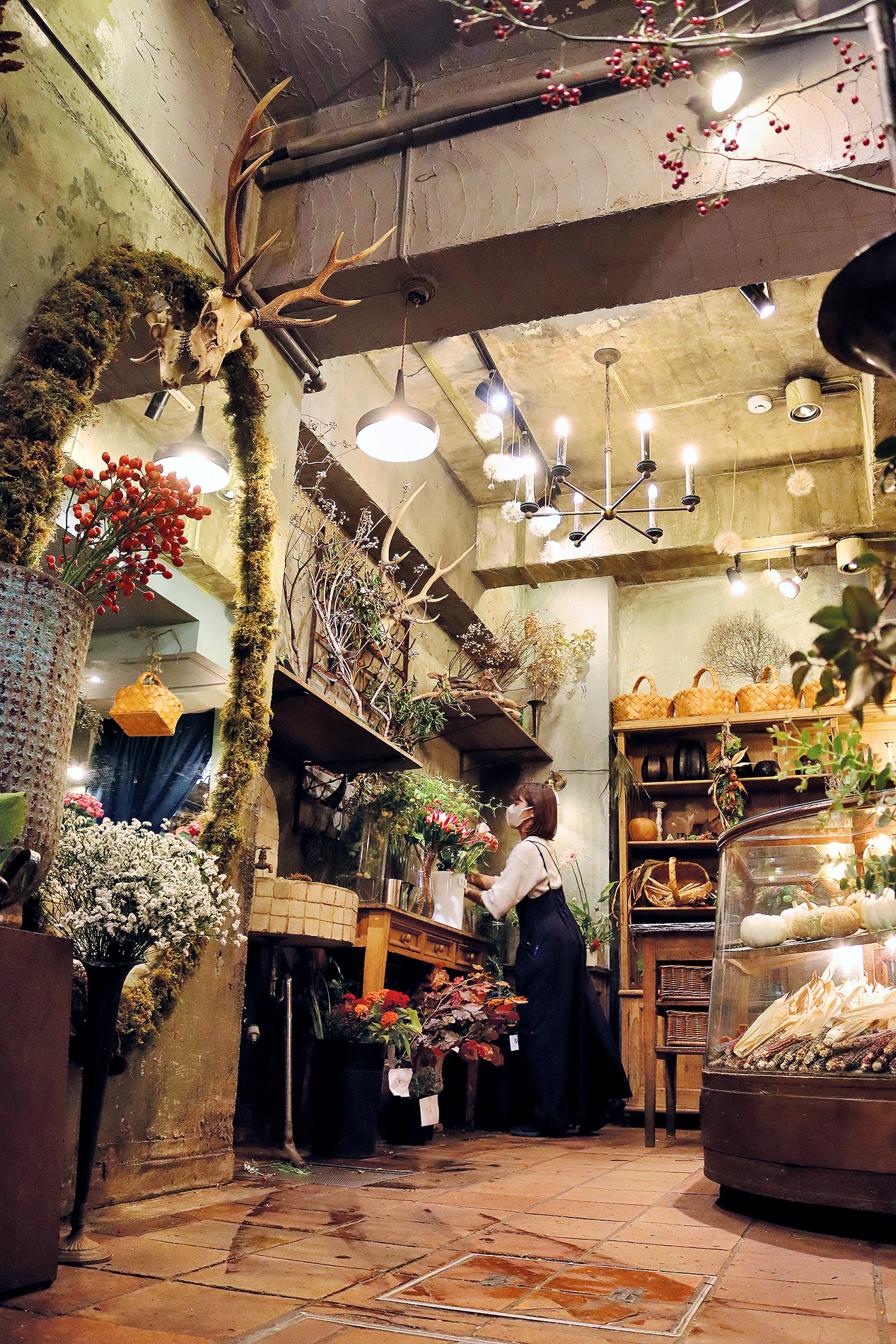
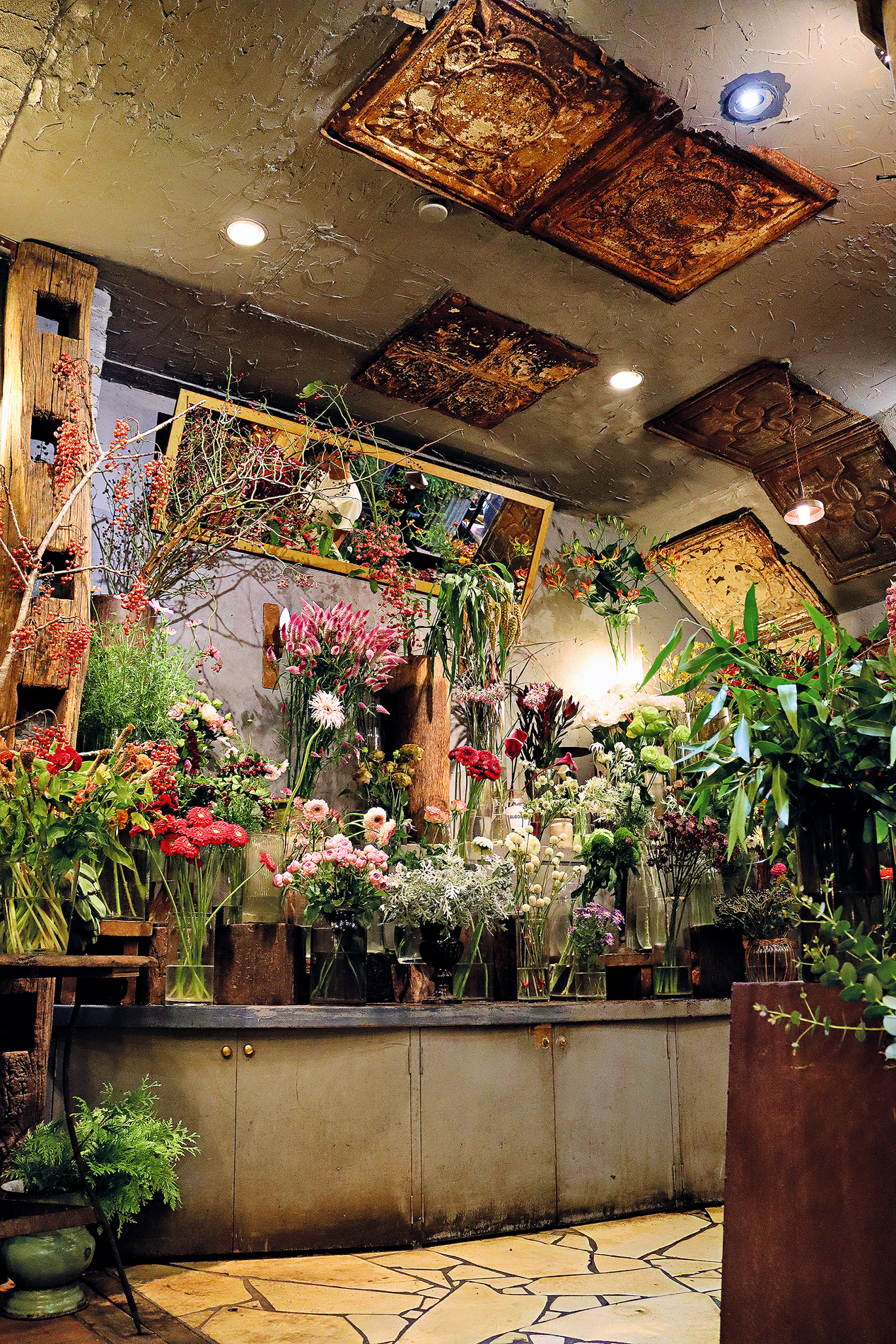
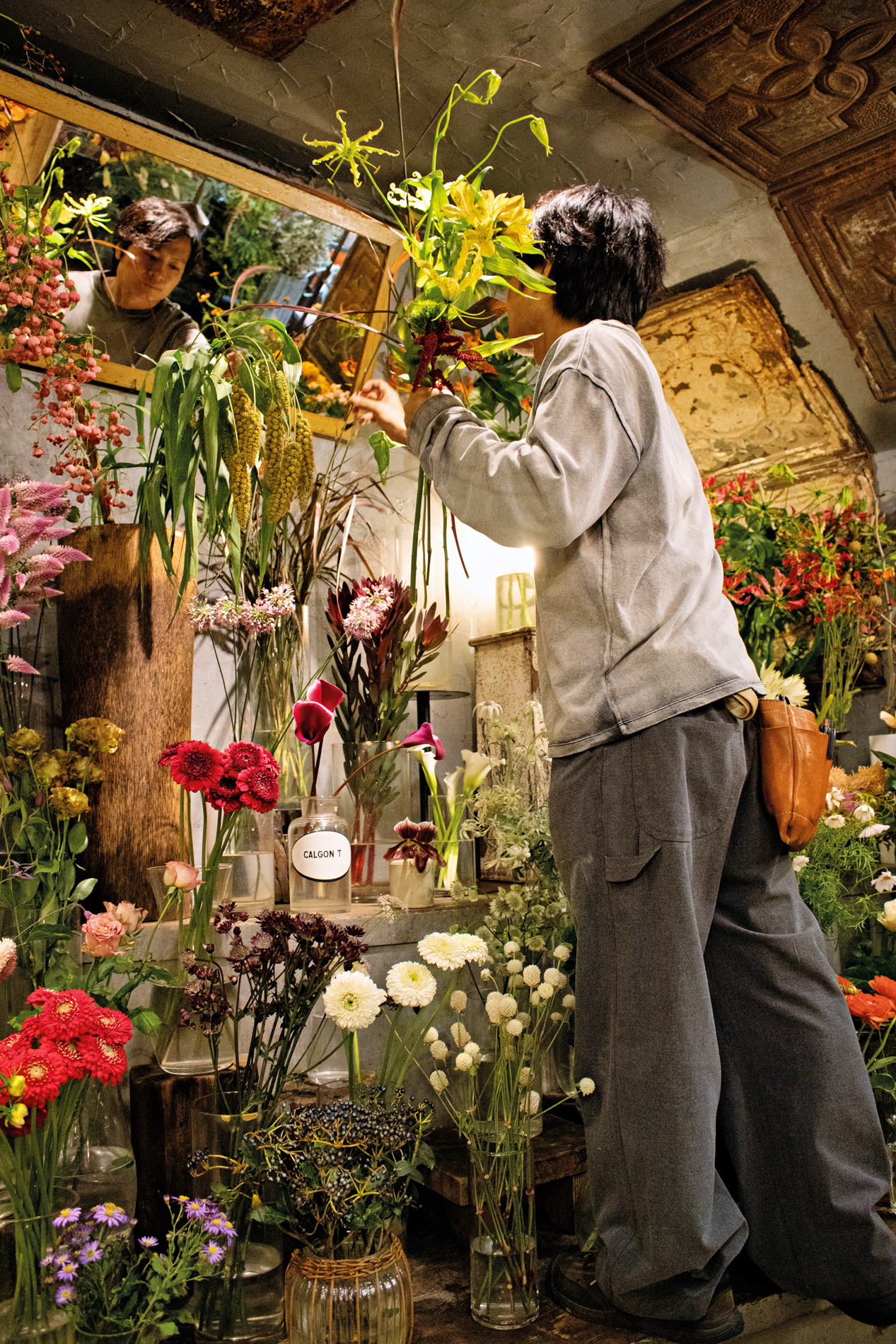
Once inside, the atmosphere changes. Warm lighting illuminates rough-plastered walls, old wooden furniture, antique objects, and an abundance of flowers. Decorative objects fill virtually every available space, even on the walls and ceilings. Flowers and branches are arranged at various heights, creating a beautifully layered and natural composition. The interior is atmospheric, elegant, and distinctly maximalist. Yet everything feels carefully and purposefully curated.
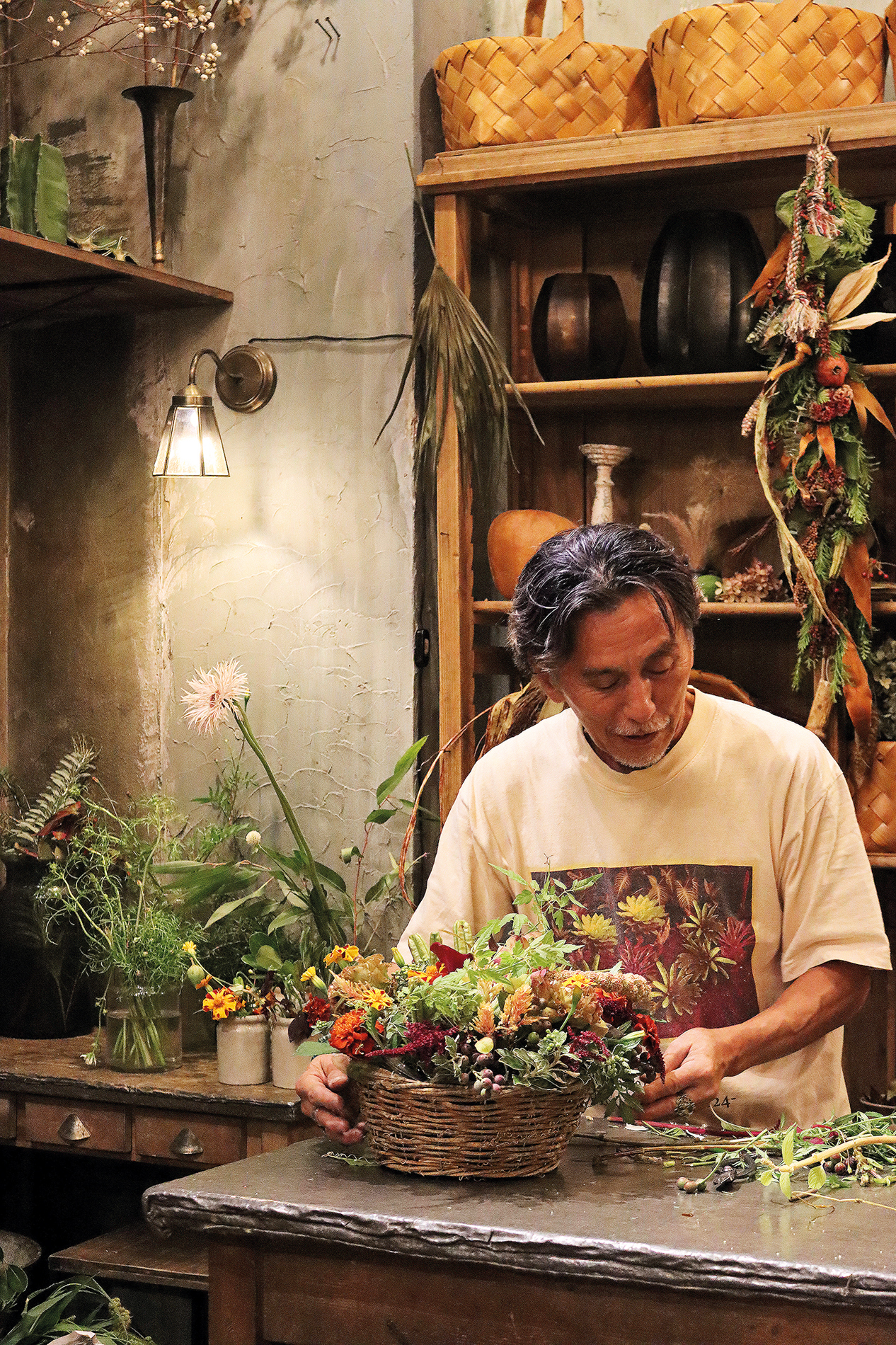
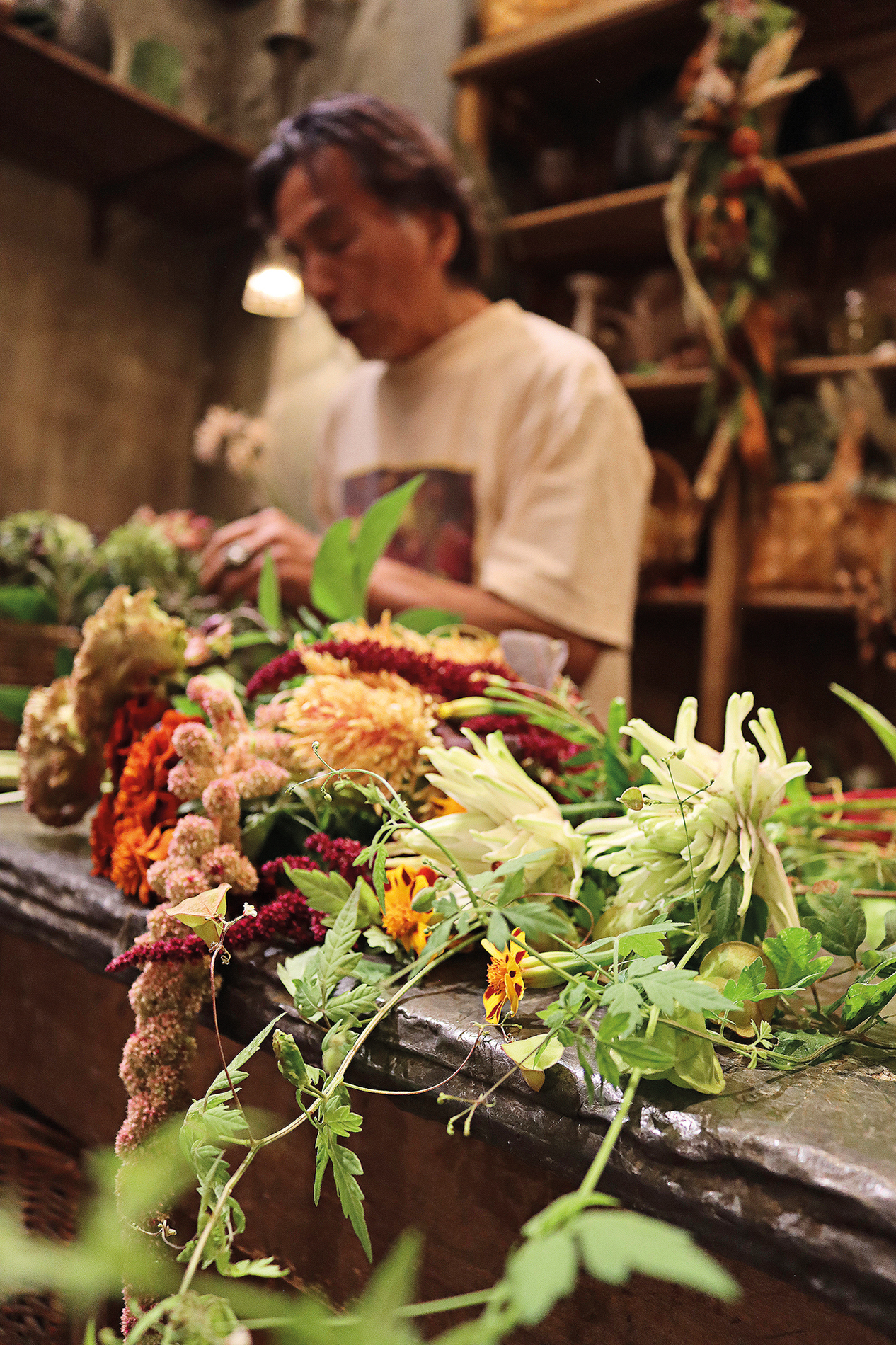
Between presentations, some employees move around to assist customers, while others work on floral arrangements in the back of the store, in a space that looks more like a long hallway. Despite the abundance of materials and the constant bustle, there is a surprisingly relaxed atmosphere.
The store reflects Noritake's philosophy, as we will discover later. Instead of forcing everything into a neat, orderly arrangement, he gives flowers and plants the space to reveal their natural character.
“Flowers look different every day”
A Fascination with Nature
Noritake opened his shop in 1986, but his fascination with flowers began even earlier. When asked what attracted him to the florist’s trade, he replies: “Flowers look different every day.”
"I don't think I could do a job where everything always stays the same. Even if you arrange just one flower today, it might be facing a different direction tomorrow. Flowers are constantly changing, and that's what drew me to this profession."
Over the years, his own style gradually evolved, and his shop changed along with him. “My shop used to be all white, with flowers that matched that sleek look. These days, I prefer a much more natural atmosphere. I want the flowers to look as if they belong right where they are in the shop.”
“I don’t choose flowers just because they’re in style”
's Natural ApproachNoritake's floral arrangements are recognizable by their natural movement, expressive lines, and apparent effortlessness. Yet he offers no complicated explanation when asked to describe his personal style.
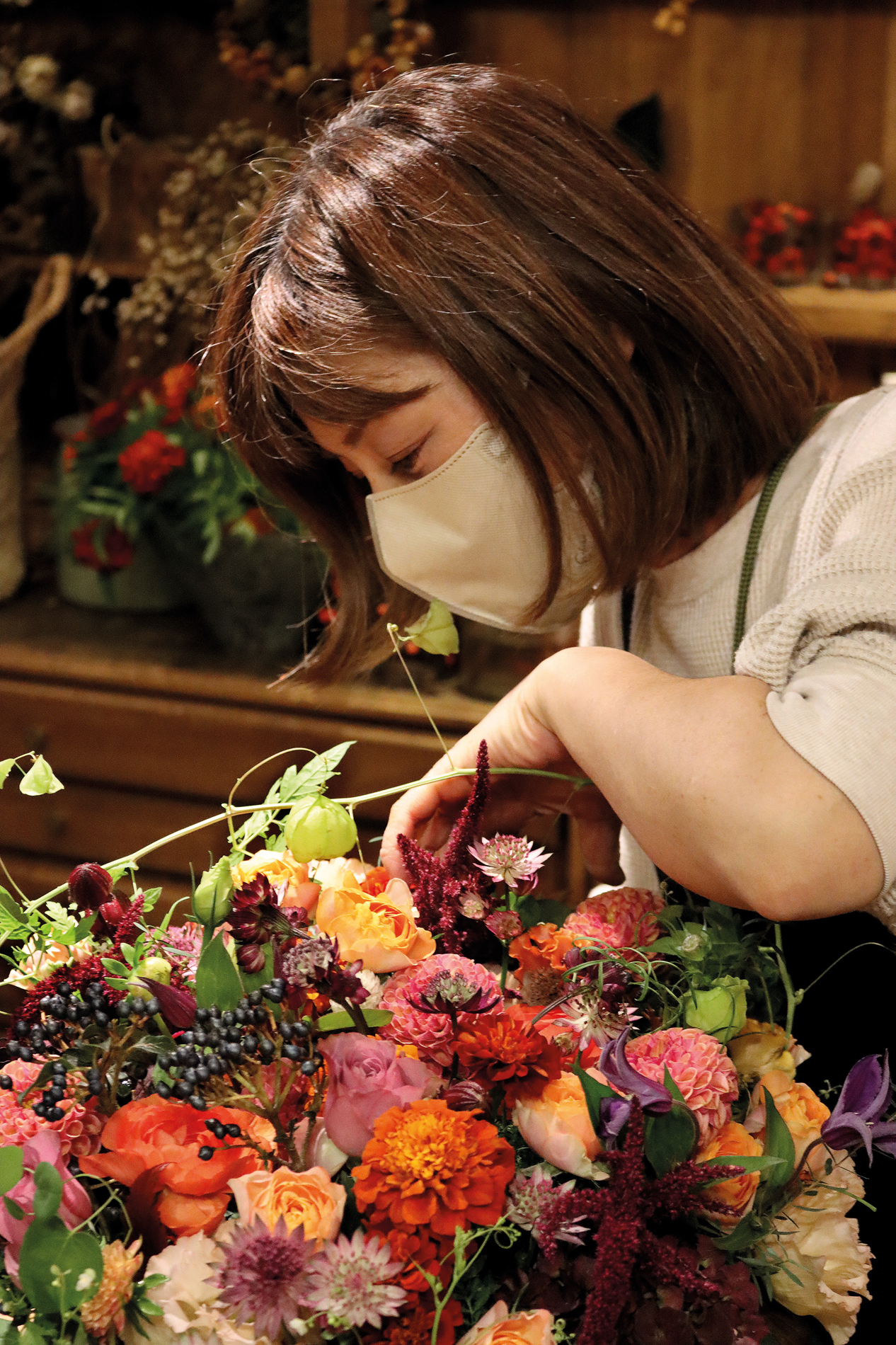
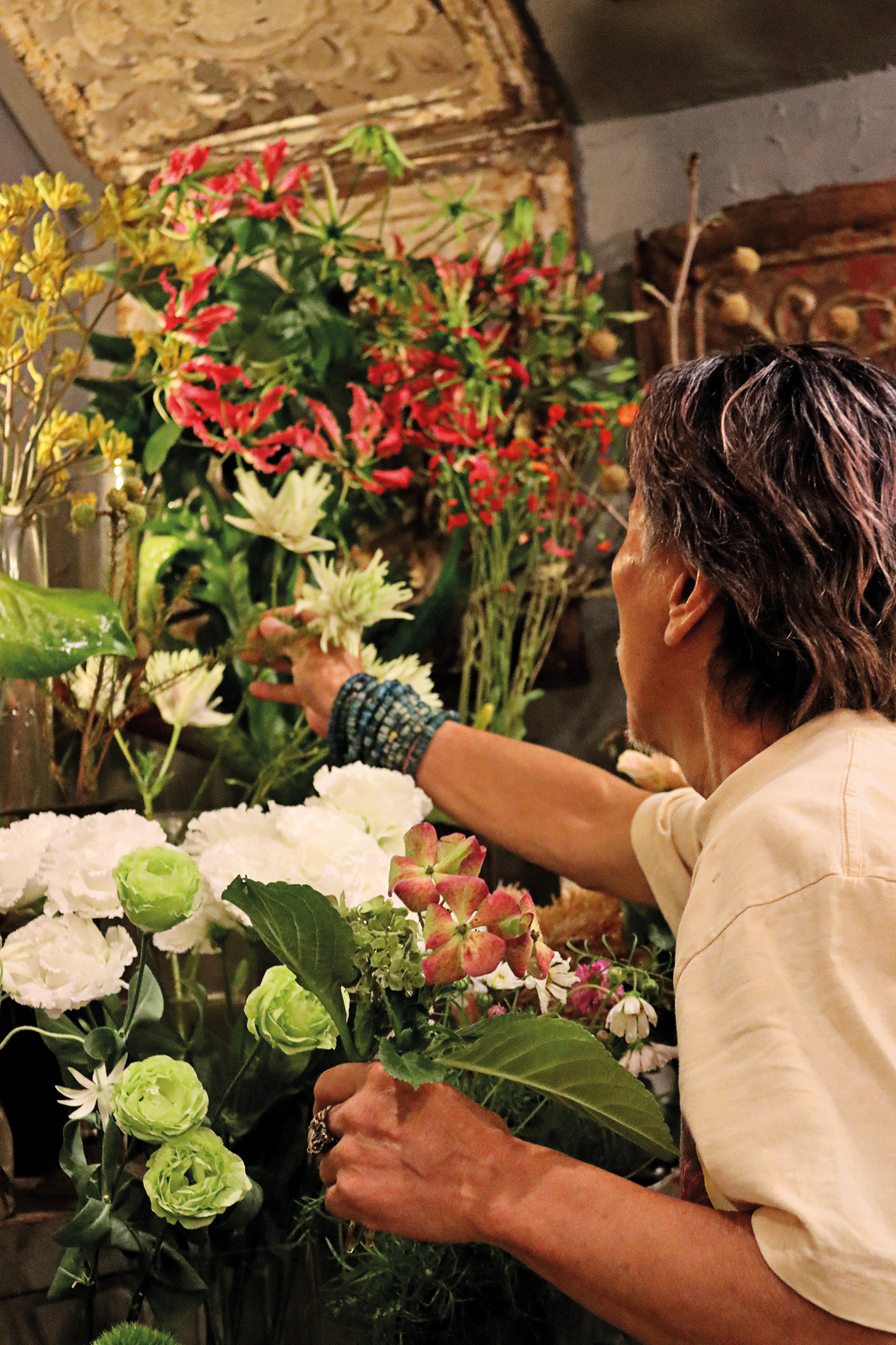
“I just use flowers that I like and create arrangements that I find beautiful. I want to highlight the natural beauty of each flower and see how it’s shown off to its best advantage.”
He describes his approach as following the natural movement of each flower. He places a flower where it seems to want to go, so to speak, and where it looks its best. He draws inspiration from all kinds of different sources. “I think it’s important to look at many different things that we personally find beautiful. Sometimes I see something in fashion or in nature that inspires me to try something new.” Other florists, some of whom are less experienced, also serve as a source of inspiration for him.
“Even when someone much younger than me creates a floral arrangement, I might think, ‘How wonderful! I can learn something from that.’ Unfortunately, some experienced florists become convinced that their way of working is the best. They’re no longer open to learning from others. I don’t think that way. When someone creates something beautiful, I want to take that knowledge to heart. That’s how you keep growing.”
Changing Customers, Changing Tastes
After decades in the business, Noritake has seen customer preferences change. For example, he’s noticed that brightly colored, artificially dyed flowers are becoming increasingly popular. “Many younger customers love those kinds of flowers, and flower shops are responding to that demand.”
"I understand that people might find them appealing, but personally, I don't want to use them. I don't choose flowers just because they're in style." Instead, he has built a clientele that appreciates his personal style. That attitude is also reflected in the way he runs his business.
“I’ve always done what I enjoy. If I focused too much on trends, I might not enjoy my work as much. But because I love what I do, I’m happy even when business is a little slower, as long as I can keep working with flowers.”
Flowers in Everyday Life
One difference between Japan and the Netherlands is the way customers buy flowers. In the Netherlands, people regularly buy fresh flowers to brighten up their homes. It’s also customary to bring flowers when visiting friends.
“I’d love it if Japanese people also made a habit of buying flowers for themselves more often. But I don’t think there’s the same need for that here. Maybe people don’t have enough peace of mind to enjoy those little things in everyday life.”
He refers to the European custom of making homes cozy with flowers and candles. According to him, Europeans may place more value on this than Japanese people do.
He explains that Japanese customers mainly buy flowers as gifts, especially for birthdays and special occasions. Businesses, on the other hand, regularly invest in floral arrangements for store openings, events, and office interiors.
“The essence of your work should be something that shows who you are.”
The Impact of Social Media
Although Noritake has been active for decades, social media has brought his work to the attention of a much larger audience in recent years. Kodai notes that Noritake was one of the first to use Instagram Live. This may have contributed to his sharp rise in popularity. This growing recognition has also led to interest and requests from abroad, especially for floral workshops.
At the same time, he notices that social media influences customers’ choices. “Sometimes people bring in photos of floral arrangements they’ve seen online and ask me to recreate them. Often it’s a design I’ve created myself before, but sometimes they bring in an example from another florist.” According to him, this can cause people to lose sight of their own preferences.
“Sometimes someone is dressed very stylishly, but the flowers they choose don’t suit them at all. In that case, I suggest something else, because I believe that the choice of flowers should reflect a person’s personal style. If you pay attention to the clothes you wear, why wouldn’t you develop the same sense of style when it comes to flowers?”
Despite his online popularity, Noritake isn’t interested in fully capitalizing on all the commercial opportunities this offers. His store doesn’t accept orders via private messages on Instagram, but instead directs customers to the online store. He also prefers not to hold workshops at other locations in Japan. “Otherwise, we’d simply have to manage too many different channels. Of course, we could probably do more, but we like to do everything at our own pace.”
Staying True to Yourself
When asked what advice he would give to the next generation of florists, Noritake returns to his personal philosophy. “Before you think about success, you have to ask yourself what you really want to do. I think it’s more important to discover what you love about the floristry profession and to continue developing that.”
He encourages young florists to experiment with new techniques and trends, but warns against letting those trends dictate their artistic direction. “There’s nothing wrong with trying something new. But don’t completely change the way you work just because something becomes fashionable. The essence of your work should be something that reflects who you are.”
Noritake has always remained true to himself and his artistic preferences. He has allowed his store to evolve and grow alongside him. It is precisely that authenticity that makes his work recognizable and has made his store what it is today.