
Circle around the candle
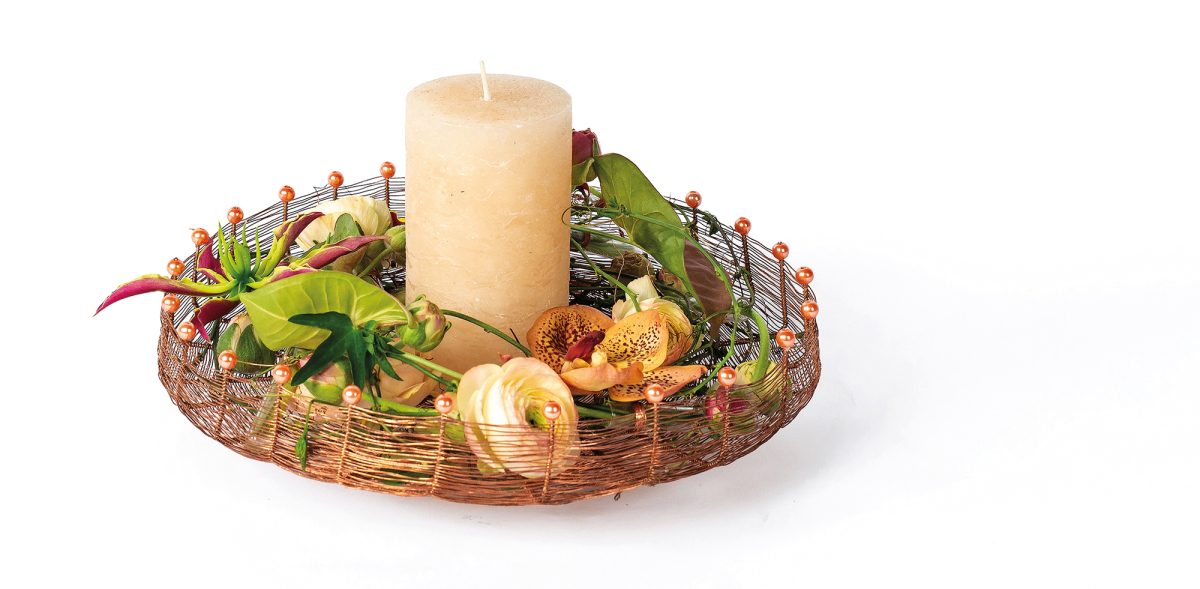
A wire bowl forms the base of this design. The visible wires are accented with Hypericum berries. Gloriosa, Anthurium, and tone-on-tone Vanda orchids are arranged in a floral circle around the candle.
Mysterious
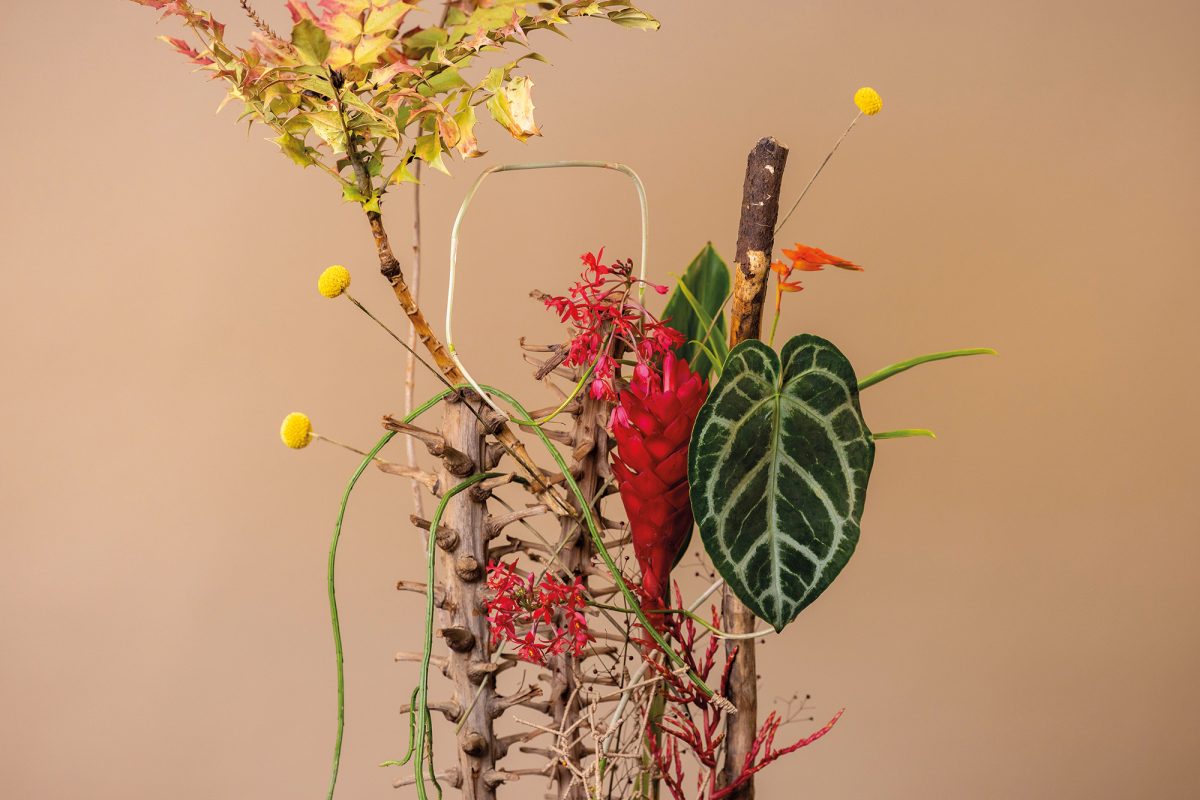
This design posed a major physical challenge. However, thanks to the correct wire thickness and careful placement of the supporting structure, the design is very stable. Only one hidden water tube was used, for the leaf of the Anthurium clarinervium. In addition, Epidendrum from Gloriosa van Ruiten was incorporated. The skeletal branches and the dried Mahonia branch give the design a slightly mysterious look.
Romantic and playful
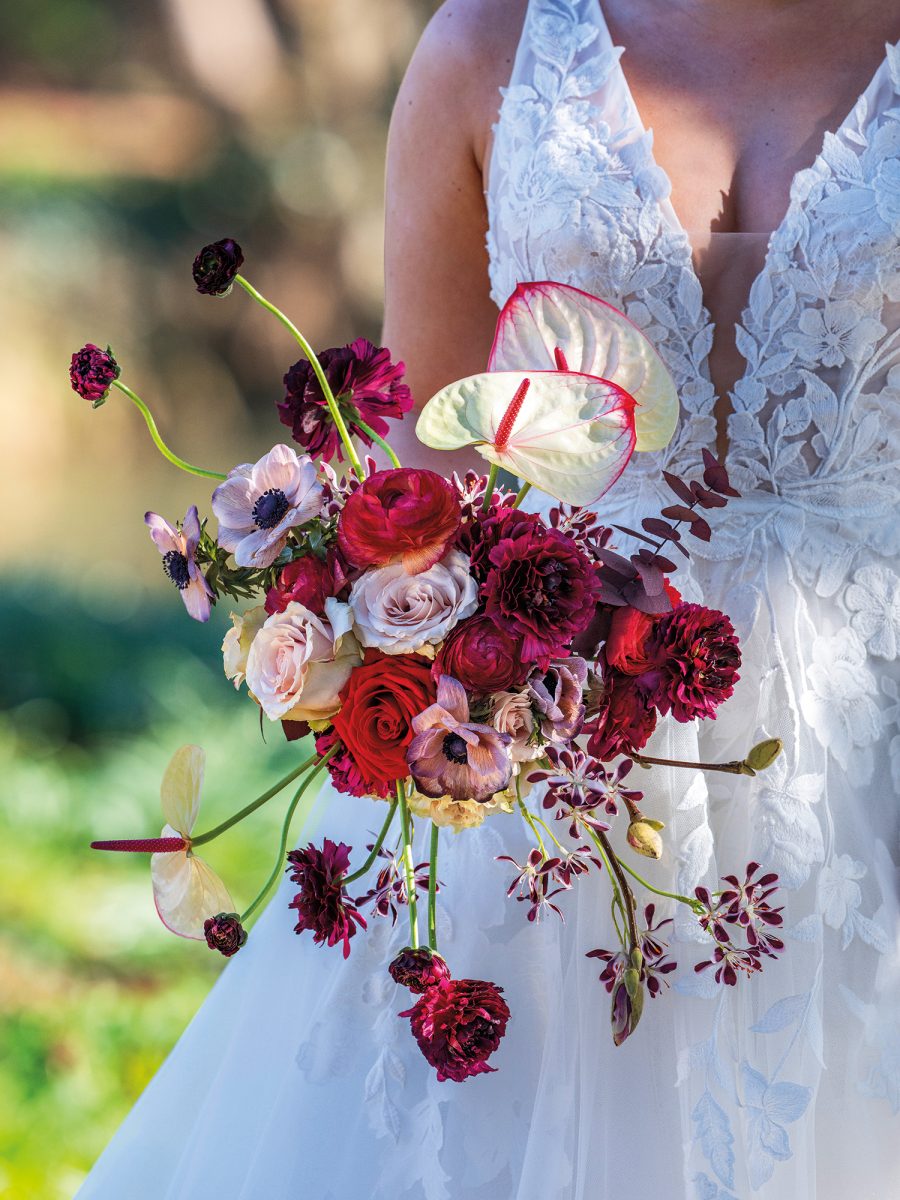
This modern, hand-tied bouquet has a playful and romantic look. The bouquet features an organic structure, with flowers arranged at varying heights to create depth and movement. The classic base consists of roses in various shades (from soft lilac to deep red) and full-bodied ranunculus for a romantic fullness. The heart-shaped Anthurium with a pink edge adds an exotic and elegant touch.
The materials used are Magnolia, Clematis ‘John Paul II’, Ranunculus ‘Elegance Red’, Anthurium ‘Mick Jagger’, Ranunculus ‘Brushmark Dragon’, Anemone ‘Galil Purper’, Rosa ‘Silverstone’, and Eucalyptus.
Summer hat
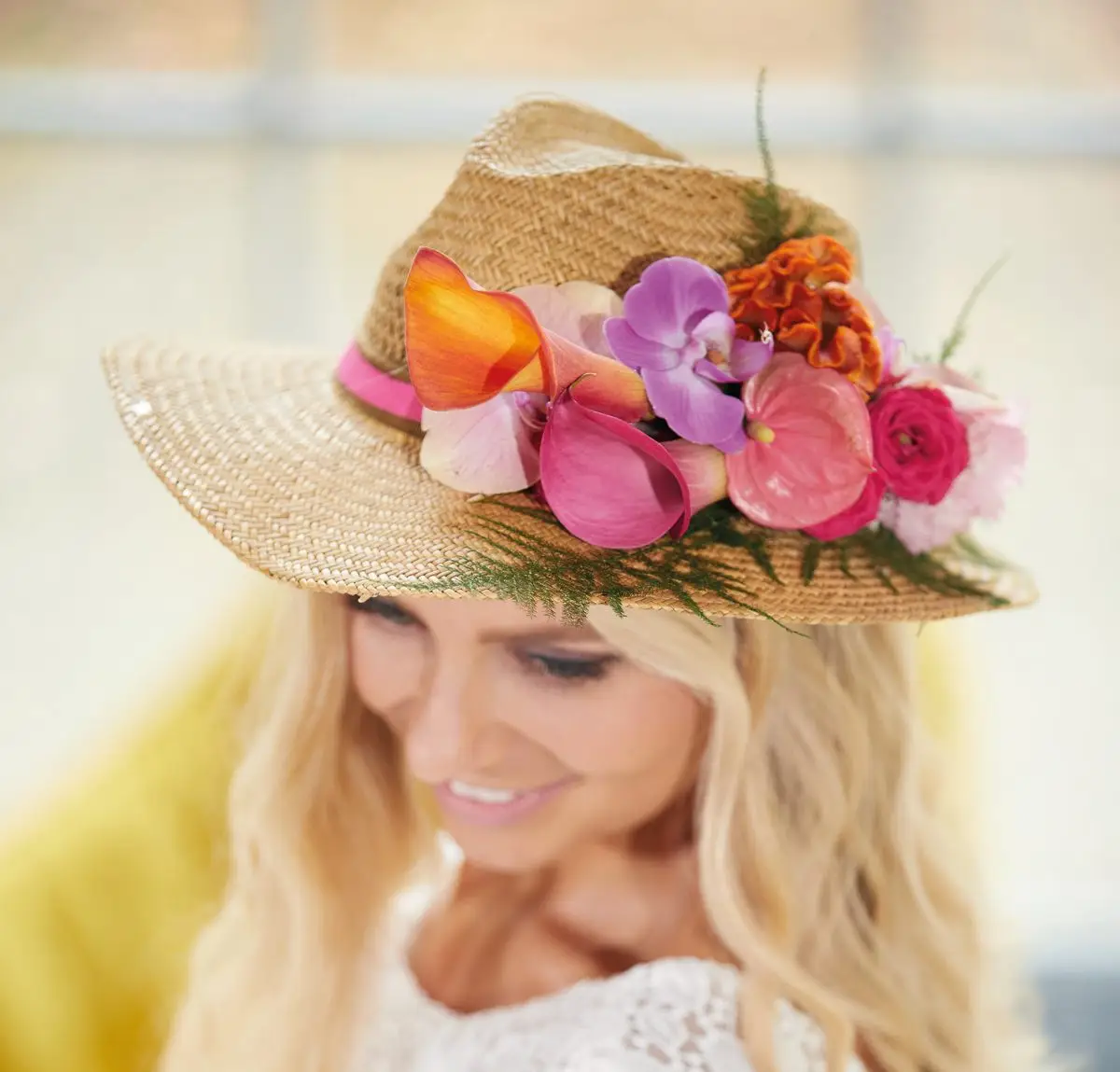
This cheerful summer hat is adorned with colorful flowers in shades of pink, lilac, and orange, among others. The flowers are attached to the hatband with decorative wire. The flowers used include: Rosa, Anthurium andreanum, Eustoma grandiflorum, Zantedeschia, Phalaenopsis, Celosia argentea, and Asparagus setaceus.
Green cylinder
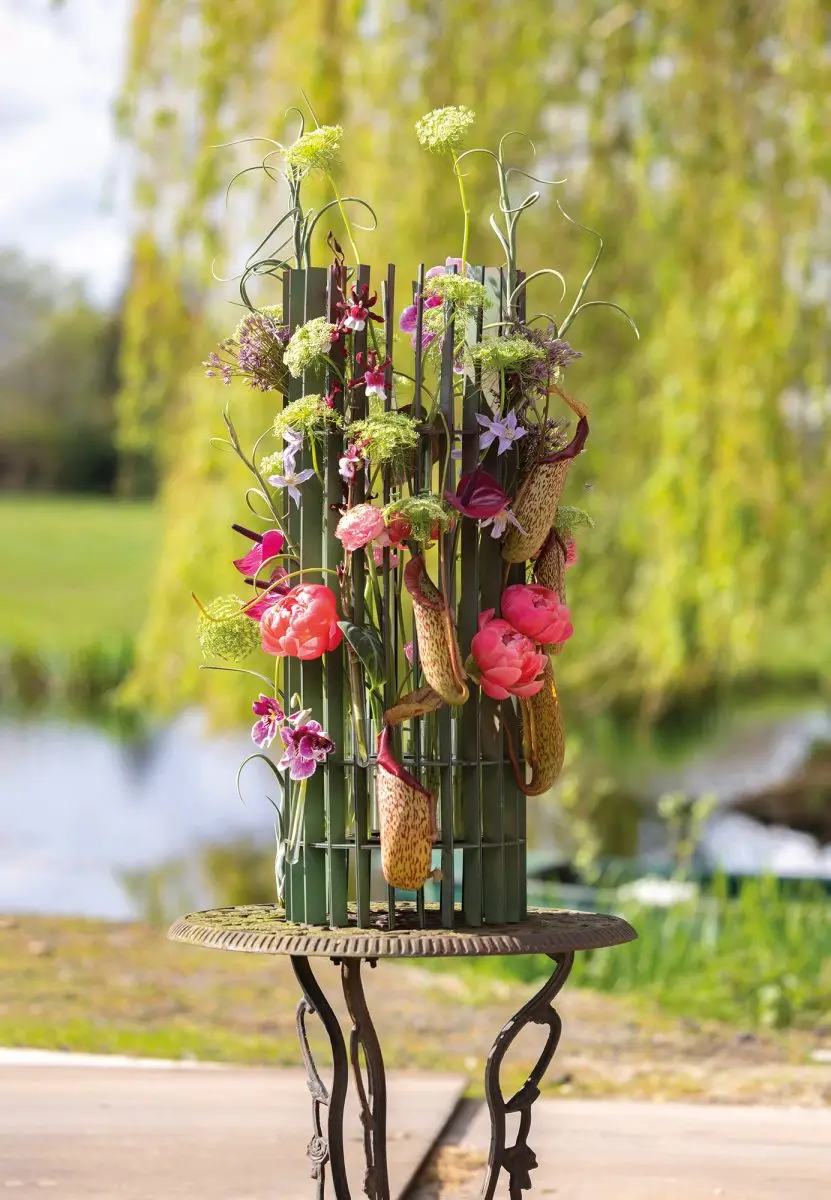
This structure is made up of long wooden elements that come together to form a cylindrical shape. The soft green hue with subtle red accents is a perfect match for the
unique Nepenthes.
Openings are built into the bottom of the frame, allowing the water tubes to be easily secured. At the top, extra small tubes have been placed for adding additional flowers. The floral arrangement consists of peonies, anthuriums, and ranunculus, complemented by orchids, clematis, allium, and Ammi majus, creating a rich and refined
composition.
Eye-catcher
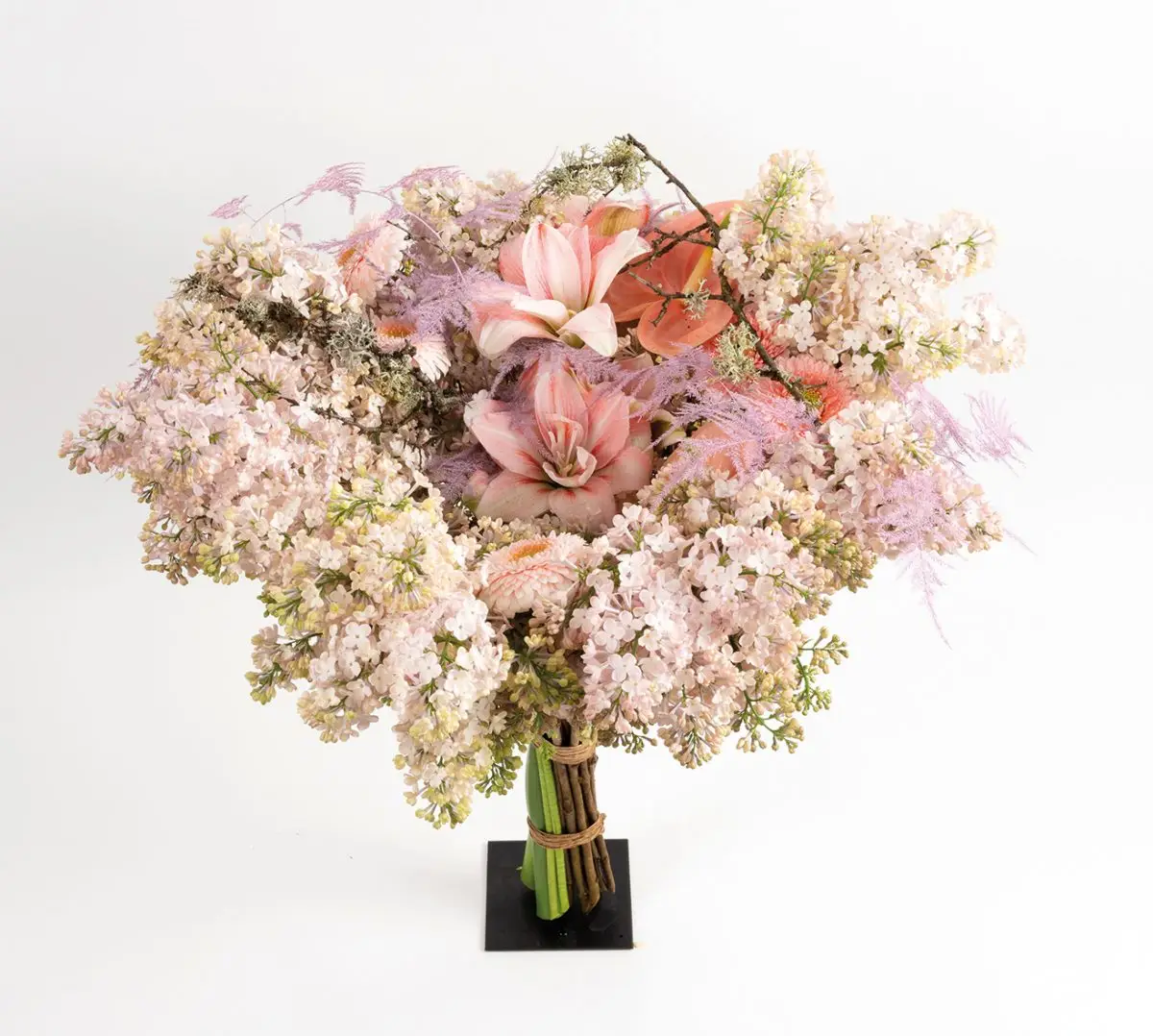
In this powerful work, Syringa forms the outer frame. Within this structure, Amaryllis, Gerbera, and Anthurium are placed, complemented by lichen-covered branches and colored Asparagus. The arrangement has a distinct presence and is clearly intended to be an eye-catcher.