
A Personalized Farewell
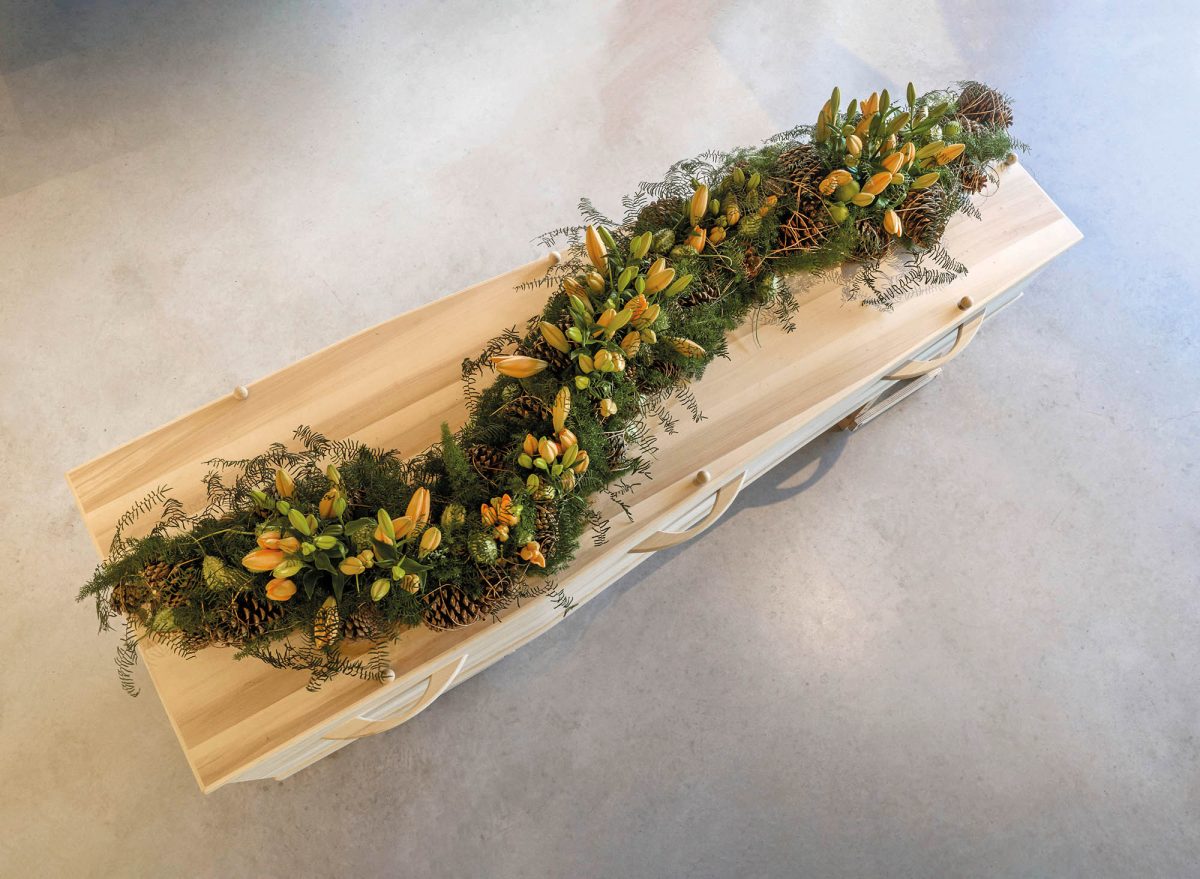
Customization is becoming the norm in today’s funeral floral arrangements. Bereaved families are increasingly choosing colors, shapes, and materials that reflect the personality of the person they are saying goodbye to. A handwritten message, a favorite flower, or an unexpected presentation makes all the difference. At the same time, new solutions are emerging around reusability, biodegradable materials, and natural burial grounds. This special issue shows how current developments and inventive craftsmanship come together in floral arrangements that are shaped not by fixed conventions, but by a personal story.
Autumn in Motion
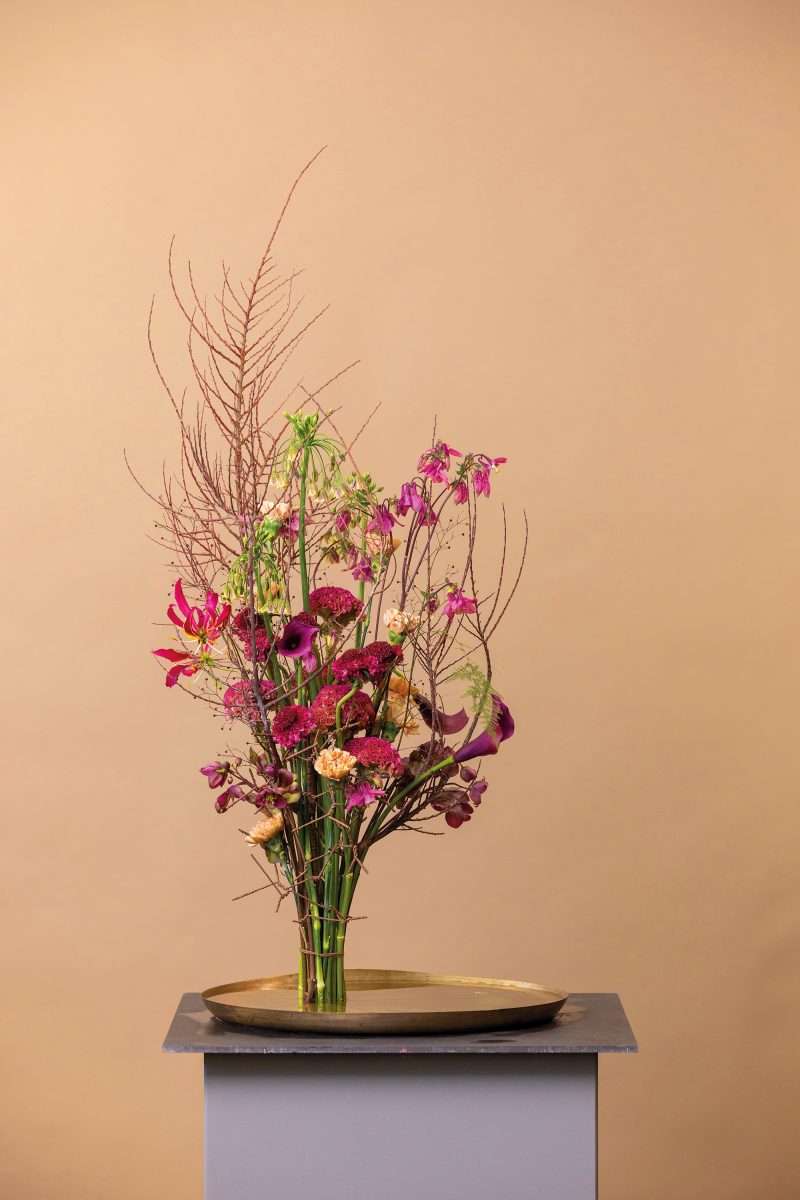
This fall is about more than just warm colors and familiar seasonal materials. New arrangements are pushing the boundaries of the bouquet, while 3D techniques and reusable bases open up new possibilities for design and production. Materials from nature meet cultivated flowers; grand, eye-catching arrangements are complemented by compact, commercially accessible variations. In this way, the season becomes a testing ground for balance, form, and technique. This special issue showcases how experimentation and craftsmanship are shaping the autumn tradition.
Standing bouquets
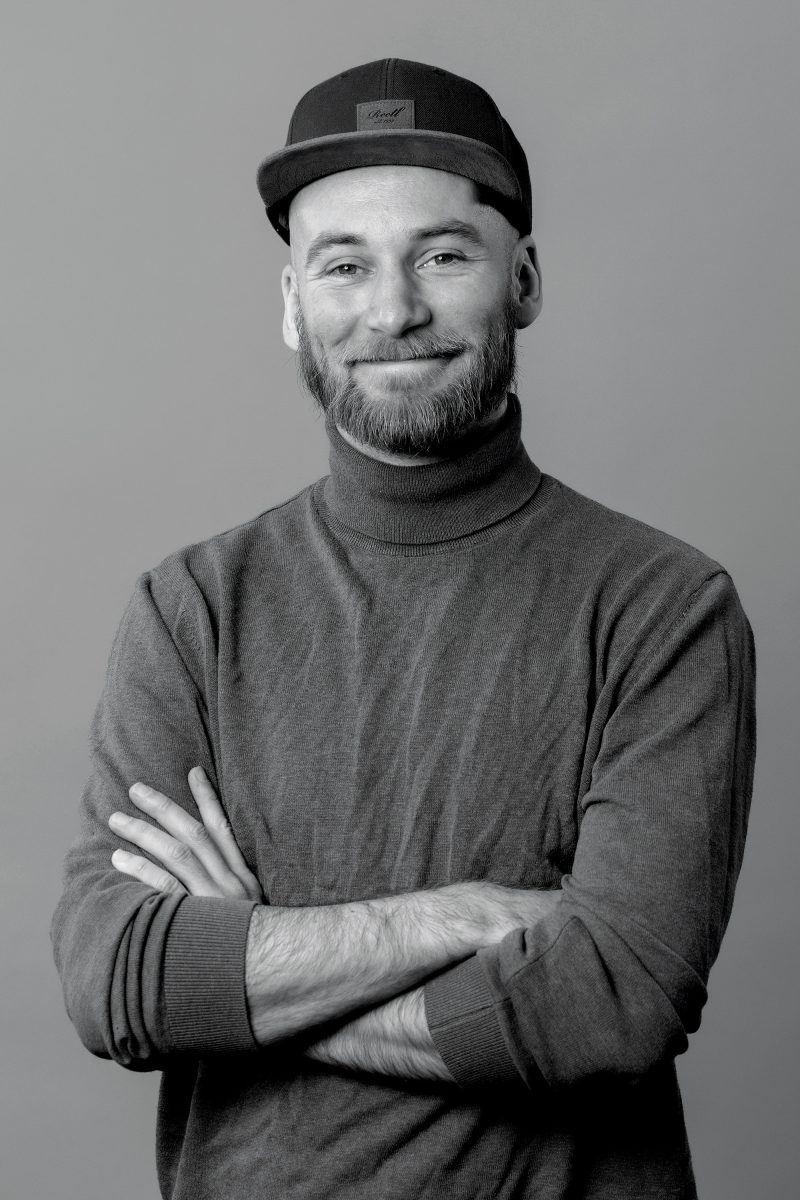
“A striking development in floral art is the rise of freestanding bouquets. This fascinates me because it challenges us to define more clearly what a bouquet actually is. The concept has its origins in the bound works from Gregor Lersch’s *Standing Ovations*, in which botanical materials were bound to structures. Since then, designers such as Lersch and Frédéric Dupré have adapted this technique for use in bouquets.”
During the 2025 International Floristry Teacher Seminar, international floristry instructors at our school arrived at this definition of a hand-tied bouquet: tied by hand, with a single dominant binding point, allowing flowers to be supplied with water and maintaining its shape when moved from the binding point.
This definition leaves the choice of technique open: sheaf-style, parallel, or, for example, binding at a single point. Whichever you choose, what matters is craftsmanship, durability, respect for the material, and a strong aesthetic appeal. Still, the debate will likely continue: when is something truly “hand-bound”? How many tubes are allowed?
“It is precisely this exploration of boundaries and the freedom that comes with it that makes freestanding bouquets interesting and results in surprising designs: florists can experiment with balance, proportion, and construction. This technique is now also being taught in various programs at the Boerma Institute.”
“You can’t sell what isn’t listed”
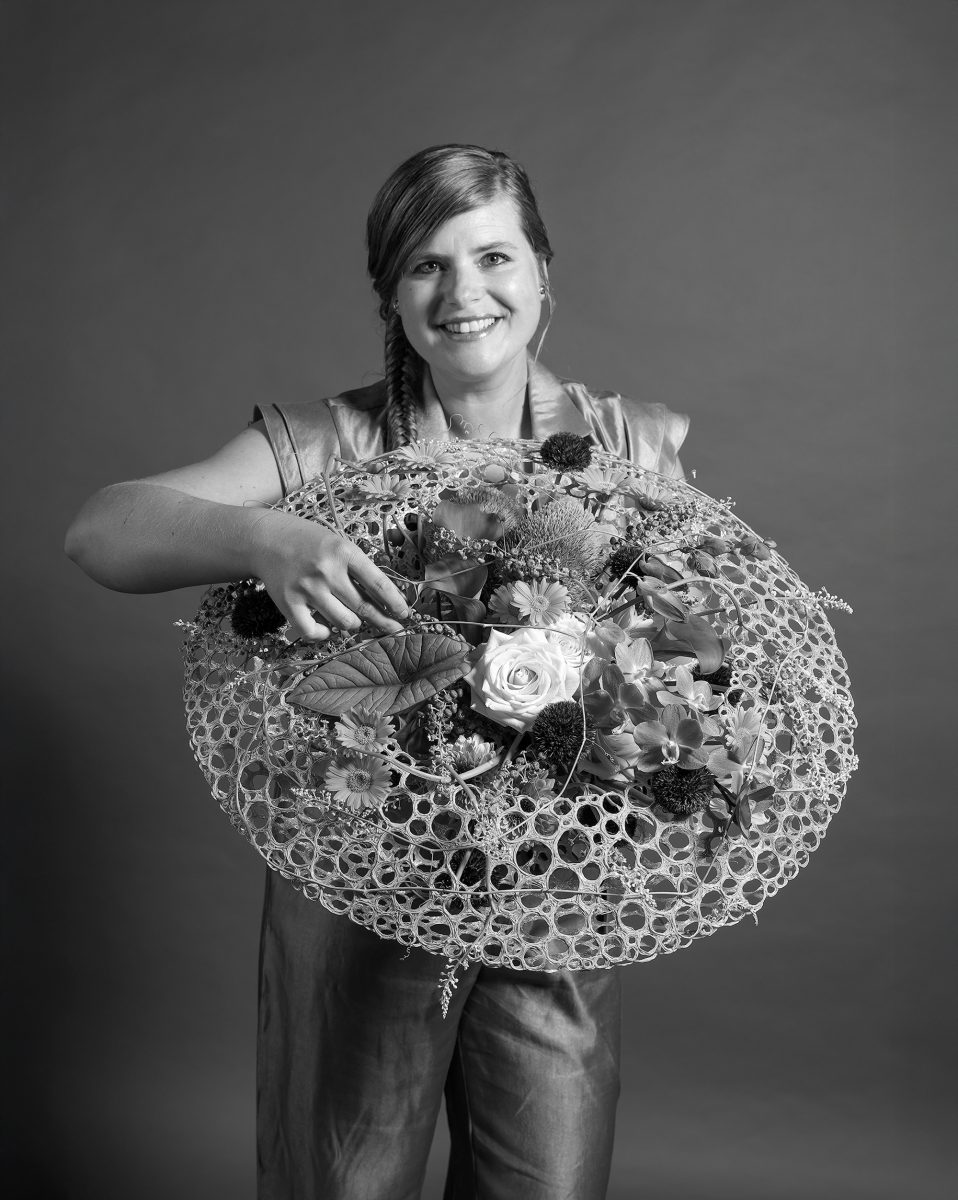
According to floral designer Hanneke Frankema, large floral arrangements can also be quite commercial. When she still had a shop in Friesland, she also sold large-scale arrangements. These immediately caught the eye in the storefront window or on a display table. Not every customer has the space or the budget for them, but that’s precisely why Frankema placed smaller “brothers and sisters” next to them: more accessible versions with the same design language.
That principle recurs in her fall series. A large object featuring 3D-printed maple leaves is paired with compact counterparts on a simpler base. Lanterns appear as striking focal points as well as in a smaller size. The frames created with a 3D pen are also available in maxi and mini versions. The technique and material appearance remain recognizable, while the size, number of flowers, and production time vary.
The process requires preparation, but according to Frankema, it also offers commercial potential. Reusable frames and bases can be mass-produced during quiet hours and refilled later. In her store, she sold the small versions individually and as sets. The large pieces drew customers in during the presentation; the smaller objects made the pieces accessible to a range of budgets and spaces. Her experience: “In some cases, volume really does mean profit.”
“It fascinates me that you can always create something different.”
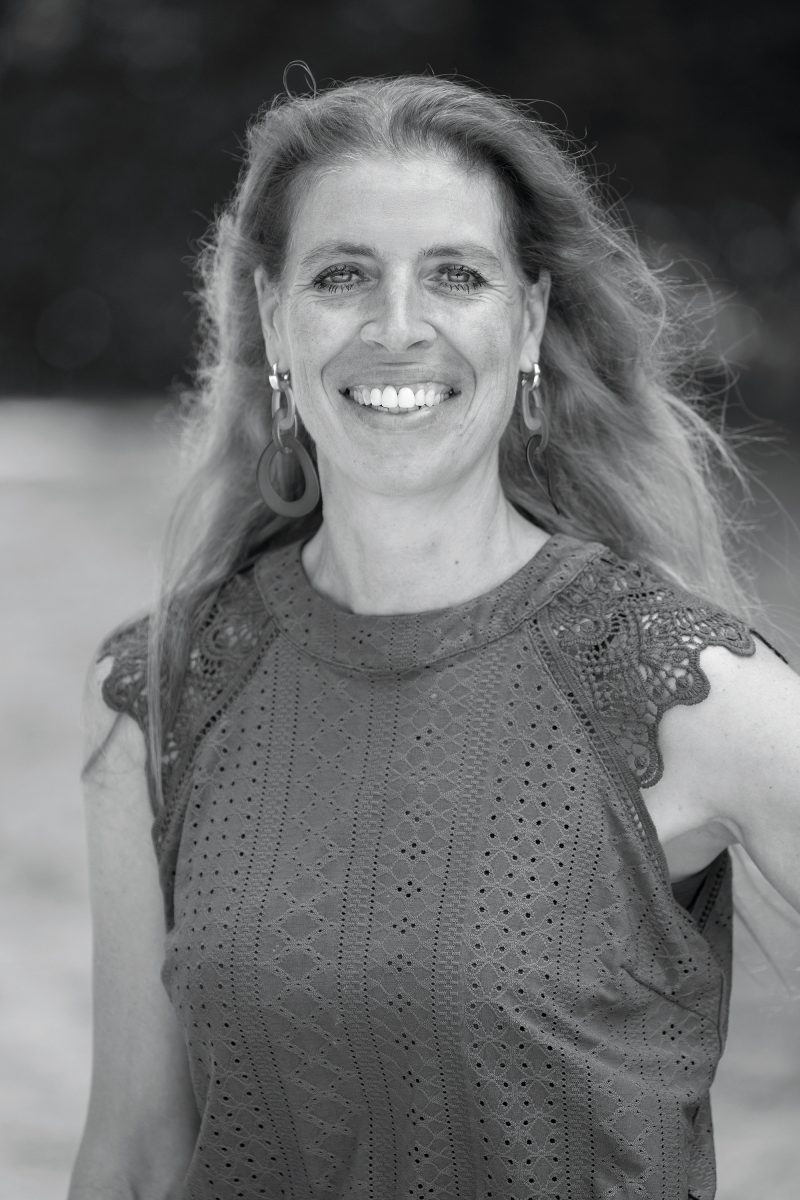
“After completing my floral design training and master’s program, I started out eighteen years ago as a freelancer for large weddings, trade shows, and companies. It fascinates me that you can always create something different. The possibilities are endless. I draw inspiration from everywhere—nature, travel, the seasons, social media, or simply taking a walk through the woods or the castle gardens. I combine colors, shapes, and materials in my head and then get to work.”
“I love combining cultivated flowers with materials found in nature. What you find in nature, you can’t get at auction, and what you get at auction, you won’t find in nature. Personally, I’m crazy about orchids—different varieties with beautiful colors. I love to include them in every arrangement. My living room is also full of different kinds of orchids, which I try to get to bloom again and again.”
“Floral arrangements can tell a story, too”

“An important part of our work is creating funeral arrangements. That’s precisely where I realize just how special the florist’s craft can be,” says Pascal Zijlmans. “At one of the most intense moments in life, we get to create something that offers comfort, evokes memories, and reflects a person’s personality.” For him, funeral arrangements are therefore about personality, meaning, and experience. “An arrangement must truly reflect the person for whom it’s made. As a florist, you can still make a difference during such an intense moment. That’s where the tremendous power of our profession lies.”
Pascal draws his inspiration first and foremost from people. “Everyone has their own story, personality, and memories. I try to reflect that in my work.” Nature is also an important source of inspiration. He enjoys working with natural flowers, plants, and materials, drawing on their diverse shapes, colors, textures, and movements. “I like it when an arrangement doesn’t look too perfect or contrived, but rather natural and unique.”
Pascal sees a growing need for experience and meaning. “People don’t just want to see the end result. They’re also interested in seeing how something comes to be and the care and craftsmanship that go into making it.” He also notes a growing interest in natural and biodegradable materials. “The future of the floral industry lies not only in creating beautiful flower arrangements, but above all in telling stories, creating experiences, and offering personalized attention.”