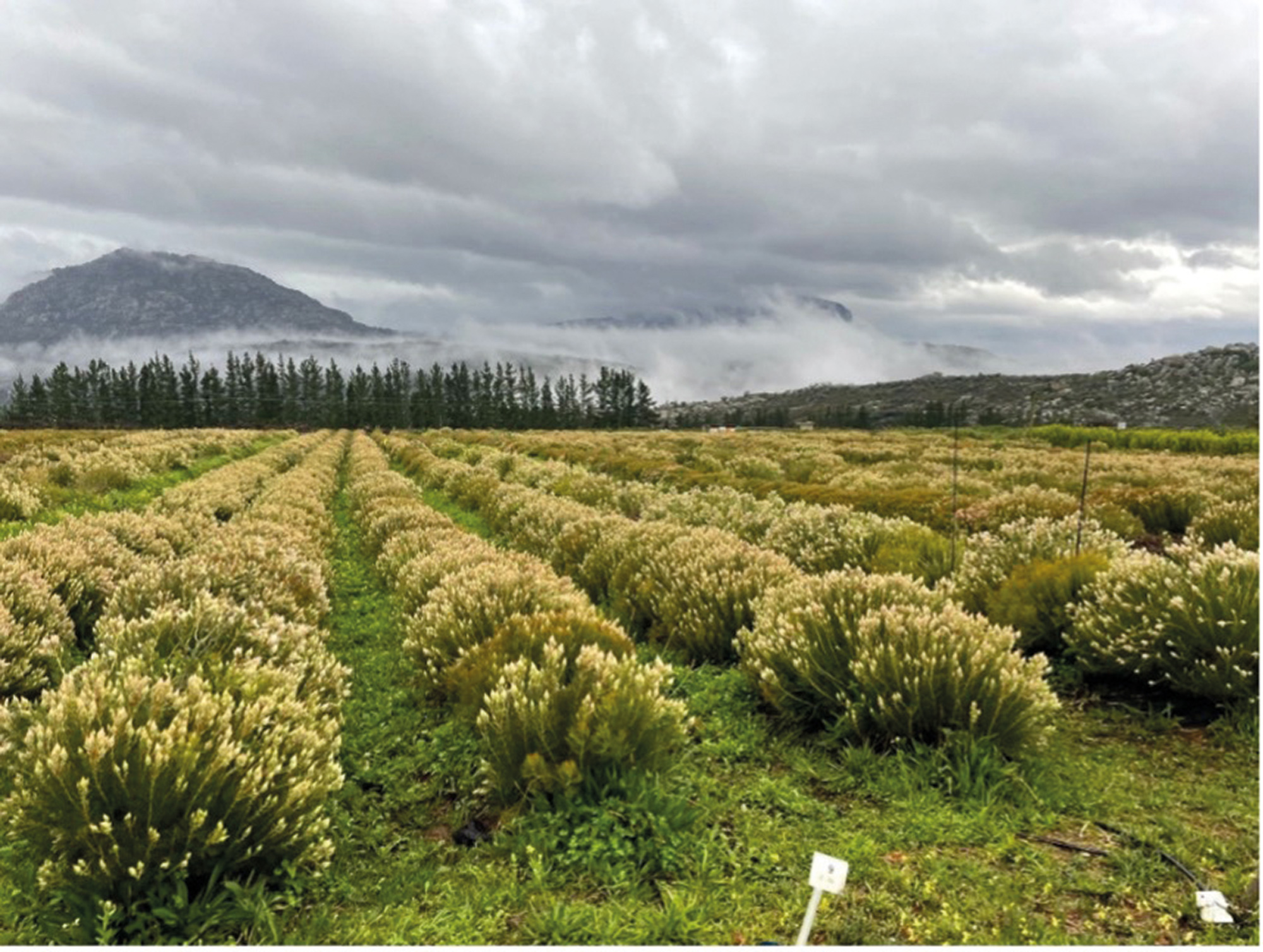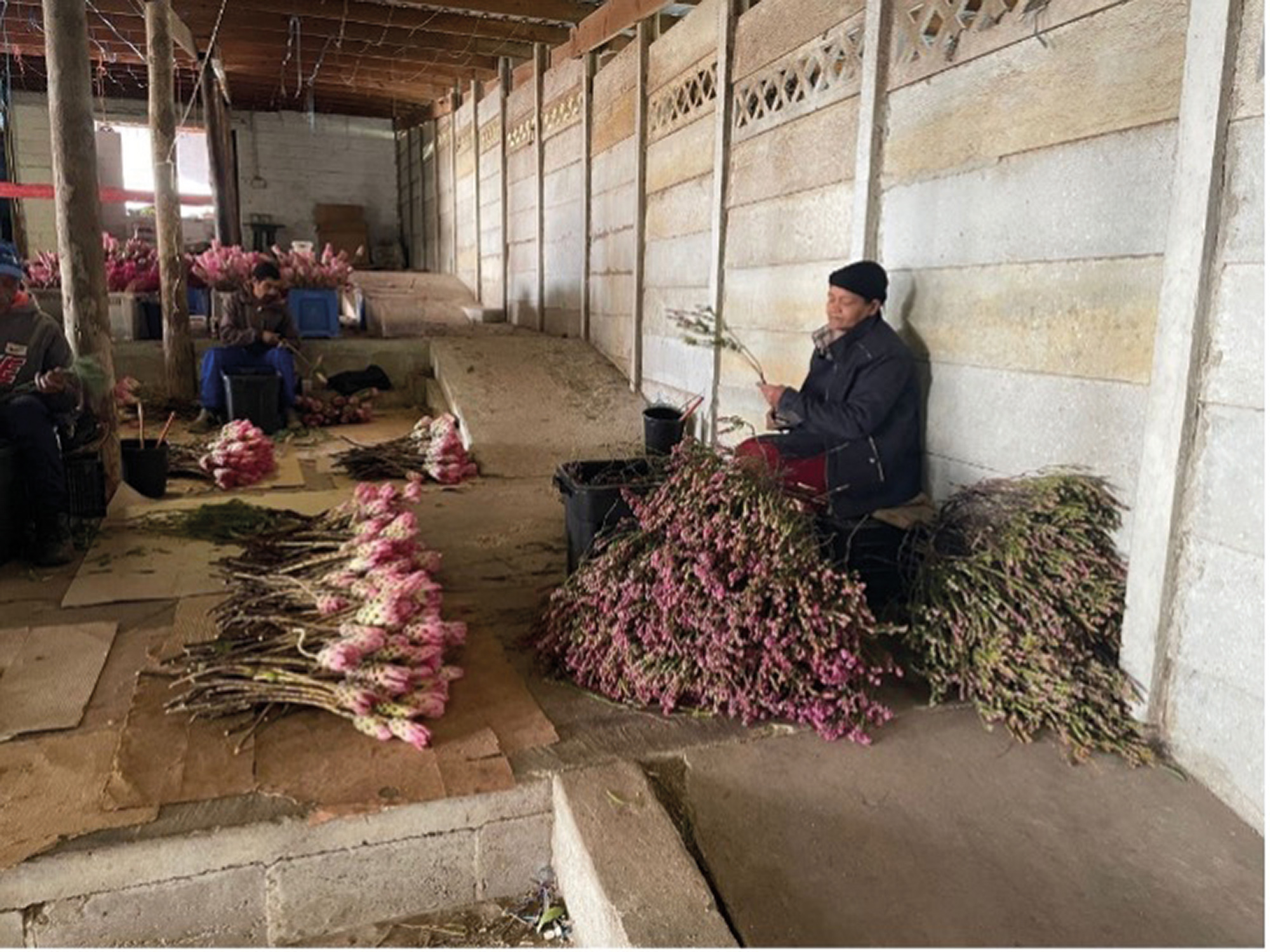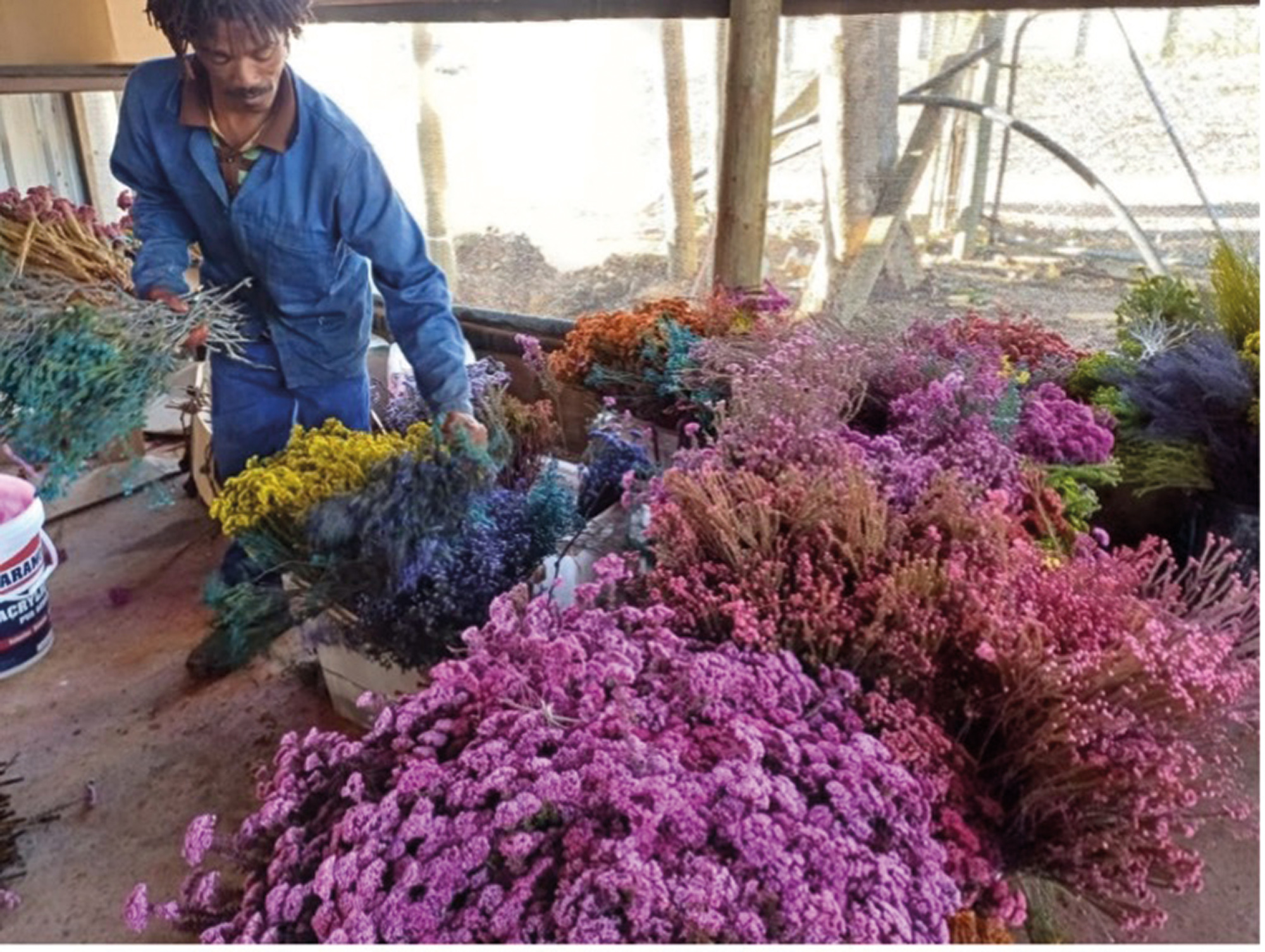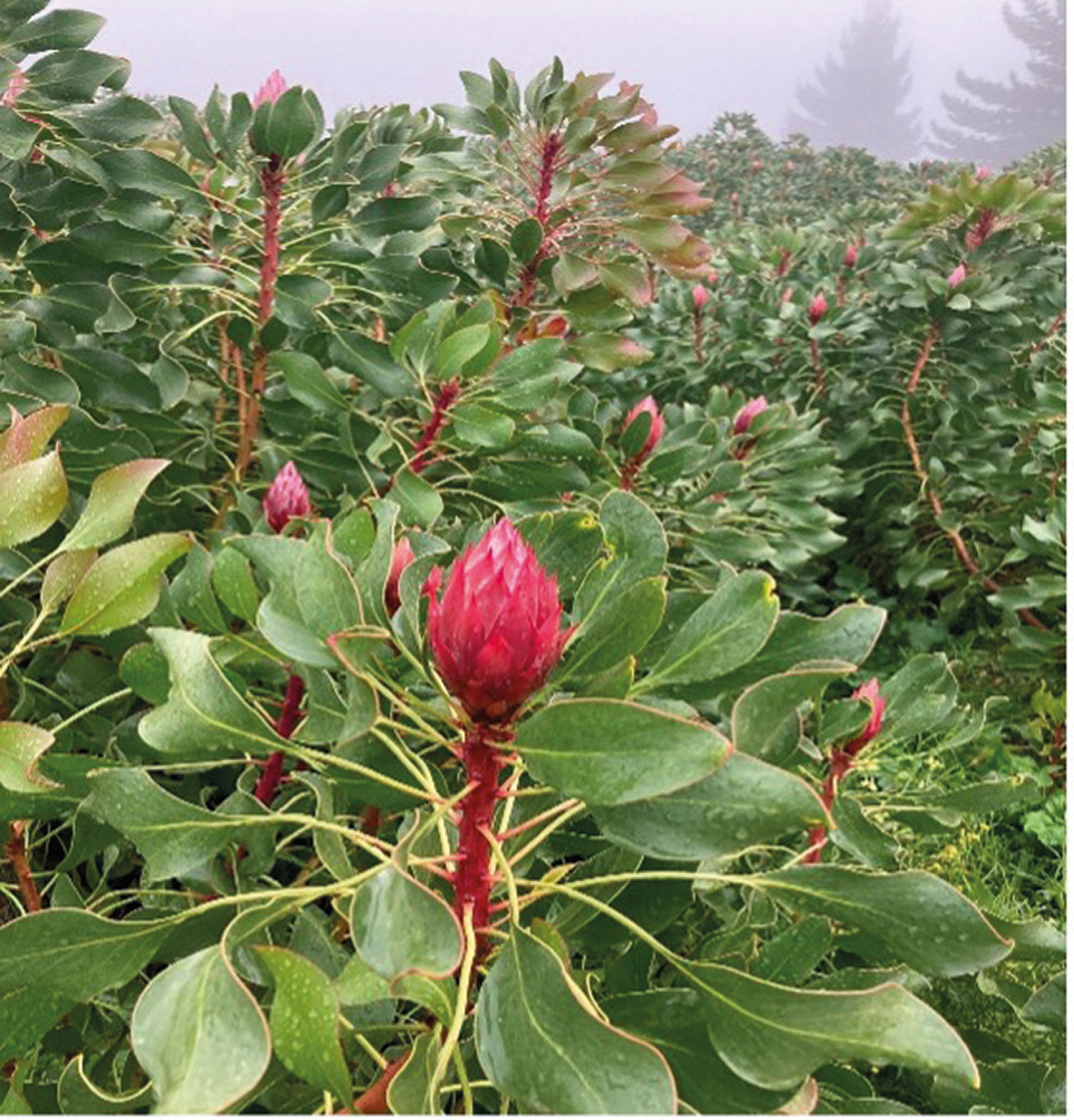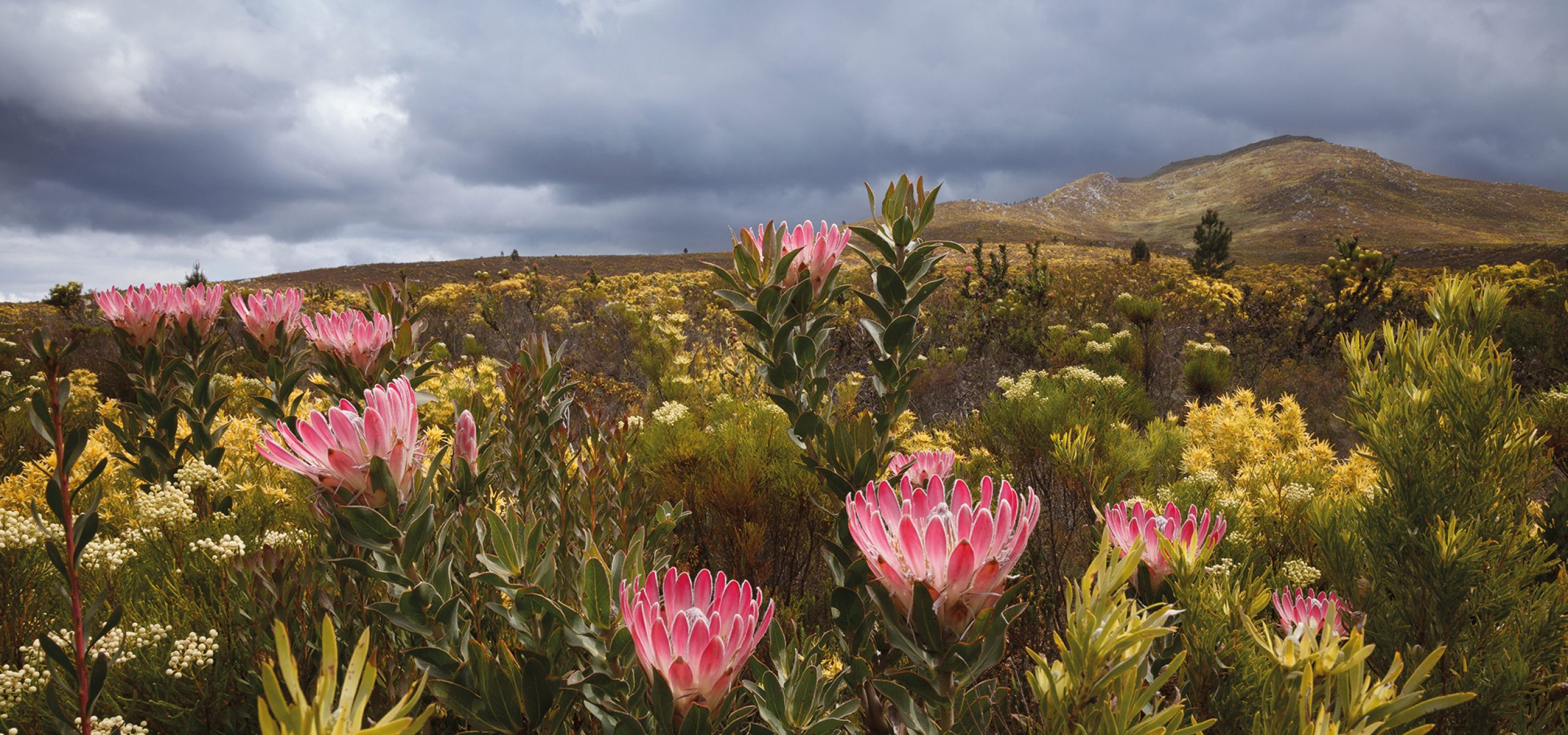
The Cape Floristic Region covers only a small part of South Africa, but is home to more than 9,000 plant species found virtually nowhere else on Earth. The region is characterized by poor sandy soils, dry summers, mild, wet winters, and an undulating landscape of mountains and valleys. Two additional important factors come into play: wind and fire. Regular wildfires have been part of the ecosystem for centuries and even stimulate many fynbos species to regrow.
Nature’s influence is significant even on a smaller scale. Every mountainside has its own microclimate. A cultivar that thrives in one location may struggle to flourish just a few kilometers away. This explains why many species are so closely tied to their natural habitat. Here, nature is literally the foundation of the final product.
Working with Nature
While many cut flowers are grown in greenhouses and can be controlled by light and temperature, fynbos follows the rhythm of the seasons. The shrubs grow outdoors and often remain in the same spot for eight to fifteen years. The timing of their bloom is determined by rain, temperature, and day length. No two seasons are exactly alike.
For the growers, this is not a limitation, but rather the foundation of their approach. Instead of controlling nature, they strive to understand it as best they can. They carefully select which varieties to plant at each location and then let the landscape do its work. The grower supports the natural process but does not take it over. It is precisely because of this that the flowers retain their characteristic shapes, colors, and textures. This also means that the season is never entirely predictable. Rain, temperature, and day length determine when a cultivar blooms, which means availability can vary by a few weeks from year to year.
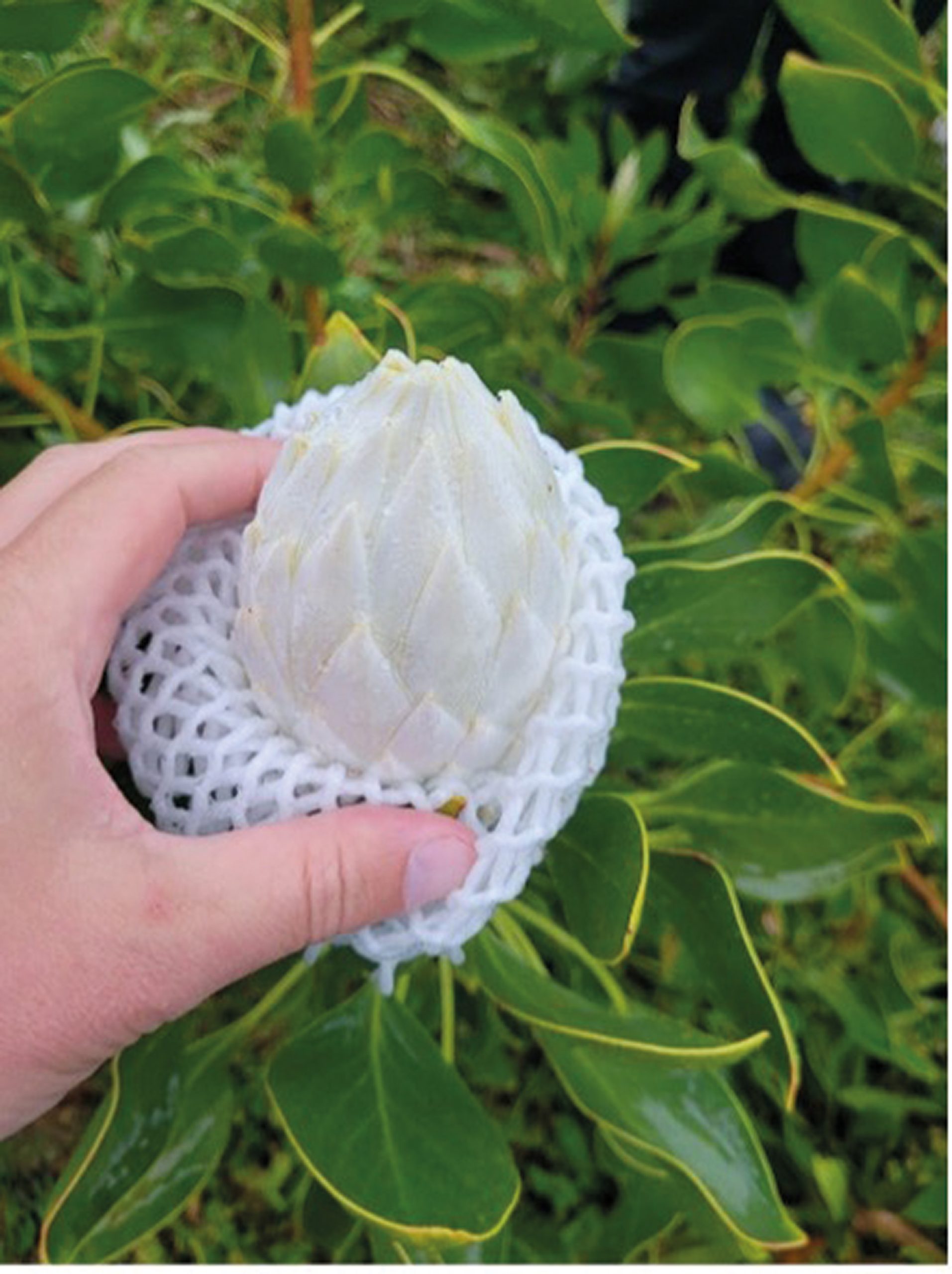
’s Craftsmanship Just because nature plays a major role doesn’t mean the grower does nothing. On the contrary: years of craftsmanship go into every flower. Anyone walking through a fynbos nursery can see this early in the season. As soon as a flower bud begins to develop, it is often covered with a fine protective net. This prevents damage from birds, strong winds, intense sunlight, or insects.
In addition, developing new cultivars requires a great deal of patience. A promising selection is first extensively tested for traits such as stem quality, flower shape, and yield. Only then does propagation via cuttings take place, followed ultimately by commercial planting. It can easily take ten years from the initial selection to the introduction of a new variety.
Nature continues to play a leading role even during cultivation. With some varieties, growers deliberately remove a flower bud so that the remaining flower can develop to its full potential. Such minor interventions require experience and ultimately ensure the quality that the floral designer receives.
Working with fynbos
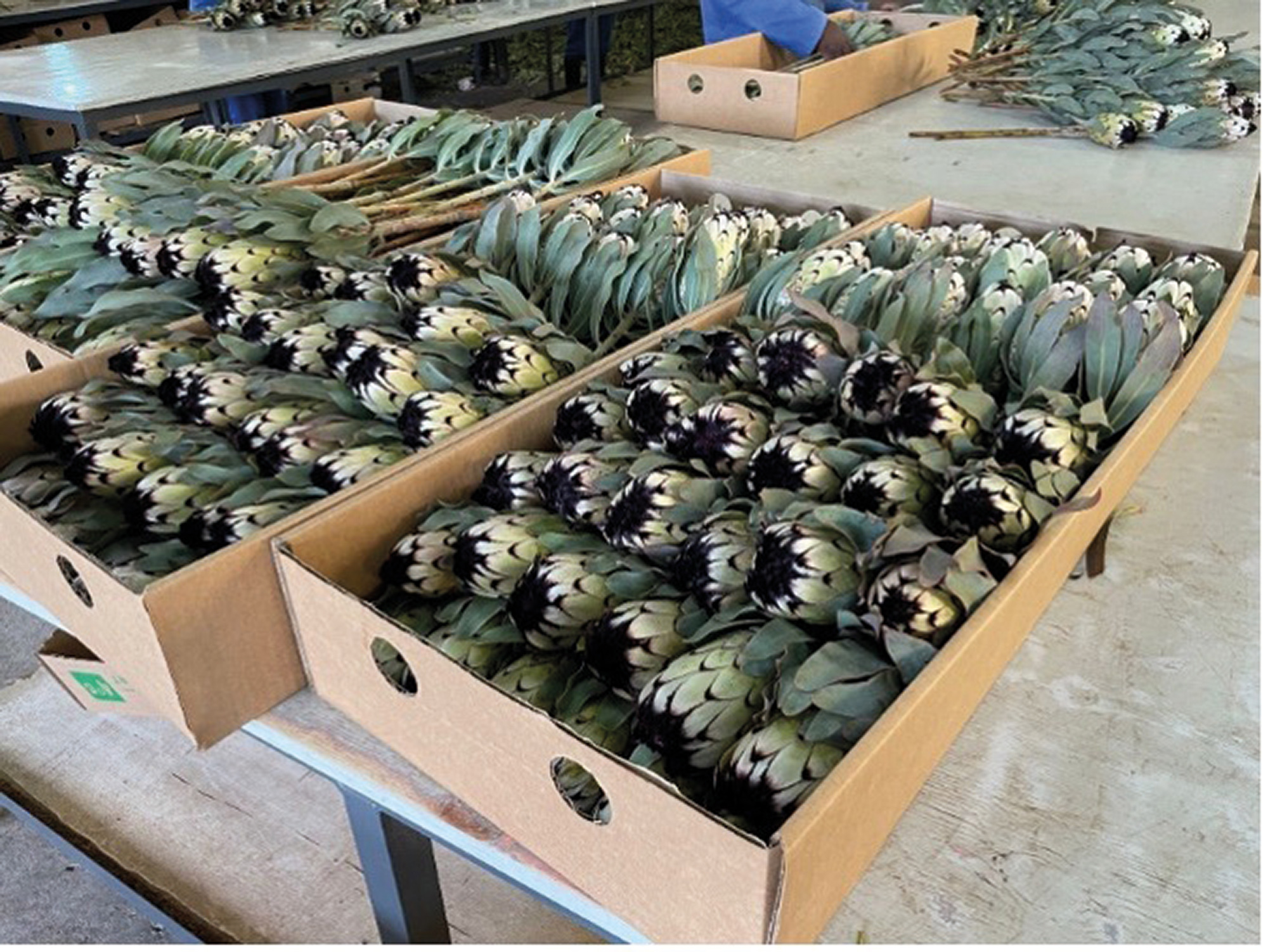
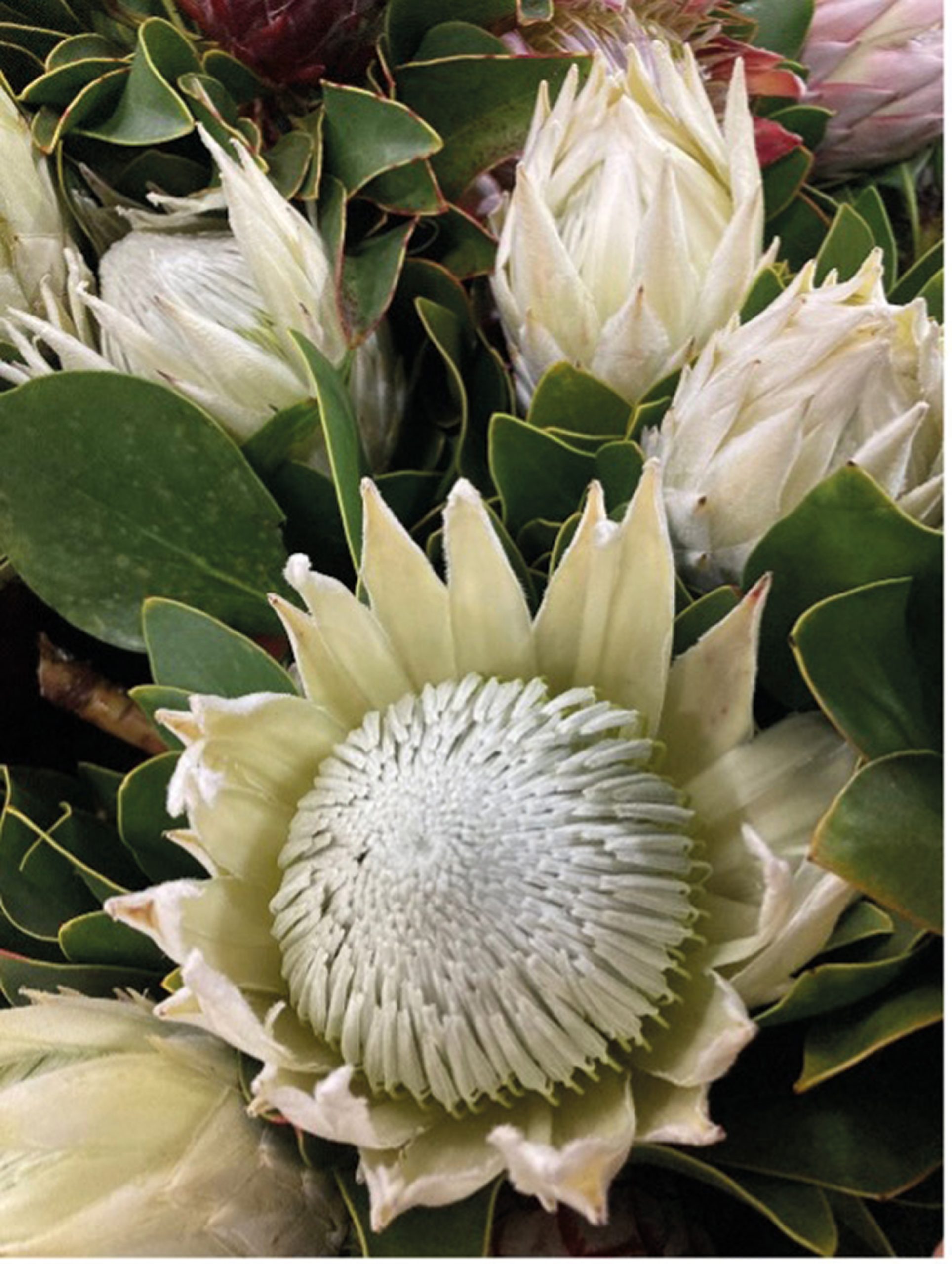
For floral designers, it is precisely these natural qualities that are so appealing. Fynbos stands out for its bold silhouettes, distinct textures, and exceptionally long vase life. Moreover, species such as Protea, Serruria, and Leucadendron offer shapes and structures that clearly differ from traditional cut flowers like roses or chrysanthemums. As a result, they instantly give every arrangement its own unique character.
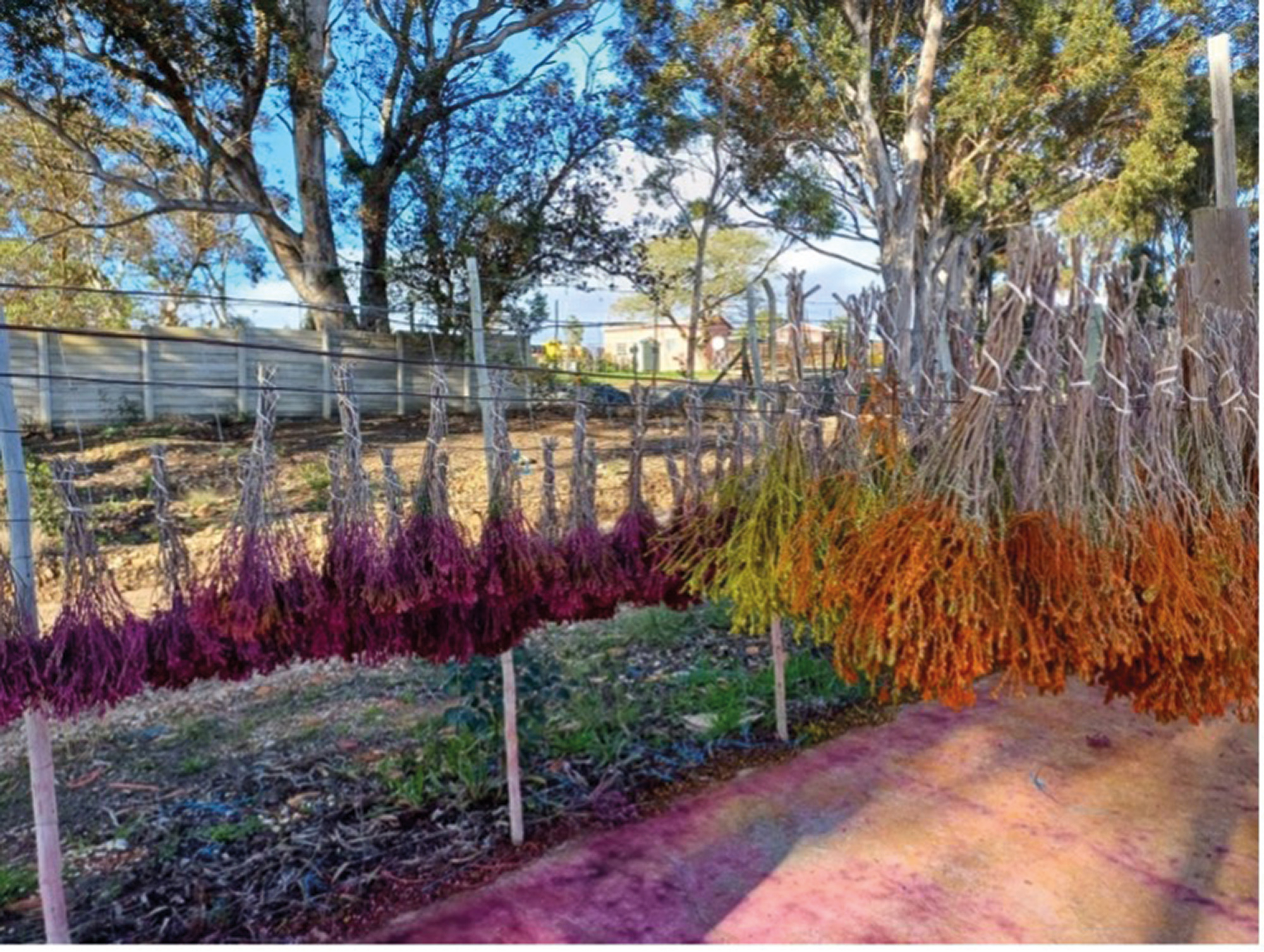
Flowers add texture to a design and blend effortlessly with both fresh and dried materials. As a result, they work just as well in natural wildflower bouquets as they do in modern, architectural arrangements.
Sustainability also plays a role. Because the plants grow outdoors in their natural habitat, virtually no energy is required for climate control. Furthermore, many companies operate in accordance with internationally recognized sustainability standards, including FSI certification, and have been investing for years in plant breeding and the careful stewardship of soil, the landscape, and their employees.
Flowers with a Story
Perhaps that is fynbos’s greatest strength. Every stem embodies the character of the landscape in which it grew. The combination of nature, patience, and
craftsmanship results in flowers that are not only special to work with, but also tell a story.
For the floral designer, this is just as valuable as the flower itself. Because when you know the origin of your materials, you see form, texture, and application in a different light. And that is precisely what turns an extraordinary flower into an extraordinary design.
FM Group imports these South African products directly from specialized growers and closely follows developments in cultivation. The current product lineup can be found in the FM Group online store.