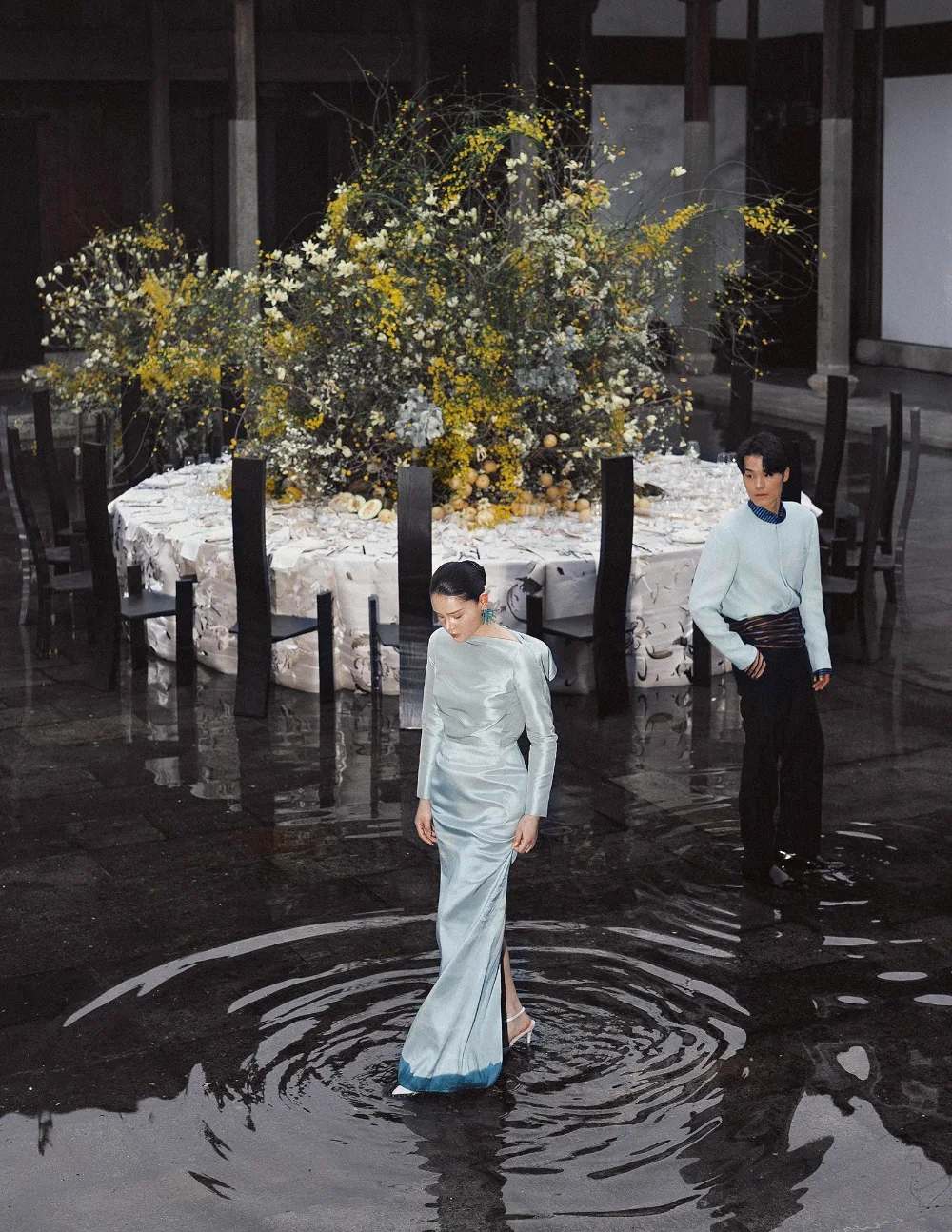
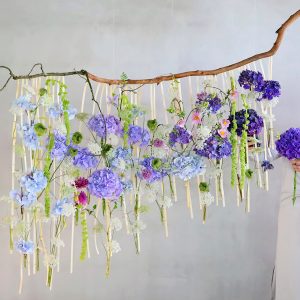
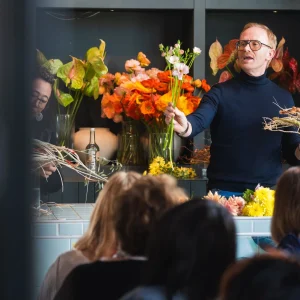
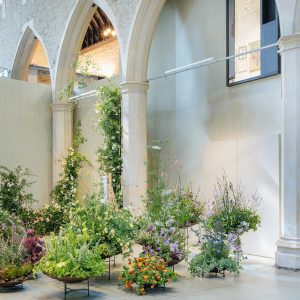
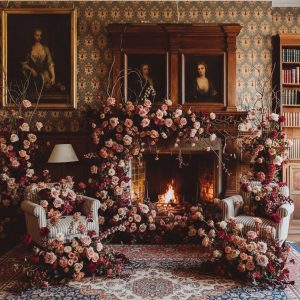
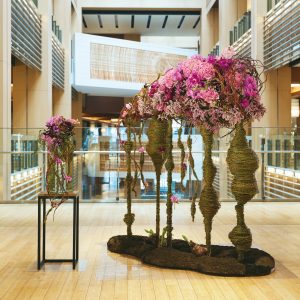
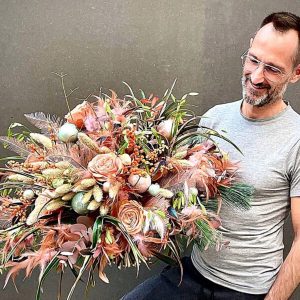
The 30-member collective PHKA is hosting a workshop at MADRID BLOOMS. Participants will gain insight into the process of creating a spatial floral arrangement, from the initial idea to its execution. In an interview on the event’s website, PHKA explains its approach.
The 30-member collective PHKA is hosting a workshop at MADRID BLOOMS. Participants will gain insight into the development of a spatial floral installation, from the initial idea to its execution. In an interview on the event’s website, PHKA explains its approach.
The collective brings together backgrounds in fields such as landscape design, interior design, textiles, and art. PHKA describes itself as “anti-disciplinary”: team members partially set aside familiar approaches to collaboratively arrive at a design. The assignment, the client’s wishes, and the budget determine the starting point.
From Concept to Creation
The workshop focuses primarily on conceiving, developing, and realizing a project. “A project is 70 percent conceptual work and 30 percent execution,” according to PHKA. The collective views workshops as an exchange of experiences, where participants also learn from one another.
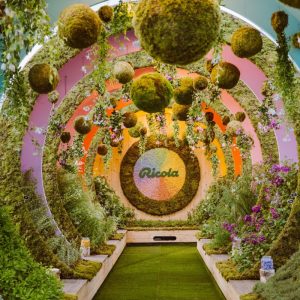
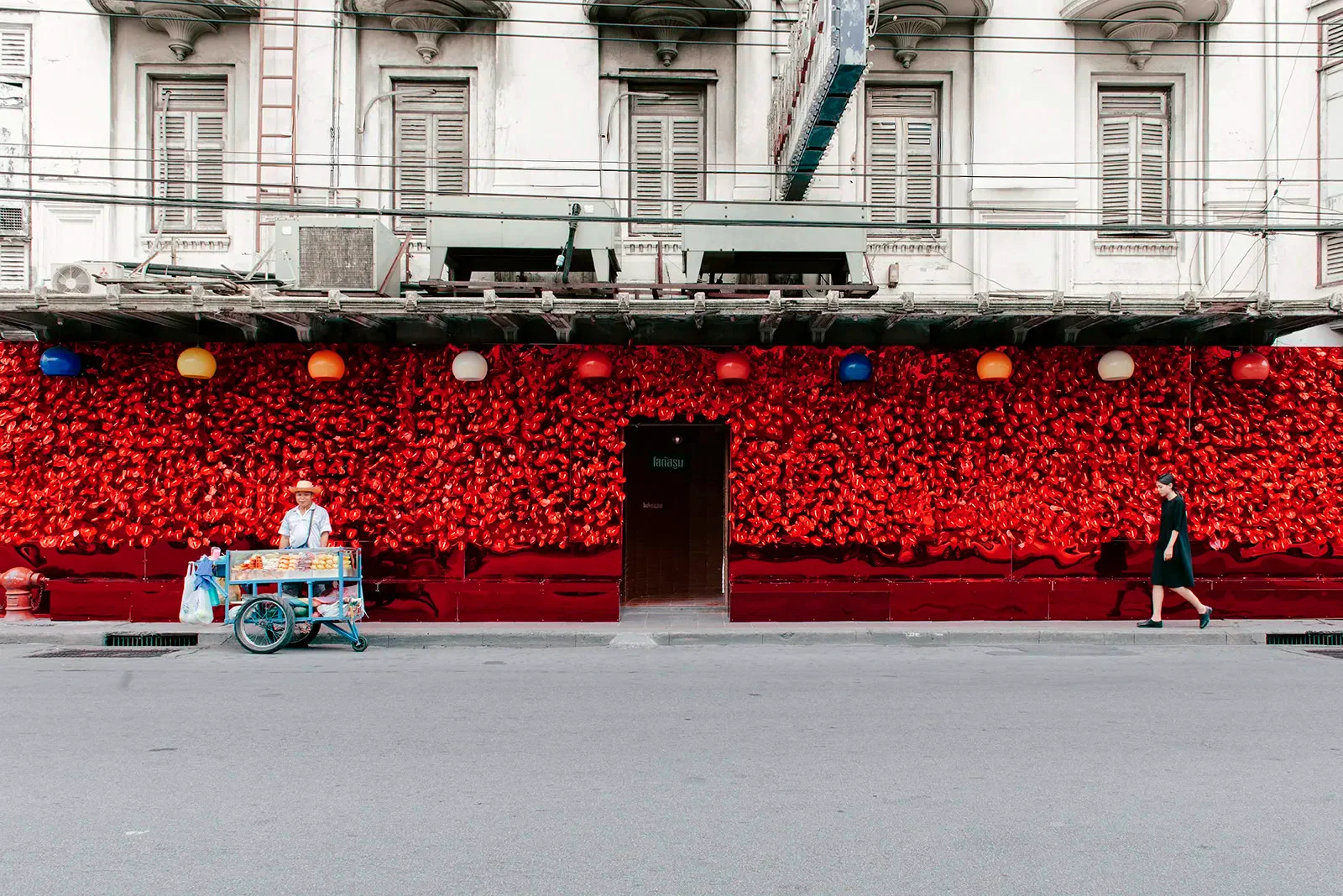
A turning point for the studio, founded in 2013, was “Abandoned One,” a 2018 public installation featuring red anthuriums. After five years of commercial commissions and weddings, primarily in Bangkok, PHKA self-funded and realized this work. The collective wanted to use flowers to transform a space and make that experience accessible to a wider audience.
Materials with a Role
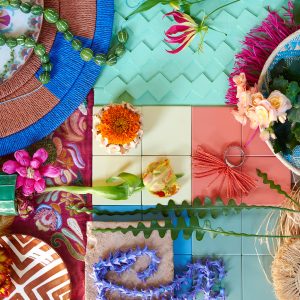
When selecting materials, PHKA distinguishes between materials that provide volume, flowers that serve as accents, and materials that define the concept. The collective prefers to source locally and states that it works entirely without floral foam. For its structures, it uses reusable or homemade frames, often in combination with chicken wire and water tubes. Plants and trees used with their roots and soil intact can be returned to the studio after the event.
Madrid Blooms ’27