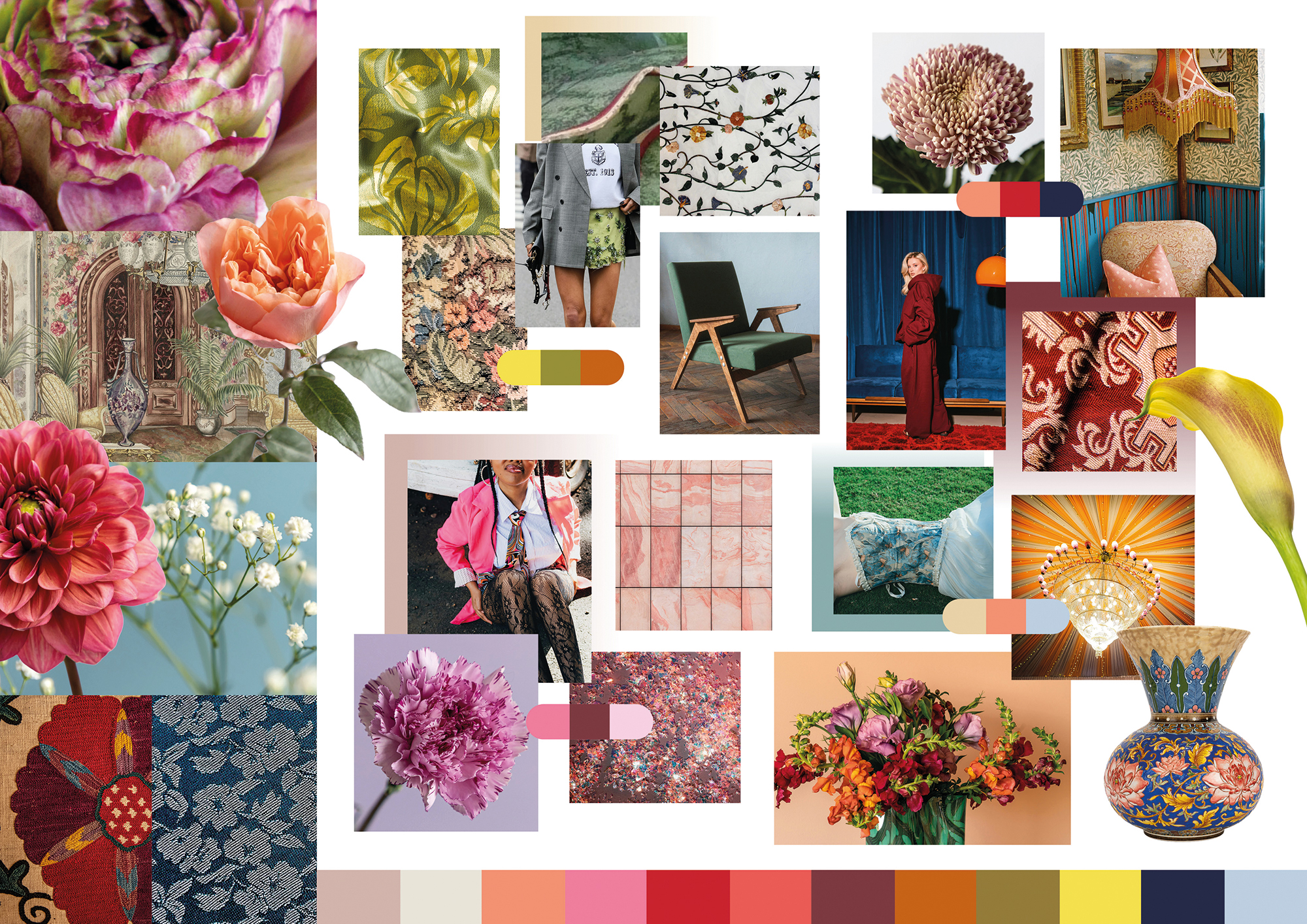
1. Heritage in Bloom
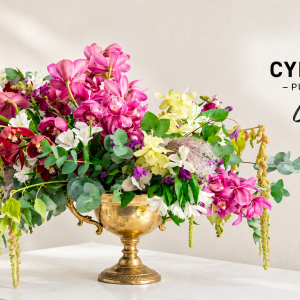
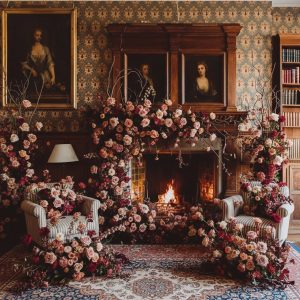
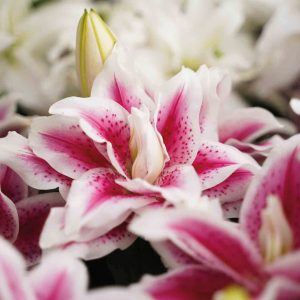
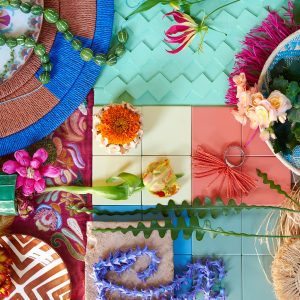
Romance, heritage, and folklore are given an expressive interpretation. Rich colors and floral motifs are combined with classic details. Jacquard, lace, wood, and tiles complement this style, which centers on craftsmanship and a personal approach to tradition.
Pink, coral, and red are complemented by dark blue and burgundy, with light shades of pink and blue serving as softer accents. Different flowers, colors, and textures can be freely combined. To create a personalized look, a color from a patterned background can be repeated in the bouquet, so that the floral arrangement and its surroundings enhance each other.
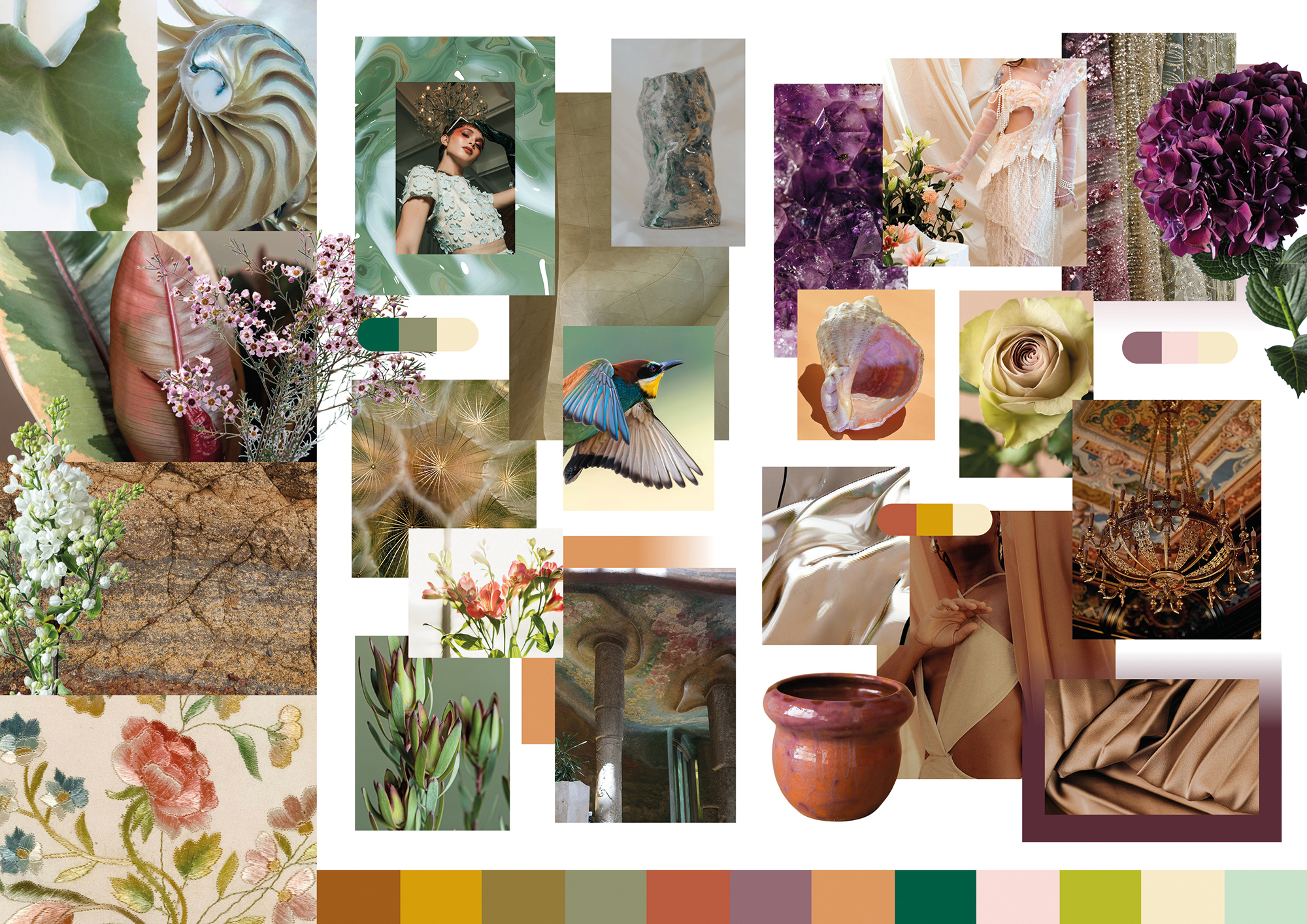
2. Poetry in Motion
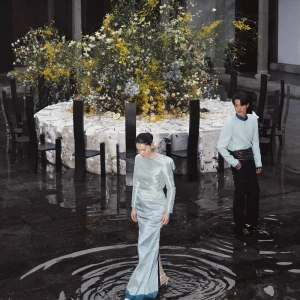
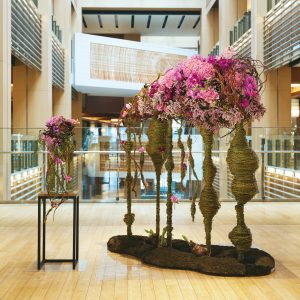
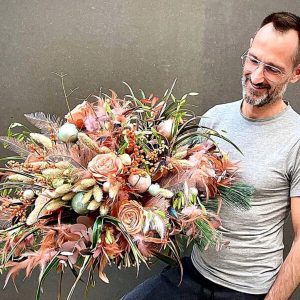
Water, stone, and organic forms serve as the starting point for the second theme. Flowing lines, natural textures, and transparency set the tone. Handmade ceramics, embroidery, and satin add varied surfaces and a handcrafted character.
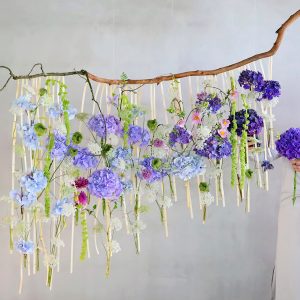
The color palette ranges from shades of sage and olive to deep green, complemented by apricot, spicy orange and brown tones, soft yellow, pink, and mauve. The summer and winter palettes create different accents. In floral arrangements, an open composition can highlight the movement of individual stems. A curved line that is echoed in the vase connects the composition and its container.
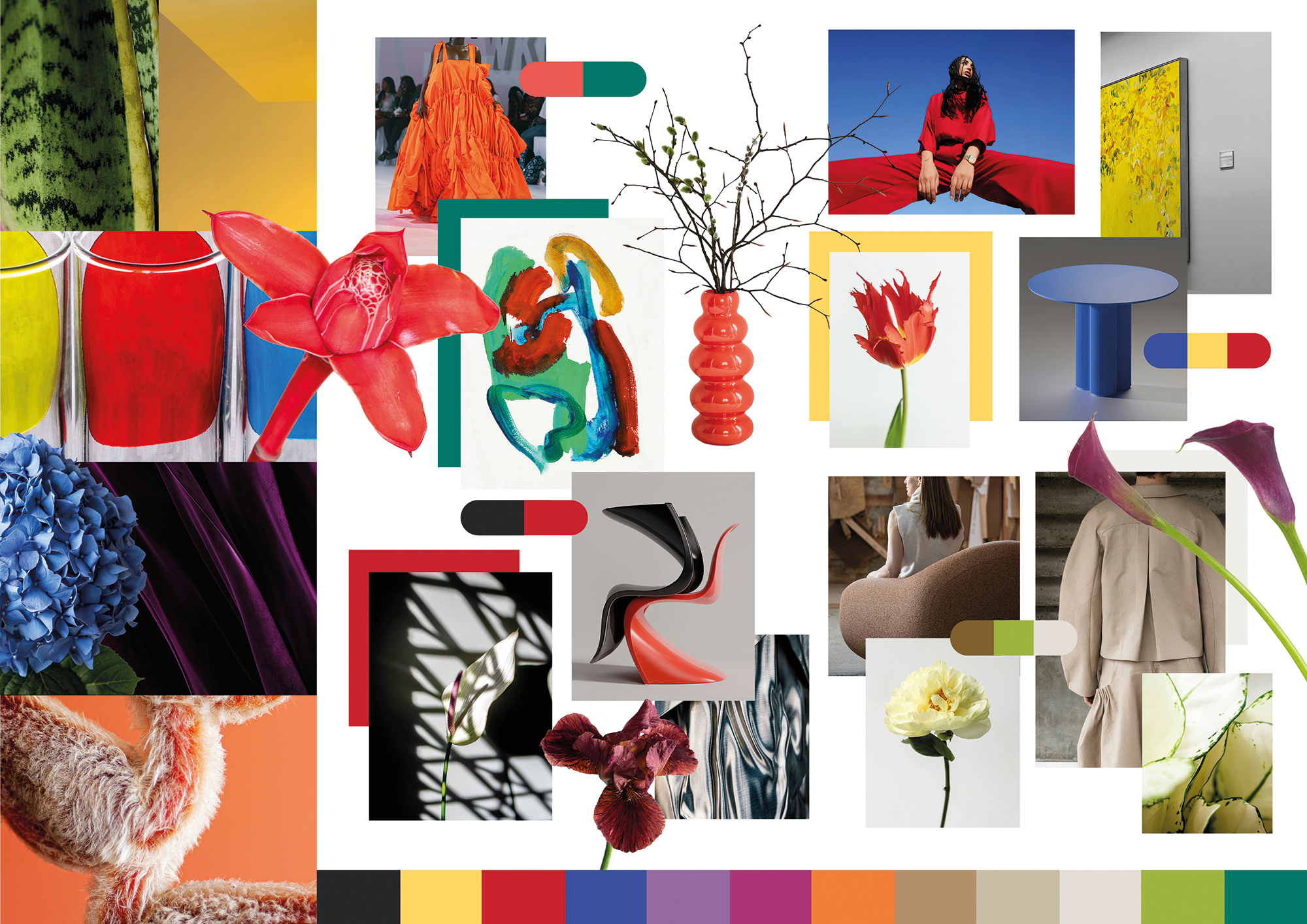
3. Bold by Design
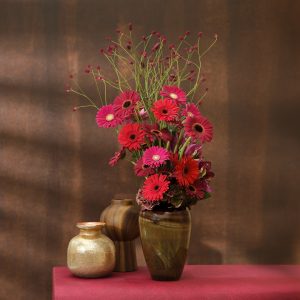
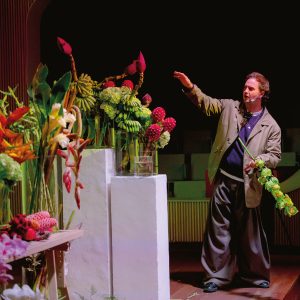
The third trend revolves around bold shapes, geometry, and contrast. A single striking shape, color, or flower takes center stage, with room for dramatic flourishes. Sharp contours, sculptural forms, shiny metal, and sturdy materials support this approach.
Bright red, blue, yellow, orange, fuchsia, and green are paired with black and more neutral shades. Here, minimalism can go hand in hand with bold color. The balance between the flower, the vase, and the empty space is key: a limited number of elements can create a striking silhouette. When arranged with ample space in a store window, such a composition has the room to make an impact even from a distance.